
Breakfast & Brunch
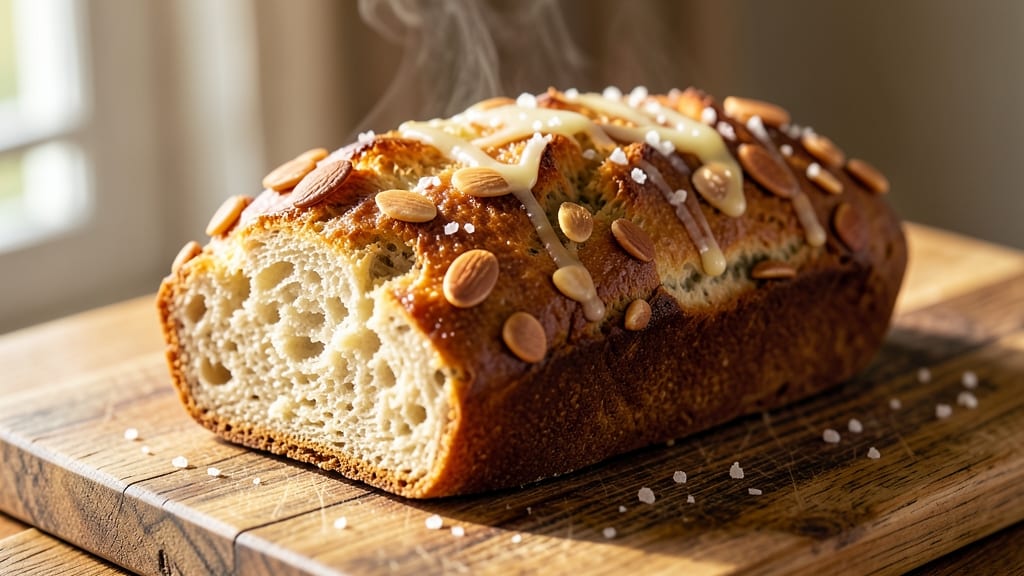
This almond bread recipe with yeast delivers the perfect balance of nutty richness and moist crumb with a golden, crispy top—no dry crumbs in sight. 🌟 The secret lies in combining toasted almonds with a touch of honey and yogurt, which keeps the texture tender while the yeast creates that signature airy rise.
I’ve baked this version countless times for brunch gatherings, and it never fails to impress, even with picky eaters.
The recipe starts with a simple yeast activation, followed by a gentle kneading process that develops gluten without overworking the dough—critical for that moist texture you crave. Toasted almonds add depth of flavor, while a hint of vanilla and citrus zest brightens the nutty profile.
Baking at the right temperature ensures a crispy top that stays intact while the interior remains soft and fragrant.
What sets this apart is how the dough proofing and baking times work together to create that ideal texture—no soggy bottoms or dense crumbs. The result? A loaf with a crispy exterior, a tender crumb studded with almonds, and just enough sweetness to satisfy without overpowering.
Slice it warm for brunch or toast it the next morning—it’s that good.
For storage, wrap the cooled loaf tightly in plastic or foil to retain freshness for up to 3 days, or freeze slices for quick toast later. The recipe also scales easily for larger gatherings, making it a versatile addition to any breakfast or brunch spread. Ready to bake?
Ingredients for almond bread recipe with yeast
Toasted almonds, tender crumb, and crispy top—just these ingredients transform into perfect almond bread.
| Ingredient | Amount | Notes |
|---|---|---|
| Active Dry Yeast 🍞 | 2 ¼ tsp | Ensure yeast is fresh |
| Warm Whole Milk 🥛 | 1 ¼ cups | 110°F for activation |
| Granulated Sugar 🍚 | ¼ cup | For yeast activation |
| Unsalted Butter 🧈 | ½ cup | Softened, not melted |
| Large Eggs 🥚 | 2 whole | Room temperature preferred |
| Plain Yogurt 🍶 | ½ cup | Full-fat for moisture |
| All-Purpose Flour 🌾 | 3 ½ cups | Sifted for light texture |
| Toasted Sliced Almonds 🥜 | 1 ½ cups | Lightly toasted, chopped |
| Honey 🍯 | ¼ cup | Pure, liquid honey |
| Vanilla Extract 🌸 | 1 tsp | Pure vanilla preferred |
| Lemon Zest 🍋 | 1 tbsp | Brightens the flavor |
| Salt 🧂 | 1 ½ tsp | Diamond Crystal preferred |
| Baking Powder 🍞 | 1 tsp | Ensures proper rise |
| Powdered Sugar 🍚 | ¼ cup | For dusting top |
The almonds are non-negotiable here. Toast your own for deeper flavor—skip the pre-toasted kind from the jar. Trader Joe's and Whole Foods sell high-quality sliced almonds in bulk, but any sliced almonds work if toasted lightly. The yeast needs to be fresh—test it by dissolving in warm water with a pinch of sugar; if it foams within 5 minutes, it's active. For the butter, Land O'Lakes or Plugrá work best—avoid salted butter unless you adjust the salt later. The yogurt should be full-fat for maximum moisture; Greek yogurt works too, but regular plain yogurt gives a lighter texture.
No honey? Maple syrup or agave nectar works in a pinch, but honey's floral notes are ideal. Short on vanilla? Vanilla bean paste adds specks and extra flavor. The lemon zest can be substituted with orange zest—just halve the amount to avoid overpowering. For a lighter loaf, sift the flour twice to remove lumps. If you're baking at high altitude, reduce the baking powder by one-quarter teaspoon—the recipe already includes it to prevent collapse. The baking powder and baking soda work together to create that signature airy rise, so don't skip either.
This bread keeps best in an airtight container at room temperature for 2 days, but it reheats beautifully. Wrap cooled slices in parchment paper and freeze for up to 3 months**—perfect for quick toast. For extra crispiness, brush the top with melted butter before baking. The loaf is best enjoyed within 24 hours of baking, but if you must store it, place a slice of bread in the container to maintain moisture. Leftovers? Toast them—it's the best way to revive stale bread.
Why You'll Love This Recipe
- No-Fuss Mix-In: The dough comes together in one bowl—just fold in almonds, no extra steps. I swear, the yeast and warm milk make it rise like magic while I sip my coffee.
- Buttery Almond Bliss: That combo of melted butter and toasted almonds? It’s like a hug for your taste buds. The sugar caramelizes just enough to keep it moist without being sweet.
- Breakfast or Snack Star: Slice it thick for French toast, toast it for a quick breakfast, or pack it for lunch. Honestly, I’ve eaten it cold with jam at midnight—no judgment here.
- Budget-Friendly Staple: Uses pantry basics (yeast, eggs, butter) and stretches for days. My loaf lasts at least five mornings, and the almonds make it feel fancy without costing a fortune.
Step-by-step instructions for almond bread with yeast
Here's the method for achieving that perfect balance of crispy top and moist interior.
👨🍳 Step 1: Activate the Yeast for Maximum Rise
In a small bowl, combine the 2.25 tsp active dry yeast with the 1.25 cups warm whole milk (about 110°F) and 0.25 cup granulated sugar. Let it sit for 5-10 minutes until it becomes frothy. You'll see bubbles forming and the mixture expanding—this confirms your yeast is alive and ready to work.
I always test the milk temperature first with a thermometer to ensure it's not too hot (above 120°F kills yeast). If it doesn't foam, your yeast may be old—start fresh with a new packet. This activation step is crucial for developing that light, airy texture we want in our almond bread.
👨🍳 Step 2: Mix Wet Ingredients for Smooth Dough
In a large mixing bowl, combine the 0.5 cup softened unsalted butter, 2 whole large eggs, 0.5 cup plain yogurt, 0.25 cup honey, 1 tsp vanilla extract, 1 tbsp lemon zest, and 1.5 tsp salt. Whisk vigorously for 2-3 minutes until the mixture is completely smooth and pale yellow in color.
The butter should be soft enough to mix easily but not melted—this creates pockets of air that help with rise. Add the activated yeast mixture and whisk again for 30 seconds to fully incorporate. This is where the magic begins—the combination of honey and yogurt creates a tender crumb while the lemon zest adds that bright, citrusy note that balances the richness.
👨🍳 Step 3: Combine Dry Ingredients and Fold in Almonds
In a separate bowl, whisk together the 3.5 cups all-purpose flour and 1 tsp baking powder. Gradually add this dry mixture to your wet ingredients while mixing on low speed with a hand mixer or using a wooden spoon. Mix just until combined—you should still see some flour streaks remaining.
Once the dough comes together, fold in the 1.5 cups toasted sliced almonds by hand using a spatula. Be gentle here to avoid deflating the air you've incorporated. The almonds should be evenly distributed throughout the dough. This is where the bread gets its signature nutty flavor and satisfying crunch—don't skip the toasting step as it enhances their flavor dramatically.
🥘 Step 4: Knead and Rest for Optimal Texture
Turn the dough onto a lightly floured surface and knead for 5-7 minutes until smooth and elastic. The dough should be slightly tacky but not sticky. If it's too dry, add 1 tsp warm milk at a time until it reaches the right consistency.
Place the dough in a lightly greased bowl, cover with a damp towel, and let it rise in a warm place for 1-1.5 hours or until doubled in size. I like to use my oven with the light on for consistent warmth. Punch down the dough gently to release air bubbles, then shape it into a loaf pan (about 9x5 inches) lined with parchment paper. This resting period allows the gluten to relax and develop, which is essential for that tender crumb we're after.
🔥 Step 5: Bake to Crispy Perfection
Preheat your oven to 350°F. Brush the top of the dough with a beaten egg (save the extra for another use) and sprinkle generously with 0.25 cup powdered sugar. This creates that beautiful crispy top while adding sweetness that caramelizes beautifully.
Bake for 50-55 minutes until the top is deep golden brown and a toothpick inserted in the center comes out clean. The bread should have a crisp exterior that gives way to a moist, tender interior. For that perfect crispy top, I like to increase the heat to 375°F for the last 5 minutes of baking—this helps develop that crackly crust we all love.
Pro Tips For Making Almond Bread Recipe With Yeast
- Test Yeast First: Skip the guesswork—mix a pinch of yeast with warm milk and 1 teaspoon sugar in a small bowl. If it doesn’t foam within 5–10 minutes, your yeast is dead, and you’ll need a new packet. I learned this the hard way after baking a dense, flavorless loaf because my yeast was past its prime.
- Use Room-Temp Butter: Softened butter blends better into the dough, but don’t microwave it—just let it sit out for 30–45 minutes until it’s pliable but not greasy. I was skeptical until I tried it; the crumb turns out lighter and more uniform, and the almond flavor shines through.
- Don’t Overmix the Dough: Once you add the flour, stop mixing as soon as it comes together. Overworking the dough makes almond bread tough, and this recipe relies on tender layers. My grandmother swore by this, and she was right: a few lumps are fine—just don’t panic.
- Bake Until Golden, Not Just Warm: Almond bread needs 350°F for 30–35 minutes, but don’t pull it out when the top looks just set. Wait until it’s deep golden brown—almost like caramelizing—and the internal temp hits 190°F. I used to rush this, and the bread ended up dry and pale. Trust the process.
Best sauces and condiments for this recipe
Citrus Glaze Finish
After baking, brush the warm loaf with a simple orange glaze made from 2 tbsp powdered sugar and 1 tbsp fresh orange juice. This adds a bright, tangy contrast to the nutty richness.
I like to do this right after removing the bread from the oven—it caramelizes beautifully while the bread is still warm. For extra flair, sprinkle with 1 tsp toasted almond slivers before the glaze sets. 🍊
Honey Butter Spread
Whip ¼ cup softened butter with 2 tbsp honey and a pinch of sea salt for a decadent spread. This pairs perfectly with the almond bread’s crispy top and moist interior. Store the mixture in an airtight container in the fridge for up to 1 week.
For a spiced version, add ½ tsp cinnamon or ¼ tsp cardamom to the butter-honey blend. Spread generously on warm slices for a brunch-worthy treat.
Almond Cream Cheese Frosting
Blend 4 oz cream cheese (softened), 2 tbsp powdered sugar, 1 tsp vanilla extract, and ¼ cup finely chopped toasted almonds until smooth. Spread this creamy frosting on cooled slices for a luxurious finish.
For extra richness, add 1 tbsp almond butter to the mix. This frosting keeps well in the fridge for 3 days, making it ideal for ahead-of-time prep. 🥜
Spiced Whipped Cream
Whip ½ cup heavy cream with 1 tbsp powdered sugar, ½ tsp cinnamon, and ¼ tsp nutmeg until soft peaks form. Pipe or dollop onto toasted almond bread slices for a light, airy contrast. This works especially well with the bread’s crispy top and tender crumb.
For a boozy twist, fold in 1 tsp almond liqueur or orange liqueur before whipping. Store the whipped cream in an airtight container for up to 2 days.
Chocolate-Dipped Edges
Melt ½ cup dark chocolate (60% cocoa) with 1 tbsp coconut oil for a smooth, glossy finish. Dip the edges of cooled slices into the chocolate, then place on parchment paper to set. The dark chocolate complements the almond’s nuttiness without overpowering it.
For a sweeter touch, add 1 tsp honey to the melted chocolate. Store the chocolate in a cool, dry place for up to 1 month. 🍫
Herbed Olive Oil Drizzle
Mix 2 tbsp extra-virgin olive oil with 1 tsp finely chopped fresh rosemary, 1 tsp lemon zest, and a pinch of flaky sea salt. Drizzle over warm slices just before serving.
The herby, citrusy notes cut through the bread’s richness while enhancing its natural flavors. This drizzle keeps in the fridge for 1 week and adds a sophisticated touch to any brunch spread.
Nutrition facts
Frequently asked questions
Why does this almond bread use yeast instead of baking powder?
Yeast creates a lighter, airier texture with that signature bread-like rise you can't get from baking powder alone. The slow fermentation process develops deeper flavor and a more complex crumb structure. For extra lift, we combine yeast with baking powder—this gives you the best of both worlds: a tender crumb with proper rise. The proofing time is what transforms this into a true almond bread rather than a quick bread.
Can I make this recipe without eggs?
Replace the 2 eggs with a flax egg substitute: mix 2 tbsp ground flaxseed with 6 tbsp water and let it thicken for 5 minutes. This works especially well if you're making a vegan version. For extra moisture, add 1 tbsp extra yogurt to compensate for the egg's binding properties. The texture will still be tender but slightly denser than the original.
How do I know when the dough has risen enough?
Look for the dough to double in size and feel noticeably puffy when pressed gently with your finger. It should spring back slowly rather than immediately collapsing. For visual confirmation, place a toothpick in the center—if it leaves a slight indentation that holds, your dough is ready. Cold environments slow fermentation, so if your kitchen is chilly, extend the proofing time by 30 minutes and use a warm oven with the light on for consistent warmth.
What's the best way to store leftovers?
Wrap the cooled loaf tightly in plastic wrap or foil to maintain freshness for up to 3 days at room temperature. For longer storage, slice the bread and freeze individual portions in airtight containers for up to 3 months. To revive frozen slices, toast them for 2-3 minutes at 375°F until crispy. Avoid refrigerating unless necessary—this can dry out the bread faster than room-temperature storage.
Can I add other nuts besides almonds?
Yes, but toast them first to enhance flavor! Try pecans or walnuts for a richer taste, or hazelnuts for a sweeter profile. Replace the almonds with equal volume, but reduce by 10% if using larger nuts like pecans. For a crunchier texture, chop them coarsely. If you're adding multiple nuts, toast them separately to prevent burning—each nut has a different oil content and toasting point.