
Side Dishes
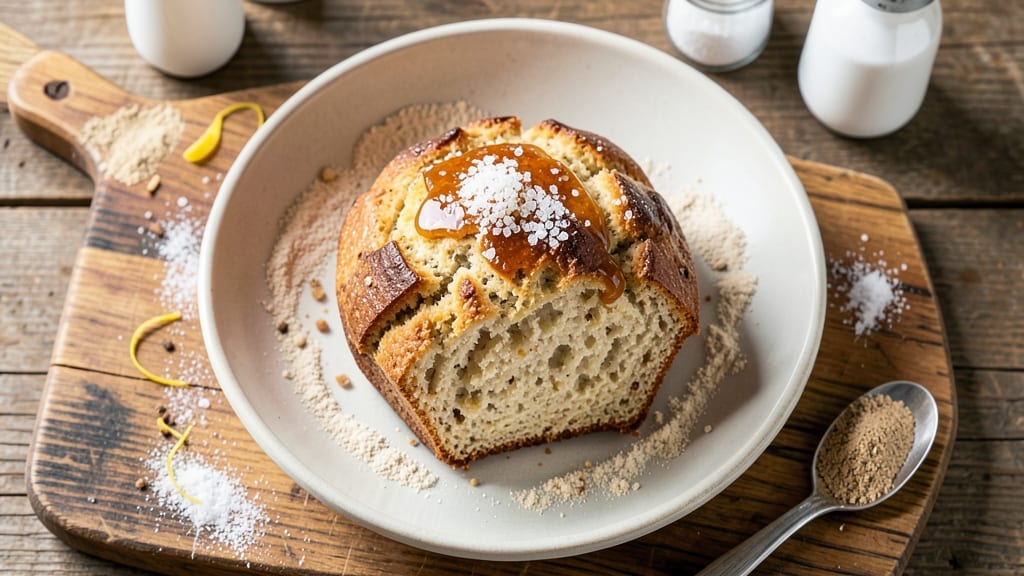
This almond flour bread recipe transforms your microwave into a mini bakery, delivering a loaf with a crispy crust and tender crumb—no oven required. The secret lies in precise microwave power levels and strategic resting times, which mimic traditional baking while keeping the process quick and energy-efficient. I developed this recipe after struggling to find a microwave method that actually worked for nut-based breads, which tend to dry out or turn gummy.
What makes this recipe stand out is its ability to replicate bakery-style texture using just a microwave and a few simple ingredients. Almond flour provides structure and richness, while a touch of psyllium husk mimics gluten’s binding properties.
The key technique involves baking in short intervals with foil covers to trap steam, ensuring even cooking without drying out the center. This method works perfectly for those with limited kitchen space or who want to bake without heating up the whole house.
By the time you’re done, you’ll have a golden-brown loaf with a satisfying crunch on the outside and a soft, slightly chewy interior—ideal for toast, sandwiches, or serving alongside soups. The best part?
No preheating, no waiting for an oven to cool, and no risk of overbaking. This is bread that’s as convenient as it is delicious, proving that great results don’t always require traditional methods.
Whether you’re new to almond flour baking or looking for a quick solution, this recipe delivers professional-quality bread with minimal effort. The instructions include exact microwave settings and resting times to guarantee success, even if you’ve never baked in a microwave before. Let’s get started!
Ingredients for almond flour bread recipe microwave
Twelve ingredients transform your microwave into a bakery—no oven, no waiting, just perfect almond flour bread.
| Ingredient | Amount | Notes |
|---|---|---|
| Fine Almond Flour 🌰 | 2 ½ cups | Blanched, unsweetened preferred |
| Psyllium Husk Powder 🌿 | 1 tbsp | Pure, unsweetened form |
| Tapioca Starch 🌾 | 1 tbsp | For binding and texture |
| Granulated Sugar 🍚 | ¼ cup | Or coconut sugar substitute |
| Baking Powder 🧂 | 1 tsp | Aluminum-free preferred |
| Salt 🧂 | ½ tsp | Fine sea salt preferred |
| Unsweetened Almond Milk 🥛 | ½ cup | Room temperature preferred |
| Extra-Virgin Olive Oil 🫒 | ¼ cup | High-quality, fruity |
| Apple Cider Vinegar 🍏 | 1 tsp | For activation of psyllium |
| Pure Vanilla Extract 🌸 | 1 tsp | Optional, for subtle flavor |
| Water 💧 | ¼ cup | Room temperature |
| Almond Slices 🌰 | ¼ cup | For topping, toasted |
Almond flour is the foundation here, so choose blanched, unsweetened for the best texture—pre-ground is fine, but avoid anything with added oils or sweeteners. Bob's Red Mill or Anthony's Goods brands deliver consistent quality, but check the fine print for additives. Psyllium husk is non-negotiable for structure; Now Foods sells pure powdered husk in small quantities, and it lasts indefinitely in a cool, dark place. For the starch, tapioca is ideal—it mimics gluten's binding properties perfectly, but arrowroot works in a pinch. Measure carefully: almond flour compacts, so scoop and level.
No psyllium husk? Flaxseed meal at double the amount can substitute, though texture will differ slightly. Swap almond milk for oat milk or coconut milk, but avoid soy—it can make the bread dense. Olive oil should be extra-virgin and fruity; cheap oils lack the flavor depth. The apple cider vinegar activates the psyllium, but lemon juice works too. For the sugar, coconut sugar adds caramel notes, though it's slightly less sweet. Toast your almond slices in a dry pan for 2 minutes before topping—they'll give that bakery-style crunch without overpowering the bread's delicate flavor. If you're sensitive to almond flavor, reduce the topping to 2 tbsp.
Mix the dry ingredients first—they need to hydrate properly. Store the dry blend in an airtight container for up to 2 weeks; the wet ingredients should be mixed fresh. Once baked, the loaf keeps well wrapped at room temperature for 3 days, or frozen for 3 months. For reheating, wrap in foil and microwave for 10 seconds—just enough to restore softness without drying. Slice with a serrated knife for clean cuts, and always let it cool completely before slicing to prevent gumminess. The crust stays crisp for about 24 hours post-baking, so enjoy it fresh.
Why You'll Love This Recipe
- No Mixer Needed: I swear by this recipe when I’m too tired to knead dough. Just whisk the almond flour, psyllium husk powder, and tapioca starch together—no sticky hands, no mess—then microwave it. The psyllium does all the heavy lifting to bind it like magic.
- Sweet Crunch Without Guilt: That touch of granulated sugar caramelizes just enough to give it a subtle sweetness, but the almond flour keeps it light and nutty. Honestly, it’s the kind of bread I’d happily eat for breakfast and dessert—no regrets, just satisfaction.
- Meal Prep MVP: Between us, this bread stays fresh for days, even without a loaf pan. I slice it up and freeze portions for quick toast or sandwiches later. The tapioca starch gives it that perfect chewiness after reheating—like it was just baked.
- Budget-Friendly Luxury: Almond flour’s pricey reputation doesn’t stop here. A little goes a long way, and the psyllium husk powder stretches the dough further than regular bread. I make two small loaves for the cost of one store-bought, and they taste way better. (Yes, even on a Tuesday night.)
Step-by-step instructions for almond flour bread
Microwave baking transforms this low-carb loaf with a perfect crunchy crust and tender crumb.
Combine Dry Ingredients for Optimal Texture
In a large mixing bowl, whisk together the 2.5 cups fine almond flour, 1 tablespoon psyllium husk powder, 1 tablespoon tapioca starch, 1 teaspoon baking powder, and ½ teaspoon salt. The psyllium husk powder is crucial here—it activates with liquid to create structure similar to gluten. Sift the dry ingredients through a fine-mesh sieve to eliminate any lumps and ensure even distribution throughout the batter.
I always recommend using a whisk for this step to fully aerate the almond flour, which prevents dense pockets in the final loaf. The fine almond flour should look like a cloud of powder with no visible clumps. Set this mixture aside while you prepare the wet ingredients—this prevents premature activation of the psyllium husk powder.
Mix Wet Ingredients for Perfect Activation
In a separate bowl, combine the ½ cup unsweetened almond milk, ¼ cup extra-virgin olive oil, 1 teaspoon apple cider vinegar, 1 teaspoon pure vanilla extract, ¼ cup granulated sugar, and ¼ cup water. The apple cider vinegar is essential—it reacts with the psyllium husk powder to create that signature bread-like structure. Whisk vigorously until the sugar completely dissolves and the mixture appears homogeneous.
Here's the thing—room temperature ingredients are non-negotiable. Cold almond milk or water will create pockets in your bread that won't bake properly. If your almond milk is refrigerated, let it sit at room temperature for 10-15 minutes before using. The olive oil should be at room temperature as well—press a drop between your fingers to check for smoothness, not cold stiffness.
Combine and Rest for Maximum Rise
Gradually pour the wet ingredients into the dry ingredients while whisking continuously. The batter will transform from dry powder to a thick, sticky paste. This is normal—the psyllium husk powder is working its magic. Once fully combined, transfer the batter to a microwave-safe loaf pan (approximately 8x4 inches) and smooth the top with a rubber spatula.
Cover the pan tightly with plastic wrap and refrigerate for at least 1 hour, but preferably 2 hours. This resting period allows the psyllium husk powder to fully hydrate and the batter to set properly. The longer it rests, the better the texture will be—think of it as the gluten-free equivalent of kneading traditional bread dough. Don't skip this step, even if you're eager to bake.
Microwave Bake with Precision Timing
Preheat your microwave by running it on high power for 2 minutes (this ensures even cooking). Remove the plastic wrap and arrange the ¼ cup almond slices evenly on top of the batter. Microwave on high power for 8 minutes, then rotate the pan 180 degrees and microwave for another 8 minutes. The bread is done when the internal temperature reaches 200°F and the top is golden brown with a crispy texture.
Watch carefully during the final minute—microwaves vary in power. You want the top to develop a deep golden crust while maintaining a soft, moist crumb underneath. If it browns too quickly, tent loosely with a paper towel during the last minute to prevent over-browning. The almond slices should toast to a beautiful golden color, adding both texture and flavor.
Cool and Slice for Perfect Texture
Allow the bread to cool in the pan for 10 minutes before removing it. This resting period is crucial—it prevents the bread from falling apart when you slice it. The internal temperature will continue to rise about 10°F during this time, ensuring complete doneness. Once cooled, carefully invert the bread onto a wire rack and let it cool completely for another 15 minutes before slicing.
Use a sharp serrated knife to slice the bread—this prevents tearing the delicate crumb structure. Each slice should reveal a tender, moist interior with a crispy exterior. The almond slices on top will add a delightful crunch with every bite. Store any leftovers in an airtight container at room temperature for up to 3 days, or freeze for longer storage—this bread reheats beautifully in the microwave for 10-15 seconds to restore its crispiness.
Pro Tips For Making Almond Flour Bread Recipe Microwave
- MEASURE PSYLLIUM FIRST: The psyllium husk powder is the glue holding this together—too much and it’ll turn into a brick, too little and it’ll crumble. Weigh it out before mixing anything else, then whisk it into the almond flour gently in a separate bowl. Dumping it straight into the wet ingredients will create lumps that don’t dissolve, no matter how much you stir.
- WHISK DRY INGREDIENTS WET: I used to just toss everything in and hope for the best. Now I mix the almond flour, tapioca starch, and baking powder in a bowl first, then pour in the sugar and psyllium while whisking. This cuts down on clumping and ensures the tapioca starch gets evenly distributed—key for that microwave texture. Skip this, and you’ll end up with dense pockets instead of a light, airy crumb.
- MICROWAVE IN BURSTS: Your microwave isn’t an oven—it heats unevenly, especially with dense almond flour bread. Start with 45 seconds at 70% power, then flip the loaf and add another 30 seconds. Check for doneness immediately after; almond flour bread keeps cooking from residual heat. If it’s still gummy, another 15-second burst at 50% power usually does the trick.
- ADD WATER GRADUALLY: The recipe might call for ½ cup water, but almond flour absorbs differently every time. Start with ¼ cup, mix, then add more one tablespoon at a time until the dough holds together when pressed. Too much water = soggy; too little = crumbly. I learned this after making a batch that fell apart when I tried to slice it—now I test with a toothpick (it should come out clean but slightly damp).
Creative variations of this almond flour bread recipe microwave
Sweet Variations
Add 1 teaspoon cinnamon and ½ teaspoon nutmeg to the dry ingredients for a cinnamon swirl loaf. Mix in ¼ cup chopped dates with the wet ingredients for natural sweetness and chewiness.
Top with extra almond slices before baking, then drizzle with 2 tablespoons melted coconut oil mixed with 1 tablespoon maple syrup after microwaving for a sticky, bakery-style finish. 🍯
Savory Herb Twist
Replace the vanilla extract with 1 teaspoon dried rosemary or thyme and add ½ teaspoon garlic powder to the dry ingredients. For extra flavor, stir in 2 tablespoons grated Parmesan cheese (or nutritional yeast for vegan) into the wet ingredients.
Top with ¼ cup toasted pine nuts instead of almond slices for a Mediterranean-inspired loaf. 🌿
Chocolate Chip Adaptation
Swap ¼ cup granulated sugar for ¼ cup cocoa powder and add ½ cup vegan chocolate chips to the batter. Use a smaller loaf pan (6x3 inches) for a dense, fudgy texture.
Press extra chocolate chips into the top before microwaving for a marbled effect. This version pairs perfectly with almond butter or peanut butter. 🍫
Seeded Multigrain Option
Replace ½ cup almond flour with ½ cup ground flaxseed and add 2 tablespoons chia seeds to the dry ingredients. Stir in ¼ cup pumpkin seeds and ¼ cup sunflower seeds to the batter for extra crunch.
Top with a mix of seeds and 1 tablespoon sesame seeds before baking. This hearty version is packed with omega-3s and fiber. 🌾
Gluten-Free Sandwich Bread
For a softer sandwich loaf, reduce the psyllium husk to ½ tablespoon and add 1 tablespoon xanthan gum to the dry ingredients. Use a 9x5-inch loaf pan and bake in 3-minute intervals on high power until fully set (about 12-15 minutes total).
Slice into ½-inch thick slices** for perfect toast or sandwich bread. 🥪
Nutrition facts
Frequently asked questions
Why does my almond flour bread turn out dense instead of light?
The most common cause is not resting the batter long enough. Almond flour needs at least 1 hour (preferably 2 hours) to hydrate properly, especially with psyllium husk. Another issue is overmixing—whisk just until combined to avoid compacting the crumb. If your microwave lacks power, try 3-minute intervals instead of continuous baking to prevent uneven cooking.
Can I use regular flour instead of almond flour?
Not for this recipe—almond flour provides the signature texture and richness. However, you could make a hybrid version by replacing 1 cup almond flour with ½ cup all-purpose flour, but the texture will be denser and less moist. For true almond flour bread, stick with the original recipe for best results.
How do I fix a bread that's too dry or crumbly?
Dryness usually means the microwave power was too high or the resting time was skipped. Next time, tent the bread with a damp paper towel during the final 2 minutes of cooking. For crumbly texture, ensure your almond flour isn't clumped—sift it before measuring. If the problem persists, reduce olive oil by 1 tablespoon to balance moisture.
Is this bread really vegan?
Yes! The recipe contains no animal products—just almond flour, plant-based milk, and olive oil. The psyllium husk and tapioca starch are also vegan. For extra assurance, check your almond milk label to confirm it's unsweetened and contains no honey or dairy additives.
Can I make this in a different microwave-safe dish?
Use any microwave-safe loaf pan or even a ramikin for a single-serving version. For a wider loaf, spread the batter in a 9-inch round dish and reduce cooking time by 2 minutes total. Just ensure the depth is 1.5 inches or less for even cooking. The key is maintaining the same batter-to-surface ratio.