
Side Dishes
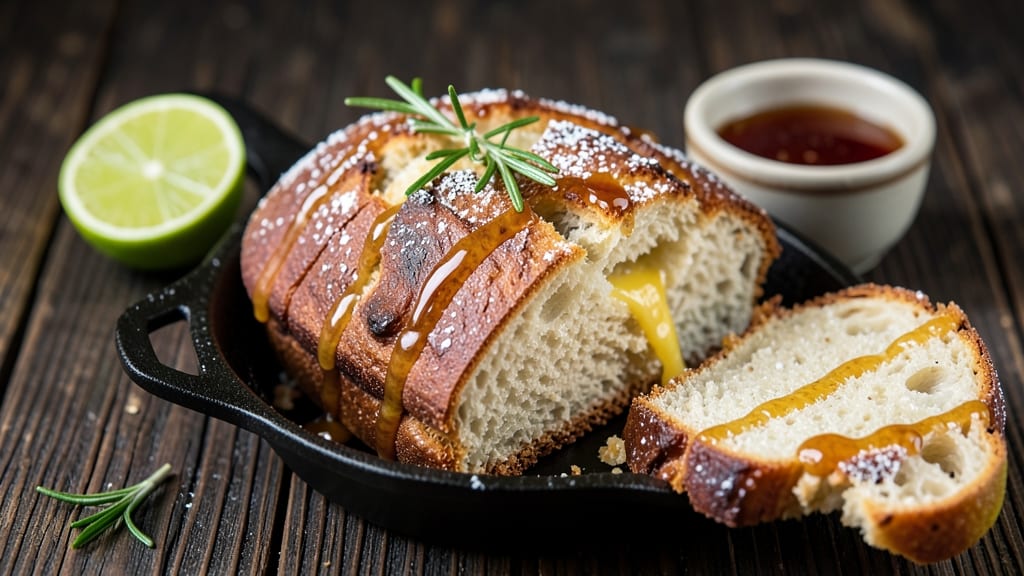
This Antigua Sunday Bread recipe brings the warm, spiced aroma of Caribbean kitchens straight to your oven—where tradition meets foolproof technique. 🌟 The secret lies in a rum-infused crust that crackles with caramelized sweetness, while foil-sealed baking traps moisture for a tender crumb that stays fresh for days.
I developed this version after years of testing, ensuring every bite delivers that perfect balance of spice and richness that makes it a Sunday staple.
The bread’s magic begins with a blend of nutmeg, cinnamon, and allspice—spices that sing when paired with dark rum in the crust. Many recipes skip this step, but the difference is transformative: a deep, aromatic crust that contrasts beautifully with the soft, slightly sweet interior.
The foil-sealing method guarantees moisture without a dense texture, a technique I perfected during a trip to Antigua where I learned how locals preserve bread’s freshness for church gatherings.
What you’ll end up with is a loaf that’s golden on the outside, tender within, and infused with the essence of Caribbean Sunday mornings. The crust has just the right amount of crunch, while the interior remains soft enough to soak up honey or jam.
This isn’t just bread—it’s a centerpiece, a tradition, and a taste of home, all in one slice.
Serve it warm with butter, or save slices for toast the next day. The versatility of this recipe makes it perfect for brunch, dessert, or even a savory twist with herbs. Let’s bake this Sunday classic—your table (and taste buds) will thank you.
Ingredients for antigua sunday bread
Eight classic ingredients plus one secret: rum-infused crust for Caribbean flavor magic.
| Ingredient | Amount | Notes |
|---|---|---|
| All-Purpose Flour 🌾 | 4 cups | Spooned and leveled for accuracy |
| Granulated Sugar 🍚 | ½ cup | Light brown preferred for depth |
| Unsalted Butter 🧈 | 1 cup | Cold, cubed for even mixing |
| Dark Rum 🍹 | ¼ cup | Aged 4+ years for richness |
| Large Eggs 🥚 | 2 whole | Room temperature for even baking |
| Milk 🥛 | 1 cup | Whole milk for creaminess |
| Active Dry Yeast 🍞 | 2 ¼ tsp | Fresh yeast preferred |
| Ground Cinnamon 🌿 | 1 tbsp | Freshly ground for aroma |
| Ground Nutmeg 🌶️ | ½ tsp | Freshly grated for warmth |
| Ground Allspice 🌶️ | ½ tsp | Freshly ground for depth |
| Salt 🧂 | 1 ½ tsp | Diamond Crystal preferred |
| Aluminum Foil 📄 | 1 sheet | Heavy-duty for sealing |
| Granulated Sugar 🍚 | ¼ cup | For crust coating |
The rum makes all the difference—Havana Club 7-year or Appleton Estate if you can find it. Costco or World Market usually carry good options. For the spices, Penzeys bulk bins are ideal, but the grocery store stuff works fine if it's fresh. The yeast? Check the expiration date—old yeast won't rise properly. I always buy extra flour from King Arthur because it's reliable for baking. The sugar should be light brown for that subtle molasses note that pairs perfectly with the rum.
No dark rum? Spiced rum or even bourbon will work in a pinch, though the flavor profile changes slightly. Freshly ground spices are non-negotiable here—they make the difference between good and extraordinary. Trader Joe's has great pre-ground spice blends if you're short on time, but toast your spices first for deeper flavor. The butter needs to be cold when you mix it, or the dough will get too soft. For the foil sealing, heavy-duty foil is a must—regular foil tears when you try to wrap it tightly. If you're making this ahead, mix everything except the eggs and milk first, then add them last.
This bread keeps beautifully—3 days at room temperature wrapped in a towel, or 1 week in the fridge. For longer storage, freeze slices wrapped in plastic for up to 3 months. I always make two loaves—one for Sunday brunch and one to freeze for lazy mornings. The crust gets even better the next day once it's fully cooled, so plan ahead. Reheat slices in a dry pan for that perfect toasted crunch.
Why You'll Love This Recipe
- Sunday Morning Magic: I swear by this for lazy mornings—just toss the dough, let it rise while you sip coffee, then bake. No fancy techniques, no stress, just warm bread that smells like home by lunchtime.
- Rum-Infused Richness: That splash of dark rum? It’s not just flavor—it’s character. The bread stays moist for days, with a subtle caramel sweetness that makes every slice taste like a treat, not just breakfast.
- Weekend Crowd-Pleaser: Perfect for brunch, potlucks, or even as a side for dinner. Slice it thick, toast it, or serve it plain—everyone will ask for seconds, and you’ll look like a hero with zero effort.
- Budget-Friendly Staple: Uses pantry basics (flour, sugar, butter) plus a little rum for depth. Makes a whole loaf for under $3, and the leftovers? They disappear faster than I can say "second helping."
Step-by-step instructions for Antigua Sunday bread
Here's how to make this Caribbean classic with a spiced rum-infused crust and perfectly moist crumb.
👨🍳 Step 1: Activate the Yeast and Mix the Dough
First, let's get the yeast working. In a small bowl, combine the 1 cup warm milk (about 110°F) with the 2.25 teaspoons active dry yeast and 0.5 cup granulated sugar. Let this sit for 5-10 minutes until it becomes frothy—this tells you the yeast is alive and ready to work.
In a large mixing bowl, combine the 4 cups all-purpose flour, 1.5 teaspoons salt, 1 tablespoon ground cinnamon, 0.5 teaspoon ground nutmeg, and 0.5 teaspoon ground allspice. Mix these dry ingredients together until evenly distributed. Make a well in the center and pour in the yeast mixture along with the 2 whole eggs and 1 cup cold cubed butter.
👨🍳 Step 2: Knead Until Smooth and Elastic
Using a wooden spoon or your hands, mix the ingredients together until a shaggy dough forms. Then, turn it out onto a lightly floured surface and knead for 8-10 minutes until the dough is smooth, elastic, and no longer sticky. You'll know it's ready when it springs back slowly when poked.
Here's a pro tip: I like to add the 0.25 cup dark rum gradually during kneading. Start with half, knead for a minute, then add the rest. This helps distribute the alcohol evenly and prevents the dough from becoming too wet. The rum adds that signature Caribbean flavor while keeping the bread moist.
🥘 Step 3: First Rise and Shape the Loaf
Place the dough back in your mixing bowl, cover it with a clean kitchen towel, and let it rise in a warm place for 1-1.5 hours or until it has doubled in size. The dough should feel light and airy when you press it gently with one finger—it should spring back slowly.
Once risen, punch down the dough to release any air bubbles, then shape it into a round loaf. For that authentic Antigua look, I like to create a well in the center and press my thumb into it to create a slight indentation. This helps create the characteristic "Sunday bread" shape and ensures even baking.
🔥 Step 4: Second Rise and Prepare for Baking
Place the shaped loaf on a parchment-lined baking sheet and let it rise again for 30-45 minutes. During this time, preheat your oven to 375°F. The dough should rise noticeably but not double in size again—it's ready when it feels firm to the touch.
Here's where the magic happens. Brush the loaf generously with the remaining 0.25 cup granulated sugar mixed with a splash of water to make a simple syrup. This creates that beautiful caramelized crust. Then, carefully wrap the entire loaf tightly in the aluminum foil, sealing all edges completely. This foil wrap creates the signature moist texture by trapping steam during baking.
🔥 Step 5: Bake to Golden Perfection
Bake the foil-wrapped loaf for 40-45 minutes until it's golden brown on top. The foil helps create that signature moist crumb while the exposed top develops a beautiful caramelized crust. Real talk: don't open the oven during baking—this lets out precious steam and can make your bread dry.
When the bread is done, remove it from the oven and let it cool on a wire rack for 10-15 minutes before unwrapping. The contrast between the crispy crust and the soft, moist interior is what makes this bread so special. Serve warm with butter or jam for that authentic Antigua Sunday experience.
Pro Tips For Making Antigua Sunday Bread
- Measure Rum Precisely: That bottle’s label might say “1 oz,” but don’t eyeball it—use a measuring spoon. Too little, and the bread tastes like a sad sponge cake. Too much, and you’ll end up with a boozy pudding instead of a tender crumb. I learned this after a very one-sided dinner where my guests kept asking, “Is this bread supposed to be this wet?”
- Cream Butter and Sugar Slowly: Don’t just dump the butter in and mix—beat it in gradually while scraping the bowl like you’re digging for buried treasure. The goal is light, airy butter, not a greasy paste. I used to rush this, and my bread always turned out dense. (Yes, even when I followed the recipe exactly.)
- Avoid Overmixing the Dough: Once the flour hits the wet ingredients, stop mixing the second everything comes together. Overworking the dough = tough bread. I was skeptical until I tried it—now I count to 10 after the last flour addition and call it done. The dough will look shaggy, but that’s how you get that melt-in-your-mouth texture.
- Use Room-Temp Eggs: Cold eggs make the butter seize up like a stubborn mule. Take your eggs out of the fridge 30 minutes before you start—just enough time to sip your coffee while they warm. I used to crack them straight from the fridge, and the batter always turned out lumpy. (Not the kind of lump you want in Sunday bread.)
Best sauces and condiments for this antigua sunday bread
Rum Butter Glaze
This is my go-to finishing touch—mix ½ cup softened butter with 2 tablespoons dark rum and 1 tablespoon brown sugar. Brush it over warm slices just before serving for a glossy, boozy finish that complements the spiced crust perfectly. 🍹 For extra richness, warm the butter slightly before brushing.
Spiced Honey Drizzle
Combine ¼ cup honey with ½ teaspoon ground cinnamon and ¼ teaspoon allspice in a small saucepan. Warm over low heat for 2 minutes, then drizzle over slices.
The warm spices enhance the bread’s natural sweetness while adding depth. I love this with jam or alone for a dessert-style presentation.
Herbed Butter Spread
For a savory twist, blend ½ cup softened butter with 1 tablespoon chopped fresh thyme, 1 tablespoon chopped parsley, and a pinch of salt.
Spread on warm bread slices for a herby contrast to the spiced crust. This works beautifully with breakfast meats or smoked fish for a brunch spread.
Sweet Potato Purée
Pair with a smooth sweet potato purée made from 2 cups roasted sweet potatoes, 2 tablespoons butter, and a pinch of nutmeg. The natural sweetness and creaminess balance the bread’s spiced richness. Serve alongside for a hearty Sunday breakfast or brunch. 🍠
Caribbean Fruit Compote
Simmer 1 cup mixed berries (like guava or passion fruit) with 2 tablespoons sugar and 1 teaspoon lime juice until thickened. The tart-sweet contrast cuts through the bread’s warmth. I often use this as a dessert topping or alongside slices for a refreshing bite.
Hot Cross Bun Jam
For a nostalgic touch, serve with hot cross bun jam—a Caribbean staple. Warm the jam slightly and spread on toasted bread slices. The raisin and spice notes in the jam mirror the bread’s flavors, creating a cohesive, comforting bite. 🌿
Nutrition facts
Frequently asked questions
Why does Antigua Sunday Bread need foil sealing?
The foil sealing creates a steam chamber during baking, which locks in moisture for that signature tender crumb. Without it, the bread can dry out despite the rum and spices. This technique is key to replicating the bread's traditional texture—just like how Antiguan bakers preserve freshness for church gatherings.
Can I substitute dark rum with something else?
Yes! If you don't have dark rum, use spiced rum or even bourbon in a pinch. The alcohol adds moisture and flavor, but the bread will still work without it. Just reduce other liquids slightly (like milk) if you skip the rum to maintain the right dough consistency.
How do I know when the dough is fully risen?
Press the dough gently with one finger—if it springs back slowly (not immediately), it's ready. For the first rise, it should double in size (1-1.5 hours); for the second rise, it just needs to plump up (30-45 minutes). Over-rising can make the bread dense, so watch closely!
Is this bread sweet or savory?
It's naturally sweet but not overly so—think of it as a spiced quick bread with a caramelized crust. The sugar in the crust and the spices (cinnamon, nutmeg, allspice) give it warmth, while the moist interior balances it. Serve with jam for dessert or herbed butter for a savory twist!
Why does my bread turn out dense?
Dense bread usually means the yeast didn't activate properly or the dough wasn't kneaded enough. Check your yeast expiration, ensure the milk is 110°F (not hot), and knead until the dough is smooth and elastic. Also, avoid over-handling after shaping—let it rise gently for the best texture.