
Side Dishes
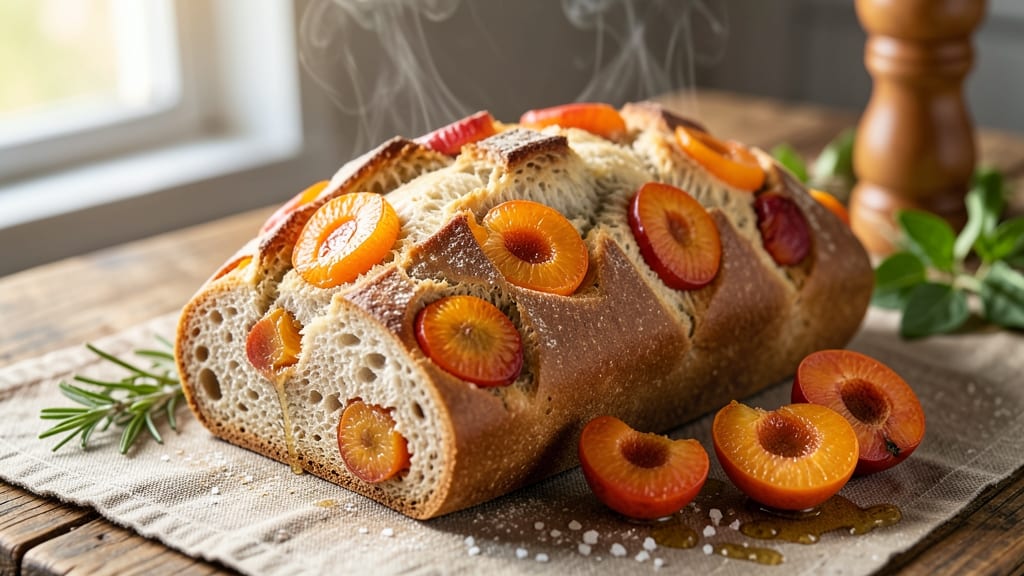
This apricot sourdough bread recipe transforms your kitchen into a bakery with its golden crust and sweet-tart swirls. 🌟 The secret lies in balancing the tangy complexity of sourdough with the natural sweetness of apricots—whether fresh, dried, or a jam—creating a loaf that's both rustic and refined.
Unlike dense commercial breads, this recipe delivers a crispy exterior and airy, chewy crumb that pairs perfectly with butter or jam.
Perfecting sourdough takes patience, but this method simplifies the process with clear steps for activating your starter and incorporating apricot filling without weighing down the dough.
The key is in the layers: a well-hydrated dough that captures the fruit's juices while maintaining structure, and a bake that achieves that coveted golden crust. Even if you're new to sourdough, the foolproof techniques here ensure a loaf that rivals artisanal bakeries.
What you'll end up with is a loaf that smells like summer—warm, fruity, and slightly tangy—with a crust that crackles satisfyingly under your fingertips. The apricot swirls add bursts of sweetness that cut through the bread's natural acidity, creating harmony in every bite.
This isn't just bread; it's a centerpiece for breakfast tables, picnic baskets, or gifts that impress.
For those short on time, adaptations like quick sourdough starters or store-bought dough still deliver results, though the traditional method yields the most rewarding texture. Whether you're baking for a crowd or treating yourself, this recipe turns simple ingredients into something extraordinary. Let's get started on creating your perfect loaf.
Ingredients for apricot sourdough bread
Transform simple pantry staples into artisanal apricot sourdough with golden crust and sweet-tart harmony.
| Ingredient | Amount | Notes |
|---|---|---|
| Active Sourdough Starter 🍞 | ½ cup | Well-fed, bubbly starter |
| All-Purpose Flour 🌾 | 4 cups | Unbleached, high-protein preferred |
| Whole Wheat Flour 🌾 | 1 cup | For added texture and nutrition |
| Granulated Sugar 🍚 | ¼ cup | Fine grain for even distribution |
| Unsalted Butter 🧈 | ½ cup | Cold, cubed for dough enrichment |
| Large Eggs 🥚 | 1 whole | Room temperature for even mixing |
| Dried Apricots 🍑 | 1 cup | Chopped, unsulfured preferred |
| Honey 🍯 | ¼ cup | Light variety for subtle sweetness |
| Orange Zest 🍊 | 1 tbsp | Fresh, finely grated |
| Salt 🧂 | 1 ½ tsp | Diamond Crystal preferred |
| Instant Yeast 🍞 | ¼ tsp | For reliable fermentation |
| Water 💧 | 1 ¼ cups | Room temperature, filtered preferred |
| Apricot Jam 🍯 | ¼ cup | Seedless, for filling swirls |
The sourdough starter is non-negotiable—it's the soul of this loaf. King Arthur or Bob's Red Mill flours create the ideal structure, while whole wheat adds subtle earthiness. For dried apricots, Trader Joe's or local bulk bins offer unsulfured options that maintain vibrant color. The honey should be light, like clover or orange blossom, to avoid overpowering the fruit's delicate notes. Store your starter in a glass jar with a loose lid to allow fermentation while preventing contamination.
No dried apricots? Fresh apricots pureed with a pinch of lemon juice work beautifully, though they'll add moisture to the dough. Substitute honey for maple syrup at a one-to-one ratio, but reduce the water by 1 tablespoon to maintain dough consistency. For those short on time, store-bought sourdough dough can be used, though the flavor won't be as developed. The orange zest can be omitted if you prefer a more neutral profile, but it brightens the entire loaf—think of it as the citrusy kiss that elevates everything.
This dough benefits from a 12-16 hour cold proof in the fridge, allowing flavors to meld and gluten to relax. Once baked, the loaf stays fresh for 3-4 days at room temperature, wrapped in a clean kitchen towel. For longer storage, freeze the cooled loaf in plastic wrap and a resealable bag—it reheats beautifully in a 350°F oven for 10 minutes. The jam filling can be prepped ahead and stored in the fridge for up to 1 week, making this a perfect make-ahead project for gatherings.
Why You'll Love This Recipe
- No-Knead Magic: I swear by this—just mix, rest, and bake. The sourdough starter does all the heavy lifting while you sip coffee, and the whole wheat flour adds just enough chew without turning it into a chore.
- Sweet & Tangy: That caramelized apricot jam swirled into the dough? Pure comfort. The buttery crust balances the tangy sourdough, and the sugar keeps every bite irresistibly moist—like a hug in bread form.
- Breakfast to Brunch: Toast it for breakfast with jam and butter, or serve thick slices with brunch—it’s my go-to for lazy mornings or when I need to impress guests who wander in at 11 AM. (Yes, it’s that good.)
- Budget-Friendly Luxury: Uses pantry staples (hello, flour and sugar) and stretches for days. The sourdough starter lasts forever, and the whole wheat keeps it hearty without breaking the bank. Leftovers? Freeze them—warm slices taste like a fresh-baked treat.
Step-by-step instructions for apricot sourdough bread
Here's the method for crafting a loaf with golden crust, tender crumb, and bursts of apricot sweetness.
👨🍳 Step 1: Prepare the Apricot Filling and Dough Base
In a small bowl, combine the 1 cup chopped dried apricots, 0.25 cup honey, and 1 tbsp orange zest. Let this mixture sit for 10 minutes to soften and release its flavors. Meanwhile, whisk together 4 cups all-purpose flour, 1 cup whole wheat flour, 0.25 cup granulated sugar, 1.5 tsp salt, and 0.25 tsp instant yeast in a large mixing bowl.
This preparation ensures the apricot filling will be properly hydrated and flavorful when incorporated later. The dry ingredients create the structural framework for our bread, while the orange zest adds that bright citrus note that cuts through the sweetness. I always use unsulfured dried apricots—they retain more natural flavor and color.
🥘 Step 2: Combine Wet Ingredients and Create the Dough
In a separate bowl, mix the 0.5 cup active sourdough starter, 1.25 cups water, and 1 whole large egg until smooth. Gradually pour this wet mixture into the dry ingredients while stirring with a wooden spoon until a shaggy dough forms. Add the apricot-honey mixture and 0.5 cup cold cubed unsalted butter to the bowl.
Use your hands to work the butter into the dough until it's fully incorporated and the mixture begins to come together. The butter adds richness and helps create that tender crumb we're after. If the dough feels too sticky at this stage, add 1 tablespoon of the all-purpose flour from your bowl. The dough should be soft but manageable.
🍳 Step 3: Knead and Develop the Gluten
Turn the dough onto a lightly floured surface and knead for 8-10 minutes until smooth and elastic. You'll know it's ready when it springs back slowly when poked and forms a windowpane when stretched thin. The gluten development is crucial—this creates the structure that will hold our airy crumb and support the apricot swirls.
I like to use the "fold and turn" method for the first few minutes, then switch to rhythmic kneading. The dough should be slightly tacky but not sticky—if it's too dry, add 1 teaspoon of water at a time until it reaches the right consistency. This kneading time might seem long, but it's what transforms our simple ingredients into a complex, flavorful loaf.
🥘 Step 4: First Rise and Prepare the Jam Swirls
Shape the dough into a ball, place it in a lightly greased bowl, cover with a damp towel, and let it rise at room temperature for 1.5-2 hours until it has nearly doubled in size. While it rises, prepare the jam swirls by spreading 0.25 cup apricot jam evenly over a piece of parchment paper, about 8x10 inches in size.
The dough should rise to about 75-100% of its original volume—you'll see bubbles forming on the surface and the dough will feel light when pressed gently. The jam swirls need to be ready to go when the dough finishes rising, so keep them covered until you're ready to use them. This step is where the magic happens—the yeast does its work creating gas bubbles that will give our bread its signature airy texture.
⏰ Step 5: Shape, Swirl, and Final Rise
Punch down the risen dough to release air, then divide it into two equal portions. Roll each portion into a 12x16-inch rectangle on the parchment paper with the jam spread. Starting from the long side, tightly roll each rectangle into a log, then pinch the seam to seal. Place the logs seam-side down on a baking sheet lined with parchment paper.
Cover the shaped loaves and let them rise for another 45-60 minutes until they've expanded by about 50%. You'll see the tops dome slightly and small bubbles form on the surface. This final rise is crucial for developing that beautiful oven spring. Preheat your oven to 375°F during this time—you want it fully heated before the bread goes in.
🔥 Step 6: Score and Bake to Golden Perfection
Score the tops of the loaves with a sharp razor or serrated knife in a decorative pattern—this prevents over-expansion and gives us that beautiful crust. Bake for 30-35 minutes until the bread reaches an internal temperature of 190°F and the crust is a deep golden brown. You'll smell that wonderful toasted bread aroma filling your kitchen.
For the perfect bake, I like to spray the oven walls with water during the first 10 minutes of baking—this creates steam that helps develop that crispy crust and open crumb. The bread is done when it sounds hollow when tapped on the bottom and the internal temperature reaches 190°F. Let it cool on a wire rack for at least 30 minutes before slicing—this allows the crumb to set properly and prevents a gummy texture.
Pro Tips For Making Apricot Sourdough Bread
- Prep Apricots Properly: Pit and chop your apricots into even ½-inch chunks—no bigger, no smaller. I learned this the hard way when I had one giant piece that stayed undercooked while the rest turned mushy. Also, pat them dry with a paper towel before folding into the dough; wet fruit makes the bread gummy.
- Use Cold Butter: Cut your unsalted butter into small cubes and let it sit in the fridge until you’re ready to fold it into the dough. Cold butter creates those perfect pockets of flakiness—no last-minute rushing to chill the dough. (And yes, even if you’re impatient like me.)
- Skip Over-Kneading: This isn’t a baguette; you’re not fighting gluten. The whole wheat flour will make the dough sticky and dense if you overwork it. Just mix until combined, then let the sourdough starter do its magic during the long rise. Trust the process—your bread will thank you.
- Proof at Room Temp: Place your shaped loaf in a lightly greased bowl, cover it loosely with plastic wrap, and let it rise at 70°F (21°C) for 1.5–2 hours. Too cold? It’ll take forever. Too warm? The yeast will overproof and collapse. A warm oven with the light on works in a pinch—just don’t let it get too hot.
Serving suggestions for apricot sourdough bread
Breakfast Brilliance
This apricot sourdough is a breakfast star—slice it thick and toast it with 2 tablespoons of cultured butter until the crust crackles. Spread with 2 tablespoons of almond butter and a drizzle of honey for a protein-packed morning.
The apricot swirls add natural sweetness that cuts through the richness, making it a perfect alternative to sugary pastries. 🌟
For an elevated treat, serve with whipped mascarpone cheese and a sprinkle of toasted pistachios—the creamy texture contrasts beautifully with the bread's chewy crumb. I love pairing it with a cup of Earl Grey tea to complement the orange zest in the dough.
The combination feels luxurious but is simple to assemble.
Picnic Perfection
Pack this bread in a woven picnic basket with whipped feta cheese, cured prosciutto, and fresh figs for a no-fuss outdoor spread. The sweet-tart balance of the apricot sourdough pairs wonderfully with salty prosciutto and creamy feta.
For a vegetarian option, swap the prosciutto for marinated artichoke hearts and sun-dried tomatoes. 🧺
Add a chilled bottle of rosé (like La Crema Cuvee) to complete the picnic vibe. The crisp acidity of the wine cuts through the bread's richness, while the fruit notes echo the apricot flavors.
I always bring a small olive oil spray bottle to keep the bread fresh and moist during transport.
Afternoon Tea Elegance
Turn this bread into a sophisticated tea-time centerpiece by slicing it into ½-inch thick rounds and serving with clotted cream and strawberry jam. The golden crust adds visual appeal, while the apricot swirls provide a subtle fruit note that complements the tea.
For a modern twist, offer dark chocolate ganache alongside the traditional spreads. 🍵
Use a small cast-iron skillet to lightly toast the bread slices before serving—this enhances the crust's crunch. Pair with Earl Grey or chamomile tea for a soothing experience. The bread's natural sweetness makes it a crowd-pleaser, even for those who typically avoid sweet breads.
Gift-Worthy Presentation
Wrap cooled loaves in brown kraft paper tied with twine and a sprig of fresh rosemary for an artisanal gift. The rustic packaging highlights the bread's homemade charm.
Include a small honey dipper and a mini jar of apricot jam for an extra thoughtful touch. This makes a perfect hostess gift or holiday present. 🎁
For an added personal touch, attach a handwritten note with the baking date and a simple recipe card. I've found that people appreciate the story behind their food—it elevates the gift from simple bread to a memorable experience.
The bread keeps well for 3-4 days at room temperature, making it ideal for gifting.
Nutrition facts
Frequently asked questions
Can I use fresh apricots instead of dried?
For fresh apricots, finely chop 2 cups and mix with 2 tablespoons lemon juice to prevent browning. Reduce the honey by 1 tablespoon since fresh fruit has more natural moisture. The texture will be slightly juicier but just as delicious.
How do I know when my sourdough starter is ready?
Your starter should be bubbly, doubled in size, and have a slightly tangy aroma. It should float in water—drop a small spoonful in a glass of water and if it stays afloat, it's ready! For this recipe, use ½ cup of active starter that's at its peak (usually 4-6 hours after feeding).
Why did my bread turn out dense? Dense bread often results from underdeveloped gluten or insufficient proofing.
Can I make this without a stand mixer?
Yes! This dough can be mixed and kneaded by hand on a lightly floured surface. Use the "fold and turn" technique for the first 5 minutes, then switch to rhythmic kneading. The dough should be smooth and elastic after 8-10 minutes of total kneading time. A little extra elbow grease makes all the difference!
How should I store leftover apricot sourdough?
Wrap cooled bread in a clean kitchen towel and store at room temperature for 3-4 days. For longer storage, freeze the loaf in plastic wrap and a resealable bag. To reheat, warm in a 350°F oven for 10 minutes or toast slices until crispy. The flavor actually improves slightly over time!