
Desserts
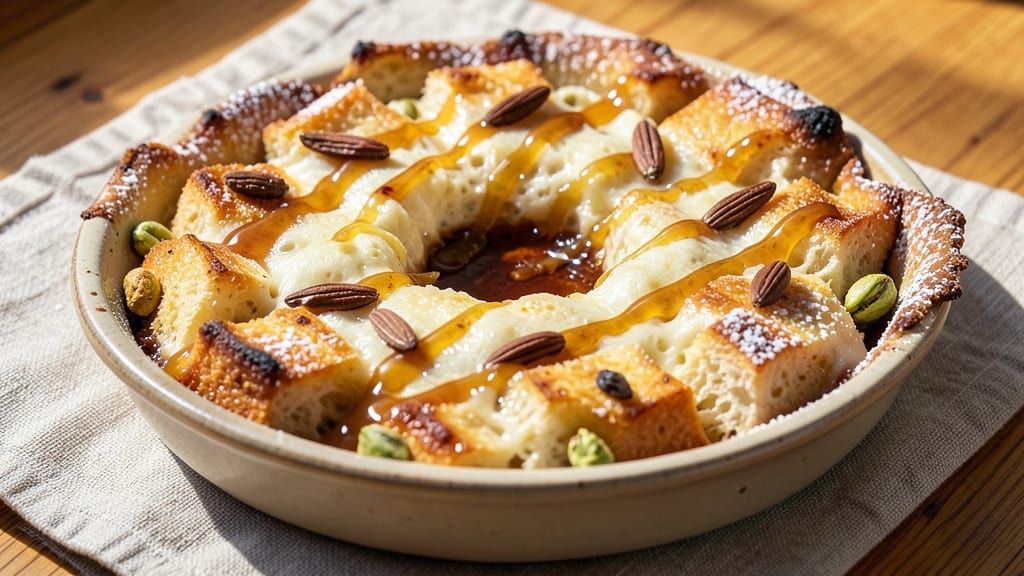
This Arabic bread pudding recipe transforms simple ingredients into a fragrant, spice-infused dessert with a crispy za'atar crust—perfect for cozy gatherings or special occasions. The blend of warm spices like cinnamon and cardamom, paired with the earthy notes of za'atar, creates a flavor profile that bridges tradition and comfort.
Unlike classic bread pudding, this version incorporates Middle Eastern touches that elevate it beyond the ordinary.
What sets this recipe apart is the two-stage baking process: first, the bread soaks up a rich custard infused with rose water and orange blossom, while the crust gets its signature crunch from a za'atar-spiced topping.
The result is a dessert that’s rich yet light, with a caramelized exterior that contrasts beautifully against the custardy interior. It’s the kind of dish that feels indulgent but still balanced—ideal for those who love warm spices and textural surprises.
The best part? This pudding tastes even better the next day, making it perfect for meal prep or hosting. Serve it warm with a drizzle of honey or a sprinkle of pistachios for extra crunch.
Whether you’re introducing Middle Eastern flavors to your dessert repertoire or simply craving something comforting, this recipe delivers restaurant-quality results with minimal effort.
Ready to bake? Let’s dive into the steps—from soaking the bread to achieving that perfectly crispy crust—so you can enjoy a taste of the Middle East in every bite.
Ingredients for arabic bread pudding
Sixteen ingredients blend Middle Eastern warmth with comforting textures for this standout dessert.
| Ingredient | Amount | Notes |
|---|---|---|
| Stale Baguettes 🥖 | 1 ½ lb | Day-old, crusty bread preferred |
| Large Eggs 🥚 | 6 whole | Room temperature for best mixing |
| Heavy Cream 🥛 | 1 ½ cups | Full-fat for rich texture |
| Whole Milk 🥛 | 1 cup | Warmed slightly for custard |
| Granulated Sugar 🍚 | 1 cup | Adjust to taste for sweetness |
| Rose Water 🌹 | 1 tsp | High-quality, pure extract |
| Orange Blossom Water 🍊 | ½ tsp | Substitute with extra rose water |
| Ground Cinnamon 🌿 | 1 tbsp | Freshly ground preferred |
| Ground Cardamom 🌿 | ½ tsp | Toasted for deeper flavor |
| Za'atar Spice Blend 🌶️ | ¼ cup | Homemade or store-bought |
| Unsalted Butter 🧈 | ½ cup | Melted, for crust richness |
| Honey 🍯 | 2 tbsp | For drizzling or crust sweetness |
| Vanilla Extract 🌸 | 1 tsp | Pure vanilla bean extract |
| Salt 🧂 | ½ tsp | Fine sea salt preferred |
| Toasted Pistachios 🌰 | ¼ cup | Chopped, for garnish |
The bread is the foundation—day-old baguettes from a French bakery or your local grocery store's bakery section work best. Look for loaves with a crisp crust and soft interior; they'll soak up the custard perfectly. Za'atar is non-negotiable for that signature earthy flavor—pick a blend with sesame seeds and sumac at specialty stores like Whole Foods or Middle Eastern markets. If you can't find it, make your own by mixing dried thyme, sumac, sesame seeds, and salt. The rose water and orange blossom water add that authentic floral note; grab them at international markets or online retailers like Penzeys Spices—they're more potent than you'd think, so start with half the amount if you're unsure.
No za'atar? Mix equal parts dried thyme, sesame seeds, and sumac for a close approximation. Running out of rose water? Orange blossom water alone works, or even a splash of vanilla extract in a pinch. The pistachios can be swapped for toasted almonds or walnuts if you're not a fan. For a richer custard, add an extra egg yolk, but keep the texture light by reducing the milk slightly. The cinnamon and cardamom should be freshly ground—pre-ground spices lose their punch quickly. If you're feeling adventurous, toast the whole spices in a dry pan for 30 seconds before grinding for an even deeper flavor. The butter is crucial for that crispy crust, so don't skimp—European-style butter like Plugrá melts beautifully.
This pudding is a make-ahead masterpiece: assemble it the night before and bake in the morning for maximum flavor development. Store leftovers in an airtight container in the fridge for up to 4 days, though it's best enjoyed within 2 days for optimal texture. Reheat in a 350°F oven for 15 minutes to restore that crispy crust. The za'atar crust can be made separately and stored in the freezer for up to 3 months—just press it onto cold pudding before baking. For serving, a drizzle of honey and extra pistachios takes it to the next level. Portion into individual ramekins for elegant presentation, or serve family-style with a sprinkle of powdered sugar for a restaurant-worthy finish.
Why You'll Love This Recipe
- No-Waste Magic: I swear by this recipe for turning yesterday’s baguette into something golden. No food waste here—just cut, soak, and bake. That crust? Perfectly crispy, not rubbery.
- Creamy Caramel Dream: The heavy cream and milk make this pudding dangerously rich—like a cross between a custard and a caramel slice. The sugar? It doesn’t just sweeten; it turns the edges into a buttery, crackly blanket.
- Weeknight or Holiday: Make it for breakfast when you’re running late, or serve it warm at dinner when unexpected guests show up. The same simple mix works for both—just adjust the sugar if you’re feeling fancy.
- Budget Breakfast Win: Eggs, milk, and stale bread? That’s it. No specialty ingredients, no markup. Plus, leftovers reheat like a dream—my kids beg for it the next day, and I don’t even pretend to hide the extra slice.
Step-by-step instructions for Arabic bread pudding
Transform stale baguettes into a fragrant, spice-kissed masterpiece with this foolproof method.
Prepare the Crusty Bread Base
Preheat your oven to 350°F and line a 9x13-inch baking dish with parchment paper, leaving an overhang for easy removal. Cut the 1.5 lb stale baguettes into 1-inch cubes, discarding any hard crusts that won't break down. Spread them evenly in the prepared dish, creating a single layer that covers the bottom completely.
Melt the 0.5 cup unsalted butter in a small saucepan over low heat, then brush it generously over the bread cubes using the back of a spoon. This step is crucial—it creates that signature crispy crust while keeping the interior tender. Sprinkle 0.25 cup za'atar spice blend evenly over the buttered bread, pressing it gently into the cubes so it adheres. This aromatic blend will infuse every bite with its signature nutty, herby complexity.
Whisk the Spiced Custard Mixture
In a large mixing bowl, whisk together the 6 whole large eggs, 1.5 cups heavy cream, 1 cup whole milk, 1 cup granulated sugar, 1 tsp rose water, 0.5 tsp orange blossom water, 1 tbsp ground cinnamon, 0.5 tsp ground cardamom, 1 tsp vanilla extract, and 0.5 tsp salt until completely smooth and well combined. The mixture should be pale yellow with no visible streaks of flour or egg.
Here's where the magic happens: warm the 1 cup whole milk slightly (just until it reaches body temperature) before adding it to the egg mixture. This prevents scrambling and ensures a silky, custard-like texture. The floral notes from the rose and orange blossom waters will mingle beautifully with the warm spices, creating that unmistakable Arabic flavor profile.
Assemble and Bake the Pudding
Pour the custard mixture evenly over the prepared bread cubes, pressing down gently with a spatula to ensure the bread soaks up the liquid completely. The bread should be fully submerged but not swimming in custard—you want every cube to absorb that rich, spiced mixture. Let the pudding sit at room temperature for 15 minutes to allow the bread to begin absorbing the custard before baking.
Bake in the preheated oven for 40-45 minutes until the top is golden brown and the center is just set (it should still have a slight wobble when gently shaken). The edges should pull away from the baking dish slightly, indicating it's developed that perfect crispy crust. If the top browns too quickly, tent loosely with aluminum foil to prevent over-browning while allowing the center to finish cooking.
Finish with Honey and Garnish
Remove the pudding from the oven and let it cool for 10 minutes before drizzling with 2 tbsp honey arranged in an artistic zigzag pattern. The honey will caramelize slightly from the residual heat, adding another layer of sweetness and visual appeal. While still warm, sprinkle the 0.25 cup toasted pistachios evenly over the top, pressing them gently into the honey so they adhere.
Serve immediately while still warm—this pudding is at its most luxurious when the custard is just set and the crust is perfectly crisp. The contrast between the golden, za'atar-kissed crust and the creamy, spice-infused custard is what makes this dish truly special. Each bite delivers that comforting balance of warmth, sweetness, and aromatic complexity that defines Arabic comfort food.
Pro Tips For Making Arabic Bread Pudding
- Soak the Bread Properly: Drown those baguette slices in the milk-cream mix for at least 30 minutes—no rushing. I learned this the hard way when my first attempt came out dry and crumbly. The bread needs time to absorb enough liquid to turn into that luscious, custardy texture, not a sad, soggy mess.
- Whisk Eggs Cold: Whisk your eggs straight from the fridge into the warm milk mixture—this prevents scrambling. After trying to salvage a batch of curdled eggs, I now swear by this: cold eggs + gradual warmth = silky perfection. Let the heat of the oven do the work, not your whisk.
- Skip the Overmixing: Stir the batter just until the bread is fully coated—no need to beat it like a smoothie. Overmixing introduces too much air, which can make the pudding dense or cause it to collapse in the oven. Think "gentle fold," not "whip into submission."
- Bake Until Golden: Pull the pudding out when the top is deep golden, not just pale brown—this guarantees a caramelized crust. I used to take it out too soon, thinking it would keep baking, but that’s how you end up with a sad, undercooked center. A toothpick test works, but so does trusting your eyes for that perfect hue.
Serving suggestions for this recipe
Warm Spiced Coffee
Pair your Arabic bread pudding with a steaming cup of Turkish coffee or Arabic qahwa, both of which complement the dessert’s warm spices beautifully. The strong, slightly bitter notes of Turkish coffee cut through the richness, while the cardamom and saffron in qahwa enhance the pudding’s aromatic profile.
I love serving it with a side of date paste for dipping—it’s a classic pairing in Middle Eastern culture and adds a natural sweetness that balances the za'atar crust. 🌟
Fresh Fruit Platter
A vibrant platter of pomegranate seeds, sliced figs, and persimmons adds freshness and color to your dessert spread. The tartness of pomegranate and figs contrasts the pudding’s sweetness, while the honeyed notes of persimmons mirror the dessert’s honey drizzle.
Arrange the fruit artfully on a wooden board or slate platter to create an inviting presentation. For extra flair, sprinkle edible rose petals over the fruit—it ties back to the rose water in the pudding. ✨
Minty Yogurt Dip
Serve the pudding with a small bowl of thick Greek yogurt mixed with fresh mint, a pinch of salt, and a drizzle of honey. This cooling dip balances the warm spices and adds a refreshing contrast to each bite.
I like to serve it in a clay pot or copper bowl for an authentic Middle Eastern touch. For an extra layer of flavor, add a few drops of orange blossom water to the yogurt—it echoes the pudding’s floral notes perfectly. 💛
Spiced Tea Trio
Offer a trio of Arabic teas to round out the experience: mint tea, hibiscus tea (karkadé), and vermicelli tea (sha’i). The bright, herbal notes of mint tea cleanse the palate, while the tartness of hibiscus tea adds a refreshing contrast.
Vermicelli tea, with its nutty, slightly sweet flavor, complements the pudding’s caramelized crust. Serve the teas in small glass teapots with matching cups for an elegant touch. 🍵
Nutty Crumble Topping
For an interactive serving experience, prepare a warm nut crumble to sprinkle over individual portions just before serving.
Mix 1 cup chopped toasted almonds, ½ cup crushed pistachios, 2 tbsp melted butter, 2 tbsp brown sugar, and 1 tsp cinnamon, then bake at 350°F for 8-10 minutes until golden.
The crunchy texture and nutty flavors elevate the pudding’s creaminess, and guests can customize their servings. Store the crumble in an airtight container for up to 5 days for quick reheating. 🌰
Creamy Whipped Cream
Finish the dessert with a dollop of whipped cream lightly sweetened with vanilla sugar and a pinch of cardamom. The lightness of the cream contrasts the pudding’s richness, while the cardamom ties into the dessert’s spiced profile.
For a modern twist, infuse the cream with rose water or orange blossom water for a floral touch. Serve in a squeeze bottle for easy drizzling over each portion—it adds a professional, restaurant-style finish. 🥛
Nutrition facts
Frequently asked questions
What kind of bread works best for this Arabic bread pudding?
Use day-old baguettes or crusty Italian bread for the best texture—they soak up custard perfectly while keeping a slight chew. Avoid soft white bread or brioche, as they turn mushy. If you can't find baguettes, French bread or even a sturdy sourdough work well too.
Can I make this pudding without rose water or orange blossom water?
Yes! If you don't have these ingredients, use 1 tsp vanilla extract instead—they'll still make it delicious. For extra authenticity, try a tiny pinch of saffron threads steeped in warm milk (just 2-3 threads). The floral notes are special but not mandatory.
How do I get that perfect crispy za'atar crust?
Key steps: Melt the butter thoroughly and brush it generously on the bread cubes before adding za'atar. Bake at 350°F for 40-45 minutes until the edges pull away from the pan. For extra crispiness, broil for 1-2 minutes at the very end (watch closely!).
Can I make this ahead of time?
Assemble the pudding up to 24 hours ahead and refrigerate. Bake straight from the fridge (add 5-10 minutes to baking time). It actually tastes better the next day as flavors meld. For make-ahead servings, reheat at 350°F for 15 minutes to restore crispiness.
What if my pudding comes out too custardy or not set?
This usually means underbaking. Check doneness by inserting a knife—it should come out clean with slight resistance. If needed, bake 5-10 more minutes at 325°F (lower temp prevents burning). For extra stability, chill the baked pudding 1 hour before serving—it firms up beautifully.