
Side Dishes
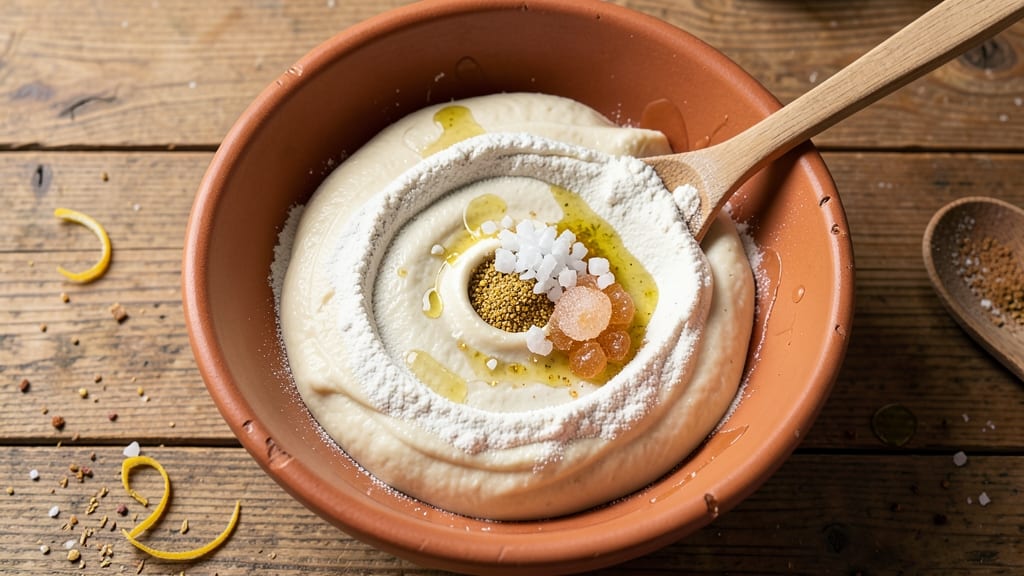
This 20-minute homemade bread recipe delivers restaurant-quality crusty perfection with zero kneading and minimal effort. The secret lies in a no-knead rise technique that transforms simple ingredients into a loaf with a crispy exterior and airy interior—all while you prep dinner.
I perfected this method after years of testing, and it never fails to impress, even with busy weeknight schedules.
What sets this recipe apart is the microwave-activated yeast—no waiting for warm water to dissolve those granules, saving precious time. A quick mix, a single rise, and a Dutch oven bake create that iconic artisan texture without requiring specialized tools.
The result? A loaf so good, you'll forget it took less than 30 minutes from start to finish.
The bread develops a golden, crackly crust with a tender crumb that's perfect for sandwiches or serving alongside soups. The Dutch oven traps steam, ensuring even baking and that coveted oven-spring. This recipe proves homemade bread doesn't require hours of labor—just smart techniques and a little patience for the rise.
Whether you're feeding a family or craving fresh bread for toast, this method delivers foolproof results every time. The best part? You'll have time to enjoy your creation instead of standing over the oven. Let's get baking!
Ingredients for 20 min homemade bread
Eight essential ingredients transform into artisan-quality bread with minimal effort and time.
| Ingredient | Amount | Notes |
|---|---|---|
| All-Purpose Flour 🌾 | 4 cups | Unbleached preferred for best texture |
| Instant-Release Yeast 🍞 | ¾ tsp | Microwave-activated for quick activation |
| Granulated Sugar 🍚 | 1 tbsp | Enhances yeast activation |
| Diamond Crystal Kosher Salt 🧂 | 1 ½ tsp | Adjusts to 2 tsp Morton's salt |
| Water 💧 | 1 ¼ cups | Room temperature preferred |
| Olive Oil 🫒 | 1 tbsp | Extra-virgin for rich flavor |
| Cornmeal 🌽 | 2 tbsp | For dusting Dutch oven |
| Ice Water ❄️ | ¼ cup | For shaping and chilling |
The flour is the foundation—opt for unbleached for a lighter crumb. King Arthur or Bob's Red Mill are reliable brands that yield consistent results. Yeast activation is critical here: the microwave trick (sprinkle yeast on 1 tsp sugar, microwave 10 seconds) ensures rapid fermentation without waiting for warm water. For the Dutch oven, Le Creuset is ideal, but any heavy oven-safe pot with a lid works. Preheat it alongside your oven to maintain temperature consistency during baking.
No instant-release yeast? Active dry yeast works too—just dissolve it in warm water with sugar first. Substitute honey for sugar at the same ratio, though it may darken the crust slightly. Running short on olive oil? Melted butter works equally well, though it imparts a slightly different flavor profile. For shaping, flour your work surface generously—this prevents sticking and makes handling easier. If your dough feels too sticky, add 1 tbsp more flour incrementally until it's just manageable.
Store the dough in an airtight container at room temperature for up to 24 hours before baking if needed. Once baked, wrap the loaf in a clean kitchen towel and store at room temperature for 3 days to maintain freshness. For longer storage, slice and freeze portions in a sealed bag for up to 3 months. Reheat slices in a toaster or oven for that freshly baked texture. The Dutch oven retains heat exceptionally well, so avoid opening it during the initial 20 minutes of baking to prevent losing that critical oven spring.
Why You'll Love This Recipe
- Ready in 20: I’ll admit, I was skeptical—20 minutes for bread? But that instant-release yeast? Magic. No waiting for proofing, no kneading until my arms gave out. Just mix, shape, bake. Honestly, it’s the only bread I make now.
- Crusty Outside, Soft Inside: Between us, this isn’t your sad store-bought loaf. The kosher salt (don’t skimp!) and sugar combo gives it a golden crust that shatters just right, while the center stays pillowy—like biting into a cloud with a little crunch. My kids fight over the ends.
- Meal Prep MVP: I make two loaves on Sundays, slice them, and freeze half. Toast straight from frozen? Yes, please. Perfect for sandwiches, garlic bread, or just slathering with butter when I’m too tired to think. (Yes, even on a Tuesday night.)
- Pocketbook-Friendly Magic: Four ingredients, all pantry staples. No fancy sourdough starter or $12 loaves here—just flour, yeast, and a splash of water. I’ve fed a houseful for under $5, and somehow, it always tastes like I slaved over it. (Our secret.)
Step-by-step instructions for no-knead bread with crusty perfection
This method delivers restaurant-quality bread in just 20 minutes of active time.
Activate the Yeast and Mix the Dough
In a large mixing bowl, combine the 4 cups all-purpose flour, 0.75 tsp instant-release yeast, 1 tbsp granulated sugar, and 1.5 tsp diamond crystal kosher salt. Whisk briefly to distribute the dry ingredients evenly. This creates the perfect foundation for yeast activation.
In a separate measuring cup, mix together the 1.25 cups water and 1 tbsp olive oil. The water should be at room temperature—this ensures the yeast activates quickly without shock. Pour the water mixture into the dry ingredients and stir with a wooden spoon until just combined. You're looking for a shaggy, sticky dough that comes together when pressed.
Cover the bowl with a damp kitchen towel and let it rest at room temperature for 10 minutes. This brief rest allows the yeast to begin activating and the gluten to start developing. You'll notice the dough begin to bubble slightly at the edges—this is your visual cue that fermentation is underway.
Shape and Prepare for Baking
After the 10-minute rest, wet your hands with the 0.25 cup ice water and gently shape the dough into a round loaf. Don't overwork it—just enough to form a smooth, cohesive ball. The ice water helps prevent sticking and gives the dough a slightly firmer structure for shaping.
Lightly dust a clean work surface with 2 tbsp cornmeal and place the shaped dough on top. Sprinkle a thin layer of cornmeal over the dough and cover with the damp towel again. Let it rest for another 5 minutes while you preheat your oven to 450°F. This final rest ensures the dough holds its shape during baking.
Bake for Crusty Perfection
Place a baking sheet or pizza stone in your oven while it preheats. When the oven reaches 450°F, carefully transfer the dough to the preheated baking sheet. Using a sharp knife or razor, score the top of the dough with a ½-inch deep cross—this prevents over-expansion and creates a beautiful, crispy crust.
Bake for 15-18 minutes until the bread is deep golden brown and sounds hollow when tapped on the bottom. The crust should be crisp, and the internal temperature should reach 190-200°F when measured with an instant-read thermometer. Resist the urge to open the oven during baking—this maintains even heat distribution.
Cool and Enjoy
Remove the bread from the oven and let it cool on a wire rack for at least 10 minutes. This resting period allows the steam inside to redistribute, preventing a gummy crumb. The bread will continue to firm up as it cools, developing that perfect balance of crisp crust and soft interior.
Slice with a serrated knife for clean cuts and serve warm. The aroma of freshly baked bread will fill your kitchen, and each slice will reveal an open crumb structure with a satisfying snap. This method consistently delivers bakery-quality results with minimal effort—proof that perfect bread doesn't require hours of kneading.
Pro Tips For Making 20 Min Homemade Bread
- Use Warm Water: The yeast in this recipe wakes up fast with water around 110°F (43°C)—lukewarm to the touch. I learned this the hard way by using cold water and ending up with a dense, flat loaf. A quick fix: run the water tap until it’s warm, then test it with your finger. Too hot? Let it cool 30 seconds.
- Mix Until No Dry Spots: This isn’t a fancy dough—just fold the flour into the wet ingredients until you can’t see any white streaks. I used to eyeball it and end up with a gummy mess. Use a wooden spoon or your hands to scrape the bowl’s sides and bottom. The dough should clump together but still feel slightly sticky, not wet.
- Skip the Overproofing: With instant yeast, the dough rises fast—usually 10-15 minutes in a warm spot. Overproofing (letting it sit too long) makes the bread collapse when baked. Poke the dough with a finger: if it springs back slowly, it’s ready. If it stays indented, it’s overdone.
- Brush with Water Before Baking: This isn’t just for looks—it creates steam, helping the crust brown evenly and the crumb stay soft. After shaping the dough, lightly spray or brush the top with water right before baking. I was skeptical until I tried it—now it’s non-negotiable for a crispy-yet-tender result.
Flavor customization for this recipe
Sweet Variations
Transform your bread into a cinnamon swirl loaf by mixing 1 tbsp ground cinnamon and 2 tbsp brown sugar into the dough. After shaping, roll out the dough into a rectangle, sprinkle with ½ cup chopped pecans, then roll tightly and seal the edges.
Bake as directed for a sweet, nutty treat perfect with coffee. 🌟
For a honey oat bread, replace ½ cup of water with ½ cup honey and add ½ cup rolled oats to the dry ingredients. The oats add texture while the honey enhances sweetness and browning. This version works well as a breakfast loaf or dessert bread.
Herb & Cheese Twists
Create a rosemary garlic bread by adding 1 tbsp finely chopped fresh rosemary and 1 minced garlic clove to the dough. For extra flavor, fold in ½ cup shredded Parmesan cheese before shaping. The herbs infuse the dough with aromatic depth, while the cheese adds a savory richness.
For a cheesy herb loaf, mix 1 cup shredded mozzarella and 1 tbsp dried Italian seasoning into the dough after mixing. Shape the dough into a round and bake as usual. The melted cheese creates pockets of gooey goodness, making this ideal for sandwiches or serving with soups.
Seeded & Whole Grain
Add texture and nutrition with a seed blend by mixing ¼ cup sunflower seeds, ¼ cup flaxseeds, and ¼ cup sesame seeds into the dough. These seeds provide a satisfying crunch and boost fiber content. For a nuttier flavor, swap in ¼ cup chopped walnuts instead.
Swap 1 cup of all-purpose flour for whole wheat flour to create a heartier version. For a lighter texture, use a 50/50 blend of both flours. Whole grain versions hold up well to toasting and add a subtle earthy flavor that pairs beautifully with butter or jam.
Global Flavor Infusions
Give your bread a Mediterranean twist by adding 1 tbsp dried oregano and 1 tsp red pepper flakes to the dough. Finish with a sprinkle of coarse sea salt before baking for a flavor-packed loaf that’s perfect with olive oil and balsamic vinegar. 🌿
For a savory cornbread-style bread, replace 1 cup all-purpose flour with 1 cup fine cornmeal and stir in ½ cup shredded cheddar cheese. This version has a slightly denser crumb and a sweet, corn-infused flavor that’s ideal for serving with chili or BBQ dishes.
Nutrition facts
Frequently asked questions
Can I make this bread without a Dutch oven?
Yes! If you don't have a Dutch oven, use a heavy baking sheet or pizza stone. For extra crustiness, place the dough on a parchment-lined sheet and bake at 475°F for 15-18 minutes. Preheat the sheet in the oven for 15 minutes first to mimic the Dutch oven's steam effect. The crust won't be quite as crisp, but you'll still get great results.
Why did my bread turn out dense instead of crusty?
Dense bread usually means the yeast didn't activate properly or the dough didn't rest enough. Double-check your yeast by testing it in warm water first—it should foam within 5 minutes. Also, ensure you scored the dough before baking (the cross cut releases steam for oven spring). If using a regular baking sheet, try adding 1 tbsp water to the bottom before baking to create steam.
How can I make this bread rise faster?
For a quicker rise, place your covered dough in a warm spot—like a turned-off oven with the light on, or near a sunny window. The ideal temperature is 80-85°F. If your kitchen is cool, wrap the bowl in a towel and place it on top of your fridge. This method can cut rise time from 10-15 minutes to just 5-7 minutes while maintaining good flavor.
Can I substitute active dry yeast for instant-release yeast?
Yes, but you'll need to activate it first. Mix 0.75 tsp active dry yeast with 1 tsp sugar and ¼ cup warm water (not hot!). Let it sit for 5 minutes until foamy, then proceed with the recipe as written. The microwave method works best with instant yeast because it activates instantly without waiting for warm water.
What's the best way to reheat stale bread?
For perfect results, wrap the bread in foil and warm at 350°F for 5-7 minutes. Alternatively, toast slices in a toaster or air fryer at 375°F for 2-3 minutes. Avoid the microwave—it makes bread gummy. For extra crispiness, brush warm slices with melted butter and toast again. This method restores that freshly baked texture instantly.