
Side Dishes
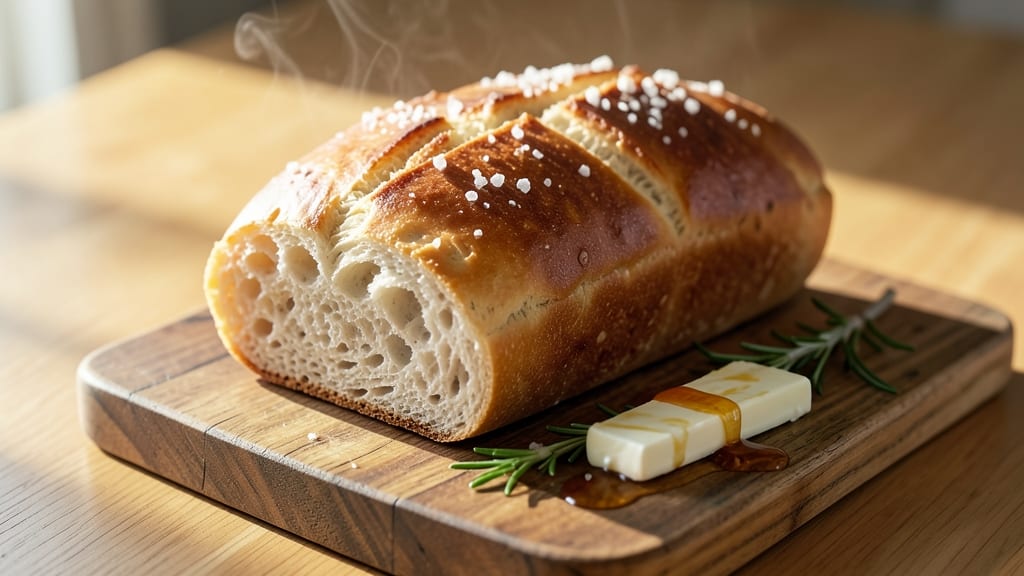
This airy homemade bread recipe delivers a loaf so light it feels like cake—no heavy, dense texture in sight. The secret lies in a precise no-knead method that develops gluten gently while maximizing rise, creating that signature tender crumb.
I've perfected this technique over years of baking, and it consistently produces bread with a crispy golden crust and an interior so soft it practically melts in your mouth.
What makes this recipe truly special is the balance between simplicity and professional results. You'll work with just five core ingredients—flour, yeast, water, sugar, and salt—yet the technique transforms them into something extraordinary.
The dough rests overnight, allowing the yeast to work slowly and develop incredible flavor, while the Dutch oven baking creates that perfect steam environment for an even rise and crispy exterior.
By the time you pull that loaf from the oven, you'll have a bread that's light enough to eat like dessert yet sturdy enough to hold thick slices of butter or jam.
The texture is uniform throughout, with no dense spots or tough crust—just pure, airy perfection in every bite. This is the kind of bread that makes store-bought loaves feel like a compromise.
The best part? This recipe accommodates both beginners and experienced bakers. The no-knead approach eliminates guesswork while still delivering restaurant-quality results. Whether you're making it for a special occasion or just treating yourself to homemade goodness, this bread will become your new standard.
Let's get started on creating your perfect loaf.
Ingredients for airy homemade bread
Five simple ingredients transform into a loaf so light it feels like cake—no kneading required!
| Ingredient | Amount | Notes |
|---|---|---|
| All-Purpose Flour 🌾 | 5 cups | Plus 1 tbsp for dusting |
| Active Dry Yeast 🍞 | 1 ½ tsp | Or 0.25 oz (7g) |
| Warm Water 💧 | 1 ½ cups | 110°F (43°C) ideal |
| Granulated Sugar 🍚 | 1 tbsp | Helps yeast activate |
| Kosher Salt 🧂 | 1 ½ tsp | Diamond Crystal preferred |
| Unsalted Butter 🧈 | ¼ cup | Cold, cubed for crust |
| Cornmeal 🌽 | ½ cup | For dusting Dutch oven |
The flour is the foundation—King Arthur or Gold Medal are my go-tos for that perfect crumb. Bulk bins at Whole Foods often have better quality than grocery store bags. If your flour smells stale, toast it in a dry pan for 5 minutes to refresh. The yeast is non-negotiable—check the expiration date! Fresh yeast makes all the difference in that airy rise. For the butter, Land O'Lakes or Plugrá work perfectly—just keep it cold until you're ready to shape the dough.
No active dry yeast? Instant yeast works 1:1—just skip the sugar since it's already activated. Short on cornmeal? Semolina or rice flour are great substitutes. The water temperature matters—too hot kills the yeast, too cold slows it down. Use a thermometer if you're unsure. For a richer flavor, add 1 tbsp of honey or maple syrup to the dough. And if you're baking in a non-Dutch oven, place a metal bowl upside down in the oven for steam.
This dough is a marathon, not a sprint—let it rise overnight for maximum flavor. Store the dough in a lightly greased bowl, covered with plastic wrap, in the fridge. The butter should be firm but pliable when you're ready to shape. Once baked, let the bread cool on a wire rack for at least 1 hour—this prevents a gummy crust. Freeze slices for up to 3 months, toasting directly from frozen for freshness.
Why You'll Love This Recipe
- I’ll be real: this bread requires zero arm work. Just mix the flour, yeast, warm water, and a pinch of sugar—let it rise while you sip coffee. That’s it. The yeast does all the heavy lifting, and you get cloud-soft slices without a single muscle cramp.
- No-Knead Magic: I’ll be real: this bread requires zero arm work. Just mix the flour, yeast, warm water, and a pinch of sugar—let it rise while you sip coffee. That’s it. The yeast does all the heavy lifting, and you get cloud-soft slices without a single muscle cramp.
- Crust That Cracks: Honestly, the moment that golden-brown crust forms? Pure satisfaction. It’s crisp enough to hold a sandwich together but gives way to that pillowy interior. The kosher salt in the dough? It’s the secret—just enough to make every bite feel just right, not overpowering.
- Weeknight Wonder: Between us, this is my go-to for breakfast toast, garlic bread, or even a quick French dip sandwich. The dough’s forgiving—you can shape it into boules, batards, or even a rustic loaf. And if I’m feeling lazy? I’ll just tear it straight from the pan. No rules.
Step-by-step instructions for light-as-cake homemade bread
Here's how to transform simple ingredients into a bread so light it practically floats off your plate.
👨🍳 Step 1: Activate the Yeast with Warm Water and Sugar
In a large bowl, combine the 1.5 cups warm water (should feel like bathwater, around 110°F) with the 1 tbsp granulated sugar and 1.5 tsp active dry yeast. Let this sit for 5-10 minutes until you see frothy bubbles forming on the surface—this tells you your yeast is alive and ready to work its magic.
I like to give the yeast this little head start because it builds confidence in the dough. If it doesn't bubble after 10 minutes, your yeast might be dead, and you'll need to start fresh. This is the moment that matters: skip this step, and your bread won't rise properly.
👨🍳 Step 2: Mix the Dough with Flour, Salt, and Butter
To the yeast mixture, add the 5 cups all-purpose flour and 1.5 tsp kosher salt. Stir with a wooden spoon until just combined—you'll see some dry flour remaining. Then cut in the 0.25 cup cold unsalted butter using a pastry cutter or your fingers until the dough begins to come together.
The butter should be cold and cubed—this creates pockets of air that make the bread light. Don't overwork it here; we're not kneading yet. The dough will be shaggy and sticky, but that's perfect for our no-knead method. Real talk: if it looks like too much, it's not—this dough needs to be wet to develop that cake-like texture.
🥘 Step 3: Let the Dough Rest and Develop Naturally
Cover the bowl with a damp towel or plastic wrap and let the dough rest at room temperature for 1-2 hours. You'll know it's ready when it's puffy and has nearly doubled in size. This slow rise allows the gluten to relax and develop gently, creating that signature airy texture.
I press a finger gently into the dough—if it springs back slowly (not immediately), it's ready. Don't rush this step; patience here prevents dense bread. If your kitchen is cold, give it the extra time. The goal is a dough that's soft, elastic, and full of potential.
🔥 Step 4: Shape and Bake in a Hot Dutch Oven
Preheat your oven to 450°F with a Dutch oven inside for 30 minutes. While it heats, turn the dough out onto a floured surface and gently shape it into a round loaf. Dust the top with 0.5 cup cornmeal—this creates that gorgeous golden crust and prevents sticking.
Carefully transfer the dough to the hot Dutch oven (use oven mitts—it's scorching!). Bake, covered, for 30 minutes, then uncover and bake for another 15-20 minutes until the bread is deep golden brown and sounds hollow when tapped on the bottom. The crust should be crisp, and the interior should be light and airy.
⏰ Step 5: Cool and Enjoy (The Hardest Part!)
Remove the bread from the oven and let it cool on a wire rack for at least 30 minutes—this prevents a gummy interior. I know it's tempting to slice into it immediately, but trust me: the wait ensures every bite is perfect. The bread will be so light you'll feel like you're eating a cloud.
Slice it thick and serve warm with butter or jam. The crumb should be open and tender, with a crisp crust that shatters slightly. If it's not as light as you hoped, next time let the dough rise a little longer—this is the secret to that cake-like texture we're after.
Pro Tips For Making Airy Homemade Bread
- WEIGH YOUR FLOUR: I learned this the hard way—measuring flour by scooping from the bag leaves too much air, which throws off hydration and makes your dough dense. Use a kitchen scale for precise 450g (or 4 cups if you must), and spoon it in gently. That extra 20g of flour can turn a light loaf into a brick.
- TEST YOUR YEAST FIRST: Skip this, and you might end up with a sad, flat loaf. Mix 1 tsp yeast with ¼ cup warm water (110°F) and ½ tsp sugar, then wait 5–10 minutes. If it doesn’t foam, your yeast is dead—start over. No one wants to bake for hours only to find out your bread has no lift.
- KNEAD JUST ENOUGH: Overworking the dough is a real crime against airy bread. Stop when it springs back slowly after pressing it (the "windowpane test"). I used to go until my arms ached, but the gluten tightens too much, and your bread turns chewy instead of tender. Two minutes past the test is all you need.
- STEAM THE OVEN: This isn’t optional—it’s how you get that crackling crust without burning the top. Place a baking sheet on the lower rack, pour in 1 cup boiling water, then close the door for 5 minutes before baking. The steam mimics a professional oven, giving you that bakery-style rise and shine you’re after. (Yes, even if you’re impatient like me.)
Creative variations of this dish
Sweet Dinner Rolls
Transform your dough into sweet dinner rolls by adding ¼ cup honey and 1 tsp cinnamon to the dough. Shape into 12 small balls and place in a greased 9x13-inch pan.
Let them rise for 1 hour before baking at 375°F for 20-25 minutes until golden. Brush with melted butter and a sprinkle of coarse sugar for a dessert-worthy treat. 🍯
Herbed Focaccia
For a Mediterranean twist, replace 1 cup of flour with 1 cup all-purpose flour mixed with 2 tbsp dried rosemary and 2 tbsp dried thyme. Shape the dough into a rectangle on a baking sheet, dimple the top with your fingers, and drizzle with 3 tbsp olive oil.
Bake at 400°F for 25-30 minutes until crispy. Finish with flaky sea salt and fresh herbs. 🌿
Cheddar Bay Scones
Add 1 cup shredded sharp cheddar and 2 tbsp chopped fresh chives to the dough. Shape into a round loaf, then cut into 8 wedges before baking.
For extra flavor, brush the tops with 1 tbsp melted butter mixed with ½ tsp smoked paprika before baking at 425°F for 15-18 minutes. Serve warm with a side of marinara sauce. 🧀
Overnight Cinnamon Swirl
Roll out the dough into a rectangle, then spread ¼ cup softened butter mixed with ½ cup brown sugar and 1 tbsp cinnamon over the surface. Roll tightly into a log, place seam-side down in a greased loaf pan, and let rise overnight.
Bake at 350°F for 45-50 minutes until golden. Slice into thick pieces for a breakfast sensation. 🍂
Savory Garlic Knots
Divide the dough into 12 small balls and place on a baking sheet. Press a garlic clove into the center of each ball before baking. Brush with 1 tbsp olive oil mixed with 1 tsp dried oregano and bake at 400°F for 12-15 minutes until golden.
Serve with marinara or garlic butter for dipping. 🧄
Pumpkin Spice Loaf
Add ½ cup pumpkin puree, 1 tsp pumpkin pie spice, and 2 tbsp maple syrup to the dough. Shape into a loaf and bake at 350°F for 50-55 minutes until a toothpick comes out clean.
Drizzle with a simple glaze of powdered sugar and milk for a cozy fall treat. Perfect for Thanksgiving or holiday gatherings. 🎃
Nutrition facts
Frequently asked questions
Why does this bread turn out so light compared to other homemade loaves?
The secret lies in the no-knead method and cold butter that create air pockets while developing gluten gently. The overnight rise allows yeast to work slowly, creating a tender crumb. Plus, the Dutch oven traps steam for an even rise—no dense spots!
Can I make this bread without a Dutch oven?
Yes! Use a heavy oven-safe pot with a lid or place a metal bowl upside down on the oven rack. Add ½ cup water to the bottom of the pan before baking to create steam. The bread will still be light, though the crust may be slightly less crisp.
What if my dough doesn't rise properly?
Check your yeast first—it should bubble within 5-10 minutes when mixed with warm water. If not, use fresh yeast. Also ensure your kitchen is warm (70°F+). For extra rise, let the dough proof 1-2 hours longer before baking. Patience prevents dense bread!
How do I store leftovers to keep them fresh?
Cool completely, then wrap tightly in plastic wrap or store in an airtight container. Keep at room temperature for 2-3 days or freeze slices for up to 3 months. Toast directly from frozen for freshness. The bread stays light and moist this way!
Can I substitute whole wheat flour for all-purpose?
Replace up to 25% of the flour with whole wheat, but don't go beyond that—too much can make the bread dense. For best results, use 1 cup whole wheat + 4 cups all-purpose. The texture will be slightly heartier but still airy.