
Side Dishes
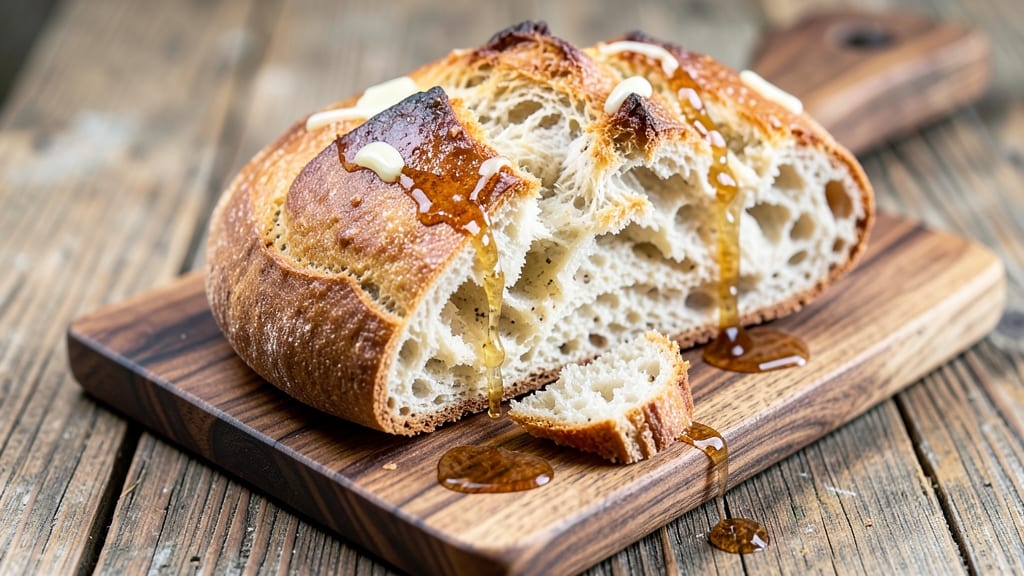
This Alaskan sourdough bread recipe delivers a rustic loaf with a crisp, tangy crust and wild berry swirls that capture the essence of Alaska’s rugged beauty. 🌲 The secret lies in a robust starter culture that thrives in cooler climates, creating a bread with an open crumb and deep flavor—perfect for hearty meals or gifting.
Unlike commercial loaves, this recipe builds flavor through slow fermentation, resulting in a loaf that tastes like home.
The process begins with developing a wild yeast starter using local ingredients like rye flour, which adds nutty depth and improves fermentation resilience. Once your starter is active, the dough comes together with whole grains for texture and a touch of honey to balance the tang.
The wild berry swirl—made from frozen Alaskan berries—adds bursts of fruity sweetness that contrast beautifully with the bread’s earthy crust.
Baking this loaf requires patience, but the results are worth it: a golden-brown crust with a satisfying crunch, a soft yet airy interior, and those signature berry swirls peeking through.
The cold proofing step ensures a lighter crumb and better rise, while scoring the loaf before baking creates that iconic open-top look. This isn’t just bread—it’s a labor of love that tastes like the Alaskan wilderness.
Whether you’re a seasoned baker or new to sourdough, this recipe breaks down each step clearly, from starter maintenance to troubleshooting common issues like overproofing. The final loaf keeps well for days, making it ideal for meal prep or sharing with neighbors.
Let’s get started on your first batch—your kitchen will smell like Alaska in minutes.
Ingredients for alaskan sourdough bread
Four cups flour kickstarts this Alaskan sourdough with wild berry swirls and a tangy crust that smells like home.
| Ingredient | Amount | Notes |
|---|---|---|
| Unbleached All-Purpose Flour 🌾 | 5 cups | Plus 1 cup for dusting |
| Whole Wheat Flour 🌾 | 1 cup | For nutty depth |
| Active Sourdough Starter 🍞 | 1 cup | 100% hydration, bubbly |
| Rye Flour 🌾 | ½ cup | For starter resilience |
| Granulated Honey 🍯 | ¼ cup | Local preferred |
| Unsalted Butter 🧈 | ½ cup | Cold, cubed |
| Large Eggs 🥚 | 2 whole | Room temperature |
| Sea Salt 🧂 | 1 ½ tsp | Fine grain preferred |
| Frozen Alaskan Wild Berries 🍇 | 1 cup | Thawed, mashed slightly |
| Water 💧 | 1 ½ cups | Room temperature |
| Cornmeal 🌽 | ¼ cup | For baking sheet |
| Sesame Seeds 🌻 | 1 tbsp | Optional topping |
The sourdough starter is the heart of this loaf—rye flour gives it that nutty depth while making it resilient in cooler climates. I always keep mine in the fridge and feed it daily with whole wheat flour and water. For the berries, frozen works perfectly—just thaw and mash them slightly (no need to strain). Trader Joe's has great frozen Alaskan berry mixes if you want to skip the thawing step. The butter should be cold when you add it to the dough—European-style butter like Plugra has higher fat content, which improves crust crispness.
No rye flour? Substitute with extra whole wheat flour—it won't be identical, but you'll still get that rustic flavor. Running short on berries? Blueberries or raspberries work just as well, though they'll be a different color. The honey can be swapped for maple syrup if you prefer, but it adds a distinct flavor. For a lighter loaf, add 0.5 tsp baking soda to the flour mix. And if you're baking in high altitude? Increase the flour by 2 tbsp**—sourdough is forgiving, but altitude changes things.
This dough needs time to develop flavor—let it rest overnight in the fridge if possible. The berry swirl can be prepped ahead and stored in the freezer for up to 2 weeks. Once baked, the loaf keeps well wrapped in a cotton towel for 3-4 days. For a crispier crust, bake it uncovered for the last 5 minutes. And if you're gifting? Slice it warm, wrap in parchment, and tie with twine—everyone will smell it before they see it.
Why You'll Love This Recipe
- No-Knead Magic: I swear by this method—just toss the dough, let it rise, and walk away. The rye flour adds a deep tang that cuts through the sweetness of the honey, while the whole wheat gives it a satisfying heft without requiring me to punch or fold like with regular sourdough.
- Honey-Rye Crunch: That first bite? The crispy crust melts into a chewy center, and the honey glaze caramelizes into something almost buttery. Honestly, I’ve never met a bread that balances sweet and savory this well—especially when you toast it and slather it with salted butter.
- Weeknight Workhorse: Between us, this bread is my go-to for breakfast, lunch, or even a fancy dinner side. Freeze half the loaf and you’ve got a 5-minute toast for mornings when you’re running late. (Yes, even on a Tuesday night.)
- Budget-Friendly Staple: Using pantry staples like unbleached flour and rye means you’re not breaking the bank, and the sourdough starter stretches your dough further than commercial yeast. A single batch feeds my whole family for days—leftovers? More like lifesavers.
Step-by-step instructions for Alaskan sourdough bread with wild berry swirls
Here's how to craft a rustic loaf with a tangy crust and fruity surprises inside.
👨🍳 Step 1: Mix the Dough Base
In a large mixing bowl, combine the 5 cups unbleached all-purpose flour, 1 cup whole wheat flour, 0.5 cup rye flour, 1.5 tsp sea salt, and 0.25 cup granulated honey. Use your hands or a wooden spoon to create wells in the dry ingredients—this helps the wet ingredients incorporate better.
In a separate bowl, whisk together the 1 cup active sourdough starter and 1.5 cups water until smooth. Pour this mixture into the flour wells and stir until everything comes together into a shaggy dough. Add the 2 whole large eggs and 0.5 cup cold cubed unsalted butter, mixing until the butter melts slightly and the dough becomes cohesive.
Transfer the dough to a lightly floured surface and knead for 8-10 minutes until smooth and elastic. You'll know it's ready when it springs back slowly when poked. If it feels too sticky, add 1-2 tablespoons of the reserved flour. This kneading develops gluten, which gives your bread its chewy texture.
🥘 Step 2: Create the Berry Swirl and First Rise
Thaw the 1 cup frozen Alaskan wild berries slightly, then mash them with a fork until they form a chunky jam-like consistency. You want some texture—don't over-blend it into a puree. Spread the dough out on a floured surface into a 12x16-inch rectangle about ½-inch thick.
Spread the mashed berries evenly over the dough, leaving a ½-inch border around the edges. Starting from the long side, tightly roll the dough into a log, sealing the seam. Place the log seam-side down in a lightly greased bowl, cover with a damp towel, and let it rise at room temperature for 1-2 hours or until it's about doubled in size. The berries should be visible through the dough, and the top should look puffy.
🔥 Step 3: Shape and Proof the Loaf
Turn the dough out onto a lightly floured surface and gently shape it into an oval loaf. Place it seam-side up on a parchment-lined baking sheet dusted with 0.25 cup cornmeal—this prevents sticking and adds a rustic texture. Cover loosely with plastic wrap and let it proof for another 30-45 minutes until it's just slightly puffed and springs back slowly when poked.
Preheat your oven to 375°F with a Dutch oven inside for 30 minutes. This step is crucial—it creates steam for that beautiful crust. While the oven preheats, use a sharp knife or razor to score the top of the loaf in a diagonal pattern (about ¼-inch deep). This helps control expansion and gives it that artisanal look.
🔥 Step 4: Bake to Golden Perfection
Carefully transfer the loaf to the preheated Dutch oven, cover tightly, and bake for 30 minutes. Remove the lid and continue baking for another 15-20 minutes until the crust is deep golden brown and the internal temperature reaches 190-200°F when measured with an instant-read thermometer.
Here's the thing—don't open the oven door during the first 30 minutes, or you'll lose steam and get a less crispy crust. The loaf should sound hollow when tapped on the bottom. If the top browns too quickly, tent it loosely with aluminum foil to prevent over-browning.
⏰ Step 5: Cool and Serve with Crunchy Toppings
Remove the bread from the Dutch oven and let it cool on a wire rack for at least 1 hour before slicing. This resting period allows the gluten to relax and the crumb to set properly. The berries will have softened slightly but should still be visible as pockets of fruity goodness throughout.
Before serving, sprinkle the 1 tbsp sesame seeds lightly over the top for a nutty crunch. Slice thickly and serve warm with a pat of the remaining butter or a drizzle of honey. The crust should be crispy and slightly chewy, with a tangy flavor from the sourdough starter and sweet-tart bursts from the Alaskan berries.
Pro Tips For Making Alaskan Sourdough Bread
- PREP STARTER FIRST: Mix your active sourdough starter into the wet ingredients before adding dry flours—this keeps the rye and whole wheat from absorbing too much hydration upfront. I learned this the hard way when my dough turned gummy because the whole wheat soaked up all the water before the starter could do its job.
- WEIGH YOUR WHOLE WHEAT: Whole wheat flour is denser than all-purpose, so scooping it by volume leads to uneven hydration. Use a kitchen scale for the whole wheat portion—even a 5-gram difference throws off the dough’s structure, especially with the rye’s extra moisture demands.
- STOP OVER-KNEADING: This isn’t a baguette—Alaskan sourdough relies on stretch-and-folds, not punishing kneads. Overwork the dough, and the whole wheat will turn mushy. Aim for 3-4 gentle folds per session, and let the starter’s strength do the heavy lifting.
- HONEY LAST, NOT LEAST: Add the granulated honey after the bulk ferment, not during autolyse. It’s sticky stuff, and mixing it in early can gum up the whole wheat’s texture. Sprinkle it lightly over the shaped loaf before baking—it’ll caramelize beautifully without weighing down the crumb.
Health benefits of this recipe
Gut Health Boost
This sourdough bread is a prebiotic powerhouse, feeding the good bacteria in your gut. The fermentation process creates natural probiotics that improve digestion and gut microbiome balance. Studies show sourdough can reduce bloating and support nutrient absorption better than commercial yeast breads. 💪
Whole Grain Benefits
The combination of whole wheat flour and rye flour delivers fiber, B vitamins, and minerals like magnesium and manganese. A single slice provides 4-5 grams of fiber, supporting heart health and steady blood sugar levels. The rye flour adds extra nutrients that help regulate digestion and reduce inflammation.
Natural Preservation
The acidity from fermentation acts as a natural preservative, keeping bread fresher longer than conventional loaves. This means fewer additives and a longer shelf life—perfect for meal prep. The wild berries also contain antioxidants that help combat oxidative stress in your body.
Protein-Rich Crust
Unlike white bread, this sourdough contains high-quality protein from the eggs and whole grains. A serving delivers 8-10 grams of protein, making it a satisfying choice for breakfast or snacks. The butter and eggs also add healthy fats that keep you full longer.
Blood Sugar Balance
The low glycemic index of sourdough (thanks to fermentation) helps stabilize blood sugar levels. The honey and berries add natural sweetness without spiking glucose, making this bread ideal for those monitoring carbohydrate intake. It's a great alternative to refined flour breads.
Alaskan Superfoods
The wild Alaskan berries provide vitamin C, antioxidants, and fiber that support immune function. These berries are often richer in nutrients than their commercial counterparts due to their natural growing conditions. The combination of berries and whole grains makes this bread a nutrient-dense choice for any meal. 🌱
Nutrition facts
Frequently asked questions
How do I know when my Alaskan sourdough starter is ready to use?
Your starter is ready when it's bubbly, doubles in size within 4-6 hours at room temperature, and has a slightly tangy, yeasty aroma. For this recipe, it should be at its peak—look for visible bubbles throughout the mixture and a light, airy texture. If it smells like vinegar, it's overripe; if it's flat, feed it more flour and give it another 12 hours.
Can I substitute the wild Alaskan berries with something else?
Swap the berries for blueberries, raspberries, or even mashed apples for a different flavor profile. Just ensure they're thawed and slightly mashed to maintain the swirl texture. For a savory twist, try mixing in finely chopped sun-dried tomatoes or caramelized onions—the tangy crust will balance the flavors beautifully.
Why did my loaf turn out dense instead of light and airy?
Dense bread usually means the dough didn't ferment long enough or was over-kneaded. Check your starter first—it must be active and bubbly. Also, ensure you gave the dough a full 1-2 hour rise before shaping and proofed it for 30-45 minutes afterward. If your kitchen is cold (below 70°F), extend fermentation times by 30-50%.
How can I store this bread to keep it fresh longer?
Wrap the cooled loaf tightly in a cotton towel or beeswax wrap, then place it in a paper bag to prevent sogginess. Store at room temperature for 3-4 days, or freeze slices for up to 3 months. For extra crispiness, reheat slices in a 350°F oven for 5-7 minutes before serving.
Can I make this recipe without a Dutch oven?
Yes! If you don't have a Dutch oven, bake the loaf on a parchment-lined baking sheet and cover it with a tight metal lid or foil tent during the first 30 minutes to trap steam. For a crispier crust, bake at 400°F instead of 375°F and increase baking time by 5-10 minutes. The texture will be slightly different but still delicious!