
Side Dishes
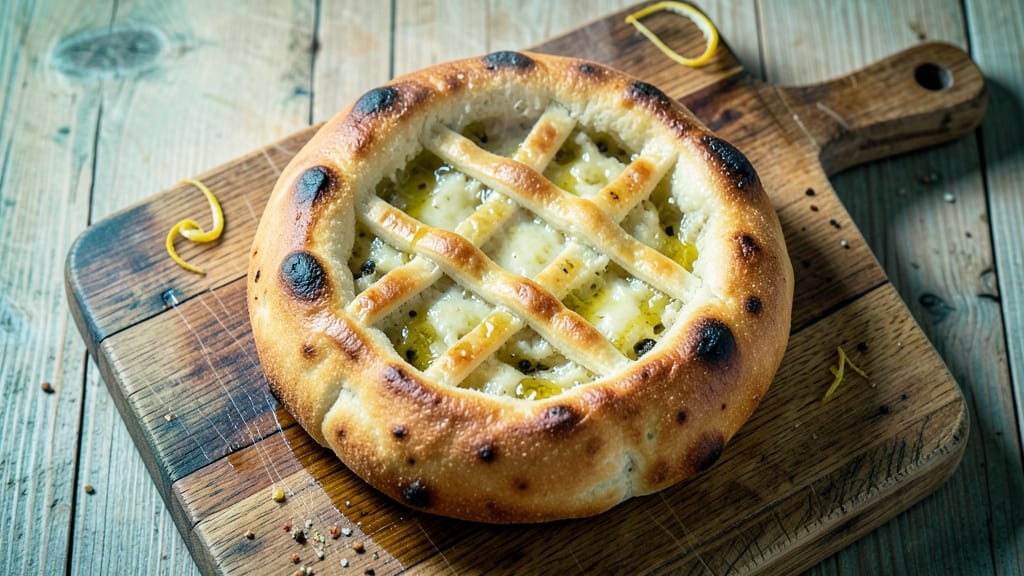
This Albanian pita bread recipe delivers the flaky, golden layers that make it a staple at Balkan tables—soft inside, crisp at the edges, with that signature za'atar kiss. The secret lies in a slow fermentation that develops gluten gently, creating those signature air pockets.
I first tried this version after visiting Albania, where it's served warm with lamb or yogurt, and it became my go-to for homemade flatbreads.
The dough is simple—just flour, yeast, water, and a touch of oil—but the technique makes all the difference. Rolling it thin and baking it on a hot surface ensures that signature crispness while keeping the interior tender.
Traditional recipes often use olive oil, though butter adds richness for a modern twist. The za'atar seasoning on top isn't just for flavor; it creates a fragrant crust that's impossible to resist.
By the time you pull these from the oven, you'll have perfectly flaky layers that separate easily, revealing the soft, pillowy interior. The aroma alone will have everyone gathering around the table.
This bread is versatile—serve it with soups, stuff it with cheese and spinach for byrek, or enjoy it plain with olive oil and salt. The key is patience; letting the dough rest develops the gluten for that signature texture.
Whether you're making it for a family dinner or a special occasion, this recipe delivers authentic Albanian flavors with a foolproof method. The dough can be prepared ahead, so you can focus on enjoying the process. Let's get started—your kitchen will smell like home in no time.
Ingredients for albanian pita bread
Simple ingredients, traditional techniques—this dough transforms into golden, flaky Albanian pita layers.
| Ingredient | Amount | Notes |
|---|---|---|
| All-Purpose Flour 🌾 | 4 cups | Plus 1 tbsp for dusting |
| Active Dry Yeast 🍞 | ¼ tsp | Or 1 packet instant yeast |
| Granulated Sugar 🍚 | 1 tbsp | Feeds yeast for activation |
| Warm Water 💧 | 1 ¼ cups | 105-110°F for yeast activation |
| Unsalted Butter 🧈 | ¼ cup | Softened, for richness |
| Extra-Virgin Olive Oil 🫒 | ¼ cup | Traditional alternative to butter |
| Salt 🧂 | 1 ½ tsp | Diamond Crystal preferred |
| Za'atar Seasoning 🌿 | 2 tbsp | For signature crust flavor |
| Sesame Seeds 🌰 | 1 tbsp | For topping, optional |
| Semolina Flour 🌾 | 2 tbsp | For dusting and rolling |
The flour is your foundation—King Arthur or Caputo if you want that extra lift, but regular all-purpose works perfectly fine. Yeast is the magic here, so make sure it's fresh (test it in warm water—it should foam in 5-10 minutes). The butter adds richness, but olive oil keeps it traditional. For the za'atar, Al-Wadi or Lebanese Kitchen brands are my go-to—they've got that perfect balance of sesame, sumac, and oregano. If you can't find za'atar, mix 1 tbsp sesame seeds + 1 tsp dried oregano + 1 tsp sumac + 1/2 tsp salt as a substitute.
No sesame seeds? Poppy seeds or crushed pistachios work in a pinch. Short on semolina? All-purpose flour is fine, though semolina gives that signature crisp texture. The dough needs time to rest—this isn't a quick bread. If you're in a hurry, you can reduce the first rise to 1 hour, but 2 hours is ideal for those signature layers. For the butter, I like Plugrá for its high fat content—it's worth the splurge for this recipe. And if you're feeling fancy, add a pinch of cardamom to the dough for an extra Albanian touch.
This dough keeps beautifully—wrap tightly in plastic and refrigerate for up to 3 days. For longer storage, freeze the shaped dough balls for 3 months. The za'atar topping is best used fresh, but you can store it in an airtight container for 2 weeks. These pitas reheat perfectly—wrap them in foil and warm in a 350°F oven for 5-10 minutes until crispy again. Leftovers? Toss them in a toaster oven for a quick crisp-up.
Why You'll Love This Recipe
- No-Knead Magic: I swear by this dough—just mix, let it rise, and roll. That butter melts into flaky layers while you’re still deciding what to eat for dinner.
- Buttery Crust, Soft Heart: The moment you pull it from the skillet, that golden crust gives way to pillowy warmth inside. Honestly, it’s the kind of bread that makes you pause mid-bite just to savor it.
- Weeknight Wonder: Wrap it around grilled lamb, stuff it with feta and tomatoes, or just toast it with jam. It’s my go-to when I’m too tired for complicated meals but still crave something special.
- Budget-Friendly Staple: Five ingredients, endless uses. A batch feeds my whole family for days—leftovers freeze perfectly, and the cost? Less than buying store-bought pita for a fraction of the quality.
Step-by-step instructions for za'atar-kissed pita bread
Here's how to craft pillowy, flaky pita with that signature za'atar aroma and crispy crust.
Activate the Yeast and Mix the Dough
In a small bowl, combine the 1.25 cups warm water, 1 tbsp granulated sugar, and 0.25 tsp active dry yeast. Let it sit for 5-10 minutes until frothy—this confirms your yeast is alive. If it doesn't bubble, start over with fresh yeast.
In a large mixing bowl, whisk together the 4 cups all-purpose flour and 1.5 tsp salt. Make a well in the center and pour in the yeast mixture along with the 0.25 cup softened unsalted butter and 0.25 cup extra-virgin olive oil. Mix with a wooden spoon until a shaggy dough forms, then knead on a lightly floured surface for 8-10 minutes until smooth and elastic.
First Rise and Flavor Infusion
Place the dough in a lightly oiled bowl, cover with a damp towel, and let rise in a warm spot for 1-1.5 hours or until doubled in size. The kitchen should feel slightly yeasty—this is your cue it's ready. Poke the dough gently; if it springs back slowly, it's perfect.
Once risen, turn the dough onto a floured surface and divide it into 6 equal pieces (about 6 ounces each). Roll each piece into a 12-inch circle, keeping the edges slightly thicker than the center. This creates those signature flaky layers when baked.
Shape and Second Rise
Dust a baking sheet with 2 tbsp semolina flour—this prevents sticking and adds texture. Arrange the dough circles on the sheet, spacing them 1 inch apart. Cover with a towel and let rise for 30-45 minutes until puffy and nearly doubled.
While waiting, mix 2 tbsp za'atar seasoning with 1 tbsp sesame seeds in a small bowl. Just before baking, brush each pita lightly with water and sprinkle generously with the za'atar mixture. This creates that signature nutty, herby crust that's crispy yet tender.
Bake to Golden Perfection
Preheat your oven to 450°F with a baking stone or inverted baking sheet inside. This creates steam for those signature flaky layers. Bake the pita for 4-5 minutes until the edges are golden brown and the tops puff dramatically.
For extra flakiness, I like to press down gently on each pita with a metal spatula during the first 30 seconds of baking. This helps create those beautiful air pockets. Remove from the oven and let cool for 2 minutes before serving—this prevents them from tearing when you pull them apart.
Pro Tips For Making Albanian Pita Bread
- Test Yeast First: Mix a tiny spoonful of yeast with warm water and sugar—wait 5 minutes for frothy bubbles. If nothing happens, toss that packet and start fresh. I learned this the hard way after baking a flat, dense loaf because my yeast was past its prime.
- Knead Less, Rest More: Albanian pita dough doesn’t need the heavy workout—just 5-6 minutes of mixing by hand until smooth. Let it rise in a warm spot (like a turned-off oven with a bowl of hot water) for at least 1.5 hours, or until it nearly doubles. Rushing this step makes the bread tough.
- Shape Flat, Not Round: Roll the dough into a thick, round disc (about ½-inch) before cutting into wedges—this keeps the pita from curling too much when baking. If you’re skeptical, try it once; the difference in texture is noticeable.
- Butter the Pan Early: Coat your baking sheet or skillet with melted butter before adding the dough, not after. This prevents sticking and gives the bottom a golden, crisp edge. (Yes, even if you’re impatient like me—trust the process.)
Creative variations of albanian pita bread
Traditional Albanian Stuffed Pita
Albanian pita isn't just a bread—it's often stuffed with savory fillings like feta cheese, spinach, and diced lamb to make byrek, a beloved Balkan dish. For this variation, roll out your dough circles to 10-inch diameter instead of 12 inches.
Divide 1 cup crumbled feta, 1 cup chopped spinach, and ½ cup cooked ground lamb among the dough. Place filling in the center, fold edges toward the center, and pinch tightly to seal. Brush with olive oil and bake as directed. 🌿
Herb-Infused Olive Oil Pita
Swap the butter for ½ cup extra-virgin olive oil and infuse it with 1 tbsp dried rosemary and 1 tsp crushed red pepper flakes while warming. This creates a fragrant, slightly spicy dough that pairs beautifully with grilled meats.
Use the same za'atar topping but add 1 tsp smoked paprika to the mix for extra depth. The oil keeps the pita tender while adding a Mediterranean twist.
Sweet Albanian Pita
For breakfast or dessert, reduce the za'atar to 1 tbsp and add 2 tbsp honey to the dough along with the yeast mixture. After shaping, brush the tops with melted 2 tbsp butter and sprinkle with 2 tbsp chopped pistachios before baking.
These sweet pitas are perfect with Albanian coffee or as a side for breakfast dishes like fërgesë (scrambled eggs with cheese). 🍯
Whole Wheat Variation
Replace 1 cup all-purpose flour with whole wheat flour for a nuttier, heartier pita. The dough will be denser, so add 1 tbsp extra olive oil to keep it tender.
This version works especially well with za'atar and sesame topping, as the earthy flavors complement the whole grains. Reduce the baking time by 30 seconds to prevent over-browning.
Garlic and Herb Pita
Mix 2 minced garlic cloves and 1 tbsp chopped fresh dill into the dough during kneading for a bright, aromatic flavor. After shaping, brush the pitas with a mix of 2 tbsp olive oil and 1 tbsp lemon juice before baking.
This variation pairs beautifully with grilled seafood or as a side for Albanian-style stuffed peppers. 🧄
Cheesy Za'atar Pita
Add ½ cup grated Pecorino Romano to the dough during mixing for a salty, tangy depth. After the second rise, brush the pitas with melted butter and sprinkle generously with za'atar and sesame seeds.
The cheese melts slightly during baking, creating a rich, savory crust. Serve warm with roasted vegetables or as a base for byrek.
Nutrition facts
Frequently asked questions
Why does Albanian pita bread need two rises?
The first rise activates the yeast and develops basic flavor, while the second rise creates those signature flaky layers. The longer the second rise (30-45 minutes), the more air pockets form during baking—key for that traditional Albanian texture. Think of it like letting a soufflé puff!
Can I make this dough ahead of time?
Shape the dough into balls, wrap tightly in plastic, and refrigerate for up to 3 days. For longer storage, freeze the dough balls for 3 months. Just let them thaw at room temperature before the second rise—no need to worry about yeast activity.
What's the best way to keep pita bread soft after baking?
Store them in an airtight container with a clean kitchen towel inside. The towel prevents moisture loss while keeping them soft. Reheat in a 350°F oven for 5 minutes or wrap in foil and warm in the oven to restore crispness.
Why did my pita turn out dense instead of flaky?
Dense pita usually means the dough didn't rise enough or was overworked. Make sure your yeast is active (5-10 minutes test) and give it plenty of time to rise—at least 1 hour first rise and 30 minutes second rise. Also, avoid over-kneading, which develops too much gluten.
Can I use this dough for stuffed byrek?
Yes! For stuffed byrek, roll your dough circles to 10-inch diameter instead of 12 inches. Fill with cheese, spinach, or meat, then fold and pinch the edges tightly. Brush with olive oil before baking as directed. This creates that classic Albanian stuffed bread texture.