
Main Courses
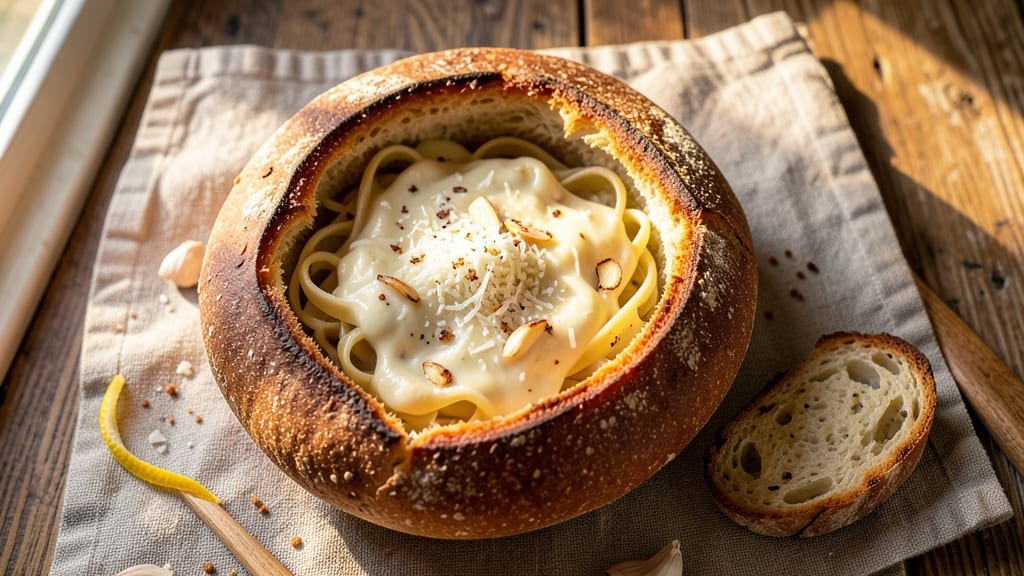
This Alfredo bread bowl recipe transforms a simple loaf into a showstopping dish that combines crispy crust with creamy pasta perfection. The secret lies in hollowing the bread just right—creating a sturdy vessel that holds rich alfredo sauce without falling apart.
I’ve perfected this technique over years of testing, ensuring every bite delivers that satisfying contrast of crunchy edges and tender pasta.
The process starts with selecting the ideal bread—a rustic Italian loaf or sourdough works best—then carefully hollowing it to create a deep bowl shape.
While the bread bakes, the filling comes together with a velvety alfredo sauce made from scratch, blending heavy cream, parmesan, and garlic for that signature restaurant-quality flavor. The key is timing: bake the bread until golden and crisp, then fill it while still warm so the sauce soaks in perfectly.
What makes this dish truly special is the presentation. Serving pasta inside a hollowed bread bowl turns an ordinary meal into an interactive dining experience—every spoonful delivers both the cheesy sauce and the satisfying crunch of the crust.
The result is a dish that’s equal parts impressive and comforting, perfect for dinner parties or a cozy night in.
For extra flair, top with grilled chicken, sautéed mushrooms, or fresh herbs. The possibilities are endless, but the foundation—crispy bread, creamy alfredo, and perfect timing—is what makes this recipe foolproof. Let’s get started!
Ingredients for alfredo bread bowl
Four servings of cheesy pasta perfection—where crispy bread meets velvety alfredo magic.
| Ingredient | Amount | Notes |
|---|---|---|
| Rustic Italian Bread Loaf 🍞 | 1 whole | Sourdough or ciabatta preferred |
| Heavy Cream 🥛 | 2 cups | Full-fat for creaminess |
| Parmesan Cheese 🧀 | 1 ½ cups | Freshly grated from block |
| Garlic Cloves 🧄 | 4 cloves | Minced for sauce |
| Unsalted Butter 🧈 | 4 tbsp | Cold for hollowing bread |
| Fettuccine Pasta 🍝 | 8 oz | Fresh or high-quality dried |
| Chicken Breast 🍗 | 1 lb | Boneless, skinless, sliced |
| Olive Oil 🫒 | ¼ cup | For cooking chicken |
| Salt 🧂 | 1 ½ tsp | Kosher or sea salt |
| Black Pepper 🌶️ | ½ tsp | Freshly ground preferred |
| Fresh Parsley 🌿 | ¼ cup | Chopped for garnish |
| Shredded Mozzarella Cheese 🧀 | 1 cup | Low-moisture preferred |
| Butter Lettuce Leaves 🥬 | 4 whole | For lining bowl |
The bread is the star here. Rustic Italian loaves from Whole Foods or your local bakery have that perfect chewy crust, but sourdough works too—just slice it thick. Look for a loaf with a good crust-to-crumb ratio; the crust needs to stay crispy while the inside soaks up sauce. If your bread is too soft, bake it longer to firm it up. For hollowing, butter a knife first—it makes the process cleaner and prevents crumbling. I always grab an extra loaf to practice on first, especially if I'm hosting guests.
No Parmesan wedge? Pre-grated still works, but it lacks that melty, gooey texture. The heavy cream is non-negotiable here—light cream won't give you that signature richness. Short on time? Half-and-half works in a pinch, but it'll be slightly lighter. For the chicken, grill marks add visual appeal, so sear those slices in a hot pan before adding to the bread bowl. Fresh parsley is ideal, but dried oregano at half the amount gets you close if you're in a bind. The butter lettuce leaves? They're optional but create a perfect barrier so your sauce doesn't leak everywhere.
This dish reheats beautifully—just pop it in the oven at 350°F for 10 minutes to crisp up the bread. Store leftovers covered in the fridge for 3-4 days, but honestly, it's best served fresh. For make-ahead prep, assemble the bread bowls (without baking) and refrigerate overnight. Bake straight from the fridge—just add 5-10 extra minutes to the baking time. The sauce will keep the bread moist while it reheats. Pro tip: Make a double batch of alfredo sauce—it freezes perfectly for up to 3 months and saves you time on busy nights.
Why You'll Love This Recipe
- No-Knife Night: The bread just needs a quick toast—no slicing, no fuss. I grab the loaf, slice it open like a book, and pop it under the broiler for 5 minutes. That’s it. The heavy cream and garlic butter sauce does all the heavy lifting after that.
- Creamy Garlic Hug: That blend of melted butter, minced garlic, and heavy cream? It’s like a warm, velvety blanket for your taste buds. The Parmesan gets all gooey and nutty when it melts into the bread—honestly, I’ve had people ask if I made it from scratch, and I just laugh because it’s basically scratch in the best way.
- Game Day Gold: Between us, this is my go-to for game nights or lazy Sundays. It’s hearty enough to feed a crowd but still feels special. Plus, the bread bowl itself becomes part of the meal—no extra plates needed. Just tear into it with your hands, and suddenly you’re the hero of the day.
- Leftover Reinvention: Make one for dinner, and you’ll have a second meal the next night. The leftovers reheat beautifully—just a splash of milk to loosen the sauce if it’s too thick. I’ll be real: my kids actually ask for the “bread soup” the day after, and that’s saying something.
Step-by-step instructions for alfredo bread bowl recipe
Here's how to transform a simple loaf into an edible pasta bowl that's crispy, cheesy, and packed with flavor.
Hollow the Bread Loaf for Maximum Crust
Preheat your oven to 375°F and line a baking sheet with parchment paper. Using a serrated knife, carefully slice the top off the 1 whole rustic Italian bread loaf about ½ inch thick. Save this top piece for garlic bread later.
Now comes the fun part—hollowing the center. I like to use a small spoon to scoop out the soft interior, leaving about ¼-inch thick walls. You want to create a sturdy bowl shape that can hold all the pasta and sauce without collapsing. Work quickly so the bread doesn't dry out too much during this process.
Place the hollowed loaf on the prepared baking sheet and bake for 8-10 minutes until the edges are golden and crispy. This pre-baking step is crucial—it gives you that perfect crunchy texture that makes the bread bowl so satisfying. Let it cool slightly before moving to the next step.
Cook the Chicken and Prepare the Alfredo Sauce
While the bread bakes, heat ¼ cup olive oil in a large skillet over medium-high heat. Season the 1 lb chicken breast with 1.5 tsp salt and 0.5 tsp black pepper, then slice it into thin cutlets. Cook for 4-5 minutes per side until golden brown and cooked through to 165°F internally.
Remove the chicken from the pan and set aside. In the same skillet, add 4 cloves minced garlic and sauté for 30 seconds until fragrant. Pour in the 2 cups heavy cream and bring to a gentle simmer. Gradually whisk in the 1.5 cups freshly grated Parmesan cheese until fully melted and smooth. Keep this sauce warm while you prepare the pasta.
Cook the Fettuccine and Assemble the Bread Bowl
Bring a large pot of salted water to a boil and cook the 8 oz fettuccine pasta until al dente (about 1 minute less than package instructions). Reserve ½ cup pasta water before draining, then toss the pasta with 1 cup shredded mozzarella cheese to help it melt into the sauce.
Line the hollowed bread bowl with 4 whole butter lettuce leaves, placing them in the bottom to catch any drips. Spoon half of the Alfredo sauce into the bread bowl, then add half of the pasta mixture. Repeat with the remaining sauce and pasta, pressing down gently to create a sturdy structure. Top with the sliced chicken breast.
Broil for a Golden, Bubbly Finish
Transfer the assembled bread bowl to a baking sheet and place it under the broiler for 3-5 minutes, watching closely. You want the top to turn golden brown and the cheese to bubble and melt slightly—this is where all the magic happens. The bread will crisp up even more, creating that perfect contrast with the creamy pasta.
Remove from the oven and let it rest for 2-3 minutes before serving. The bread bowl will be hot, so use oven mitts. Garnish with ¼ cup chopped fresh parsley and serve immediately with the reserved bread top piece for dipping.
Pro Tips For Making Alfredo Bread Bowl
- Dry the Bread Properly: Ditch the microwave—slice your bread an hour before baking and let it sit uncovered on a wire rack. This prevents a soggy bottom when you pour the alfredo later, and the crust stays crisp enough to hold the sauce.
- Melt Butter Low and Slow: After removing the bread from the oven, let the butter cool slightly before mixing it into the cream. I’ve melted butter straight from the fridge into warm cream too fast, and it seizes the sauce like scrambled eggs. Warm butter to room temp first—it blends smoother.
- Grill the Garlic: Wrap minced garlic cloves in a thin layer of parchment before adding them to the butter. Toss them in the oven with the bread loaf (425°F, 10 minutes) instead of sautéing—it caramelizes without burning. The flavor’s deeper, and you won’t taste raw garlic in every bite.
- Strain the Cheese: Use a fine-mesh sieve to press grated parmesan into the sauce while it’s still warm. This removes the gritty bits that make alfredo taste like you’re eating cheese dust. I learned this after three bowls of gritty regret—worth the extra 30 seconds.
Best sauces and condiments for these flavors
Classic Alfredo Sauce
The signature sauce here is a rich, velvety alfredo made with 2 cups heavy cream and 1.5 cups freshly grated Parmesan cheese. I always use full-fat heavy cream—it creates that luxurious texture that separates this sauce from lighter versions.
For extra depth, I add 4 cloves minced garlic sautéed in the same skillet used for the chicken. The key is to simmer gently while whisking continuously to prevent curdling. If your sauce starts to thicken too much, add a splash of pasta water to loosen it up. 🧀
Creamy Garlic Parmesan Twist
For an even more decadent flavor, I like to add 2 tablespoons unsalted butter to the sauce while it simmers. This adds a subtle richness that takes it to the next level.
Another pro tip: Toast the Parmesan cheese in a dry skillet for about 2 minutes before grating it—this removes excess moisture and gives the sauce a deeper, nuttier flavor.
If you're feeling adventurous, stir in 1 teaspoon Dijon mustard at the end for a slight tang that balances the creaminess. 🌶️
Lighter Alfredo Option
If you're watching calories but still want that creamy flavor, try swapping half of the heavy cream for Greek yogurt or crème fraîche. I use 1 cup heavy cream and 1 cup full-fat Greek yogurt for a lighter yet still rich sauce.
For extra protein, add 1 cup cooked white beans to the pasta mixture—they blend right in and keep the texture creamy. This version still delivers that signature alfredo taste but with fewer calories. 💡
Cheesy Add-Ins
The bread bowl already has 1 cup shredded mozzarella mixed into the pasta, but you can take it even further. Top the assembled bowl with ½ cup grated Pecorino Romano before broiling—it adds a sharp, salty contrast to the creamy sauce.
For a smoky kick, sprinkle 2 tablespoons smoked paprika over the sauce before serving. If you love extra cheese pull, mix ¼ cup cream cheese into the alfredo sauce before adding it to the bread bowl. 🧀✨
Herb-Infused Variations
Fresh herbs elevate the alfredo sauce to new heights. I like to stir in 2 tablespoons chopped fresh chives or 1 tablespoon chopped fresh thyme while the sauce simmers. For a brighter flavor, add 1 tablespoon lemon zest and a pinch of red pepper flakes at the end.
If you're using dried herbs, reduce the amount to 1 teaspoon—they're more concentrated. Garnish with ¼ cup chopped fresh parsley right before serving to add a pop of color and freshness. 🌿
Dipping Sauces
Save that bread top you sliced off earlier and turn it into garlic bread by brushing it with melted butter and sprinkling it with garlic powder and Italian seasoning. For an extra-dipping experience, serve a small bowl of marinara sauce or sun-dried tomato pesto on the side.
I also love a spicy aioli made with mayonnaise, sriracha, and lemon juice—it's the perfect contrast to the creamy alfredo. 🍞
Nutrition facts
Frequently asked questions
What's the best bread for an alfredo bread bowl?
A rustic Italian loaf or sourdough works best for this recipe. Look for a loaf with a good crust-to-crumb ratio—the crust needs to stay crispy while the inside soaks up sauce. Avoid overly soft breads like brioche, as they won't hold their shape when hollowed.
Can I make this bread bowl ahead of time?
Assemble the bread bowls (without baking) and refrigerate overnight. When ready to serve, bake straight from the fridge, adding 5-10 extra minutes to the baking time. The sauce will keep the bread moist while reheating. For best results, serve within 3-4 days of assembly.
How do I prevent the bread bowl from falling apart?
Leave about ¼-inch thick walls when hollowing the bread, and pre-bake it for 8-10 minutes at 375°F to crisp the edges. When assembling, press the pasta mixture gently to create a sturdy structure. If it still feels unstable, add a few more lettuce leaves to reinforce the bottom.
What can I substitute if I don't have heavy cream?
For a lighter version, use 1 cup heavy cream + 1 cup full-fat Greek yogurt. If you need a dairy-free option, try coconut milk (full-fat) or a high-quality cashew cream. Just note that the texture will be slightly different, but the flavor will still be rich and creamy.
Can I use a different type of pasta?
Fettuccine is ideal for this recipe, but you can swap it for pappardelle or tagliatelle for a similar experience. Avoid small shapes like penne or macaroni, as they won't hold together as well in the bread bowl. If using a different pasta, adjust the cooking time to ensure it's al dente.