
Side Dishes
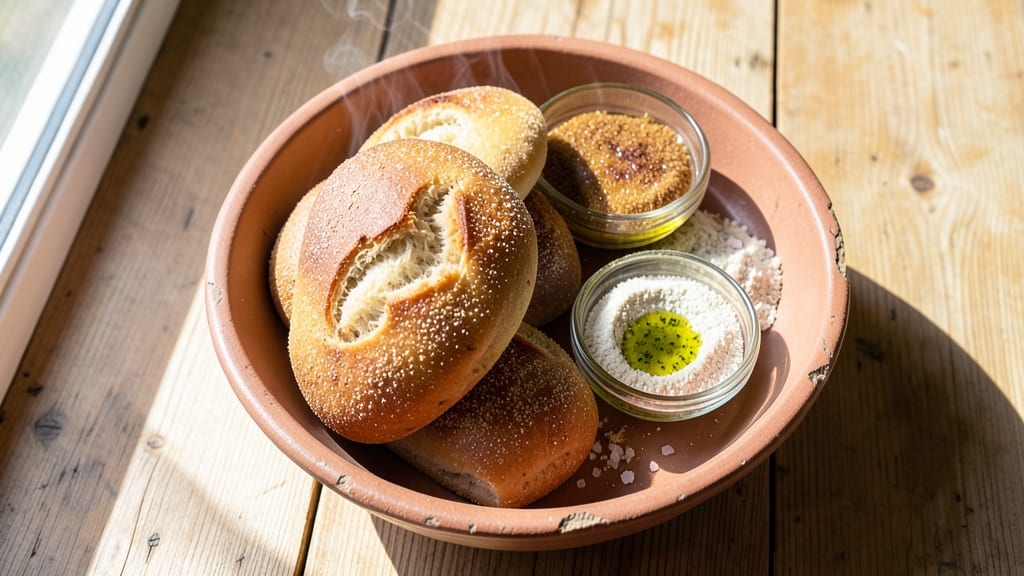
This Algerian bread recipe brings the warm, aromatic essence of North African kitchens to your table with its signature zaatar-spiced crust and foil-sealed softness.
The secret lies in a blend of semolina and flour, enriched with olive oil and anise seeds—a combination that creates a dough with just the right balance of chewiness and tenderness.
I developed this recipe after years of perfecting the technique, ensuring every bite delivers that perfect contrast between crispy exterior and pillowy interior.
The dough begins with a simple yet essential process: kneading warm olive oil into the flour mixture until it forms a smooth, elastic ball. This step is critical—it ensures the bread develops the right texture without becoming dense.
After resting, the dough is shaped into rounds and baked in a way that traps steam, creating that signature softness while the zaatar spice blend gives the crust its distinctive golden hue and nutty aroma.
What you’ll end up with is a loaf of bread that’s both rustic and refined—ideal for dipping in olive oil, pairing with stews, or serving alongside grilled meats. The zaatar crust adds a subtle earthy flavor that pairs beautifully with the bread’s tender crumb.
This recipe is designed to be foolproof, making it perfect for both beginners and experienced bakers looking to add a touch of Algerian tradition to their kitchen.
Once you try this bread, you’ll understand why it’s a staple in Algerian homes—simple ingredients, traditional techniques, and a result that’s impossible to resist. Let’s get started on creating this delicious, culturally rich bread that’s sure to impress.
Ingredients for algerian bread
Four cups of flour plus zaatar and anise—simple ingredients for bread with restaurant-quality flavor.
| Ingredient | Amount | Notes |
|---|---|---|
| All-Purpose Flour 🌾 | 3 cups | Light flour preferred for tender crumb |
| Fine Semolina 🌾 | 1 cup | For chewy texture, don't substitute |
| Active Dry Yeast 🍞 | ¼ tsp | Or 1 packet (2.25 tsp) |
| Granulated Sugar 🍚 | 1 tbsp | Feeds yeast for better rise |
| Salt 🧂 | 1 tsp | Kosher or sea salt preferred |
| Extra-Virgin Olive Oil 🫒 | ½ cup | High quality, fruity variety |
| Warm Water 💧 | 1 ¼ cups | 110°F for optimal yeast activation |
| Zaatar Spice Blend 🌿 | 2 tbsp | Store-bought or homemade mix |
| Anise Seeds 🌱 | 1 tsp | Toasted for deeper flavor |
| Sesame Seeds 🌰 | 1 tbsp | For topping and crunch |
| Aluminum Foil 📄 | 1 sheet | For steam sealing during bake |
The zaatar is the star here, so don't skimp. If you can't find it pre-mixed, grab sesame seeds, sumac, and dried thyme at Middle Eastern markets—they'll have everything you need. Trader Joe's carries a good blend too if you're short on time. Anise seeds? Toast them in a dry pan for 30 seconds first—that extra step makes all the difference. For the olive oil, any good extra-virgin works, but avoid the cheap stuff. You'll know it's the right kind when it smells grassy and peppery. The semolina is non-negotiable—it gives that signature chewiness Algerian bread is known for.
No zaatar? Mix 1 tsp sesame seeds, 1 tsp sumac, and 1 tsp dried thyme for a quick substitute. Out of anise seeds? Star anise powder at half the amount works in a pinch. The yeast is the only tricky part—if your kitchen's cold, warm the water to 110°F (like baby bath temperature). No thermometer? Test with your elbow—should feel warm but not hot. For the dough, don't over-knead. Just mix until it comes together, then let the machine or your arms do the work for 5 minutes. The semolina will make it gummy at first, but keep going.
This dough needs 1-2 hours to rise—don't rush it. Cover with a damp towel so it doesn't dry out. Once baked, the bread stays fresh for 3 days at room temperature, wrapped in a clean towel. For longer storage, freeze the shaped rounds before baking—just pop them in the oven straight from frozen. The foil trick? Crumple it loosely over the dough rounds before baking to trap steam. That's what gives the bread its signature softness while the zaatar crust gets crispy.
Why You'll Love This Recipe
- No-Knead Magic: I swear by this dough—just mix, let it rise, and forget it. The semolina gives it that signature crunch without any fuss, and honestly? I’ve made it while scrolling through my phone.
- Breakfast to Dinner: Serve it warm with jam for a lazy morning or tear it over salads and soups when you’re in a rush. My kids even ask for it with peanut butter—because why not? It’s that reliable.
- Budget-Friendly Staple: A single batch costs pennies and stretches for days. Freeze extras for when you’re too tired to bake, or stash them in the pantry for a quick energy boost. It’s the kind of bread that never lets you down.
Step-by-step instructions for zaatar-spiced Algerian bread
Here's how to make bread with a crispy zaatar crust and tender interior—no fancy tools needed.
Mix the Dough and Let It Rise
In a large bowl, whisk together the 3 cups all-purpose flour, 1 cup fine semolina, 0.25 tsp active dry yeast, 1 tbsp granulated sugar, and 1 tsp salt. The semolina gives that signature chewy texture, so don't skip it. Make a well in the center and add the 0.5 cup extra-virgin olive oil and 1.25 cups warm water (about 110°F). Mix with a wooden spoon until a shaggy dough forms.
Turn the dough onto a lightly floured surface and knead for 8-10 minutes until smooth and elastic. You'll know it's ready when it springs back slowly when poked. If it feels sticky, add a little more flour—just enough to make it pliable. Shape into a ball, place it back in the bowl, cover with a damp towel, and let it rise in a warm place for 1-2 hours or until doubled in size. The dough should feel light and airy when pressed gently.
Shape and Add the Zaatar Crust
Punch down the risen dough to release air, then divide it into 4 equal pieces. Roll each piece into a 12-inch rope, about 1 inch thick. Lay each rope on a baking sheet lined with parchment paper, leaving space between them. Brush the tops lightly with a little water to help the zaatar stick.
In a small bowl, mix the 2 tbsp zaatar spice blend and 1 tsp toasted anise seeds. Sprinkle half of this mixture evenly over the dough ropes, pressing it gently into the surface. The zaatar will give that signature nutty, herby flavor and crispy crust. Let the dough rest for 15-20 minutes while you preheat the oven to 400°F. This resting step keeps the bread from spreading too much in the oven.
Seal with Foil and Bake
Preheat your oven to 400°F while the dough rests. Once preheated, place the baking sheet in the oven and bake for 10 minutes. After 10 minutes, remove the baking sheet and use a pair of kitchen shears to cut a 12-inch square from the 1 sheet aluminum foil. Drape the foil loosely over the bread, leaving the tops exposed. This creates a steam bath that keeps the bread soft inside while the zaatar crust crisps up.
Return the bread to the oven and bake for another 15-20 minutes, until the crust is deep golden brown and the bread sounds hollow when tapped on the bottom. The foil traps steam, so the interior stays tender while the crust gets crispy. If the bread browns too quickly, tent it with foil to prevent burning.
Finish with Sesame and Serve Warm
Remove the bread from the oven and let it cool on the baking sheet for 5 minutes. Sprinkle the remaining zaatar mixture and 1 tbsp sesame seeds evenly over the tops while still warm. The sesame adds a nice crunch and balances the earthy zaatar flavor. Serve immediately while the bread is still soft inside and the crust is crispy.
This bread is best enjoyed fresh, straight from the oven. The zaatar crust adds a savory, slightly tangy flavor that pairs perfectly with soups, dips, or even just a smear of olive oil. Store any leftovers in an airtight container at room temperature for up to 2 days, but it won't taste as fresh as when it's warm.
Pro Tips For Making Algerian Bread
- Mix Semolina Last: I learned this the hard way—adding semolina too early makes the dough gummy. Toss that fine semolina with flour after the yeast and sugar have activated, then fold it in just until combined. The texture stays light, not dense.
- Proof at Room Temp: Cold proofing saves time, but Algerian bread needs warmth to rise properly. Use a slightly warm spot (around 80°F) for the first hour—your oven with the light on works. After that, let it rise until it’s nearly doubled, but don’t overproof or the crumb turns gummy.
- Skip the Over-Kneading: This dough isn’t fussy, but too much handling develops gluten and makes the bread tough. Mix until just combined, then do a quick stretch-and-fold every 30 minutes during the first rise. Less effort, better texture.
- Toast the Semolina: Sounds weird, but it works: dry-toast the semolina in a pan for 2-3 minutes before mixing. It adds a subtle nuttiness and prevents the dough from sticking to the pan during baking. (Yes, even if you’re impatient like me—just 2 minutes.)
Troubleshooting your algerian bread
Dough Too Sticky?
If your dough feels too sticky during kneading, resist the urge to add too much extra flour—just 1 tablespoon at a time is all you need. The semolina already absorbs moisture well, so over-flouring can make the bread dense.
Instead, try wetting your hands slightly with water while kneading to help grip the dough without adding dry ingredients. 💡
Uneven Rise?
If your dough doesn’t rise properly, your yeast might be too old or the water wasn’t warm enough. Always check that your warm water is between 105-110°F—use a kitchen thermometer for accuracy.
If your kitchen is cold, place the dough bowl near a warm oven (turned off) with the light on to create a cozy environment. Let it rise for an extra 30 minutes if needed.
Crust Too Pale?
A pale crust usually means the zaatar didn’t stick well or the oven wasn’t hot enough. Brush the dough ropes with a little more water before adding the zaatar to help it adhere better.
For a deeper color, increase your oven temperature to 425°F for the last 5 minutes of baking. A broiler can also help crisp up the crust if needed.
Dense Interior?
If your bread turns out dense, you may have over-kneaded or skipped the resting step. Knead just until the dough is smooth—about 8-10 minutes. Also,
Bread Spread Too Much?
If your bread spreads out too much during baking, it likely didn’t rest long enough after shaping. Let the dough rest for the full 15-20 minutes before baking to allow the gluten to relax. Also, make sure your oven racks are positioned in the middle of the oven for even heat distribution. A baking stone can help too—place it in the oven while preheating for a more even bake.
Zaatar Not Adhering?
If the zaatar keeps falling off, your dough ropes might not be dry enough. Brush them lightly with water before sprinkling the spice blend—this helps it stick. For extra grip, press the zaatar gently into the dough with your fingers.
If you’re using homemade zaatar, make sure it’s finely ground so it adheres better than coarse blends. 🌿
Nutrition facts
Frequently asked questions about Algerian bread
What makes Algerian bread different from regular bread?
The key difference lies in the semolina flour and zaatar spice blend. Algerian bread uses a mix of flour and semolina for its signature chewy texture, while the zaatar crust gives it that distinctive nutty, herby flavor. The foil-sealing technique also creates a unique contrast between crispy crust and soft interior that you won't find in standard loaves.
Can I make this bread without zaatar?
Yes! If you can't find zaatar, mix 1 tsp sesame seeds, 1 tsp sumac, and 1 tsp dried thyme for a quick substitute. The anise seeds are also optional but add that signature licorice-like flavor. For a simpler version, just use 1 tbsp sesame seeds mixed with a pinch of salt for a basic topping.
How long does Algerian bread stay fresh?
This bread stays fresh for 3 days at room temperature when wrapped in a clean towel. For longer storage, freeze the shaped dough rounds before baking—they'll keep for up to 3 months. Just bake straight from frozen, adding 5-10 extra minutes to ensure they're fully cooked through.
What's the best way to reheat stale Algerian bread?
For best results, wrap the bread in aluminum foil and warm it in a 350°F oven for 5-8 minutes. The foil helps restore moisture while keeping the crust from drying out. You can also use a toaster for 1-2 minutes per side, but this may make the interior slightly tougher.
Can I make this bread in a Dutch oven?
The Dutch oven's tight lid creates an even better steam environment than foil. Shape your dough ropes in the Dutch oven, then bake at 400°F for 20-25 minutes with the lid on. Remove the lid for the last 5 minutes to crisp the zaatar crust. The result will be even more tender inside with a perfectly golden crust.