
Side Dishes
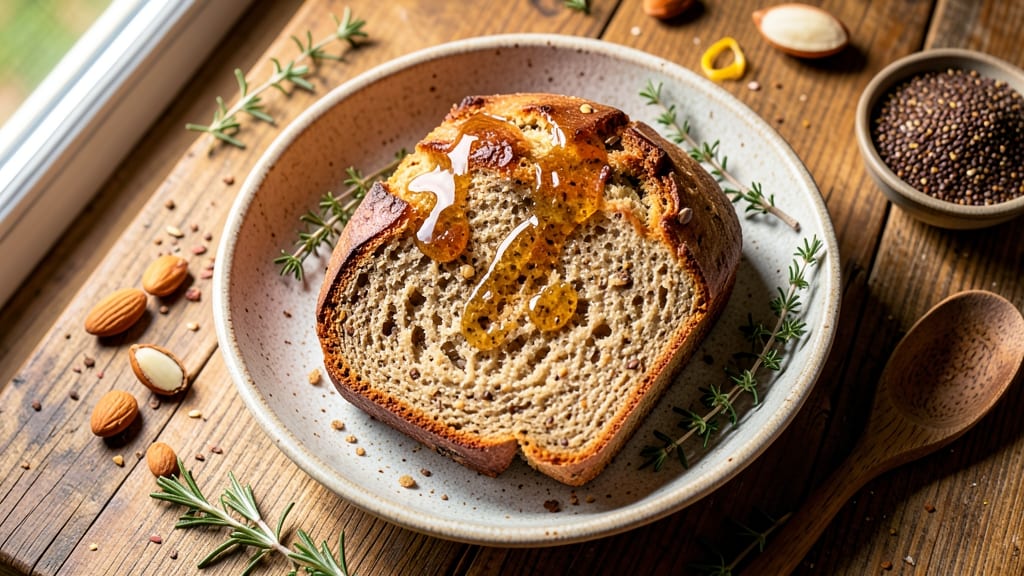
This almond flour and flaxseed bread recipe delivers a gluten-free loaf with a satisfying nutty crunch and hearty seed texture that rivals traditional wheat bread. The secret lies in flaxseed's binding power—no eggs or dairy needed—while almond flour creates a tender yet sturdy crumb.
I developed this recipe after years of perfecting plant-based baking, ensuring it holds up to toast, sandwiches, and even French toast without crumbling.
The magic happens in the mixing: flax "eggs" hydrate while almond flour absorbs moisture, creating a dough that behaves like traditional bread dough. A touch of apple cider vinegar enhances rise, and baking powder ensures that signature lift.
What you'll end up with is a moist, golden-brown loaf with a crisp crust and a tender interior that's packed with nutty, earthy flavor from the almonds and flax.
Perfect for those avoiding gluten or seeking a seed-rich alternative, this bread freezes beautifully for up to 3 months and stays fresh for 5 days when wrapped tightly. The texture holds up to everything from avocado toast to grilled cheese, making it a versatile staple for any kitchen.
Let's get started on this foolproof, restaurant-quality loaf that proves gluten-free doesn't mean flavor-free.
Unlike dense gluten-free breads, this recipe achieves a light, airy crumb through precise hydration and proofing techniques. The flaxseeds add a satisfying bite, while almond flour contributes a subtle sweetness that balances the earthiness.
Whether you're baking for dietary needs or simply exploring plant-based alternatives, this loaf delivers on both texture and taste.
Ingredients for almond flour and flaxseed bread
Eight plant-powered staples transform into a gluten-free loaf with restaurant-quality texture and nutty depth.
| Ingredient | Amount | Notes |
|---|---|---|
| Almond Flour 🥜 | 3 cups | Finely ground, unsweetened preferred |
| Ground Flaxseeds 🌾 | ½ cup | Freshly ground for binding |
| Water 💧 | 1 ¼ cups | Room temperature preferred |
| Apple Cider Vinegar 🍏 | 1 tbsp | For enhanced rise and tang |
| Baking Powder 🍞 | 1 ½ tsp | Aluminum-free recommended |
| Salt 🧂 | ½ tsp | Fine sea salt preferred |
| Maple Syrup 🍁 | 2 tbsp | Grade B for deeper flavor |
| Olive Oil 🫒 | ¼ cup | Extra-virgin for richness |
| Psyllium Husk Powder 🌿 | 1 tbsp | For improved texture and binding |
| Sesame Seeds 🌻 | 2 tbsp | For topping and extra crunch |
| Sunflower Seeds 🌻 | ¼ cup | Lightly toasted for flavor |
Almond flour is the backbone of this recipe—Bob's Red Mill or Anthony's Goods brands deliver the finest grind for optimal texture. The flaxseeds must be freshly ground to maximize their binding properties; store-bought ground flaxseed works, but grinding whole seeds yields superior results. Psyllium husk powder is non-negotiable for achieving that signature bread-like crumb, and Navitas Organics offers the most reliable quality. For almond flour, avoid pre-sweetened varieties, as they can alter the delicate balance of flavors in this recipe. The seeds should be toasted just until fragrant—about 3-4 minutes in a dry pan—to enhance their nutty aroma without burning.
No psyllium husk? An extra 1 tbsp of ground flaxseed can substitute, though texture may be slightly denser. Substituting maple syrup? Agave nectar at equal volume works, but maple's depth of flavor is ideal. Olive oil can be swapped for avocado oil if preferred, though extra-virgin olive oil adds a subtle fruity note that complements the almond flour beautifully. For those with nut allergies, sunflower seed flour replaces almond flour at a 1:1 ratio, though texture will differ slightly. Always measure baking powder carefully—Diamond Crystal requires 1/4 tsp less than other brands, so check the box.
This loaf freezes exceptionally well—3 months in an airtight container or vacuum-sealed bag. For best results, wrap tightly in plastic wrap before placing in a freezer bag. Thaw at room temperature for 1-2 hours or warm in a 200°F oven for 10-15 minutes to restore freshness. Store at room temperature for up to 5 days in a bread box or wrapped in a clean kitchen towel. The seeds and crust make this ideal for toasting or French toast—the flaxseed binding ensures it holds up beautifully to moisture. For extra crispiness, brush the crust with melted coconut oil before baking.
Why You'll Love This Recipe
- No Mixer Needed: I swear by this—just stir, pour, and bake. The almond flour and ground flaxseeds blend into a thick batter in seconds, no food processor or fancy tools required. Honestly, my blender sits unused for this one.
- Nutty, Tangy Magic: That apple cider vinegar gives it a subtle tang, while the almond flour delivers a rich, toasty depth. It’s not sweet—just good, with a texture that’s soft inside and just slightly crisp on the edges. (Yes, even my picky husband asks for seconds.)
- Meal Prep MVP: Slice it fresh, toast it as needed, or pack it in lunchboxes—it stays fresh for days without turning gummy. Between us, I’ve had it for breakfast, as a sandwich base, and even as a quick snack with butter. It’s my go-to for lazy mornings.
- Budget-Friendly Staple: Almond flour is pricey upfront, but a bag lasts forever—this recipe uses half a cup, and the flaxseeds stretch it further. No wasted ingredients, no last-minute grocery runs. Plus, it’s gluten-free without the markup of specialty bread.
Step-by-step instructions for almond flour and flaxseed bread
This gluten-free loaf delivers a perfect balance of nutty richness and seed crunch every time.
Mix Wet Ingredients for Optimal Texture
In a medium bowl, combine the 1.25 cups water with 1 tbsp apple cider vinegar and 2 tbsp maple syrup. Stir until fully dissolved—the vinegar will create a subtle tang that enhances flavor and helps with rise. In a separate small bowl, whisk together the 0.5 cup ground flaxseeds with 1 tbsp psyllium husk powder and let sit for 5 minutes. This creates a gel-like binder that mimics gluten's structure in traditional bread.
The psyllium husk is crucial here—it absorbs liquid and forms a sticky network that gives the bread its structure. If you skip this step, your loaf will be dense rather than light and airy. The flaxseeds add both nutrition and binding properties, while the maple syrup provides natural sweetness that balances the nutty almond flavor.
Combine Dry Ingredients and Incorporate Wet Mixture
In a large mixing bowl, whisk together the 3 cups almond flour, 1.5 tsp baking powder, and 0.5 tsp salt. The almond flour should be sifted first to prevent clumping and ensure even distribution of leavening agents. Make a well in the center and pour in the 0.25 cup olive oil and the flaxseed-psyllium mixture from Step 1.
Gently fold the wet ingredients into the dry using a spatula, mixing just until combined. Overmixing develops gluten-like proteins in the almond flour, which can make the bread dense. You're looking for a thick, shaggy batter that still has some dry spots—this indicates proper hydration without overworking the mixture.
Prepare the Loaf Pan and Add Seed Topping
Preheat your oven to 350°F and lightly grease an 8x4-inch loaf pan with olive oil or line it with parchment paper. In a small bowl, toast the 0.25 cup sunflower seeds and 2 tbsp sesame seeds in a dry skillet over medium heat for 2-3 minutes until fragrant and lightly golden. This enhances their flavor and adds crunch to the finished loaf.
Pour the batter into the prepared loaf pan and smooth the top with a spatula. Sprinkle the toasted seeds evenly over the top, pressing them lightly into the batter. The seeds will add texture contrast and visual appeal, while also preventing the crust from becoming too tough during baking.
Bake Until Golden and Internal Temperature Reaches 200°F
Bake the bread for 45-50 minutes until the top is golden brown and a toothpick inserted into the center comes out clean. The bread is done when it reaches an internal temperature of 200°F—this ensures it's fully baked through without becoming dry. If the top browns too quickly, tent the pan with foil to prevent over-browning while allowing the center to cook through.
I find it helpful to check the bread at the 40-minute mark—this gives you time to adjust the oven temperature if needed. The almond flour can sometimes absorb moisture unevenly, so monitoring both color and internal temperature is key. Remove from the oven and let cool in the pan for 10 minutes before transferring to a wire rack to cool completely.
Slice and Serve for Maximum Freshness
Once completely cooled, slice the bread into 8 equal portions (about 1-inch thick slices). The bread will firm up as it cools, making it easier to slice cleanly. Store any leftovers in an airtight container at room temperature for up to 3 days, or freeze for up to 3 months for maximum freshness.
This bread pairs beautifully with soups, spreads, or as a base for sandwiches. The nutty flavor and seed crunch make it satisfying on its own, while its gluten-free nature makes it accessible for those with dietary restrictions. The psyllium husk gives it a satisfying chew, while the almond flour provides a tender crumb that's surprisingly close to traditional bread.
Pro Tips For Making Almond Flour And Flaxseed Bread
- Mix Flax Egg First: Let the ground flaxseed sit with water for at least 5 minutes before adding other ingredients—this gives it time to fully gel, which mimics eggs and binds the bread properly. I learned this the hard way when my first batch fell apart like a sad soufflé.
- Weigh Your Almond Flour: Scooping almond flour by volume leads to inconsistent results. Use a kitchen scale for precision—this stuff packs differently than regular flour, and even 10 grams extra can make your bread dense. Trust me, your future toast will thank you.
- Don’t Overmix the Batter: Stir just until combined—overworking it develops gluten-like strings in almond flour, making the bread tough. Think "loose and airy," not "homogeneous." I used to beat it like I was punishing it, and the texture suffered.
- Bake Low and Slow: Preheat the oven to 325°F (not 350°F or higher) and bake for 40-45 minutes. Almond flour burns easily, and rushing it turns the crust into charcoal while the center stays raw. Patience here makes the difference between a golden loaf and a hockey puck.
Make-ahead tips for this dish
Prep Ahead
Mix the wet ingredients and flaxseed binder up to 3 days in advance and store them in a sealed glass container in the fridge. The flaxseed mixture will thicken slightly—just stir before using.
I often prep this the night before to save morning baking time. The dry ingredients can be measured and sifted ahead of time in a separate container for even faster assembly. 📅
Freeze Freshly Baked
This bread freezes beautifully at its peak freshness. Wrap the cooled loaf tightly in plastic wrap, then place it in a freezer bag with all the air squeezed out. Label with the date and freeze for up to 3 months.
When ready to use, thaw at room temperature for 2 hours or warm in a 200°F oven for 10 minutes to restore crispness. I keep a backup loaf frozen at all times for lazy mornings. ❄️
Batch Baking
Double the recipe for a 16-slice loaf using a 9x5-inch pan. The same mixing ratios apply, but increase baking time to 55-60 minutes. Store extras in individual slices wrapped in parchment paper—this prevents drying between layers.
I bake two loaves on weekends and freeze one immediately for future meals. The psyllium husk helps maintain texture even after freezing. 💡
Toasting Tips
Toast slices directly in a dry skillet over medium heat for 2-3 minutes per side for maximum crispiness. The almond flour develops a delicious nutty aroma when toasted.
For French toast, soak slices in a mix of 2 eggs (or flax eggs), ¼ cup milk, and 1 tsp cinnamon for 1 minute per side in a buttered pan. The flaxseed binding keeps it from falling apart. 🍞
Storage Hacks
Keep bread fresh longer by storing it in a bread box or sealed container with a slice of apple or a damp paper towel. The apple releases ethylene gas that slows staling, while the damp towel maintains moisture.
For extra crunch, brush the crust with melted coconut oil before storing. I've kept this bread fresh for 7 days using this method. 🌱
Reheating Secrets
Revive stale slices by wrapping them in foil and heating at 300°F for 5-7 minutes. For microwave reheating, place a slice on a plate with 1 tsp water and cover with a damp paper towel for 20 seconds.
The steam helps restore moisture without making it soggy. I always reheat a slice before serving with butter or jam. 🔥
Nutrition facts
Frequently asked questions
Why does this recipe use both flaxseed and psyllium husk?
The flaxseed creates a gel-like binder that mimics eggs, while psyllium husk forms a sticky network that mimics gluten's structure. Together, they give this bread its signature light, airy crumb and prevents crumbling. The flax adds nutrition and omega-3s, while psyllium improves texture and moisture retention.
Can I make this bread without psyllium husk?
Yes, but the texture will be denser. Substitute with an extra 1 tbsp ground flaxseed or 1 tbsp chia seeds soaked in 3 tbsp water for 10 minutes. For best results, add 1 tsp xanthan gum to help bind the crumb. The bread will still be delicious but may crumble slightly more.
How do I know when the bread is fully baked?
Check for two things: the internal temperature should reach 200°F (use a meat thermometer), and a toothpick inserted in the center should come out clean. The top should be golden brown, not pale. If it browns too quickly, tent with foil to prevent over-browning while the center cooks.
Can I add herbs or spices to this recipe?
Try 1 tsp dried rosemary, ½ tsp garlic powder, or 1 tsp cinnamon mixed into the dry ingredients. For savory versions, add 1 tbsp nutritional yeast for a cheesy flavor. Just reduce salt slightly if using salty seasonings. The almond flour's mild sweetness pairs well with both sweet and savory additions.
Why does my bread turn out gummy?
Gummy texture usually means overmixing or too much moisture. Mix just until combined (don't overwork the batter), and ensure your almond flour is fresh—old flour absorbs more liquid. Also, check that your flaxseed mixture has gelled properly (it should be thick, not runny). Bake 5 minutes longer if needed to evaporate excess moisture.