
Side Dishes
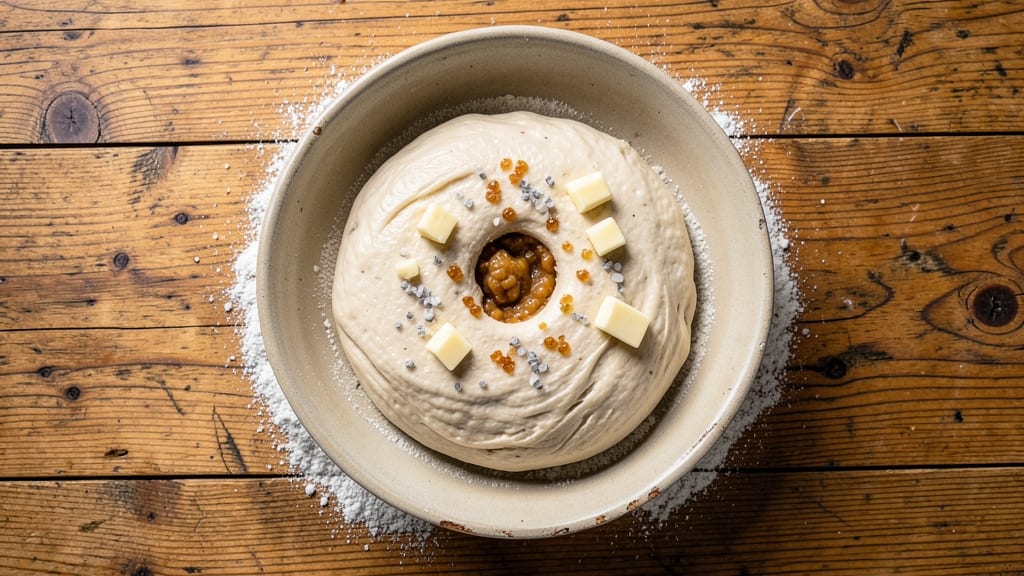
This almost no-knead sourdough bread recipe transforms simple ingredients into artisanal loaves with minimal effort. The secret lies in a long, slow fermentation that develops deep flavor and an open, airy crumb—no kneading required. I’ve perfected this method over years of baking, ensuring even beginners achieve restaurant-quality results at home.
The process begins with a simple starter, which you’ll activate overnight, then mix with flour and water to create a dough that barely needs handling. After a 24-hour bulk fermentation in the fridge, shaping and baking become effortless.
The foil-sealed crust technique guarantees a crispy exterior without over-browning, while the open crumb delivers that coveted sourdough texture.
By the time you pull that golden loaf from the oven, you’ll have bread with a crispy crust, tender crumb, and tangy depth that rivals bakery-fresh loaves. This recipe is designed for foolproof success, whether you’re a first-time baker or a seasoned pro looking to simplify your routine.
Perfect for toast, sandwiches, or serving alongside soups, this bread keeps well for days—making it ideal for meal prep. Let’s get started on your first perfect loaf.
Ingredients for almost no knead sourdough bread
Four key ingredients and a little patience transform flour into restaurant-worthy sourdough.
| Ingredient | Amount | Notes |
|---|---|---|
| Unbleached All-Purpose Flour 🌾 | 5 cups | High-protein for structure (12% protein preferred) |
| Active Sourdough Starter 🍞 | 1 cup | 100% hydration, bubbly and active |
| Granulated Sugar 🍚 | ¼ cup | White or raw, for initial feeding |
| Unsalted Butter 🧈 | ½ cup | Cold, cubed for scoring |
| Coarse Kosher Salt 🧂 | 1 ½ tsp | Diamond Crystal preferred |
| Ice Water 💧 | 3 cups | Chilled for precise hydration |
| Extra-Virgin Olive Oil 🫒 | ½ tbsp | For dough bowl and shaping |
| Cornmeal 🌽 | ½ cup | For dusting parchment |
| Heavy Cream 🥛 | ¼ cup | Optional for ultra-rich crust |
| Aluminum Foil 📄 | 1 sheet | Heavy-duty for sealing |
| Wooden Spoon 🪵 | 1 whole | For gentle dough mixing |
| Lame or Razor Blade ✂️ | 1 whole | For crisp scoring |
The flour is non-negotiable—King Arthur or Caputo Tipo 00 (if you want Italian-style) give the best structure. I always grab King Arthur unbleached from Williams Sonoma or the bulk bins at Whole Foods for consistency. Protein content matters here: 12% or higher ensures that open crumb. The sourdough starter needs to be active (bubbly and doubled in 4-6 hours after feeding)—if yours is sluggish, feed it twice before using. For the butter, grab Plugrá from Costco—it's European-style and stays firm when cold. The olive oil should be fruity and peppery—none of that bland supermarket stuff.
No sourdough starter? Buy one from a trusted baker or use instant yeast (½ tsp) as a backup, but the flavor won't be the same. Running low on flour? Substitute half with whole wheat for a nuttier taste, but expect a denser crumb. The heavy cream is optional but adds a luxurious richness—swap for milk if you're avoiding dairy. For the salt, Diamond Crystal dissolves more gently than table salt, so use it if you've got it. The ice water is critical—room temp water will over-hydrate your dough. If you're in a pinch, use very cold tap water straight from the fridge.
This dough is a marathon, not a sprint—plan ahead. The starter can be refrigerated for up to 1 week before using. Once mixed, the dough keeps in the fridge for 48 hours before baking. For long-term storage, freeze shaped loaves (unbaked) for 3 months—thaw overnight in the fridge before baking. The foil-sealed crust trick? Use heavy-duty foil and press it firmly against the dough to prevent air pockets. Leftovers? Toast within 2 days for best texture—stale bread is a crime in my book.
Why You'll Love This Recipe
- Foolproof Mix-In: I’ll admit, I used to stress over sourdough—until I discovered this recipe. Just toss in your starter, flour, a pinch of sugar, and a pat of butter, then let time do the work. No stretching, no punching, no second-guessing.
- Buttery Tang Perfection: That little cube of butter and a whisper of sugar? It’s what makes this bread ridiculously good. The crust gets a golden crackle while the inside stays soft—like a hug from a bakery, but made in my kitchen.
- Weeknight Wonder: Between us, this is my go-to when I’ve got nothing planned. Toss it together before bed, wake up to bread that’s ready to toast. It’s the kind of recipe that turns "I don’t feel like cooking" into "I made something amazing."
- Stretch Every Dollar: Here’s what sold me—the ingredients are basic, but the results feel special. A single batch feeds my family for days, and the leftovers? Perfect for French toast or croutons. No waste, all flavor.
Step-by-step instructions for almost no-knead sourdough bread
Here's how to transform simple ingredients into artisanal bread with minimal effort.
Mix the Dough with Precision
In a large bowl, combine the 5 cups unbleached all-purpose flour, 1 cup active sourdough starter, 0.25 cup granulated sugar, and 1.5 tsp coarse kosher salt. Use the wooden spoon to gently stir until the dry ingredients are evenly distributed—this prevents gluten development too early. Gradually add 3 cups ice water while stirring continuously, just until the mixture comes together into a shaggy dough.
Let the dough rest uncovered at room temperature for 30 minutes. This initial rest allows the flour to fully hydrate and the gluten to begin forming naturally. You'll notice the dough becomes slightly more cohesive and less sticky as it relaxes. Avoid the temptation to knead—this is where the "almost no-knead" magic begins.
Shape and Seal for Overnight Fermentation
Lightly oil your hands and gently shape the dough into a loose round by folding the edges toward the center. Place it in a bowl that's just large enough to hold it without stretching. Cover the bowl tightly with aluminum foil and refrigerate overnight for 12-16 hours. This cold fermentation develops deep flavor and creates that signature open crumb structure.
The cold slows fermentation just enough to prevent overproofing while allowing time for complex flavors to develop. When you remove the dough from the fridge, it should have visibly expanded and feel slightly springy when pressed gently. If it hasn't risen much, let it sit at room temperature for another 30-60 minutes before proceeding.
Prepare for Baking with Butter Scoring
Preheat your oven to 425°F with a Dutch oven inside for 45 minutes. While the oven heats, turn the dough onto a lightly cornmeal-dusted surface. Gently shape it into a round loaf about 1 inch thick. Cut the 0.5 cup unsalted butter into small cubes and press them into the top of the dough, spacing them about 1 inch apart. This creates those beautiful butter pockets in your final loaf.
Use the lame or razor blade to score the dough in a simple pattern—either a cross or a decorative design. The score helps control expansion and prevents the loaf from cracking unpredictably. The butter cubes will melt during baking, creating pockets of rich, creamy goodness throughout the crumb.
Bake with Foil-Sealed Perfection
Carefully transfer the scored dough to the preheated Dutch oven. Bake covered for 30 minutes, then remove the lid and bake uncovered for another 15-20 minutes until the crust is deep golden brown and sounds hollow when tapped on the bottom. The internal temperature should reach 205-210°F—this ensures proper doneness without drying out the crumb.
For an extra-rich crust, brush the baked loaf with 0.25 cup heavy cream immediately after removing it from the oven. The steam creates a glossy, tender crust that's irresistible. Let the bread cool on a wire rack for at least 1 hour before slicing—this allows the crumb to set properly and prevents a gummy texture.
Slice and Serve with Confidence
Once cooled, slice the loaf with a serrated knife for clean cuts that reveal the open crumb structure. The butter pockets should be visible throughout, adding both visual appeal and rich flavor. Serve warm with your favorite butter or jam, or store wrapped at room temperature for up to 3 days for even better flavor development.
This bread proves that exceptional results don't require hours of kneading. The key lies in proper fermentation time, precise scoring, and that perfect balance of butter and cream for an ultra-rich experience. Each slice delivers that satisfying combination of crisp crust and airy, buttery crumb that makes homemade bread worth every minute of the process.
Pro Tips For Making Almost No Knead Sourdough Bread
- WEIGH YOUR FLOUR: I learned this the hard way—using volume measurements for unbleached all-purpose flour in sourdough leads to inconsistent results. Grab a kitchen scale and measure to the gram (450g for this recipe). The density matters more than you’d think, especially when mixing with a wet starter.
- USE COLD BUTTER: Skip the softened butter—this isn’t a cookie dough. Cut that unsalted butter into small cubes and let it sit in the fridge until you’re ready to mix it in. Cold butter creates pockets that make the final bread tender and flaky, not greasy. (Yes, even if you’re impatient like me.)
- DON’T OVERHANDLE THE DOUGH: This recipe is called "almost no knead" for a reason. After mixing, just fold the dough a few times—maybe 10-12 gentle turns—until it comes together. Overworking it develops gluten too much, and you’ll end up with a dense loaf instead of that light, airy texture. Less is more here.
- STEAM THE OVEN: Preheat your Dutch oven with the lid on, then add a metal tray of boiling water to the oven floor right before baking. The steam is what gives sourdough that crackling crust and prevents the bottom from drying out. I used to skip this, and my bread always felt underwhelming—don’t make that mistake.
Wine and beer pairings for almost no knead sourdough bread
Crisp White Wine
Sourdough’s tangy depth pairs beautifully with dry white wines that cut through the richness. I love Sauvignon Blanc from New Zealand—its citrus and herbal notes refresh your palate after each buttery bite. Look for a Marlborough Sauvignon Blanc with bright acidity and a touch of grassiness.
A French Picpoul de Pinet from Languedoc is another fantastic choice—its crisp, mineral-driven profile balances the bread’s sweetness. 🍷
Light Red Options
If you prefer red, go for light-bodied varieties that won’t overpower the sourdough’s delicate crumb. A Pinot Noir from Oregon or Burgundy offers red fruit and earthiness that complement the butter pockets beautifully.
I recommend a Willamette Valley Pinot Noir—its silky texture and cherry notes enhance the bread’s richness without competing. Avoid heavy Cabernets or Syrahs, which can clash with the bread’s tender crumb. 🍇
Beer Pairings
For beer lovers, Belgian witbiers or German Hefeweizens are ideal—their citrusy, spicy notes mirror the sourdough’s tang. Try a Hoegaarden or Allagash White with a squeeze of lemon to brighten the flavors.
If you prefer darker beers, a Belgian Dubbel like Westmalle Trappist adds caramel and malty depth that pairs surprisingly well with the butter pockets. 🍺
Non-Alcoholic Choices
Skip the alcohol? A sparkling apple cider with a hint of cinnamon enhances the bread’s sweetness and warmth. For something more savory, try a sparkling mineral water with a slice of lemon—it cleanses your palate between bites.
Iced hibiscus tea (like Mexican Jamaica) adds a floral, slightly tart contrast that works wonderfully with the rich crust. 🍹
Seasonal Adjustments
In summer, a chilled rosé with its crisp acidity and berry notes refreshes the palate. For winter, a Malbec from Argentina adds bold fruit and warmth that stands up to the bread’s richness.
If you’re serving this with butter or jam, opt for something lighter—like a Gewürztraminer—to avoid overwhelming the sweetness. 🍷✨
Nutrition facts
Frequently asked questions
Why does this recipe work with almost no kneading?
The magic happens during the long, cold fermentation in the fridge. This slow process allows gluten to develop naturally without manual kneading, creating that signature open crumb. The butter cubes also help relax the dough structure, making shaping effortless.
Can I use this dough for sandwiches or just toast?
This bread excels for both! The buttery crumb holds up perfectly for sandwiches like grilled cheese or Reuben, while the crisp crust makes it ideal for toast. For sandwiches, slice it 1 hour after baking when fully cooled for clean cuts.
What if my dough doesn't rise much after refrigeration?
Let it sit at room temperature for 30-60 minutes before shaping. If it still feels underproofed, give it another 1-2 hours at room temp. Cold slows fermentation—don't rush it! A slightly underproofed loaf will still bake well but may be denser.
How do I store leftovers to keep them fresh?
Wrap cooled loaves tightly in beeswax wrap or foil and store at room temperature for up to 3 days. For longer storage, freeze shaped (unbaked) loaves for 3 months. Toast within 2 days for best texture—stale bread ruins the experience!
Can I make this without a Dutch oven?
Yes! Use a heavy oven-safe pot with lid or even a baking sheet with foil. For best results, bake covered for 30 minutes then uncovered for 15-20 minutes, rotating halfway. The crust won't be as crispy, but the crumb will still be excellent.