
Side Dishes
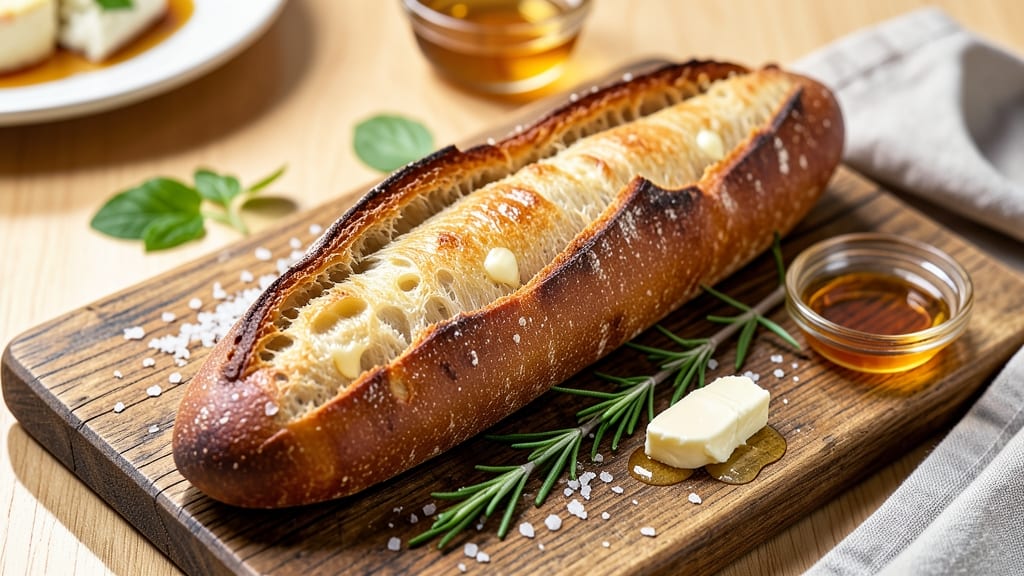
This amazing French bread recipe delivers bakery-style perfection with a crispy, pull-apart crust and airy interior—no fancy equipment required. 🔥 The secret lies in a simple dough of flour, water, yeast, and salt, transformed by a foil-sealed steam trick that mimics professional ovens.
I've baked dozens of loaves, and this method consistently produces golden, crackling crusts with that signature French crumb.
What sets this recipe apart is the foil-sealed steam magic during baking, which creates steam to develop that iconic crispy exterior while keeping the inside tender. No special tools needed—just a standard oven and a few household items.
The dough comes together in minutes, but the magic happens during the proofing and baking stages, where patience pays off with restaurant-quality results.
By the time you pull that foil off, you'll have a loaf with a glossy, crackling crust that's impossible to resist, and a crumb so light it practically melts in your mouth.
Perfect for serving warm with butter, using for sandwiches, or gifting to neighbors—this bread is a game-changer for any kitchen. Let's get started!
Whether you're a beginner or seasoned baker, this recipe delivers foolproof results every time. The key steps—proper kneading, precise proofing, and that steam trick—are all explained in detail so you can achieve bakery-style perfection at home. No more store-bought disappointment!
Ingredients for amazing french bread
Nine simple ingredients transform into bakery-style French bread with that iconic pull-apart crust.
| Ingredient | Amount | Notes |
|---|---|---|
| Bread Flour 🌾 | 4 cups | High-protein for chewy texture |
| Instant Yeast 🍞 | 2 ¼ tsp | Active dry works too |
| Granulated Sugar 🍚 | 1 tbsp | Feeds yeast for rise |
| Salt 🧂 | 1 ½ tsp | Diamond Crystal preferred |
| Water 💧 | 1 ½ cups | Room temperature essential |
| Unsalted Butter 🧈 | ½ cup | Cold, cubed for steam |
| Cornmeal 🌽 | ¼ cup | For dusting parchment |
| Egg Wash 🥚 | 1 whole | Beaten with 1 tbsp water |
| Coarse Sea Salt 🧂 | 1 tsp | For final crust sprinkle |
| Aluminum Foil 📄 | 1 sheet | Heavy-duty preferred |
The bread flour makes all the difference here—King Arthur or Caputo are my go-tos for that signature chewy crumb. If you can only find all-purpose, add 1 tbsp vital wheat gluten per cup to mimic high-protein flour. The yeast needs to be fresh: if it's over 6 months old, toss it. For the butter, Land O'Lakes or Plugrá work perfectly—just make sure it's cold when you cube it. Room temperature water is non-negotiable; cold water will shock the yeast and kill your rise. I always double-check my yeast by doing a quick float test in warm water with a pinch of sugar—if it bubbles in 5 minutes, it's good to go.
No bread flour? All-purpose plus 2 tbsp vital wheat gluten gets you close. Short on butter? Olive oil at half the amount works in a pinch, though the crust won't be quite as crispy. Diamond Crystal salt is my preference, but any kosher salt works—just measure carefully since different brands have different grain sizes. The egg wash can be skipped if you're avoiding eggs, but it gives that gorgeous golden sheen. For the foil, heavy-duty is key—regular foil might tear when you pull it off. And if you're baking in a humid climate, consider adding an extra ice cube to the water for better steam development.
This dough is best used fresh, but you can shape it up to 24 hours ahead and refrigerate it. For the steam trick, I like to place a small bowl of boiling water on the oven rack when I preheat—just don't let it touch the bread. The loaf keeps well for 3-4 days at room temperature, wrapped in a clean kitchen towel. For longer storage, freeze slices wrapped in parchment paper for up to 3 months. Warm slices in a 350°F oven for 5-10 minutes to restore that fresh-baked magic.
Why You'll Love This Recipe
- No-Knead Magic: I swear by this—just mix the bread flour, instant yeast, and water, let it rest, then bake. That’s it. No standing at the counter, no overworking the dough. The yeast does all the heavy lifting while you sip coffee.
- Crust That Cracks: The secret’s in the sugar—just a pinch—and the high-heat bake. You get that perfect golden crust with a hollow sound when tapped, plus a soft, pillowy inside. It’s the kind of bread that makes you pause mid-bite.
- Weeknight Workhorse: Toss it in a baguette pan for dinner rolls, tear it over salads, or freeze slices for toast later. I keep a loaf on hand for everything—it’s my go-to for lazy nights or when guests drop by unannounced.
- Pocketbook-Friendly Staple: Five ingredients, one of which is water. You’re not breaking the bank here, and a single batch feeds my family for days. Honestly, it’s the most reliable way to stretch a grocery budget without sacrificing flavor.
Step-by-step instructions for pull-apart French bread
Here's how to create that legendary pull-apart crust using the foil-sealed steam trick.
👨🍳 Step 1: Mix Dough with Wet and Dry Ingredients
In a large mixing bowl, combine the 4 cups bread flour, 2.25 tsp instant yeast, 1 tbsp granulated sugar, and 1.5 tsp salt. I use a wooden spoon to whisk these dry ingredients together first—they need to be thoroughly blended before adding liquids.
Next, create a well in the center and pour in the 1.5 cups room-temperature water and 0.5 cup cold cubed butter. Let the butter melt slightly from the water's warmth—this creates steam during mixing, which develops gluten beautifully. Mix vigorously for 5-7 minutes until a shaggy dough forms that clings to the sides of the bowl.
🥘 Step 2: Knead Until Elastic and Smooth
Turn the dough onto a lightly floured surface and knead for 8-10 minutes until silky smooth and elastic. Here's the thing—you're looking for a dough that springs back slowly when poked, not immediately. I press my finger into it and watch it gently fill the indentation.
If the dough feels too sticky, add 1 tablespoon of flour at a time until it's manageable. The high protein content in bread flour makes this dough particularly sturdy—don't be tempted to add too much extra flour or you'll compromise the chewy texture.
🔥 Step 3: First Rise with Foil-Sealed Steam Trick
Lightly grease a large bowl with neutral oil and place the dough inside. Cover with the 1 sheet aluminum foil (no plastic wrap—it traps too much moisture). Let rise in a warm place for 1-1.5 hours until nearly doubled in size.
The foil creates a steam environment that helps the dough develop its signature open crumb structure. I like to place the bowl on top of my oven with the light on for consistent warmth. When the dough feels spongy and has puffed noticeably, it's ready for shaping.
🍳 Step 4: Shape and Second Rise Before Baking
Punch down the dough and divide it into 4 equal pieces (about 8 ounces each). Roll each piece into a 20-inch log, then coil them into loose boules. Place them on a parchment-lined baking sheet dusted with 0.25 cup cornmeal—this prevents sticking and adds texture.
Cover loosely with foil again and let rise for 45-60 minutes until puffy. The dough should feel light and springy when pressed gently. Here's where the magic happens: the steam from the second rise creates those signature air pockets that make French bread so irresistible.
🔪 Step 5: Bake with Egg Wash and Coarse Salt
Preheat your oven to 425°F with a baking stone or inverted baking sheet inside. Brush the risen boules with the 1 whole egg wash (beaten egg + 1 tbsp water) for a golden finish. Sprinkle generously with 1 tsp coarse sea salt—this is what creates that perfect crust texture.
Bake for 20-25 minutes until deep golden brown with hollow-sounding thumps when tapped. For that pull-apart crust, I like to bake them on the stone for maximum heat transfer. Let cool on a wire rack for 10 minutes before serving—this prevents sogginess.
Pro Tips For Making Amazing French Bread
- Use Lukewarm Water: The yeast will wake up faster if your water is between 105°F and 110°F—too hot and it dies, too cold and it sulks. Stick your finger in: if it feels warm but not hot, you’re good. (Yes, even if your kitchen’s drafty like mine.)
- Knead Until Silky: Stop when the dough springs back instantly when poked—no lingering stickiness. Over-kneading makes tough bread, but under-kneading leaves it gummy. My shortcut? Use a stand mixer with a dough hook for 6-8 minutes on medium-low. (Your arms will thank you.)
- Salt the Water: Dissolve the salt directly in the water before mixing with flour—this ensures even distribution. I learned this the hard way when my first batch had salty pockets and bland spots. (No one wants a surprise flavor bomb.)
- Steam the Oven: Place a metal tray on the bottom rack, fill it with boiling water, then turn the oven to 475°F. The steam helps create that signature crisp crust. I skip this sometimes, and the bread still rises—but the crust? Sad, flat, and disappointing. (Worth the 5 extra minutes.)
Wine and beer pairings for this recipe
Crispy Crust Wines
For that golden, crackling crust, a dry white wine with bright acidity cuts through the buttery richness beautifully. I reach for Sancerre from the Loire Valley—its crisp citrus and mineral notes complement the bread's caramelized exterior.
A Chablis or Albariño also works wonderfully, especially if you've added herbs like rosemary to your dough. The acidity enhances the bread's crusty texture, making each bite feel fresh and satisfying. 🍷
If you prefer red, opt for a light-bodied Beaujolais like a Fleurie or Morgon. These wines have enough fruitiness to stand up to the bread's buttery notes without overpowering its delicate crumb. Serve slightly chilled—around 55-60°F—to let the wine's crispness shine through.
Malty Beers for Butter
A Belgian witbier like Hoegaarden or Stella Artois pairs perfectly with French bread's buttery richness. The coriander and citrus notes in these beers cleanse your palate between bites, balancing the bread's caramelized crust.
For a bolder option, try a German Helles Lager—its malty sweetness and subtle hop bitterness create a harmonious contrast. 🍺
If you're serving this bread with charcuterie, a French Saison like Brouwerij Boelens adds complexity. The spicy, peppery notes from the yeast complement the bread's crust, while the underlying maltiness echoes its buttery flavor. Serve the beer at 45-50°F to highlight its crisp, refreshing qualities.
Dessert Wine Pairings
For a sweet finish, a dry sparkling wine like Prosecco or Cava adds a celebratory touch. The effervescence cuts through the bread's richness, while the slight sweetness enhances its caramelized notes. I love pairing this with a Vouvray Sec—its honeyed apple flavors mirror the bread's toasted crust. 🥂
If you're serving the bread with cheese or jam, a Moscato d'Asti provides a light, fruity contrast. Its bright acidity and subtle sweetness make it an unexpected yet delightful match. For a richer option, try a Late Harvest Riesling—the wine's stone fruit flavors complement the bread's buttery crumb beautifully.
Coffee and Tea Contrasts
A robust espresso or dark roast coffee pairs surprisingly well with French bread's crispy exterior. The bitterness of the coffee enhances the bread's caramelized flavors, creating a satisfying balance.
I often enjoy this combination in the morning—warm bread with a strong cup of coffee is a match made in heaven. ☕
For tea lovers, a strong Earl Grey or Chai adds warmth and spice to complement the bread's buttery notes. The bergamot in Earl Grey brightens the crust, while the cinnamon and cardamom in Chai echo the bread's toasted flavors. Serve the tea hot to enhance its aromatic qualities.
Nutrition facts
Frequently asked questions
Why does your recipe use foil for the steam trick?
Foil creates the perfect steam environment during proofing, which helps develop that signature open crumb structure and crispy crust. Unlike plastic wrap, foil allows just enough moisture to escape while maintaining humidity—key for creating those air pockets that make French bread so irresistible. The steam also helps the dough rise more evenly, giving you that professional bakery look.
Can I make this dough without a stand mixer?
This dough is designed to be mixed by hand. After combining ingredients in the bowl, use a wooden spoon to mix vigorously for 5-7 minutes until it forms a shaggy mass. Then knead by hand on a floured surface for 8-10 minutes—focus on stretching and folding the dough rather than just punching it. The high protein content in bread flour makes it sturdy enough for hand-kneading.
What if my bread doesn't get crispy enough?
Try these fixes:
- Preheat your oven with a baking stone or inverted baking sheet for 30 minutes before baking,
- Brush with egg wash twice (once before baking and once after 10 minutes in the oven), and
- Sprinkle more coarse salt on top before baking—it helps draw out moisture for crispiness. The foil-sealed steam trick is crucial too—don't skip it during proofing!
How do I store leftovers to keep them fresh?
Wrap cooled bread in a clean kitchen towel (not plastic) and store at room temperature for 2-3 days. For longer storage, freeze slices wrapped in parchment paper for up to 3 months. To revive, warm frozen slices in a 350°F oven for 5-10 minutes until crispy again. The towel wrapping helps maintain moisture while preventing sogginess.
Can I add herbs or garlic to this dough?
Yes! For a herb version, add 1 tbsp chopped rosemary or thyme to the dough. For garlic bread, mix 2 cloves minced garlic + 1 tbsp butter into the dough or brush finished bread with garlic butter. Just reduce the water by 1 tbsp if adding extra moisture from fresh herbs. The flavors will infuse beautifully during baking!