
Side Dishes
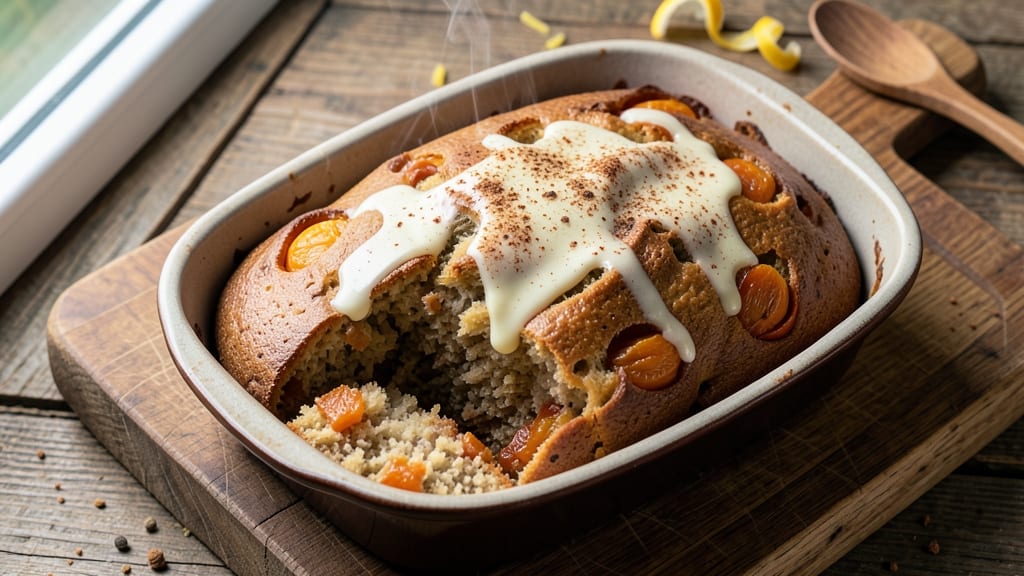
This American persimmon bread recipe transforms humble ingredients into a spiced, fruity loaf that smells like autumn in every bite. The secret lies in using ripe Fuyu persimmons—either pureed or finely chopped—swirled into a tender, cinnamon-kissed dough that bakes up with a golden crust and moist crumb.
I developed this recipe after years of baking traditional persimmon breads, refining it to ensure the fruit stays vibrant and the texture remains perfectly tender.
The dough comes together with simple pantry staples—flour, sugar, eggs, and butter—but the magic happens in the swirl. Fresh persimmons lend natural sweetness and a subtle floral note, while warm spices like cinnamon, nutmeg, and cardamom deepen the flavor.
Baking at 350°F ensures a slow rise, allowing the fruit to caramelize slightly without overpowering the bread’s delicate structure.
What you’ll end up with is a loaf that’s moist, fragrant, and studded with pockets of spiced persimmon—perfect for breakfast toast, afternoon tea, or gifting. The crust stays soft for days, while the crumb remains tender, making every slice worth savoring.
This recipe delivers restaurant-quality results with minimal effort, proving that homemade bread can be both impressive and foolproof.
Serve warm with butter or jam, or enjoy it cold as part of a charcuterie spread. The versatility of this bread makes it ideal for holidays, brunch, or any day you crave something comforting. Let’s get baking—your kitchen will smell like fall in no time.
Ingredients for american persimmon bread
Twelve simple ingredients transform into a fragrant, spiced loaf with vibrant persimmon swirls.
| Ingredient | Amount | Notes |
|---|---|---|
| All-Purpose Flour 🌾 | 4 cups | Sifted for optimal texture |
| Granulated Sugar 🍚 | 1 ½ cups | Light brown preferred |
| Unsalted Butter 🧈 | 1 cup | Cold, cubed for even mixing |
| Large Eggs 🥚 | 2 whole | Room temperature |
| Ripe Fuyu Persimmons 🍎 | 2 cups | Pureed or finely chopped |
| Ground Cinnamon 🌿 | 2 tbsp | Freshly ground preferred |
| Ground Nutmeg 🌿 | 1 tsp | Freshly grated for depth |
| Ground Cardamom 🌿 | ½ tsp | Toasted for aromatic punch |
| Baking Powder 🧂 | 2 tsp | Diamond Crystal preferred |
| Salt 🧂 | ½ tsp | Fine sea salt |
| Vanilla Extract 🍯 | 1 tsp | Pure extract preferred |
| Milk 🥛 | ½ cup | Whole milk for richness |
The persimmons are the heart of this recipe—Fuyu variety is essential for its sweet, floral notes and firm texture when ripe. Look for fruit that yields slightly to gentle pressure but isn't mushy; Whole Foods or local Asian markets often carry them in fall. If you can't find Fuyu, Hachiya persimmons can be used but require cooking to soften first. For the spices, Penzeys Spices or the bulk bins at Trader Joe's offer the freshest ground options, which make all the difference in flavor depth. The butter should be cold when creamed with sugar to develop proper air pockets in the dough.
No persimmons? Substitute 1.5 cups of unsweetened applesauce or pumpkin puree—both work beautifully in the swirl, though the texture will be slightly denser. For the spices, if you're missing cardamom, a pinch of allspice or extra cinnamon will bridge the gap. The baking powder must be fresh—test by mixing 1 tsp with 2 tbsp hot water; if it fizzes, it's good. For the milk, any variety works, but whole milk provides the best richness. Prefer plant-based? Unsweetened almond milk works in a pinch, though the texture may be slightly lighter. The vanilla extract should be pure—imitation extracts often lack the depth.
This bread stays fresh for 3-4 days at room temperature wrapped in a clean kitchen towel, or up to 5 days in an airtight container. For longer storage, freeze the loaf unwrapped for 1 hour, then wrap tightly in plastic wrap and foil—it keeps for up to 3 months. To reheat, wrap a slice in foil and warm in a 350°F oven for 5-7 minutes. The crust will crisp up beautifully, and the persimmon swirls remain moist. I always bake two loaves—one for the week and one to gift, as it makes an impressive centerpiece for holiday tables.
Why You'll Love This Recipe
- No-Fuss Mixing: I swear by this recipe because it’s basically a dump-and-stir situation. You’ll have the dough ready in minutes—just toss in the persimmons (peeled and chopped, no fancy techniques), fold in the butter and sugar, and let the eggs bind it all. Honestly, it’s the kind of bread that makes me feel like I’ve earned a break.
- Sweet-Spiced Magic: That caramelized persimmon flavor? It’s like a cross between pumpkin and honey, but brighter. The ripe Fuyu persimmons add natural sweetness without needing extra sugar, and the warm spices (if you add them) make every slice taste like autumn in a loaf. My kids fight over the last piece—no joke.
- Weeknight Hero: This bread is my go-to when I need something hearty but not heavy. Toast it for breakfast, pack slices for lunch, or serve it warm with butter at dinner. It’s the kind of loaf that disappears fast, but you’ll always have a reason to bake it again.
- Budget-Friendly Staples: You’re using pantry basics—flour, sugar, butter, eggs—and turning them into something special with persimmons, which are often cheaper than apples or pears. Plus, it keeps well for days, so you’re not scrambling to use it up. Between us, I’ve made three loaves in a week and never regretted it.
Step-by-step instructions for American persimmon bread
This method delivers moist, spiced bread with perfect fruit swirls every time.
Prepare the Persimmon Filling
In a medium bowl, combine the 2 cups of ripe Fuyu persimmons with 1 tablespoon of the 2 tablespoons ground cinnamon, the 1 teaspoon ground nutmeg, and 0.25 teaspoon of the 0.5 teaspoon ground cardamom. Mash the persimmons with a fork until you achieve a chunky puree with small fruit pieces remaining—this texture ensures visible swirls in the finished bread.
Set aside the filling while you prepare the dough. The persimmons should be fully ripe (they'll yield slightly to gentle pressure) to prevent a bitter taste. If using frozen persimmons, thaw and drain them first to avoid excess moisture in the batter.
Cream Butter and Sugar
In a stand mixer fitted with the paddle attachment, beat the 1 cup of cold, cubed unsalted butter and 1.5 cups granulated sugar on medium speed for 3-4 minutes. You're looking for a light, fluffy mixture that nearly doubles in volume and becomes pale in color. This creaming process incorporates air, which creates the bread's tender crumb.
I like to use cold butter here—it prevents the mixture from becoming too warm before adding the eggs. If your kitchen is warm, chill the butter for 15 minutes before starting. Scrape down the sides of the bowl with a spatula once or twice during mixing to ensure even incorporation.
Combine Wet and Dry Ingredients
Add the 2 whole large eggs, 1 teaspoon vanilla extract, and 0.5 cup milk to the butter-sugar mixture. Mix on low speed until just combined, about 30 seconds. In a separate bowl, whisk together the 4 cups sifted all-purpose flour, 2 teaspoons baking powder, 0.5 teaspoon salt, and the remaining 1 tablespoon ground cinnamon and 0.25 teaspoon ground cardamom.
With the mixer on low speed, gradually add the dry ingredients to the wet mixture. Mix only until the flour is incorporated—you should still see small streaks of flour. Overmixing develops gluten, which can make the bread dense. The dough will be thick and sticky, similar to cookie dough.
Fold in Persimmon Filling
Using a silicone spatula, gently fold half of the persimmon filling into the dough until evenly distributed. Then fold in the remaining filling, being careful not to overmix. The dough will be quite sticky, but resist the urge to add more flour—this prevents the bread from becoming too dry.
Transfer the dough to a greased 9x5-inch loaf pan, spreading it evenly with the spatula. The dough will rise slightly as you work it into the pan. Place the pan on a baking sheet to catch any potential overflow during baking.
Bake to Golden Perfection
Preheat your oven to 350°F. Bake the bread for 50-55 minutes, or until a toothpick inserted in the center comes out clean. The top should be golden brown with a slightly cracked surface—this indicates proper baking. If the top browns too quickly, tent the pan with foil after 30 minutes.
For best results, let the bread cool in the pan for 10 minutes before transferring to a wire rack. This resting period allows the fruit juices to redistribute, preventing a gummy texture. Once cooled, slice with a serrated knife for clean cuts that showcase those beautiful persimmon swirls.
Pro Tips For Making American Persimmon Bread
- USE COLD BUTTER: Mixing butter into the dough cold—yes, even when the recipe says "softened"—prevents the persimmon’s natural moisture from turning the bread gummy. I learned this the hard way after a batch turned out dense and sticky; now I cut the butter into small cubes and fold them in just until combined.
- PEEL AND GRATE PERSIMMONS: Skip the hassle of coring and chopping Fuyu persimmons—peel them first, then grate them fine. This ensures even distribution in the batter and avoids those annoying little seeds that make the bread texture uneven. (Pro move: Wear gloves if you’re squeamish about the astringency.)
- WEIGH YOUR FLOUR: Scooping flour from the bag packs it down, adding extra volume that throws off the bread’s structure. Use a kitchen scale for the flour—350 grams is your target—and level it off with a knife. Trust me, your bread will rise better and taste lighter.
- BAKE UNTIL 190°F: The bread’s done when the internal temp hits 190°F, not when it looks golden. I used to pull it out too soon, and the center stayed doughy—now I wait, even if it means an extra 5–10 minutes. A toothpick test is good, but the thermometer never lies.
Regional styles of this dish
Southern Comfort Style
In the Deep South, persimmon bread often includes a touch of bourbon or peach brandy in the dough for extra depth. I add 1 tablespoon of bourbon to the wet ingredients—it enhances the spice notes while keeping the bread moist.
Southern bakers also frequently use cornmeal in the pan for a crunchy bottom, which I recommend trying for a rustic texture. 🥃
Midwest Apple-Persimmon Twist
The Midwest takes persimmon bread in a different direction by adding diced apples to the filling for extra texture. I like using Honeycrisp apples because they stay tender when baked.
The combination creates a beautiful contrast between the sweet persimmon and the slight tartness of the apples. This variation works especially well when served with maple butter.
New England Spiced Variation
New England bakers often incorporate cranberries into their persimmon bread for a tart-sweet balance. I add ½ cup of dried cranberries to the filling along with the persimmons. The cranberries hold their shape beautifully during baking, adding bursts of tartness that complement the warm spices.
This version pairs perfectly with cream cheese frosting for a holiday treat. 🍁
Texas-Style Cinnamon Swirl
In Texas, persimmon bread sometimes features a double swirl—one layer of persimmon filling and another of cinnamon-sugar mixture. I sprinkle ¼ cup of sugar mixed with 1 tablespoon of cinnamon over the dough before the final rise.
This creates a caramelized crust that's irresistible. The technique works well with either Fuyu or Hachiya persimmons. 🌶️
Pacific Northwest Dried Fruit Mix
The Pacific Northwest often incorporates dried cherries or apricots into their persimmon bread for a chewy texture. I use ½ cup of chopped dried fruit mixed with the persimmon filling.
The fruit absorbs some of the moisture, creating a denser crumb that's perfect for hearty breakfasts. This version keeps well for days, making it ideal for meal prep. 🌲
Modern Gluten-Free Adaptation
For gluten-free bakers, I recommend substituting 1:1 gluten-free flour blend (like Bob's Red Mill) for the all-purpose flour. The texture will be slightly denser, but the persimmon filling still shines. I also add ½ teaspoon of xanthan gum to improve structure.
This version works beautifully with almond milk instead of dairy. The flavor remains rich and satisfying despite the gluten-free base. 🌾
Nutrition facts
Frequently asked questions
Can I use Hachiya persimmons instead of Fuyu?
Hachiya persimmons are astringent when unripe, so they must be fully ripe and soft before using. For this recipe, you'll need to cook them first—simmer peeled Hachiya persimmons in ¼ cup water for 5 minutes until tender, then mash them into the filling. The texture will be slightly softer than Fuyu, but the flavor remains delicious.
Why did my bread turn out dense instead of light?
Overmixing the dough is the most common cause. Mix just until the flour disappears—30 seconds after adding dry ingredients is ideal. Another culprit could be underripe persimmons, which release less moisture. Always use fully ripe Fuyu persimmons that yield slightly to pressure. Also ensure your baking powder is fresh.
How do I store persimmon bread without it drying out?
Wrap the cooled loaf tightly in a clean kitchen towel or place it in an airtight container with a slice of bread or apple to maintain moisture. For longer storage, freeze the bread unwrapped for 1 hour, then wrap in plastic and foil. Thaw at room temperature—no need to reheat unless you prefer a crispier crust.
Can I make this bread without a mixer?
Use a sturdy wooden spoon or silicone spatula to cream the butter and sugar by hand for 5-7 minutes until light and fluffy. For the dough, mix with a large spoon or your hands (dough will be sticky). The key is patience—work the dough just until combined to avoid overdevelopment.
What's the best way to reheat persimmon bread?
Wrap a slice in foil and warm in a 350°F oven for 5-7 minutes to restore moisture and crisp the crust. For microwave reheating, place the slice on a plate and cover with a damp paper towel for 10-15 seconds—this prevents drying while warming through. Never microwave uncovered.