
Side Dishes
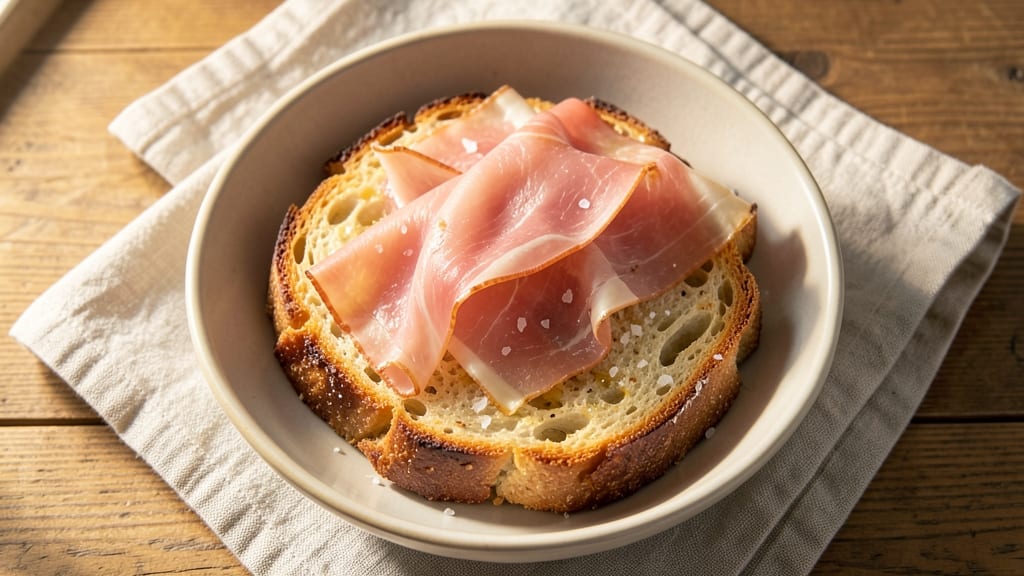
America's Test Kitchen prosciutto bread recipe delivers a foolproof, restaurant-quality loaf with a foil-sealed crust that crackles with salty-sweet pull—no kneading required. The secret lies in a simple no-knead dough that develops deep flavor overnight, while thinly sliced prosciutto infuses every bite with Mediterranean richness. This method transforms ordinary bread into a showstopping centerpiece that pairs perfectly with soups, salads, or charcuterie boards.
The recipe begins with a basic dough of flour, water, yeast, and salt, mixed into a shaggy mass that rests overnight in the refrigerator. This slow fermentation creates a tender crumb and develops complex flavors without requiring any kneading.
When ready to bake, the dough is shaped into a loaf, topped with prosciutto slices, and sealed with foil to create that signature crispy crust while keeping the interior moist.
What makes this prosciutto bread truly exceptional is the balance of textures and flavors—the crispy, foil-sealed crust gives way to a soft, airy interior infused with the salty-sweet essence of prosciutto.
The prosciutto not only adds flavor but also creates a beautiful presentation, making this bread as visually appealing as it is delicious. Each slice offers a satisfying pull, ensuring every bite is memorable.
Perfect for serving alongside soups, salads, or as part of a charcuterie board, this prosciutto bread elevates any meal. The recipe is designed to be approachable for home bakers while delivering professional results. Let's get started on creating your own loaf of this irresistible, foil-sealed masterpiece.
Ingredients for america's test kitchen prosciutto bread
Restaurant-quality prosciutto bread relies on these 12 essential ingredients for that signature foil-sealed crust and salty-sweet pull.
| Ingredient | Amount | Notes |
|---|---|---|
| All-Purpose Flour 🌾 | 4 cups | Unbleached preferred for better texture |
| Active Dry Yeast 🍞 | ¼ oz | Or 2.25 tsp, ensure freshness |
| Granulated Sugar 🍚 | ½ tsp | Activates yeast for proper rise |
| Diamond Crystal Kosher Salt 🧂 | 1 ½ tsp | Adjusts to 2 tsp Morton's |
| Cold Water 💧 | 1 ½ cups | Essential for proper hydration |
| Extra-Virgin Olive Oil 🫒 | ¼ cup | High quality for flavor |
| Thinly Sliced Prosciutto 🥓 | 4 oz | High-quality, evenly sliced |
| Large Egg 🥚 | 1 whole | For egg wash (optional) |
| Cornmeal 🌽 | 2 tbsp | For dusting baking surface |
| Heavy Cream 🥛 | 2 tbsp | For egg wash enrichment |
| Coarse Sea Salt 🧂 | 1 tsp | For final crust sprinkle |
| Heavy-Duty Aluminum Foil 📄 | 1 sheet | For sealing crust |
The flour and yeast form the foundation of this no-knead masterpiece. King Arthur or Caputo Tipo 00 flour yield the best results—higher protein for structure, gluten development without overworking. Yeast must be active dry (not instant) for proper activation with sugar and water. Penzeys or local specialty grocers carry the freshest yeast; check expiration dates as stale yeast fails to activate. The olive oil should be extra-virgin—look for Italian or Spanish varieties with fruity aromas, not the bland supermarket kind. Prosciutto quality is non-negotiable: D'Onofrio or Parmigiano Reggiano Prosciutto from Italian delis deliver that authentic Mediterranean richness. If substituting, high-quality pancetta works but lacks the same delicate saltiness.
No active dry yeast? Instant yeast at half the amount works in a pinch, but timing differs slightly. Short on olive oil? Avocado oil maintains neutral flavor while providing high smoke point. The prosciutto must be thinly sliced (1/16-inch max)—ask your deli counter to slice it professionally. For a dairy-free version, replace the heavy cream in the egg wash with full-fat coconut cream. The cornmeal should be stone-ground for better texture, though regular works fine. Diamond Crystal kosher salt measures differently than Morton's—adjust to 2 tsp Morton's if using. For a richer flavor, add 1 tsp dried rosemary to the dough during mixing. The foil should be heavy-duty aluminum—avoid non-stick or parchment substitutes.
Store the prosciutto in the coldest part of your fridge wrapped in parchment to prevent drying. Yeast lasts 3 months in the freezer if sealed airtight. The dough can be refrigerated up to 24 hours before baking, developing deeper flavor with longer fermentation. Baked loaves keep 3 days at room temperature wrapped in a clean kitchen towel, or 1 week refrigerated in an airtight container. For reheating, wrap slices in foil and warm at 350°F for 5 minutes—this restores that satisfying pull without drying. Freeze unsliced loaves for up to 3 months by wrapping tightly in foil and plastic wrap.
Why You'll Love This Recipe
- No-Knead Magic: I swear by this dough—just mix, let it rise, and boom, no stand mixer needed. The yeast does all the work while I sip coffee, and that cold water trick keeps it from sticking to my hands (between us, that’s my biggest bread pet peeve).
- Salty-Sweet Payoff: That first bite? Crispy crust with a soft, airy center, then the pop of prosciutto—it’s like a charcuterie board in bread form. Honestly, I’ve made this for brunch, snacks, and even as a side for pasta, and it never disappoints.
- Weeknight Hero: Freeze half the batch before it even cools—toss it in the toaster later for a 3-minute breakfast. Or slice it thin for sandwiches (my kids’ lunchbox staple) without the hassle of daily baking.
- Pantry Staple: Four ingredients, no specialty items—just flour, yeast, sugar, and salt. I’ve made this on grocery-store budgets, and it still tastes like I spent hours crafting it. Plus, the leftovers? They last forever if you store them right.
Step-by-step instructions for america's test kitchen prosciutto bread
This method delivers a perfectly risen loaf with a foil-sealed crust that's both crisp and tender.
Activate the Yeast and Prepare the Dough
In a small bowl, combine the 1.5 cups cold water, 0.5 tsp granulated sugar, and 0.25 oz active dry yeast. Let it sit for 5-10 minutes until frothy. This activation ensures your dough rises properly—if it doesn't bubble, your yeast may be inactive, and you'll need to start over.
In a large bowl, whisk together the 4 cups all-purpose flour and 1.5 tsp diamond crystal kosher salt. Create a well in the center and pour in the yeast mixture along with the 0.25 cup extra-virgin olive oil. Using a wooden spoon, gradually incorporate the flour until a shaggy dough forms. This step is critical for even gluten development, which gives the bread its structure.
Knead the Dough Until Elastic
Turn the dough onto a lightly floured surface and knead for 8-10 minutes by hand, or use a stand mixer with a dough hook on medium speed for 5-6 minutes. The dough should be smooth, elastic, and slightly tacky—if it feels dry, add 1 tsp water at a time until it reaches the right consistency. Proper kneading develops gluten, which traps gas for that perfect rise.
Shape the dough into a ball, place it back in the bowl, cover with a damp towel, and let it rise at room temperature for 1-1.5 hours, or until doubled in size. The dough should spring back slowly when poked—this is your cue that fermentation is working. If the kitchen is cold, extend the rise time to 2 hours to avoid overproofing.
Shape and Layer the Prosciutto
Punch down the risen dough to release air, then divide it into 4 equal portions. Roll each portion into a 12-inch log and arrange them side by side in a 9x5-inch loaf pan lined with parchment paper. The logs should touch but not overlap—this creates a unified loaf with a clean rise.
Unfold the 4 oz thinly sliced prosciutto and arrange it in a single layer over the dough logs, pressing gently to adhere. The prosciutto will infuse the bread with its signature salty-sweet flavor while creating a stunning visual contrast when baked. Cover the pan loosely with a damp towel and let the dough rise again for 30-45 minutes until it expands slightly above the pan.
Seal with Foil and Bake for Crispy Crust
Preheat your oven to 375°F. Brush the dough with a mixture of 1 whole large egg and 2 tbsp heavy cream, then sprinkle evenly with 1 tsp coarse sea salt. Cut a 12-inch square of the heavy-duty aluminum foil, fold it in half, and place it over the loaf pan, pressing down firmly to create a tight seal. This foil trap steams the bread, resulting in a crisp exterior and tender interior.
Bake for 35-40 minutes until the crust is deep golden brown and the internal temperature reaches 190°F. The foil should be visibly puffed—this indicates proper steam buildup. If the crust browns too quickly, tent the foil with an additional sheet to prevent burning. Remove from the oven and let the bread cool in the pan for 10 minutes before transferring to a wire rack.
Uncover and Finish with Cornmeal
Carefully remove the foil and sprinkle the top of the bread with 2 tbsp cornmeal while still warm. This step adds texture and prevents the crust from becoming gummy. Let the bread cool completely before slicing—rushing this step can result in a dense, uneven crumb. The prosciutto will crisp slightly as it cools, enhancing its savory depth.
Slice the bread into 4 equal portions and serve warm. Each bite should deliver a balance of crispy crust, tender crumb, and the unmistakable flavor of cured prosciutto. For best results, store leftovers in an airtight container at room temperature for up to 2 days, or freeze for up to 3 months.
Pro Tips For Making America'S Test Kitchen Prosciutto Bread
- Measure Salt Precisely: Diamond Crystal kosher salt is not the same as table salt—this recipe counts on it. Use the exact 1½ teaspoons called for, or your dough will either taste bland or turn out dense. I learned this the hard way when I eyeballed it and ended up with a brick instead of bread.
- Proof Dough at Room Temp: Skip the fridge for the first rise—just let the dough sit in a warm spot (like a turned-off oven with the light on) for 1–1½ hours. Cold slows yeast down, and you’ll end up waiting twice as long. After shaping, then refrigerate overnight for flavor development.
- Shape Tightly, Seal Well: The prosciutto layers won’t stick if you handle the dough like it’s fragile. Roll it thin (¼-inch thick), keep tension on the edges, and pinch the seams tightly. If air gets in, the layers will separate when baking—no amount of pretty folding fixes that.
- Bake Until Golden: The bread’s done when it’s deep golden, not just pale. If it’s browning too fast, tent it with foil—but don’t rush it out. Underbaked prosciutto bread is gummy, and nobody wants that. A toothpick should come out clean (or with a few crumbs).
Creative variations of america's test kitchen prosciutto bread
Italian-Inspired Focaccia
Transform your prosciutto bread into a rustic Italian focaccia by shaping the dough into a rectangle on a baking sheet.
After the first rise, dimple the dough with your fingers, then top with 4 oz prosciutto, 2 tbsp olive oil, 1 tsp flaky sea salt, and 1 tsp dried rosemary. Bake at 375°F for 25-30 minutes until golden.
The result is a crispy, herby bread perfect for dipping in olive oil. 🌿
Rosemary & Garlic Twist
Infuse the dough with 1 tbsp finely chopped fresh rosemary and 2 minced garlic cloves during mixing for an aromatic twist. Replace the prosciutto with 2 oz thinly sliced pancetta and sprinkle with 1 tsp garlic powder before baking.
This variation keeps the foil-seal technique but adds a fragrant Mediterranean profile that pairs beautifully with soups or roasted vegetables.
Sweet Honey & Prosciutto
For a sweet-savory fusion, brush the baked loaf with 2 tbsp warm honey after removing the foil. Top with an additional 1 oz prosciutto and let it crisp. The honey caramelizes slightly, creating a sticky contrast to the salty prosciutto.
This version works wonderfully as a dessert bread or with sharp cheeses like pecorino romano. 🍯
Everything Bagel Style
Sprinkle 2 tbsp everything bagel seasoning (sesame seeds, poppy seeds, garlic, onion, salt) over the dough before the final rise. After baking, top with 2 oz prosciutto and a drizzle of 1 tbsp melted butter.
The crunchy seasoning adds texture while the prosciutto keeps the signature flavor. This variation is ideal for breakfast or as a snack with cream cheese.
Spicy Chipotle Prosciutto
Add 1 tsp chipotle powder and ½ tsp smoked paprika to the dough during mixing for a smoky kick. Use 2 oz spicy prosciutto (ask your deli for chipotle-infused slices) and finish with a sprinkle of ½ tsp cayenne pepper after baking.
The heat cuts through the richness, making it perfect for hearty meals like chili or tacos. 🌶️
Herbed Goat Cheese Loaf
Swap the prosciutto for 4 oz crumbled goat cheese mixed with 1 tbsp chopped thyme and 1 tsp black pepper. After baking, top with 2 oz prosciutto arranged in a decorative pattern.
The tangy goat cheese balances the saltiness, creating a sophisticated twist that’s ideal for brunch or charcuterie boards. This version skips the foil seal for a softer crust.
Nutrition facts
Frequently asked questions
Why does this prosciutto bread need a foil seal during baking?
The foil seal creates a steam chamber that produces that signature crispy-yet-tender crust while keeping the interior moist. Without it, the crust would dry out too quickly, and you'd lose the bread's signature texture. The steam also helps develop a perfect oven spring for that light, airy crumb.
Can I make this recipe without a mixer?
This recipe is designed to work perfectly by hand. Simply knead the dough on a lightly floured surface for 8-10 minutes until smooth and elastic. The no-knead approach makes it especially forgiving for home bakers without stand mixers.
What's the best way to store leftovers?
Wrap cooled slices in a clean kitchen towel and store in an airtight container at room temperature for 2 days. For longer storage, freeze unsliced loaves for 3 months by wrapping tightly in foil and plastic. Reheat slices at 350°F for 5 minutes wrapped in foil to restore that satisfying pull.
How do I know when the dough is properly risen?
The dough is ready when it's doubled in size and springs back slowly when poked gently with a finger. If it springs back quickly, it needs more time. In cold kitchens, allow up to 2 hours for proper rise—this develops the best flavor and texture.
Can I substitute pancetta for the prosciutto?
Yes, but expect slightly different flavor and texture. Pancetta has a fattier, smokier profile than prosciutto, so use 2 oz instead of 4 oz. For closer results, choose high-quality pancetta and slice it thinly (1/16-inch) like prosciutto. The crust will still form beautifully, though the saltiness will be more pronounced.