
Side Dishes
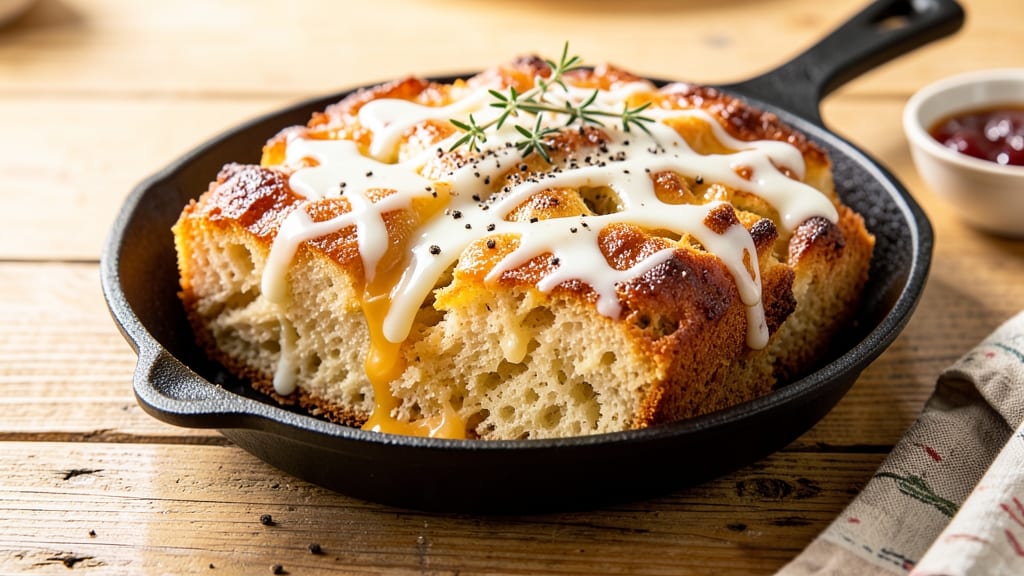
This Amish cheese bread recipe delivers the perfect balance of crispy crust and gooey, melty cheese swirls—just like the bread you'd find at a Pennsylvania Dutch country gathering. 💛 The secret lies in a slow fermentation process that develops deep flavor and an airy crumb, while the cheese swirls create pockets of rich, savory goodness in every bite.
Traditional Amish cooking emphasizes simplicity and patience, and this recipe embodies those principles. With just a few basic ingredients—flour, yeast, milk, butter, and cheese—you'll create a bread that's both rustic and impressive.
The dough gets its signature texture from a long rise, which allows the gluten to relax and the flavors to meld beautifully.
What makes this bread truly special is how it transforms from a simple dough to a golden, crusty loaf with those irresistible cheese swirls.
The high heat of the oven creates a crisp exterior while keeping the interior tender, and the melted cheese adds a rich, savory depth that makes every slice worth savoring.
Serve this bread warm alongside hearty soups, stews, or chili for a comforting meal that feels like a taste of Amish country. The combination of the crusty bread and melty cheese makes it a perfect addition to any gathering, bringing a touch of tradition to your table.
Ingredients for amish cheese bread
Four cups of flour kick off this rustic loaf, blending with yeast and milk to create a dough that rises beautifully.
| Ingredient | Amount | Notes |
|---|---|---|
| All-Purpose Flour 🌾 | 4 cups | Sifted for even texture |
| Active Dry Yeast 🍞 | ¼ tsp | Ensure it's fresh |
| Warm Whole Milk 🥛 | 1 ¼ cups | 110°F for yeast activation |
| Unsalted Butter 🧈 | ½ cup | Cold, cubed for swirling |
| Granulated Sugar 🍚 | 1 tbsp | For yeast feeding |
| Salt 🧂 | 1 tsp | Kosher or sea salt |
| Shredded Sharp Cheddar Cheese 🧀 | 2 cups | Aged for best flavor |
| Large Egg 🥚 | 1 whole | Room temperature |
| Extra-Virgin Olive Oil 🫒 | 2 tbsp | For dough handling |
The flour is the foundation—King Arthur or Bob’s Red Mill brands work best for that signature Amish texture. Yeast? Fresh is non-negotiable—test it in warm milk with a pinch of sugar first. If it doesn’t foam within 5 minutes, toss it. For the cheese, aged sharp cheddar (like Cabot or Tillamook) delivers that tangy depth, but Monterey Jack works in a pinch. The butter should be cold—Plugrá or Land O’Lakes work, but avoid salted versions. Grab whole milk from the dairy section (not the cartons)—it’s richer and makes a difference in flavor.
No sharp cheddar? Pepper Jack or Gouda add their own unique kick. Short on butter? Olive oil or coconut oil (melted) keeps the swirls creamy, though texture may vary slightly. The dough needs a long rise—at least 2 hours, but overnight in the fridge is ideal. If your yeast is sluggish, warm the milk to 110°F (not boiling). For the egg, room temperature ensures even mixing. And if you’re swirling cheese, freeze it first—it’ll hold its shape better when folded in.
Dough keeps 3 days wrapped in plastic in the fridge, or 3 months frozen. For the cheese swirls, portion and freeze before baking—just thaw slightly before shaping. The baked loaf? Cool completely before slicing to prevent crumbly edges. Store leftovers in an airtight container for 4-5 days—it reheats beautifully in a 350°F oven for 10 minutes, wrapped in foil.
Why You'll Love This Recipe
- No-Yeast Fuss: I swear by this dough—just mix, let it rise once, and bake. No kneading, no waiting hours, just 10 minutes of hands-off time while the yeast works its magic with warm milk and butter.
- Buttery Cheese Bliss: That pull-apart texture? Pure joy. The sugar-caramelized butter and melted cheese inside make every bite feel like a hug—crusty outside, gooey inside, and so satisfying.
- Breakfast to Snack: Honestly, this bread is my secret weapon. Toast it for breakfast with jam, serve warm with soup, or pack slices for lunch—it’s the one thing my kids actually finish.
- Budget Stretch: Five ingredients, one dough, endless uses. A single batch feeds my family for days, and the leftovers? Perfect for sandwiches or reheating with a sprinkle of cheese. Cheap, filling, and no waste.
Step-by-step instructions for Amish cheese bread
Here's how to achieve that signature Amish crusty exterior with gooey cheese swirls inside.
👨🍳 Step 1: Activate the Yeast and Mix the Dough
In a small bowl, combine the 1.25 cups warm whole milk (about 110°F) with the 1 tbsp granulated sugar and 0.25 tsp active dry yeast. Let this sit for 5-10 minutes until it becomes foamy—this confirms your yeast is active. If it doesn't foam, your yeast is likely dead and you'll need to start over.
In a large mixing bowl, whisk together the 4 cups all-purpose flour and 1 tsp salt. Make a well in the center and pour in the yeast mixture along with the 1 whole large egg and 2 tbsp extra-virgin olive oil. Using a wooden spoon, gently mix until a shaggy dough forms, then turn it out onto a lightly floured surface and knead for 8-10 minutes until smooth and elastic. The dough should feel slightly tacky but not sticky—add a little more flour if needed.
🥘 Step 2: Incorporate the Butter and Cheese
Return the kneaded dough to the mixing bowl and let it rest for 5 minutes. Cut the 0.5 cup unsalted butter into small cubes and distribute them evenly over the dough. Fold the dough over itself to incorporate the butter, then let it rest again for 5 minutes—this helps the butter distribute more evenly.
Next, sprinkle the 2 cups shredded sharp cheddar cheese evenly over the dough. Using your hands, gently fold the cheese into the dough, being careful not to overwork it. The cheese should be distributed throughout but still form visible swirls when you roll it out later. Cover the bowl with a clean kitchen towel and let the dough rise in a warm place for 1-1.5 hours, or until it has doubled in size.
🔥 Step 3: Shape and Proof the Loaves
Once the dough has risen, punch it down to release the air and divide it into 4 equal portions. On a lightly floured surface, roll each portion into a 12-inch long log, about 3 inches wide. Place each log seam-side down on a parchment-lined baking sheet, leaving 2 inches of space between them. Cover loosely with the kitchen towel and let them proof for another 30-45 minutes—they should look slightly puffy but still hold their shape when gently pressed.
Here's the thing—don't overproof these loaves. They should rise just enough to fill the baking sheet but not collapse. If they're ready, you'll see the dough has expanded and the surface looks slightly domed. This final proofing ensures they'll bake up tall and crusty rather than flat and dense.
🔥 Step 4: Bake to Golden Perfection
Preheat your oven to 375°F. Bake the loaves for 20-25 minutes until they're deep golden brown on top. The key here is to watch closely after 15 minutes
You'll know they're done when they sound hollow when tapped on the bottom and the internal temperature reaches 190°F. The cheese should be melted and gooey inside, with those beautiful swirls visible through the crust. Let them cool on a wire rack for 10 minutes before serving—this prevents the cheese from oozing out when you slice them.
Pro Tips For Making Amish Cheese Bread
- Test Your Yeast First: Skip the guesswork—mix a spoonful of warm milk with the yeast and a pinch of sugar, then wait 5 minutes. If it doesn’t bubble, toss it and start fresh. I learned this the hard way after baking a dense, flat loaf because my "fresh" yeast was actually expired.
- Chill the Dough Overnight: Let the dough rest in the fridge for 12–16 hours—yes, even if you’re eager. The slow fermentation deepens the flavor and makes the texture tender. I was skeptical until I tried it, and now I never skip it.
- Cut Cold Butter Small: Dice the unsalted butter into tiny cubes (pea-sized) and toss them into the dry ingredients before adding the milk. This ensures even distribution and prevents big, greasy clumps in your bread. Trust me, your future self will notice the difference.
- Don’t Overproof the Loaf: The dough should double in size, but stop when it springs back slowly when poked—not immediately. Overproofing collapses the structure, leaving you with a sad, dense loaf. I used to rush this, and the results were always disappointing.
Creative variations of amish cheese bread
Amish-Style Herb Swirl
Swap out some of that sharp cheddar for a mix of 2 tbsp dried rosemary, 1 tbsp dried thyme, and 1 tsp garlic powder—fold them into the dough along with the cheese.
The herbs infuse the butter beautifully, creating a fragrant, rustic flavor that feels authentically Amish. I like to add 1 tbsp lemon zest too for a bright contrast. 🌿
Sweet Potato Twist
For a fall favorite, replace ½ cup of the shredded cheese with ½ cup mashed cooked sweet potato (about 1 medium sweet potato, peeled and roasted). The natural sweetness balances the sharp cheddar, and the texture stays tender.
Add ½ tsp cinnamon to the dough for warmth. This version pairs perfectly with chili or turkey dinner. 🍠
Jalapeño Kick
For those who love heat, fold in ½ cup finely diced jalapeños (seeds removed for mild heat) along with the cheese. The jalapeños add a spicy surprise in every bite, especially when they melt into those gooey swirls.
If you want extra flavor, mix the jalapeños with 1 tbsp honey before adding them to the dough. 🌶️
Whole Wheat Version
Replace 1 cup of all-purpose flour with whole wheat flour for a nuttier, heartier loaf. The texture will be slightly denser, but the flavor is richer and more complex. To compensate, add 1 extra tbsp olive oil to keep the dough from drying out.
This version is perfect for those who want a little more fiber without sacrificing that classic Amish taste. 🌾
Breakfast Cheese Bread
Transform this into a breakfast loaf by adding ½ cup cooked breakfast sausage (like Johnsonville or Applegate) and ½ cup diced cooked bacon to the dough. Fold them in gently after the cheese, then bake as usual.
Serve warm with scrambled eggs or as a side for brunch. The salty, savory flavors make it a crowd-pleaser. 🍳
Gluten-Free Adaptation
For a gluten-free version, swap the all-purpose flour for a 1:1 gluten-free flour blend (like King Arthur or Bob’s Red Mill). Add ½ tsp xanthan gum to help bind the dough.
The texture won’t be identical, but it’s still delicious and inclusive. Use sharp cheddar and butter as usual, but expect a slightly denser crumb. 💪
Nutrition facts
Frequently asked questions
Why does Amish cheese bread need such a long rise time?
The extended rise (at least 1-1.5 hours) develops the bread's signature texture and flavor. This slow fermentation allows the gluten to relax, creating a tender crumb while building complex flavors through natural yeast activity. The patience pays off with that perfect balance of crisp crust and airy interior!
Can I make this recipe without a stand mixer?
This recipe is designed for hand-kneading. Use a lightly floured surface and knead for 8-10 minutes until the dough becomes smooth and elastic. The butter and cheese should be incorporated by hand folding after kneading. The manual method actually helps develop more gluten for that traditional Amish texture.
What's the best way to store leftovers?
Wrap cooled loaves tightly in plastic wrap or aluminum foil and store at room temperature for up to 3 days. For longer storage, freeze slices in a single layer before bagging - they'll keep for 3 months. To reheat, wrap slices in foil and warm in a 350°F oven for 10 minutes until crispy again.
Why did my cheese bread turn out dense instead of crusty? Dense bread usually means one of two things: overproofing (dough rose too long) or insufficient kneading.
Can I use powdered milk instead of whole milk?
While possible, whole milk creates a richer flavor and better texture. If you must substitute, use 1 cup powdered whole milk mixed with ½ cup warm water to match the fat content. For the best results, stick with whole milk - the fat content helps create that signature tender crumb and melty cheese swirls.