
Side Dishes
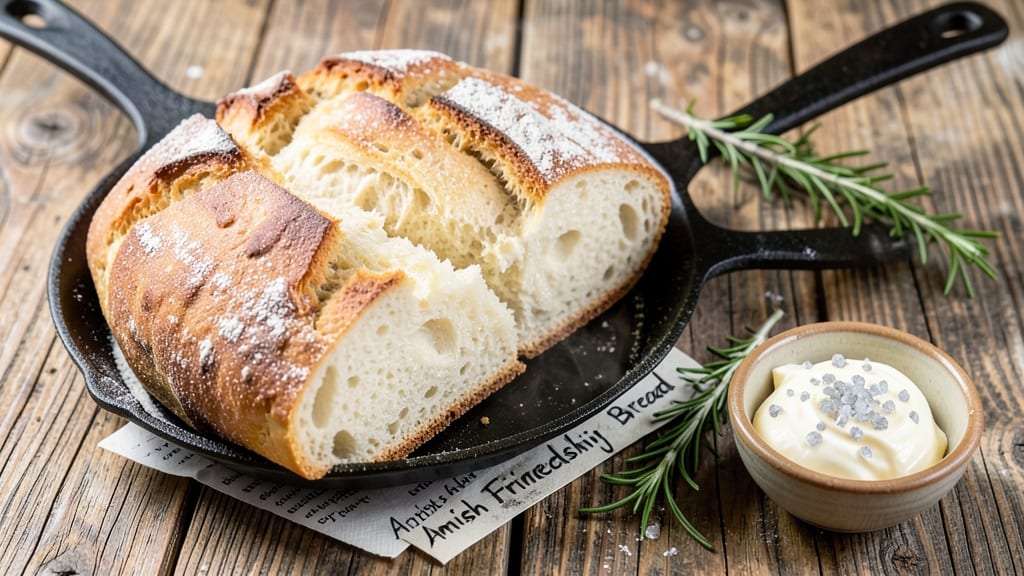
This Amish friendship white bread recipe brings nostalgic warmth to your kitchen with its signature foil-sealed sweetness and walnut swirls. 🌾 The traditional method creates a tender, pull-apart loaf that's perfect for sharing—just like the Amish communities it originated from.
What makes this recipe special is the simple yet foolproof technique that delivers restaurant-quality results at home, with no fancy equipment needed.
The secret to achieving that signature tender texture lies in the slow baking process, where the bread steams in its foil packet before finishing uncovered. This creates a moist, slightly sweet crumb with a golden crust, while the walnut swirl adds rich, nutty flavor in every bite.
The recipe uses basic pantry ingredients you likely already have, making it both accessible and impressive for any occasion.
By the time you pull that foil-sealed loaf from the oven, you'll have a warm, fragrant bread that's perfect for slicing thick or tearing by hand. The slightly sweet, buttery flavor pairs beautifully with butter, jam, or even on its own.
This recipe maintains the traditional Amish method while adapting it for modern home kitchens—simple enough for beginners but impressive enough for gatherings.
Whether you're celebrating a special occasion or simply craving homemade bread, this recipe delivers the perfect balance of tenderness and flavor. The walnut swirl adds a touch of sophistication without complicating the process, making it a crowd-pleaser every time.
Let's get started on creating this timeless classic in your own kitchen.
Ingredients for amish friendship white bread
Six simple ingredients transform into nostalgic Amish friendship bread with walnut swirls and foil-sealed sweetness.
| Ingredient | Amount | Notes |
|---|---|---|
| All-Purpose Flour 🌾 | 6 cups | White bread flour preferred |
| Granulated Sugar 🍚 | ½ cup | White sugar for sweetness |
| Active Dry Yeast 🍞 | 2 ¼ tsp | Or 1 packet instant yeast |
| Unsalted Butter 🧈 | ½ cup | Cold, cubed for easier mixing |
| Warm Water 💧 | 1 ¼ cups | 110°F for yeast activation |
| Salt 🧂 | 1 ½ tsp | Diamond Crystal preferred |
| Chopped Walnuts 🥜 | 1 ½ cups | Toasted for enhanced flavor |
| Almond Extract 🌿 | ½ tsp | For subtle almond aroma |
| Heavy Cream 🥛 | ¼ cup | Cold for swirl texture |
| Almond Sliced 🌰 | ¼ cup | For decorative topping |
| Aluminum Foil 📄 | 1 sheet | Heavy-duty for sealing |
| Granulated Sugar 🍚 | 1 tbsp | For sprinkling on top |
The flour is the foundation—white bread flour gives that signature tender crumb, but all-purpose works in a pinch. King Arthur or Bob's Red Mill are my go-tos for consistent results. Walnuts should be freshly toasted (5 minutes at 350°F) to bring out their rich flavor. The yeast is crucial—check the expiration date and use it within 3 months for best activation. For the almond extract, Goya or McCormick brands are reliable and affordable. The heavy cream needs to be cold straight from the fridge to create those beautiful swirls without melting prematurely.
No almond extract? Vanilla extract at half the amount works surprisingly well. Running low on walnuts? Pecans or hazelnuts keep the same nutty essence. The butter must be cold and cubed—don't let it sit at room temperature or the dough will get gummy. For the yeast activation, warm water between 110-115°F is ideal (too hot kills it, too cold slows it). If your kitchen's humid, reduce the yeast by 0.25 tsp to prevent overproofing. The foil should be heavy-duty aluminum—regular foil tears during the steam phase.
Store any leftovers in an airtight container for 3-4 days at room temperature, or freeze for up to 3 months. The walnut swirl stays fresh longest if you wrap the bread tightly in plastic wrap before storing. For serving, slice thickly with a serrated knife—this bread tears beautifully when warm. The foil-sealed method means it reheats perfectly—just wrap a slice in foil and warm in a 300°F oven for 5 minutes. This bread freezes beautifully too—slice before freezing for perfect individual portions later.
Why You'll Love This Recipe
- Five-Ingredient Magic: I swear by this recipe because it’s all about the basics done right—just flour, sugar, yeast, butter, and water. No fancy pantry trips or last-minute substitutions; if you’ve got those five things, you’re golden.
- Buttery Softness Guaranteed: That warm butter mixed into the dough? It’s the secret weapon—creamy, tender crumb that’s almost too good to slice. Honestly, I’ve tried store-bought, but this tastes like homemade love.
- Meal Prep MVP: Bake a batch on Sunday, and you’ve got sandwich bread, toast, or French toast for the whole week. Wrap it in a towel, and it stays fresh longer than anything I’ve ever bought. (Yes, even on a Tuesday night.)
- Budget-Friendly Staple: Flour and sugar are cheap, yeast is a steal, and butter stretches further than you’d think. I make two loaves for the cost of one store-bought—plus, it’s way more satisfying to tear into something you baked yourself.
Step-by-step instructions for Amish friendship white bread with walnut swirls
This classic Amish bread comes together with a few key techniques that create its signature swirls and tender crumb.
👨🍳 Step 1: Activate the Yeast and Mix the Dough
In a large bowl, combine the 1.25 cups warm water (about 110°F) with the 0.5 cup granulated sugar and 2.25 tsp active dry yeast. Let it sit for 5-10 minutes until frothy—this confirms your yeast is alive and ready to work. If it doesn't bubble, start over with fresh yeast.
In a separate bowl, whisk together the 6 cups all-purpose flour and 1.5 tsp salt. Cut in the 0.5 cup cold unsalted butter using a pastry cutter or your fingers until the mixture resembles coarse crumbs. Pour the yeast mixture into the flour and stir until a shaggy dough forms. This is where the magic begins—your dough will transform from sticky to smooth.
🍳 Step 2: Knead Until Smooth and Elastic
Turn the dough onto a lightly floured surface and knead for 8-10 minutes until it becomes smooth, elastic, and springs back when pressed. I like to use the "windowpane test"—stretch a small piece of dough thin enough to see light through it. If it tears, knead a bit longer.
During kneading, the gluten develops, which gives this bread its signature tender yet sturdy texture. Don't rush this step—proper kneading prevents a dense, heavy loaf. Once the dough passes the test, shape it into a ball and place it in a lightly greased bowl. Cover with a damp towel and let it rise in a warm place for 1 hour or until doubled in size.
🥘 Step 3: Create the Walnut Swirls and Shape the Loaves
While the dough rises, prepare the filling by mixing the 1.5 cups chopped walnuts with the 0.5 tsp almond extract and 0.25 cup heavy cream. This combination adds rich flavor and that signature swirl pattern. Punch down the risen dough and divide it into 6 equal portions (about 1 cup each).
Roll each portion into a 12-inch rope. Spread about 1 tablespoon of the walnut mixture along one side of each rope, then roll tightly to seal. Place each loaf seam-side down in a greased 9x5-inch loaf pan. Cover and let rise for another 30-45 minutes until puffy. The dough should feel light and springy when pressed gently.
🔥 Step 4: Bake with Foil-Sealed Perfection
Preheat your oven to 350°F. Brush the tops of the loaves with water and sprinkle with the remaining 1 tbsp granulated sugar. This creates that classic caramelized crust. Cover each loaf pan tightly with aluminum foil and bake for 45 minutes. The foil traps steam, ensuring a tender crumb.
Remove the foil and bake for another 10-15 minutes until the bread is golden brown and sounds hollow when tapped on the bottom. Let the loaves cool in the pans for 10 minutes before transferring to a wire rack. The internal temperature should reach 190°F—this guarantees a perfectly baked loaf.
⏰ Step 5: Slice and Serve with Almond Garnish
Once completely cooled, slice the loaves into ½-inch thick pieces. The walnut swirls should be visible throughout each slice, and the texture should be tender with a slightly crisp crust. For extra presentation, sprinkle the sliced bread with the 0.25 cup sliced almonds before serving.
This bread tastes best at room temperature, so let it sit for 30 minutes before slicing if you're impatient to try it. The almond extract and walnuts create a subtle sweetness that pairs perfectly with butter or jam. Store any leftovers in an airtight container for up to 5 days—though I doubt it'll last that long!
Pro Tips For Making Amish Friendship White Bread
- MEASURE FLUIDS ACCURATELY: The warm water and melted butter in this recipe are not the place to eyeball. Use a liquid measuring cup—yeast and sugar react differently when volumes vary, and you’ll end up with either a dense loaf or one that rises too fast and collapses. I learned this the hard way after making a batch that tasted like it had half the butter.
- SOFTEN BUTTER BEFORE MIXING: Cold butter cubes in warm water? That’s a recipe for uneven texture. Cut the butter into small pieces and let it sit at room temperature for 20-30 minutes until it’s pliable but not melted—just enough to blend smoothly into the dough. Your bread will have that signature tender crumb instead of a waxy, greasy bite.
- DON’T OVERMIX THE DOUGH: Once you add the yeast and flour, stop stirring the second everything comes together. Overworking the dough develops gluten too early, which makes the bread tough instead of light and fluffy. A few gentle folds with a spatula is all it takes—this isn’t pizza dough.
- LET THE DOUGH RISE UNTIL IT DOUBLES: Patience here makes all the difference. The recipe might say "until puffy," but don’t pull it out until it’s fully doubled in size—even if that means leaving it overnight in the fridge. The longer the rise, the better the flavor and texture, especially with this buttery, sweet version. (Yes, even if you’re impatient like me.)
Health benefits of amish friendship white bread
Whole Grain Benefits
While this recipe uses all-purpose flour, you can boost its nutritional profile by substituting 1-2 cups with whole wheat or rye flour. Whole grains provide fiber (about 3g per cup), which aids digestion and helps stabilize blood sugar levels.
The walnuts add healthy fats and plant-based protein, with 1.5 cups providing 15g protein and 18g fat—mostly heart-healthy omega-3s. 🌱
Low-Sugar Adaptation
For a less sweet version, reduce the sugar to ¼ cup total (both in the dough and topping). Use ½ tsp cinnamon instead of almond extract for warmth, and add 1 tsp vanilla extract for depth.
This keeps the bread tender while cutting refined sugar by 75%. The walnuts' natural sweetness will still shine through.
Gluten-Free Option
For gluten-free bakers, replace the flour with a 1:1 gluten-free bread flour blend (like Bob's Red Mill or King Arthur). Add 1 tsp xanthan gum to improve elasticity.
Note that gluten-free versions may be denser—bake 10-15 minutes longer and check at 180°F internal temp. The walnut swirl remains a delicious focal point. 🥜
Protein Boost
Increase the protein content by adding ½ cup vital wheat gluten to the flour mixture or mixing in ¼ cup ground flaxseed with the walnuts. These additions raise protein by 10-15g per loaf without altering texture. The flaxseed also adds omega-3s, while wheat gluten improves chewiness—ideal for sandwiches.
Diabetic-Friendly Adjustments
Swap the granulated sugar for ½ cup monk fruit sweetener or ¼ cup erythritol to eliminate refined carbs. Use unsweetened applesauce (¼ cup) to replace half the butter, reducing fat while adding moisture. These changes keep the bread low-glycemic while maintaining tenderness. Always monitor blood sugar responses individually.
Nutrition facts
Frequently asked questions
Why does Amish friendship bread use foil sealing?
The foil sealing creates a steam bath during baking, which locks in moisture and produces that signature tender crumb. This traditional method prevents the bread from drying out while developing a golden crust. The steam also helps create the slightly sweet flavor that makes this bread so special.
Can I make this bread without walnuts?
Replace the walnuts with pecans, hazelnuts, or even dried cranberries for a different flavor profile. If you prefer no nuts, simply omit the walnut mixture and use the extra 0.25 cup heavy cream to brush the tops before baking for extra richness.
How do I know when the dough is properly kneaded?
Perform the "windowpane test"—stretch a small piece of dough until it's thin enough to see light through it. If it tears easily, knead 2-3 more minutes. The dough should also spring back slowly when pressed gently with your finger. Proper kneading develops gluten for that perfect tender yet sturdy texture.
Why does my bread taste bland?
Bland flavor usually comes from underproofed dough or skipping the almond extract. Let the dough rise until it's doubled in size (about 1 hour) and add the almond extract—it's key for that subtle sweet aroma. For extra flavor, try adding ½ tsp cinnamon to the dough or brushing warm bread with melted butter.
Can I make this bread in a Dutch oven?
Yes! Shape the dough into a round loaf, place it in a greased Dutch oven, and cover with foil. Bake at 350°F for 50 minutes (covered), then 10 minutes uncovered. The Dutch oven creates a crispier crust while keeping the interior tender. For a swirl effect, shape the dough into a round and press the walnut mixture into the center before sealing.