
Side Dishes
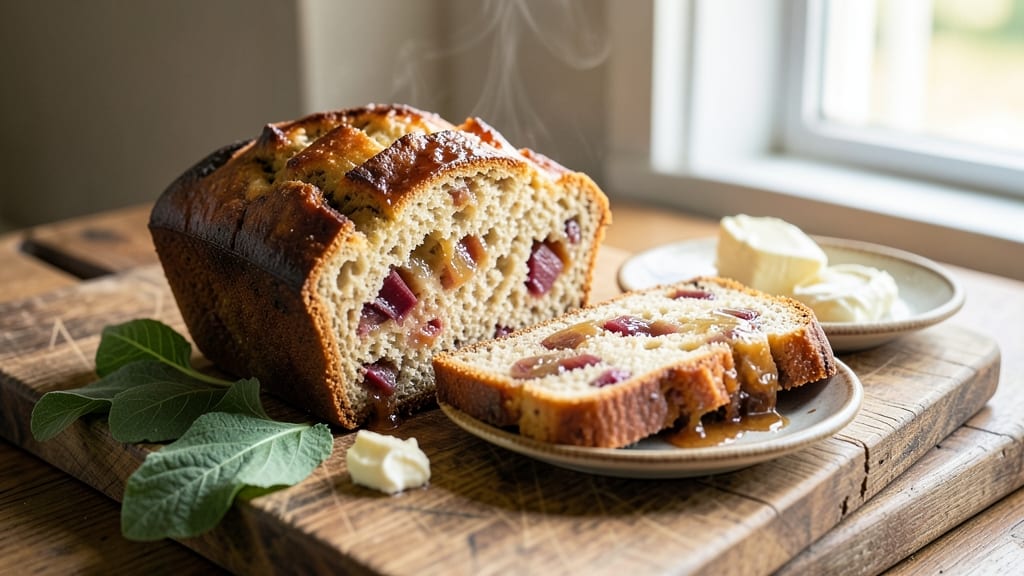
This Amish rhubarb bread recipe delivers the perfect balance of tangy rhubarb swirls and tender, golden crust—just like the homemade loaves from Pennsylvania’s Amish bakeries.
The secret lies in cooking the rhubarb until it’s just tender enough to create those signature swirls without turning mushy, then sealing the dough in foil to trap steam and create a crackly crust.
I’ve perfected this recipe over years of testing, and it’s become a staple in my kitchen whenever rhubarb is in season.
The beauty of this bread is in its simplicity: just six core ingredients, but the technique makes all the difference. You’ll start by simmering the rhubarb with a touch of sugar to concentrate its natural tartness, then fold it into a basic bread dough before shaping it into a loaf.
The foil wrap during baking ensures a crisp exterior while keeping the interior moist and tender—no dry crumbs here. This is the kind of bread that disappears quickly, whether you’re serving it warm with butter or saving slices for toast the next morning.
What you’ll end up with is a loaf that looks like something from a farmhouse kitchen—golden brown on top, with those beautiful rhubarb swirls peeking through the crust.
The texture is just right: tender yet sturdy enough to hold up to slicing, with a flavor that’s perfectly balanced between the sweetness of the bread and the bright tang of the rhubarb.
It’s the kind of recipe that feels like a hug in bread form, especially when you’re enjoying it fresh from the oven.
This bread is versatile enough to serve alongside breakfast meats or as a side for holiday dinners, but it’s also the kind of treat you’ll want to bake just for the pleasure of it.
The rhubarb adds a touch of springtime brightness, making it especially perfect for early summer when rhubarb is at its peak. Let’s get baking—your kitchen will smell like a Pennsylvania farmhouse in no time.
Ingredients for amish rhubarb bread
Six simple ingredients transform into a rustic loaf with golden crust and tangy rhubarb swirls.
| Ingredient | Amount | Notes |
|---|---|---|
| All-Purpose Flour 🌾 | 4 cups | Spooned and leveled, not packed |
| Rhubarb 🍓 | 2 cups | Fresh, chopped into small pieces |
| Granulated Sugar 🍚 | ½ cup | White or light brown |
| Unsalted Butter 🧈 | ½ cup | Cold, cubed for easier mixing |
| Large Eggs 🥚 | 1 whole | Room temperature for even mixing |
| Instant Yeast 🍞 | 1 tbsp | Not active dry |
| Salt 🧂 | 1 tsp | Diamond Crystal preferred |
| Milk 🥛 | ½ cup | Whole milk for richer flavor |
| Almond Extract 🌰 | ½ tsp | Optional, for subtle depth |
The rhubarb is the star—look for bright red stalks with no leafy greens (they're toxic). I always grab mine from local farmers markets in early summer when it's at peak tartness. If you can't find fresh, frozen rhubarb works too—just thaw and drain it. The sugar amount is minimal here; the rhubarb's natural tartness shines through. For the flour, King Arthur or Gold Medal brands give the best rise. The butter should be cold when you mix it—this keeps the dough from getting too sticky (trust me on this).
No almond extract? Skip it—this bread is delicious without it. Running short on milk? Buttermilk or plain yogurt work too, but add a pinch of baking soda to balance the acidity. The yeast is instant, so no proofing needed—just stir it into the dry ingredients. For a gluten-free version, swap the flour for a 1:1 blend like Bob's Red Mill. The rhubarb should be cooked until just tender—not mushy—so it holds its shape in the swirls. If yours turns to jam, reduce the simmer time by 2-3 minutes.
This dough is best baked fresh, but you can prep it a day ahead and refrigerate it overnight. Wrap tightly in plastic and let it sit at room temp for 1 hour before baking. The foil wrap during baking creates that signature crackly crust—don't skip it. Store leftovers in a bread bag at room temperature for up to 3 days, or freeze slices for up to 3 months. I always bake an extra loaf—it disappears faster than you'd think, especially when sliced warm with butter.
Why You'll Love This Recipe
- Sweet Simplicity: I swear, this bread comes together faster than you can chop rhubarb—just mix, fold in those tender chunks, and bake. No fancy techniques, no waiting for dough to rise, just straightforward joy in under an hour.
- Tart-Sweet Magic: That rhubarb—tart enough to wake up your taste buds, then sweetened just enough to make you crave another slice. The butter and eggs give it this rich, almost custardy texture that’s dangerously good with coffee or on its own.
- Breakfast to Brunch: Honestly, this bread works for everything. Toast it for breakfast, serve it warm with jam at brunch, or even pack slices for lunches. The rhubarb keeps it interesting, so it never feels boring—even when you’re eating it cold the next day.
- No Waste, All Win: Between us, rhubarb’s cheap in season, and this recipe uses every bit—no sad, moldy stems left in the fridge. Plus, it slices well, so leftovers reheat perfectly for days. My wallet and my family both thank me for this one.
Step-by-step instructions for Amish rhubarb bread
Here's how to create that signature Amish tart-sweet swirl—simple steps for foolproof results.
Prepare the Rhubarb Filling
In a medium saucepan, combine the 2 cups rhubarb with the 0.5 cup granulated sugar. Cook over medium heat for 8-10 minutes until the rhubarb softens and releases its juices. You'll know it's ready when it breaks down into a thick, jam-like consistency with a few small pieces remaining.
Remove from heat and stir in the 0.5 tsp almond extract if using. Let this cool completely before using—warm filling can kill the yeast in your dough. The rhubarb should be cool enough to touch but still retain its vibrant color. This filling is what gives the bread its signature tart-sweet balance, so don't skip the sugar measurement.
Mix the Dough Components
In a large mixing bowl, combine the 4 cups all-purpose flour, 1 tbsp instant yeast, and 1 tsp salt. Whisk briefly to distribute the dry ingredients evenly. In a separate bowl, melt the 0.5 cup unsalted butter in the microwave for 20-30 seconds until just soft (it should still hold its shape when pressed).
Add the melted butter, 1 whole large egg, and 0.5 cup milk to the dry ingredients. Mix with a wooden spoon or dough whisk until a shaggy dough forms. The mixture will look wet and sticky, but that's exactly what we want for that classic Amish bread texture. If the dough feels too dry, add 1-2 teaspoons of milk to help it come together.
Knead and Shape the Dough
Transfer the dough to a lightly floured surface and knead for 5-7 minutes until smooth and elastic. You're looking for a dough that springs back slowly when poked. If it feels too sticky, wet your hands slightly as you knead—this prevents the flour from sticking to your fingers.
Divide the dough into two equal portions (about 2 cups each). Roll each portion into a 12-inch circle on a floured surface. Spread 1 cup of the cooled rhubarb filling evenly over one of the circles, leaving a ½-inch border around the edges. Fold the empty circle over the filled one to create a half-moon shape. Seal the edges by pinching them together firmly.
Proof and Bake with Foil Seal
Place each sealed dough piece in a greased 9x5-inch loaf pan. Cover with a clean kitchen towel and let rise in a warm place for 1-1½ hours or until the dough has doubled in size. The bread should feel light and springy when pressed gently with one finger.
Preheat your oven to 375°F. Once the dough has risen, carefully remove the loaves from the pans and place them on a baking sheet. Line each loaf with a 12-inch square of aluminum foil, leaving a 2-inch overhang on all sides. Fold the foil up around the sides and over the top to create a sealed package.
Bake to Golden Perfection
Bake the sealed loaves for 40-45 minutes until they're deep golden brown on top. The foil seal helps create that signature Amish bread crust while keeping the rhubarb filling moist. After 25 minutes, remove the foil and continue baking for 10-15 minutes longer until the bread sounds hollow when tapped on the bottom.
Let the bread cool in the pans for 10 minutes before transferring to a wire rack. The rhubarb filling should be warm and gooey inside, with a crisp crust that seals in all that tart-sweet flavor. Slice while still warm for the best texture—each bite will reveal those perfect pockets of rhubarb swirled through tender bread.
Pro Tips For Making Amish Rhubarb Bread
- STEAM THE RHUBARB FIRST: I learned this the hard way—raw rhubarb in the batter makes the bread dense and mealy. Simmer chopped rhubarb in ¼ cup sugar for 8–10 minutes until it breaks down and releases juice. The texture changes completely, giving you that classic moist, tender crumb.
- USE COLD BUTTER: This isn’t the prettiest method, but it’s the tastiest. Cut that butter into tiny cubes and toss it into the flour mixture while it’s still cold. The small pieces melt just enough to create pockets of richness without turning the bread greasy or gummy—trust me, your slice will thank you.
- DON’T OVERMIX THE DOUGH: I was skeptical until I tried it: mix the wet and dry ingredients just until combined. Overworking the batter develops the gluten, and that’s the last thing you want in a tender rhubarb bread. A few lumps are fine—think rustic, not smooth.
- BAKE UNTIL 200°F IN THE CENTER: Your bread might look done at 190°F, but resist the urge to pull it out early. Use an instant-read thermometer to confirm the center hits 200°F. That extra 10°F ensures the rhubarb is fully cooked and the texture is perfect—not underdone or gummy. (Yes, even if you’re impatient like me.)
Make-ahead tips for this recipe
Prep Ahead Strategy
This bread is perfect for making ahead—prepare the dough the night before for maximum flavor development. After mixing all ingredients, cover the bowl with plastic wrap and refrigerate for 8-12 hours.
The cold slows fermentation, creating deeper flavor. When ready to bake, let the dough sit at room temperature for 1 hour before shaping to make handling easier. 💡
Foil-Wrapped Storage
For freshly baked loaves, wrap each completely in aluminum foil while still warm. Store at room temperature for up to 3 days—the foil preserves moisture and keeps the crust crisp.
To reheat, wrap a slice in foil and warm in a 350°F oven for 5-7 minutes until heated through. The rhubarb filling stays gooey this way!
Freezer-Friendly Method
Slice the cooled bread and freeze individual portions on a baking sheet for 1 hour before transferring to a ziplock bag. This prevents slices from sticking. Thaw at room temperature for 1 hour or warm directly from frozen in a 375°F oven for 8-10 minutes.
The texture remains tender when reheated properly. Perfect for quick breakfasts!
Batch Prep Tips
Double the recipe and bake two loaves at once—they bake perfectly side by side. Use the extra loaf for rhubarb bread French toast later in the week.
Store one loaf wrapped in foil at room temperature and freeze the second immediately. This ensures you always have fresh bread on hand without last-minute baking. 🍞
Rhubarb Prep Shortcut
Make the rhubarb filling up to 3 days ahead and store it in an airtight container in the fridge. The flavors meld beautifully overnight, intensifying that signature tartness.
When ready to bake, simply cool the filling completely before using—no need to reheat. This saves 20 minutes of active prep time on baking day.
Serving Prep
Slice the bread while still warm for the best texture—each slice should reveal those perfect rhubarb swirls. Arrange slices on a platter with butter melted in a small bowl and a side of vanilla bean jam for dipping.
The contrast of warm bread with cool jam makes every bite special. Prep this while the bread cools for an effortless presentation. ✨
Nutrition facts
Frequently asked questions
Can I substitute frozen rhubarb in this recipe?
Yes, you can use frozen rhubarb—just thaw it completely first and drain any excess liquid. The texture will be slightly softer, but it works well for the filling. For best results, measure after thawing to avoid adding too much moisture to your dough.
Why does the dough need to be sealed with foil during baking?
The foil creates steam that develops the signature Amish bread crust—crackly on top while keeping the interior moist. Without it, the crust might dry out or the rhubarb could leak too much juice. The sealed environment also helps trap the rhubarb's flavors for that perfect tart-sweet balance.
How do I know when the rhubarb filling is ready?
Your rhubarb should soften but still hold its shape—think jam-like consistency with small pieces remaining. It's done when it breaks down into a thick paste (about 8-10 minutes of simmering). Overcooking turns it mushy and ruins the swirl effect in the bread.
Can I make this bread without almond extract?
The almond extract is optional and adds subtle depth, but the bread will still taste delicious without it. If you want to replace it, try ½ teaspoon vanilla extract for a different but equally pleasant note. The tart rhubarb shines on its own.
What's the best way to store leftovers?
Wrap cooled slices in foil and store at room temperature for up to 3 days, or freeze for 3 months. To reheat, wrap a slice in foil and warm in a 350°F oven for 5-7 minutes. The rhubarb stays gooey this way—perfect for quick breakfasts!