
Side Dishes
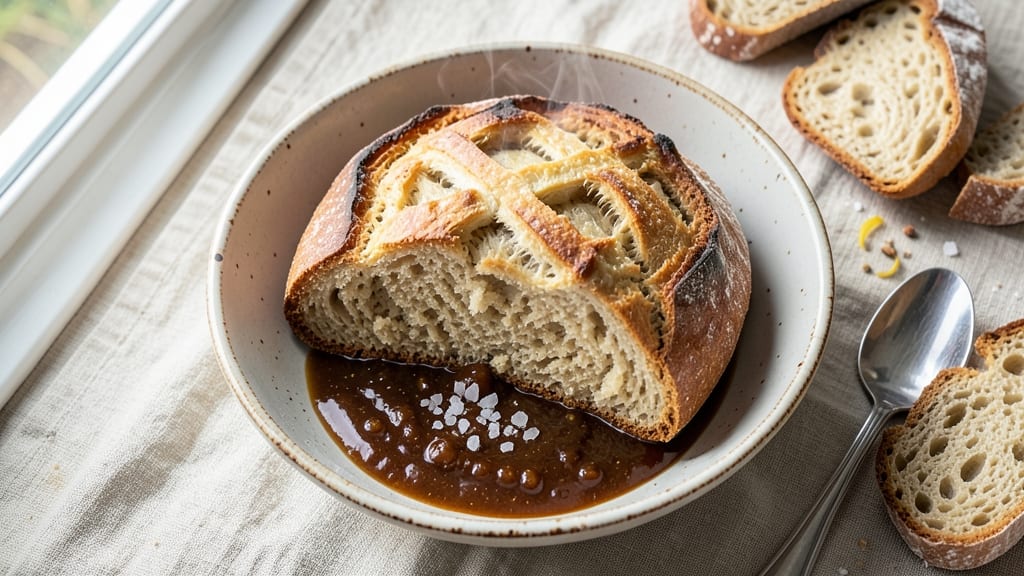
This Anadama bread recipe using King Arthur flour delivers the iconic molasses-kissed crust and tender interior that makes New England sandwiches legendary.
The secret lies in a steam bath during baking, which creates that signature crispy exterior while keeping the crumb impossibly soft—just like the bread you’d find at Boston’s historic Union Oyster House. King Arthur’s high-protein flour ensures a sturdy yet tender crumb that holds up perfectly for toast or sandwiches.
The process is straightforward but requires patience: a long fermentation develops deep flavor, while the foil-sealed steam bath transforms the crust into something almost caramelized.
You’ll need about 2 hours for prep and baking, but the results—crusty enough to stand up to butter, yet soft enough to melt in your mouth—are worth every minute. This isn’t just bread; it’s a texture and flavor experience that turns ordinary meals into something special.
What sets this recipe apart is the balance of sweetness and heartiness. The molasses crust adds a subtle caramel note that pairs beautifully with the bread’s rustic, slightly dense crumb, while the steam bath ensures that signature crispness without burning.
Whether you’re making a classic grilled cheese or simply toasting a slice with butter, the contrast of textures and flavors will remind you why Anadama bread is a New England staple.
For best results, let the dough rest overnight in the refrigerator—this slow fermentation enhances the flavor and makes shaping easier. The bread keeps well for several days, making it perfect for meal prep or gifting.
Ready to bake your own? Here’s how to achieve that perfect molasses-kissed crust and foil-sealed softness every time.
Ingredients for anadama bread recipe king arthur
The iconic molasses-kissed crust and tender crumb start with these 12 simple ingredients.
| Ingredient | Amount | Notes |
|---|---|---|
| King Arthur Bread Flour 🌾 | 4 cups | High-protein for sturdy crumb |
| Active Dry Yeast 🍞 | ¼ oz | Or 2 packets instant yeast |
| Molasses 🍯 | ½ cup | Unsulphured for authentic flavor |
| Granulated Sugar 🍚 | ½ cup | White or light brown |
| Salt 🧂 | 2 tsp | Diamond Crystal preferred |
| Unsalted Butter 🧈 | ½ cup | Cold, cubed for dough |
| Warm Water 💧 | 1 ¼ cups | 110°F for yeast activation |
| Large Eggs 🥚 | 1 whole | Room temperature |
| Aluminum Foil 📄 | 1 sheet | Heavy-duty for steam bath |
| Cornmeal 🌽 | ¼ cup | For dusting loaf pan |
| Coarse Salt 🧂 | 1 tbsp | For crust sprinkle |
| Sesame Seeds 🌻 | 1 tbsp | Optional for traditional topping |
King Arthur bread flour is a game-changer here—its high protein gives that signature sturdy yet tender crumb. Grab it from King Arthur's website or any quality baking section, but don't substitute all-purpose flour unless you're okay with a denser loaf. The molasses needs to be unsulphured for that authentic New England flavor—Goya or Anthony's Good & Plenty are my go-tos. For the butter, I always use Plugrá or Land O'Lakes because they're consistently high-fat and cold straight from the fridge. The yeast should be fresh—if it's past its expiration, toss it and start over. And that coarse salt? Maldon flaky salt is perfect for topping, but any sea salt will work in a pinch.
No unsulphured molasses? Dark corn syrup at half the amount gets you close, though it won't be quite as authentic. Short on butter? Coconut oil works in a bind, but the flavor won't be identical. The sesame seeds are optional, but if you skip them, a sprinkle of poppy seeds adds a nice contrast. For the yeast, if you've got instant yeast, just halve the amount—no need to dissolve it first. The cornmeal can be swapped for all-purpose flour if needed, though it won't be quite as traditional. And that warm water? 110°F is perfect—too hot and you'll kill the yeast, too cold and it won't activate properly.
This dough needs time—overnight in the fridge is ideal for maximum flavor. The bread keeps beautifully for 4-5 days wrapped in a cloth bag at room temperature, or up to 2 weeks frozen. For reheating, wrap slices in foil and warm in a 350°F oven for 5 minutes. Pro tip: the molasses crust gets even better the next day—save a slice or two for tomorrow's toast. And if you make extra? Gift it. Everyone loves homemade Anadama.
Why You'll Love This Recipe
- No-Knead Magic: I swear by this—just mix, let it rise overnight, and bake. That King Arthur flour handles the molasses so well, no sticky mess or extra effort. Honestly, my lazy Sundays just got a whole lot better.
- Molasses Kiss: That deep, caramelized sweetness from the molasses? It’s the star. The sugar balances it perfectly, giving you a bread that’s rich but not cloying—like a hug in every bite. (Yes, even on a Tuesday night.)
- Weeknight Workhorse: Toss it in a sandwich for lunch, toast it with butter for breakfast, or serve it alongside chili for dinner. The crust holds up, the crumb stays soft, and it’s always the last thing to disappear. Between us, I’ve fed a crowd with one loaf.
- Budget-Friendly Staple: Five ingredients, zero waste. The yeast and flour stretch further than store-bought, and the molasses adds depth without breaking the bank. I bake two loaves, freeze one—no sad, stale bread here. Practical? Absolutely.
Step-by-step instructions for molasses-kissed Anadama bread
This classic New England bread delivers a perfect balance of crisp molasses crust and tender, foil-sealed interior.
Activate the Yeast for Maximum Rise
In a small bowl, combine the 1.25 cups warm water (around 110°F) with the 0.5 cup molasses and 0.5 cup granulated sugar. Stir until both are fully dissolved. Sprinkle the 0.25 oz active dry yeast over the liquid and let sit for 5-10 minutes until it becomes foamy and bubbly.
This activation step is crucial—you'll see tiny bubbles forming on the surface when the yeast is ready. If it doesn't foam within 10 minutes, your yeast might be dead, and you'll need to start over. The molasses adds depth of flavor while helping to feed the yeast for a robust rise.
Mix the Dough for Perfect Texture
In a large mixing bowl, combine the 4 cups King Arthur Bread Flour, 2 tsp salt, and the yeast mixture. Using a wooden spoon or dough whisk, stir until a shaggy dough forms. Add the 1 whole large egg and 0.5 cup cold cubed unsalted butter, mixing until the butter is incorporated.
Turn the dough out onto a lightly floured surface and knead for 8-10 minutes until smooth and elastic. The dough should be slightly tacky but not sticky. If it's too dry, add 1 teaspoon warm water at a time. The high-protein bread flour gives this loaf its signature sturdy crumb, so proper kneading is essential for that classic Anadama texture.
First Rise and Shape for Even Baking
Lightly oil a large bowl, place the dough inside, and cover with a damp towel. Let it rise in a warm place for 1-1.5 hours or until doubled in size. The dough should be puffy and spring back slowly when poked with a finger.
Punch down the dough to release air, then divide it into two equal pieces. Shape each piece into a round loaf, about 8 inches in diameter. Place them on a lightly floured surface and let rest for 10 minutes before final shaping. This resting period helps prevent the dough from shrinking during proofing.
Prepare for Baking with Foil Seal
Preheat your oven to 375°F. Line a baking sheet with the 1 sheet aluminum foil, leaving a 2-inch overhang on all sides. Sprinkle the 0.25 cup cornmeal evenly over the foil—this prevents sticking and adds a delicate crunch.
Place one shaped loaf on the cornmeal-dusted foil and brush the top with water. Sprinkle evenly with the 1 tbsp coarse salt and 1 tbsp sesame seeds. Fold the foil up around the loaf, sealing it completely. Repeat with the second loaf. The foil creates a steam bath that produces that signature tender interior while the molasses-salt-sesame topping gives the crust its signature flavor and texture.
Bake to Golden Perfection
Bake the foil-sealed loaves for 30-35 minutes until the crust is deep golden brown and the internal temperature reaches 190°F. Remove from the oven and carefully unfold the foil. The bread should have a crisp crust with a tender, slightly sticky interior.
Let the bread cool on a wire rack for 15-20 minutes before slicing. The crust will firm up slightly as it cools, making it easier to serve. This bread is best enjoyed fresh—its molasses-kissed crust and tender crumb make every slice worth the wait. Store any leftovers wrapped in foil at room temperature for up to 3 days or freeze for longer storage.
Pro Tips For Making Anadama Bread Recipe King Arthur
- Bloom the Yeast Properly: Skip the guesswork—dissolve the yeast in warm water (110°F) with a pinch of sugar first, then wait 5 minutes until it’s frothy before adding molasses. I learned this the hard way: dead yeast means flat bread, and no one wants that.
- Use Real Molasses: The recipe calls for molasses, but not just any molasses—unsulphured makes a real difference. Sulphured molasses can taste bitter and overpower the bread’s depth. Trust me, your loaf will thank you.
- Don’t Rush the First Rise: Let the dough rise in a warm spot until it’s doubled, even if it takes 2+ hours. I used to cut corners and end up with dense, gummy bread. Patience here guarantees a light, airy crumb.
- Steam the Loaf: Place a metal bowl upside-down on the oven rack while preheating, then pour 1 cup hot water in it when baking. This creates steam for the first 10 minutes, giving you that classic Anadama crust without burning the top. (Yes, even if you’re impatient like me.)
Dietary considerations for this dish
Gluten-Free Adaptation
For a gluten-free version, replace the King Arthur Bread Flour with a 1:1 gluten-free bread flour blend like King Arthur Measure for Measure. Add 1 tsp xanthan gum to help bind the dough, as gluten-free flours lack natural elasticity.
You may need to adjust the water by 1-2 tbsp—gluten-free doughs are often drier. Proofing time will also increase by 30-50 minutes due to slower fermentation. 🌾
Dairy-Free Option
Skip the butter entirely and use ½ cup coconut oil (solid at room temperature) or ½ cup vegan butter like Miyoko’s. The texture will be slightly denser but still delicious.
For extra richness, add 1 tbsp olive oil to the dough. The molasses and salt will still create that signature crust, just without dairy. 🧈
Lower-Sugar Version
Reduce the molasses to ¼ cup and replace the remaining ¼ cup with maple syrup or agave for a milder sweetness. Cut the granulated sugar to ¼ cup and add 1 tsp vanilla extract to compensate for the reduced sweetness.
The crust will still have depth but be less pronounced. 🍯
Allergen-Friendly Swaps
For egg-free bread, replace the 1 egg with 1 tbsp ground flaxseed mixed with 3 tbsp water (let sit for 5 minutes to thicken). For sesame-free topping, swap the sesame seeds with poppy seeds or toasted sunflower seeds.
Always check labels on molasses and flour for hidden allergens—some brands process in facilities with nuts or dairy. 🌻
Keto Considerations
This bread isn’t keto-friendly as written, but you can create a low-carb version using almond flour or coconut flour. Replace the 4 cups King Arthur Bread Flour with 3 cups almond flour and 1 cup coconut flour, and add 1 extra egg for binding.
Expect a denser texture, but it’ll pair well with high-fat meals. 🥑
Storage Flexibility
For longer freshness, store in an airtight container with a slice of bread or a damp paper towel to prevent drying. Freeze slices wrapped in foil for up to 3 months—reheat in a 350°F oven for 5-7 minutes to restore crispness.
The molasses flavor actually improves with storage, making it perfect for meal prep. ❄️
Nutrition facts
Frequently asked questions
Why does this Anadama bread need a steam bath?
The foil-sealed steam bath creates that signature tender interior while developing the crisp molasses crust. Without it, the bread would be too dense—this method mimics traditional New England baking techniques that produce the perfect texture contrast. The steam keeps the crumb moist and slightly sticky, just like the bread from historic Boston bakeries.
Can I make this bread without molasses?
Yes, but you’ll lose the signature flavor. Replace the ½ cup molasses with ½ cup honey or ¼ cup maple syrup + ¼ cup brown sugar for a similar caramel note. The crust won’t be identical, but the bread will still be delicious with a slightly sweeter profile.
How do I know when the bread is fully baked?
Look for a deep golden-brown crust and an internal temperature of 190°F when measured with an instant-read thermometer. The bread should also sound hollow when tapped on the bottom. If the crust browns too quickly, tent with foil during baking.
Why does the dough need overnight refrigeration?
Cold fermentation slows yeast activity, developing deeper flavor and improving texture. The dough also becomes easier to handle after resting. If short on time, proof at room temperature for 2 hours, but the flavor won’t be as complex. For best results, plan ahead—this bread tastes even better the next day!
What’s the best way to serve Anadama bread?
Toast slices with butter for a simple treat, or use it for classic grilled cheese sandwiches. The crisp crust holds up perfectly! For a sweet option, spread with cream cheese and drizzle with honey. The molasses flavor pairs beautifully with rich cheeses and salty toppings.