
Side Dishes
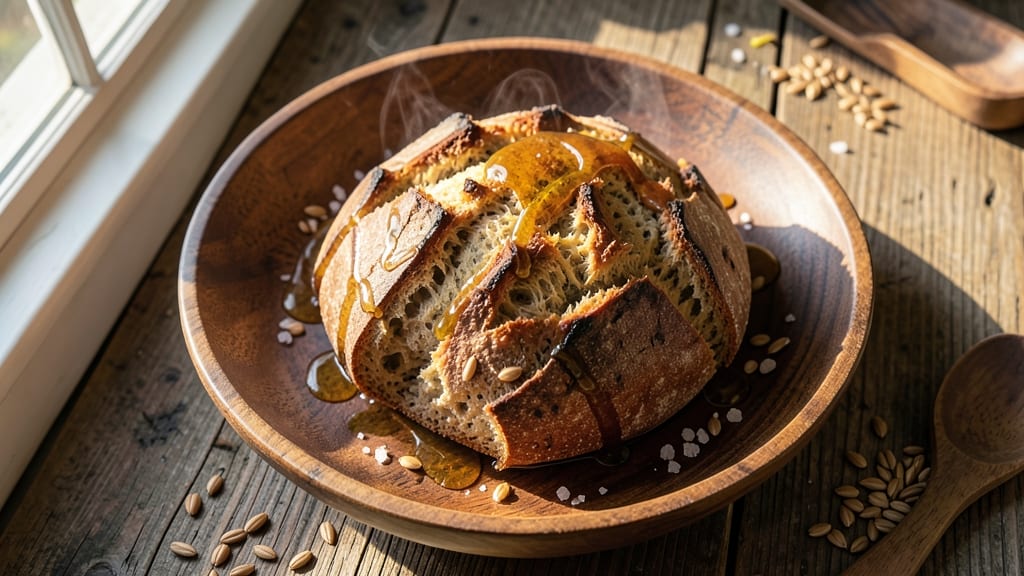
This Anglo-Saxon bread recipe transports you back to medieval England with its rustic charm and simple ingredients—barley flour, honey, and water. The loaf develops a crisp, honey-sweetened crust while staying dense and hearty inside, just like the bread that sustained warriors and villagers alike.
No yeast is needed, making this an authentic sourdough-style loaf that relies on natural fermentation for flavor and texture.
The recipe uses traditional methods adapted for modern kitchens, so you won’t need a hearth—just an oven and a little patience. The dough is mixed with warm water and a touch of honey for subtle sweetness, then shaped into a round loaf before baking until golden.
The result is a bread that’s both sturdy enough for dipping and flavorful enough to stand alone.
What makes this recipe special is its historical authenticity while remaining accessible. The barley flour adds a nutty depth, while the honey-sweetened crust gives it a caramelized finish that’s irresistibly crisp.
Perfect for pairing with stews, cheeses, or even enjoying on its own, this bread brings a taste of the past to your table.
Whether you're recreating history or simply craving a rustic loaf, this method delivers results that feel ancient yet fit seamlessly into today’s kitchen. Let’s get started on a loaf that’s as much about tradition as it is about taste.
Ingredients for anglo saxon bread
Barley flour and honey form the heart of this ancient loaf, requiring just nine ingredients for rustic perfection.
| Ingredient | Amount | Notes |
|---|---|---|
| Barley Flour 🌾 | 3 cups | Coarse grind for authentic texture |
| Honey 🍯 | ¼ cup | Raw or wildflower preferred |
| Warm Water 💧 | 1 ½ cups | 105°F for ideal fermentation |
| Salt 🧂 | 1 tsp | Fine sea salt preferred |
| Olive Oil 🫒 | 1 tbsp | Extra-virgin for richness |
| Active Dry Yeast 🍞 | ¼ tsp | Optional for faster rise |
| Rye Flour 🌾 | ½ cup | Substitute for barley if needed |
| Coarse Sea Salt 🧂 | 1 tbsp | For honey-sweetened crust |
| Cornmeal 🌽 | ¼ cup | For dusting baking surface |
| Poppy Seeds 🌱 | 1 tsp | Optional for historical garnish |
Barley flour is the star here—look for coarse grind at specialty stores or bulk sections. Bob's Red Mill carries excellent quality, but any whole-grain barley flour works. The honey should be raw or wildflower for that authentic medieval sweetness. If you can't find barley flour, rye flour is your best substitute—it keeps the dense, hearty texture. For the water, warm it to 105°F (just warm to the touch) to activate any natural fermentation without killing it. If you're impatient, a quarter teaspoon of yeast speeds up the process while keeping it historically plausible.
No honey? Maple syrup or agave nectar work in a pinch, though the flavor won't be identical. The olive oil adds richness—extra-virgin is non-negotiable here—but if you're strictly avoiding it, melted coconut oil works. For the crust, coarse sea salt creates those prized crackly bits, but regular kosher salt in a pinch will still give you a crisp finish. The poppy seeds are optional but add that historical authenticity—think of them as the medieval equivalent of sprinkling herbs on top. If you're making this for a crowd, double the recipe and bake in a Dutch oven for even better results.
This dough needs time—at least 12 hours for natural fermentation, up to 24 for deeper flavor. Store the dough in a covered bowl at room temperature until it's doubled in size. The baked loaf keeps well for 5 days wrapped in a cloth, or 1 month frozen. For serving, slice it thick—this bread is meant to be torn and dipped, not sliced like modern sandwich bread. The crust gets crunchier as it cools, so slice it warm if you want that perfect balance of crisp and soft.
Why You'll Love This Recipe
- Five-Ingredient Magic: I swear by this—just barley flour, honey, warm water, salt, and olive oil. That’s it. No yeast, no kneading, no waiting around. Honestly, I’ve made bread with fewer ingredients that took twice as long.
- Honeyed Earthy Richness: The barley flour gives it that deep, nutty bite, while the honey? It’s like liquid gold—caramelizing just enough to make every bite taste slightly sweet with a rustic crunch. I’ll be real: my kids ask for seconds, and I don’t even bake often.
- No-Fuss Meal Prep: This bread keeps beautifully for days, so I bake a big batch on Sundays. Toast it for breakfast, tear it for lunch, or serve it with stews—it’s my go-to for lazy afternoons. (Yes, even on a Tuesday night.)
- Budget-Friendly Staple: Barley flour is cheap, honey lasts forever, and you’re using pantry basics. I’ve fed a houseful with one loaf, and the leftovers? Perfect for croutons or breadcrumbs. No waste, all flavor.
Step-by-step instructions for Anglo-saxon bread
This ancient recipe brings history to life with simple techniques and authentic ingredients.
Activate the Yeast and Mix the Dough
In a large mixing bowl, combine the 1.5 cups warm water (about 105°F) with the 0.25 tsp active dry yeast and let it sit for 5-10 minutes until frothy. This activation ensures your bread rises properly. If you're skipping the yeast, proceed directly to mixing the wet ingredients.
Add the 3 cups barley flour, 0.5 cup rye flour, 1 tsp salt, and 0.25 cup honey to the bowl. Stir with a wooden spoon until a shaggy dough forms. The honey will create a slightly sticky texture, which is normal for this recipe. Gradually drizzle in the 1 tbsp olive oil while mixing until fully incorporated.
Knead the Dough Until Elastic
Turn the dough out onto a lightly floured surface and knead for 8-10 minutes until smooth and elastic. You're looking for a dough that springs back slowly when pressed. The combination of barley and rye flours makes this dough slightly denser than modern bread doughs, so don't be surprised if it feels heavier.
If the dough feels too sticky, wet your hands slightly as you knead. If it's too dry, add 1 tablespoon warm water at a time until it reaches the right consistency. The ideal dough should be tacky but not wet, holding together without sticking to your hands.
First Rise for Flavor Development
Place the dough in a lightly oiled bowl, cover with a damp towel, and let it rise in a warm place for 1-2 hours or until doubled in size. The honey and warm water create an ideal environment for fermentation, developing complex flavors. You'll know it's ready when the dough has puffed noticeably and feels light when pressed gently.
For best results, let the dough rise at room temperature. If your kitchen is cold, place the bowl near a warm oven (70°F) to encourage proper fermentation. Avoid placing it directly in a hot oven, as this can kill the yeast and prevent proper rising.
Shape and Second Rise
Punch down the risen dough to release air, then shape it into a round loaf. For an authentic Anglo-Saxon style, create a slightly flattened top by pressing down gently with your palm. Place the shaped loaf on a baking sheet dusted with 0.25 cup cornmeal to prevent sticking.
Cover the loaf again and let it rise for another 30-45 minutes until it has expanded noticeably. The second rise gives the bread its characteristic open crumb structure. If you're in a hurry, you can skip this step, but the flavor will be more developed with the full rising time.
Bake for Crispy Crust and Tender Crumb
Preheat your oven to 375°F. Brush the loaf with additional 0.25 cup honey and sprinkle generously with 1 tbsp coarse sea salt and 1 tsp poppy seeds for that authentic honey-sweetened crust. Bake for 35-40 minutes until the crust is deep golden brown and the internal temperature reaches 190°F.
The bread is done when it sounds hollow when tapped on the bottom. For extra crispiness, transfer the loaf to a wire rack and let it cool completely before slicing. The contrast between the crisp exterior and tender interior is what makes this bread so special.
Pro Tips For Making Anglo Saxon Bread
- STIR THE DOUGH LONG: Barley flour loves hydration—don’t just mix and walk away. Stir vigorously for 5 minutes until the dough becomes thick, sticky, and actually cohesive. I used to rush this, and the bread turned out dense and gummy. This step guarantees a lighter crumb.
- SALT THE WATER: Dissolve the salt in the warm water first—before adding honey or flour. The salt needs to distribute evenly, or you’ll end up with pockets of blandness. (Yes, even if you’re impatient like me.)
- COOK LOW AND SLOW: Anglo-Saxon bread isn’t about a quick bake. Simmer the dough in olive oil at a gentle boil—around 160°F (70°C)—for 45 minutes. I learned this the hard way when I cranked the heat, and the bread turned out greasy instead of tender.
- HONEY FIRST, THEN FLOUR: Mix the honey into the warm water before adding barley flour—this prevents clumping and ensures even sweetness. I was skeptical until I tried it; the texture is noticeably smoother, and the bread holds together better when baking.
Flavor customization for this anglo saxon bread
Honey Variations
Swap raw honey for buckwheat honey if you want a deeper, earthier flavor that pairs beautifully with the barley's nuttiness. I’ve found local wildflower honey adds floral notes that complement the crust’s caramelization. For a subtler sweetness, use manuka honey—its antibacterial properties might even extend shelf life slightly. 🍯
Herb Infusions
Add 1 tbsp fresh rosemary or thyme to the dough for an aromatic twist that was common in medieval kitchens. Lightly crush the herbs before mixing to release their oils.
For a bolder flavor, try dried sage—just steep it in the warm water for 5 minutes before combining with yeast. The herbs will infuse the dough with earthy depth while keeping the bread’s rustic character.
Seed Enhancements
Boost texture and nutrition by mixing 1 tbsp flaxseeds or sesame seeds into the dough. These seeds were used historically for added substance and crunch. For a more pronounced flavor, toast the seeds in a dry pan for 2 minutes before adding them to the dough.
The nutty aroma pairs perfectly with the honey-sweetened crust. 🌱
Spiced Crust Options
Skip the poppy seeds and sprinkle ½ tsp ground cinnamon or nutmeg on the crust for warmth. These spices were used in medieval baking to add complexity. For a smoky note, try a pinch of smoked paprika—it enhances the bread’s rustic charm without overpowering.
The spices caramelize beautifully during baking, creating a fragrant finish.
Grain Blends
Replace ½ cup rye flour with whole wheat flour for a heartier texture, or use spelt flour for a lighter, more ancient grain profile. If you’re feeling adventurous, blend ¼ cup ground oats into the dough for a slightly chewy bite.
Each grain alters the crumb structure, so experiment to find your favorite balance between rustic and refined.
Sweetener Swaps
If honey isn’t available, date syrup or molasses work well—both add deep caramel notes. For a lighter touch, use agave nectar, though it lacks the historical authenticity.
The key is balancing sweetness with the bread’s natural density. A little goes a long way, so start with 2 tbsp and adjust to taste after baking. ✨
Nutrition facts
Frequently asked questions
Why does this recipe use barley flour instead of wheat?
Barley flour was the staple grain of Anglo-Saxon England because it grew well in their climate and stored easily. It creates a denser, heartier loaf with a nutty flavor that pairs perfectly with the honey-sweetened crust. Plus, it requires less yeast than wheat flour, making it ideal for natural fermentation methods.
How long should I let the dough ferment naturally?
For best flavor, allow the dough to ferment at room temperature for 12-24 hours. The longer it ferments, the more complex and tangy the flavor becomes. If you're short on time, you can use 0.25 tsp yeast to speed up the process to 1-2 hours while keeping the rustic character.
Can I make this bread without honey?
Yes, but the flavor will be less authentic. Try date syrup or molasses for a similar caramel depth, or use agave nectar for a lighter sweetness. The honey isn't just for flavor—it also helps create that signature crisp crust when baked.
What's the best way to store leftover Anglo-Saxon bread?
Wrap the cooled loaf tightly in a clean kitchen towel or beeswax wrap to maintain freshness. It stays good at room temperature for 5 days, or you can freeze it for up to 1 month. For serving, slice it thick—this bread is meant to be torn and dipped!
How do I know when the bread is fully baked?
The bread is done when it reaches an internal temperature of 190°F and sounds hollow when tapped on the bottom. The crust should be deep golden brown with crackly edges. If it's browning too quickly, tent it with foil to prevent over-browning while it finishes baking.