
Side Dishes
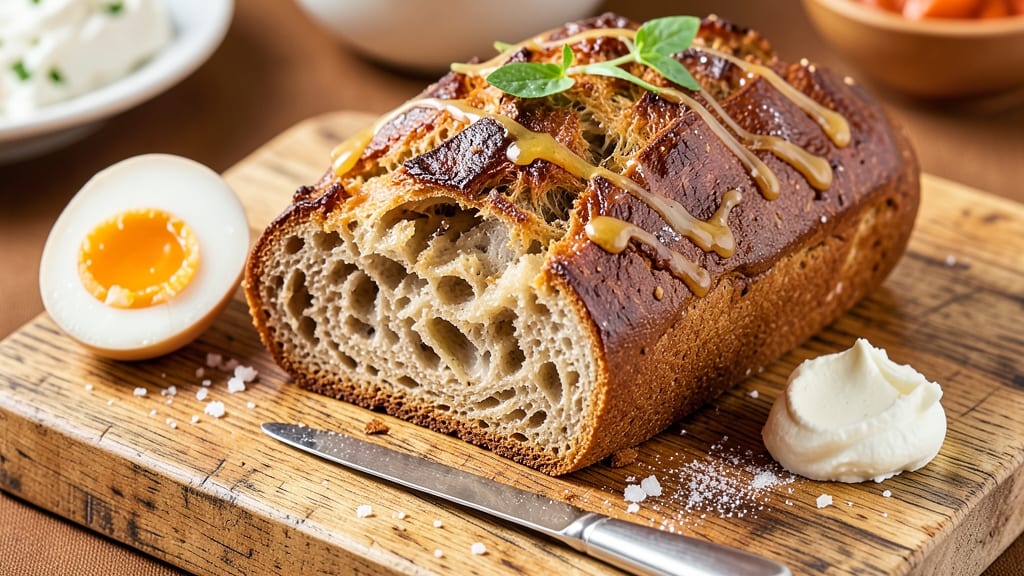
This animal-based bread recipe transforms simple ingredients into a rich, savory loaf with a crisp foil-sealed crust—perfect for elevating any meal. 💛 The secret lies in butter and eggs, which create a tender crumb and golden-brown exterior that rivals artisanal bakery bread.
Unlike dry, store-bought loaves, this recipe delivers a moist, flavorful texture that holds up to slicing and toasting.
We start with a foolproof dough made from high-fat butter and whole milk, which adds richness and structure. Kneading develops gluten for a light texture, while a blend of sharp cheddar and fresh herbs infuses every bite with depth.
The foil-sealed crust ensures a crisp exterior without over-browning, locking in moisture for days of freshness.
Baking at 375°F for 30 minutes yields a loaf with a crackly crust and a soft, chewy interior. The butter and eggs create a velvety crumb that stays tender even when toasted, making it ideal for sandwiches, dipping, or serving alongside soups.
This recipe proves that animal-based ingredients aren’t just for flavor—they’re the foundation of texture and satisfaction.
Whether you’re a home baker or a bread novice, this method delivers restaurant-quality results with minimal effort. The foil-sealed crust is a game-changer, ensuring a perfect rise and even browning every time. Let’s get started—your kitchen will smell like a bakery in no time.
Ingredients for animal based bread
Butter, eggs, and milk create a velvety crumb while cheddar and herbs deliver savory depth in this artisanal loaf.
| Ingredient | Amount | Notes |
|---|---|---|
| Unsalted Butter 🧈 | 1 cup | Cold, cubed for dough development |
| Large Eggs 🥚 | 2 whole | Room temperature for even mixing |
| Whole Milk 🥛 | 1 cup | Warmed slightly for better hydration |
| All-Purpose Flour 🌾 | 4 cups | Bread flour preferred for structure |
| Active Dry Yeast 🍞 | 2 ¼ tsp | Fresh yeast if available |
| Granulated Sugar 🍚 | 1 tbsp | Feeds yeast for proper rise |
| Diamond Crystal Kosher Salt 🧂 | 1 ½ tsp | Adjusts to taste after kneading |
| Sharp White Cheddar Cheese 🧀 | 1 ½ cups | Freshly grated, block preferred |
| Fresh Rosemary 🌿 | ¼ cup | Finely chopped, stems removed |
| Fresh Thyme 🌿 | ¼ cup | Leaves only, stems discarded |
| Garlic Cloves 🧄 | 4 cloves | Minced for herb-cheese blend |
| Heavy Cream 🥛 | ¼ cup | For final brush and richness |
| Aluminum Foil 📄 | 1 sheet | Heavy-duty for sealing crust |
The butter matters here—European-style unsalted with at least 82% fat content yields the richest dough. Plugrá or Kerrygold are ideal, but any high-fat butter works. Room temperature eggs and warmed milk hydrate the flour better than cold ingredients. For yeast, Fresh Start or Red Star active dry works reliably, but test it first by sprinkling in warm water with a pinch of sugar—it should foam in 5-10 minutes. The flour? King Arthur Bread Flour if you want to splurge, but Gold Medal All-Purpose is a solid grocery store alternative. Cheese is non-negotiable—Cabot or Pepper Ridge sharp white cheddar melts beautifully and adds the right tang.
No fresh herbs? Dried rosemary and thyme at one-third the amount will work, though the flavor won't be as vibrant. Substituting milk? Heavy cream or half-and-half adds richness but may alter texture slightly. For a dairy-free twist (though this isn't vegan), nutritional yeast plus olive oil can mimic some of the cheesy depth. The garlic can be omitted if you dislike its intensity, but the herbs and cheese carry enough flavor on their own. If you're short on time, pre-shredded cheese is fine, though it contains anti-caking agents that may affect texture slightly. The foil sealing is critical—heavy-duty aluminum foil prevents over-browning while creating that coveted crisp crust.
This loaf keeps beautifully—3-4 days at room temperature wrapped in a clean kitchen towel, or up to 1 week in the fridge. For longer storage, freeze the whole loaf (unwrapped) for up to 3 months. To revive, wrap tightly in foil and reheat in a 350°F oven for 10-15 minutes. The crust stays crisp even after freezing, making it perfect for toast or sandwiches. I always bake two loaves—one for the week and one to freeze. The second batch? Perfect for gifting or feeding unexpected guests. Slice with a serrated knife for clean cuts, and store leftovers in an airtight container to maintain freshness.
Why You'll Love This Recipe
- No-Knead, No-Fuss Rise: I swear by the whole milk here—it makes the dough so tender and rich without requiring a single punch or fold. Just mix, let it rest, and wake up to bread that smells like a bakery.
- Butter So Rich: That unsalted butter? It’s the star. The moment it melts into the warm dough, you get this golden crust with a crumb so soft it practically melts in your mouth—no fancy techniques, just pure indulgence.
- Weeknight Wonder: I make a batch on Sundays, and it lasts all week. Toast it for breakfast, pack it for lunch, or freeze slices for quick toast later. Honestly, it’s my lazy-day hero.
- Budget-Friendly Luxury: Flour, eggs, butter, milk—these are pantry staples that don’t break the bank. Yet somehow, it feels like a special-occasion loaf. Between us, this is how I trick people into thinking I’m a better baker than I am.
Step-by-step instructions for savory cheese and herb loaf
Master this rich dough technique and you'll achieve a golden crust with tender crumb every time.
👨🍳 Step 1: Activate the Yeast and Mix the Dough
In a stand mixer fitted with the dough hook attachment, combine the 1 cup unsalted butter (cold and cubed), 1 cup warmed whole milk, 2.25 tsp active dry yeast, and 1 tbsp granulated sugar. Mix on low speed for 2 minutes until the yeast dissolves completely and the mixture becomes slightly foamy. This activation step ensures proper fermentation later.
Add the 4 cups all-purpose flour and 1.5 tsp diamond crystal kosher salt all at once. Mix on medium speed for 5-6 minutes until the dough begins to pull away from the sides of the bowl and forms a shaggy mass. The dough should be slightly tacky but not sticky—if it sticks to your fingers, add 1 tablespoon flour at a time until it reaches the right consistency.
🥘 Step 2: Knead and Develop Gluten
Continue kneading on medium speed for an additional 8-10 minutes until the dough becomes smooth, elastic, and passes the windowpane test. To test, stretch a small piece of dough between your fingers—it should thin out without tearing. This gluten development creates the structure needed for that perfect oven spring.
Transfer the dough to a lightly floured surface and shape it into a round loaf. Place it in a lightly greased bowl, cover with a clean kitchen towel, and let rise in a warm place for 1-2 hours or until doubled in size. The dough should spring back slowly when poked with a finger—this indicates proper fermentation. If the kitchen isn't warm enough, place the bowl near a turned-off oven light bulb to speed up the process.
🍳 Step 3: Prepare the Herb-Cheese Filling
While the dough rises, prepare the herb-cheese filling by combining the 1.5 cups sharp white cheddar cheese (finely grated), 0.25 cup minced garlic cloves, 0.25 cup finely chopped fresh rosemary, and 0.25 cup fresh thyme leaves in a small bowl. Mix well to distribute the herbs evenly through the cheese mixture. This aromatic blend will infuse the bread with rich, savory depth.
Roll out the risen dough on a lightly floured surface into a 12x16-inch rectangle about ¼-inch thick. Spread the herb-cheese mixture evenly over the dough, leaving a ½-inch border around the edges. This border prevents the filling from leaking during baking and ensures a clean seal when you fold the dough.
🥘 Step 4: Shape and Seal the Loaf
Carefully fold the dough over the filling to completely enclose it, then pinch the edges tightly to seal. Transfer the loaf to a baking sheet lined with 1 sheet aluminum foil (shiny side up) and brush the top generously with the 0.25 cup heavy cream. This creates a beautiful golden crust and adds richness to the final product. Let the loaf rest for 15 minutes at room temperature while you preheat your oven to 375°F.
Bake for 40-45 minutes until the crust is deep golden brown and the internal temperature reaches 190°F. For the best results, tent the loaf with foil after 20 minutes to prevent over-browning. The bread is done when it sounds hollow when tapped on the bottom and pulls away cleanly from the foil.
⏰ Step 5: Rest and Serve
Remove the loaf from the oven and let it cool on a wire rack for at least 30 minutes before slicing. This resting period allows the internal structure to set and prevents a gummy crumb. For maximum flavor, serve warm with additional fresh herbs sprinkled on top or alongside a rich soup or salad.
The finished loaf should have a crisp, golden crust with a tender, cheesy interior. Each slice should be perfectly balanced—crispy enough to hold its shape when toasted, yet soft enough to melt in your mouth. Store any leftovers wrapped in foil at room temperature for up to 2 days or freeze for longer storage.
Pro Tips For Making Animal Based Bread
- Warm the Milk First: Pour whole milk into a saucepan and heat it to about 110°F (43°C)—just until it’s warm to the touch but not steaming. This activates the yeast faster and prevents a gummy dough later. I used to skip this, and my bread always needed extra time to rise properly.
- Cream Butter and Sugar: Beat the unsalted butter with the eggs until the mixture is pale and fluffy, about 3-4 minutes. This incorporates air, which makes the bread lighter and more tender. I learned this the hard way—under-beating gives a dense, heavy result.
- Don’t Over-Knead: Stop kneading once the dough springs back slowly when poked and looks smooth, not sticky. Overworking it develops too much gluten, making the bread tough. I’ve ruined batches by kneading for 10 minutes straight—5-7 is plenty.
- Use Room-Temp Ingredients: Let eggs, butter, and milk sit out for 30-60 minutes before mixing. Cold ingredients slow yeast activation and can lead to a weak rise. I was skeptical until I tried it—my bread now rises higher and bakes more evenly.
Creative variations of these flavors
Classic Brioche Twist
Swap the sharp cheddar for 1 cup softened butter and 2 tbsp honey to transform this into a sweet brioche-style loaf. Replace the herb-cheese filling with a vanilla bean paste and ½ cup candied pecans for a luxurious breakfast bread.
Brush the baked loaf with simple syrup (equal parts sugar and water) and sprinkle with flaky sea salt for a French-inspired finish. 🥖
Savory Garlic-Herb Fougasse
Shape the dough into a rustic fougasse by pinching off small pieces and tucking them under the edges before baking. Replace the cheese filling with 1 cup olive oil-infused garlic butter and 2 tbsp chopped sun-dried tomatoes.
After baking, drizzle with balsamic glaze and sprinkle with fresh basil. This Italian-inspired variation pairs perfectly with charcuterie boards or roasted meats.
Cheesy Jalapeño Cornbread
For a Southern-inspired twist, replace 1 cup all-purpose flour with 1 cup fine cornmeal and add ½ cup shredded pepper jack cheese plus 2 diced jalapeños. Fold the filling into the dough before shaping instead of layering.
Bake in a cast-iron skillet for extra crispiness. Serve warm with honey butter or spicy mayo for dipping.
Herbed Gougères-Inspired Bites
Divide the dough into 12 equal portions and shape into small balls. Roll each in 1 tbsp grated Gruyère cheese and 1 tsp chopped chives. Bake at 400°F for 15-18 minutes until puffed and golden.
These bite-sized versions make perfect appetizers for parties or game day. The high butter content ensures they stay tender inside while developing a crisp exterior.
Whole Wheat Protein Boost
Replace 2 cups all-purpose flour with 2 cups whole wheat flour and add 1 scoop vanilla whey protein powder to the dough. Use the original herb-cheese filling but reduce cheese to 1 cup to balance the denser flour.
This version adds fiber and protein while maintaining the rich texture. Perfect for meal prep—slice and toast for a hearty breakfast option.
Smoked Paprika and Honey Glaze
After baking, brush the cooled loaf with a glaze made from ¼ cup honey, 1 tbsp smoked paprika, and 1 tsp apple cider vinegar. Let it set for 10 minutes before slicing.
The glaze adds a sweet-smoky contrast that complements the savory herbs and cheese. Store in an airtight container for up to 5 days—the flavors deepen overnight.
Nutrition facts
Frequently asked questions
Why does this recipe use so much butter?
The 1 cup of butter creates a rich, tender crumb that stays moist for days. Butter adds fat which prevents the bread from drying out quickly, and its flavor enhances the overall taste. This is especially important for animal-based breads where texture is key—without enough fat, the loaf would be dense and dry.
Can I substitute the heavy cream for something else?
Yes! For the final brush, use whole milk or half-and-half for a lighter flavor. If you want extra richness, try melted butter instead. Just remember that heavy cream gives the best golden crust and adds that signature velvety texture. The ¼ cup is crucial for that bakery-style finish.
What if my dough doesn't rise properly?
Check your yeast first—it should foam in 5-10 minutes when mixed with warm water and sugar. If the dough isn't rising, try placing the bowl in a warmer spot (like near a turned-off oven light) or cover it with a damp towel to retain moisture. Cold kitchens slow fermentation. Also, make sure your yeast isn't expired—fresh yeast works better than old packets.
How do I know when the bread is fully baked?
Your bread is done when it reaches an internal temperature of 190°F and sounds hollow when tapped on the bottom. The crust should be deep golden brown, and it should pull away cleanly from the foil. If unsure, slice into the center—it should be fully set with no raw dough. Overbaking can dry out the bread, so remove it just as it reaches these cues.
Can I make this bread without dairy?
While this recipe relies on dairy for its signature texture, you can substitute 1 cup butter with 1 cup vegan butter or coconut oil and 1 cup milk with 1 cup unsweetened almond milk. For the cheese filling, use nutritional yeast mixed with olive oil and herbs. The texture will be slightly different but still delicious. The key is maintaining the fat content for moisture.