
Side Dishes
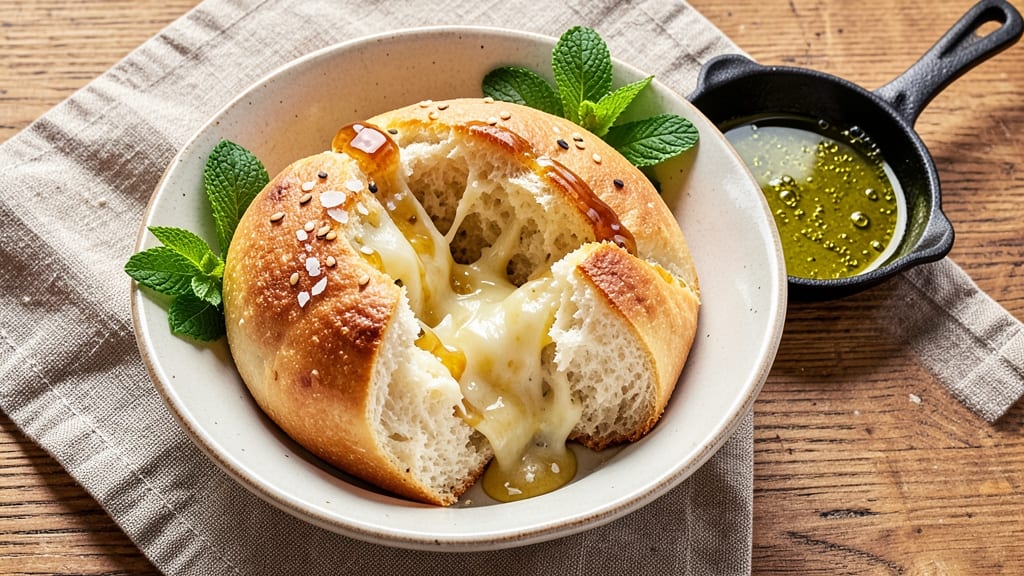
This Arabic cheese bread recipe brings the golden, flaky crust and melty feta pull of Middle Eastern street food to your kitchen table. The secret lies in a simple yeast dough infused with za’atar, a fragrant blend of thyme, sesame, and sumac that transforms ordinary bread into something extraordinary.
I first discovered this technique during a trip to Damascus, where vendors sold crispy, cheese-stuffed loaves that disappeared as quickly as they were baked.
The dough itself is straightforward—just flour, yeast, water, and a pinch of salt—but the magic happens in the shaping and baking.
You’ll stretch the dough into a thin rectangle, stud it with chunks of feta or akkawi cheese, then fold it into a pocket that releases those irresistible cheese pulls when sliced. The za’atar-spiced crust adds a nutty, earthy aroma that pairs perfectly with the salty tang of the cheese.
What you’ll end up with is a crispy, golden-brown loaf that’s impossible to resist—each bite delivers a satisfying pull of melted cheese, followed by the warm, herby notes of the crust.
It’s the kind of bread that disappears faster than you can say shukran, making it perfect for sharing with family or serving alongside soups and salads. The best part? This recipe scales effortlessly, whether you’re feeding a crowd or just craving a taste of the Mediterranean.
For those with dietary preferences, a gluten-free flour blend can be substituted without sacrificing texture, though the traditional version remains the star. Once you try this, store-bought cheese bread will never compare again. Let’s get started on making yours.
Ingredients for arabic cheese bread
Golden crust, melty cheese pulls, and fragrant za'atar—just 12 ingredients for Middle Eastern magic.
| Ingredient | Amount | Notes |
|---|---|---|
| All-Purpose Flour 🌾 | 4 cups | Plus 2 tbsp for dusting |
| Active Dry Yeast 🍞 | ¼ tsp | Or 1 packet instant yeast |
| Granulated Sugar 🍚 | 1 tbsp | Helps yeast activate |
| Warm Water 💧 | 1 cup | 105-110°F for yeast |
| Extra-Virgin Olive Oil 🫒 | 1 tbsp | Plus extra for brushing |
| Salt 🧂 | 1 tsp | Kosher or sea salt |
| Za'atar Spice Blend 🌿 | 2 tbsp | Store-bought or homemade |
| Feta Cheese 🧀 | 1 ½ cups | Crumbled, block preferred |
| Akkawi Cheese 🧀 | 1 cup | Optional, for extra pull |
| Sesame Seeds 🌰 | 2 tbsp | Toasted for extra crunch |
| Sumac 🍃 | 1 tsp | For tangy finish |
| Cornmeal 🌽 | ¼ cup | For dusting baking sheet |
Za'atar is the soul of this bread. Middle Eastern markets carry the best blends, but Penzeys or Trader Joe's have solid options too. Look for vibrant, earthy tones—no grayish or stale-smelling mixes. The feta should be crumbly and salty, not soft or oily. Block feta is ideal, but pre-crumbled works in a pinch (just drain excess liquid). For the akkawi cheese, Arabian grocery stores stock it—it's that creamy, mild cheese that stretches like magic. If you can't find it, extra feta or even mozzarella in a stretchy pinch will do.
No za'atar? Mix 1 tbsp dried thyme, 1 tbsp sesame seeds, 1 tsp sumac, and 1/2 tsp salt for a close substitute. Running short on feta? Halloumi or even ricotta can work, though texture differs. The dough can be made ahead—just refrigerate it up to 24 hours and let it come to room temp before shaping. For a gluten-free version, King Arthur GF flour blend works well, though the crust will be slightly denser. Toast the sesame seeds in a dry pan for 2 minutes—they'll add incredible crunch to the crust.
Shape the dough and let it proof at room temp for 1-2 hours for best rise. Once baked, the bread stays fresh for 2 days at room temp wrapped in a towel, or 5 days in the fridge. For longer storage, freeze slices wrapped in parchment—reheat in a 350°F oven for 5-10 minutes. I always bake an extra loaf—it disappears faster than you can say shukran.
Why You'll Love This Recipe
- No Yeast Fuss: I swear by this dough—just toss in flour, yeast, sugar, and warm water, then let it rise while I sip tea. No kneading, no stress, and that olive oil pull-apart magic happens on its own.
- Cheese Overload: Between us, the stretchy, gooey cheese pulls so hard you’ll need a napkin. That salty, tangy kick from the olive oil and melted cheese? It’s the kind of bread that disappears in minutes.
- Weeknight Hero: I keep a batch in the fridge all week—toss it in the oven for 10 minutes when I’m starving. Perfect with soup, as a snack, or even for breakfast (yes, I’ve done it).
- Budget Stretch: Five ingredients, zero waste. That flour and yeast go far, and the olive oil doubles as dressing or drizzle. My wallet and I both approve of this cheap, satisfying win.
Step-by-step instructions for za'atar-spiced cheese bread
Here's how to craft the perfect pull-apart bread with a fragrant za'atar crust and gooey feta center.
Activate the Yeast for a Light Dough
In a small bowl, whisk together the 1 cup warm water (between 105-110°F—test by sprinkling in yeast, it should sizzle within 10 seconds), 1 tbsp granulated sugar, and 0.25 tsp active dry yeast. Let this sit for 5-10 minutes until foamy. If it doesn't foam, your yeast is dead—start fresh.
In a large bowl, combine the 4 cups all-purpose flour and 1 tsp salt. Make a well in the center and pour in the yeast mixture along with the 1 tbsp extra-virgin olive oil. Mix with a wooden spoon until a shaggy dough forms, then turn it out onto a lightly floured surface. This is where the magic begins—your dough should be soft but not sticky.
Knead Until Smooth and Elastic
Knead the dough for 8-10 minutes by pressing down, folding over, and turning it on the floured surface. You're working the gluten, which gives the bread its chewy texture and pull-apart quality. When finished, the dough should be smooth, elastic, and spring back slowly when poked.
Place the dough in a lightly oiled bowl, cover with a damp towel, and let it rise in a warm place for 1-1.5 hours or until doubled in size. I like to put it near the oven with the light on for consistent warmth. Poke it gently—if it springs back slowly, it's ready.
Shape and Stuff with Cheese
Punch down the risen dough and divide it into 6 equal portions. Roll each into a 12-inch rope, then pinch the ends to seal. On a floured surface, gently stretch each rope into an oval shape about 10x6 inches. This creates the signature flatbread shape that holds all that melted cheese.
In a separate bowl, mix the 1.5 cups feta cheese (crumbled), 1 cup akkawi cheese (if using), and 1 tsp sumac. Spoon about 1/6 of the cheese mixture onto each dough oval, then gather the edges and pinch them together to form a sealed pocket. The cheese should stay inside as it bakes.
Proof and Prepare for Baking
Place the stuffed dough pieces on a parchment-lined baking sheet, cover with a damp towel, and let them proof for another 30-45 minutes until puffy. While they proof, preheat your oven to 400°F and brush the tops of the breads with a little extra olive oil. Sprinkle generously with the 2 tbsp za'atar spice blend and 2 tbsp sesame seeds—this is where the signature flavor comes from.
Just before baking, dust the baking sheet with 0.25 cup cornmeal to prevent sticking. The za'atar will give a nutty, herby aroma as it bakes, and the sesame seeds will toast to golden perfection. The bread should look puffy and inviting, ready for that magical pull-apart moment.
Bake Until Golden and Cheesy
Bake for 20-25 minutes until the tops are deeply golden brown and the cheese inside is bubbling hot. The bread should smell like a mix of warm spices and melted cheese—this is the moment you've been waiting for. If the tops brown too quickly, tent with foil for the last 5 minutes to prevent burning.
Let the bread rest for 5 minutes before serving—this allows the cheese to set slightly so it doesn't run everywhere when you pull. Serve warm with extra za'atar sprinkled on top or with a side of hummus and olives. The perfect pull should leave you with strings of melted cheese between your fingers.
Pro Tips For Making Arabic Cheese Bread
- STRETCH THE DOUGH: Use your knuckles—not just fingertips—to press the dough into the pan. The extra pressure creates those signature deep dimples, and it’s faster than fussing with a fork. (Yes, even if your hands are tired.)
- TEST YEAST TEMPERATURE: Fill a small bowl with warm water (105–110°F—your pinky should barely handle it) before mixing in yeast and sugar. Cold water kills it; hot water cooks it. I learned this the hard way when my dough took three hours to rise.
- DON’T OVERMIX THE CHEESE: Once you fold in the cheese (like akkawi or mozzarella), stop when it’s just combined. Overworking it turns the dough gummy and makes the bread dense. Think "marbled," not "blended."
- USE A LIGHT TOUCH WHEN SHAPING: Arabic cheese bread needs a gentle hand—press the dough into the pan with your fingers, not a rolling pin. Too much flattening = tough crust. My first attempt looked like a brick; now I just pat it down like I’m tucking in a baby.
Troubleshooting this dish
Dough Too Sticky
If your dough feels overly sticky during kneading, you likely need more flour—but don’t overdo it. Sprinkle 1 tablespoon at a time on your work surface while kneading, just enough to keep it from sticking to your hands.
I’ve found that 5-6 tablespoons total is usually enough for this recipe. The dough should be soft but not wet; if it cracks when poked, it’s ready.
Cheese Leaking Out
Cheese escaping during baking happens when the dough isn’t sealed properly.
Flat or Dense Crust
A flat or dense crust often means the dough didn’t rise enough or the oven wasn’t hot enough. Ensure your oven is fully preheated to 400°F before baking, and let the dough proof until it’s visibly puffy. If your kitchen is cold, place the dough near a warm spot (like the oven with the light on) to encourage rising. A za’atar crust should be crispy and golden, not flat.
Yeast Not Activating
If your yeast doesn’t foam within 10 minutes, it’s likely dead. Test your water temperature—it should be between 105-110°F. If it’s too hot, the yeast will die; if too cold, it won’t activate.
I keep a thermometer handy to avoid this. If the yeast fails, start fresh with a new packet or try instant yeast, which activates faster.
Uneven Browning
For even browning, rotate your baking sheet halfway through the 20-25 minute bake. If one side browns too quickly, tent with foil for the last 5 minutes to prevent burning.
A cornmeal-dusted sheet also helps distribute heat evenly. Avoid overcrowding the pan—leave at least 1 inch of space between loaves for proper airflow.
Cheese Not Melting
If your cheese stays firm, it might not be the right type or the oven isn’t hot enough. Feta or akkawi cheese melts beautifully, but if yours doesn’t, try adding a splash of water or milk to the cheese mixture before stuffing.
Bake at 400°F for the full time—cheese needs high heat to melt completely. For extra gooeyness, brush the tops with olive oil before baking.
Nutrition facts
Frequently asked questions
Can I make this Arabic cheese bread without za'atar?
If you don't have za'atar, mix 1 tbsp dried thyme, 1 tbsp sesame seeds, 1 tsp sumac, and ½ tsp salt for a similar flavor profile. The sesame seeds will still give that nutty crunch, while the thyme and sumac add depth. For extra Middle Eastern flair, try a pinch of smoked paprika instead of sumac.
How do I store leftover cheese bread?
Wrap the bread in a clean kitchen towel or foil and store at room temperature for 2 days—this keeps it fresh and chewy. For longer storage, refrigerate for up to 5 days or freeze slices wrapped in parchment. To reheat, warm in a 350°F oven for 5-10 minutes until the cheese is gooey again.
What if I can't find akkawi cheese?
No problem! Use extra feta or even mozzarella for a stretchy texture. For a closer match, try halloumi, which holds its shape better when baked. Just reduce the total cheese by ¼ cup to avoid overstuffing the dough.
Can I make this bread gluten-free?
Yes, but expect a slightly denser texture. Use a 1:1 gluten-free flour blend like King Arthur's, and add ½ tsp xanthan gum if not included. Let the dough rest 10 minutes after mixing to hydrate fully. Proof times may vary—watch for puffiness rather than relying on timing.
Why did my bread turn out flat?
Flat bread usually means the dough didn't rise enough. Ensure your yeast is active (foamy in 5-10 minutes in warm water) and your oven is fully preheated to 400°F. Place the dough in a warm spot (like near the oven light) for rising. If your kitchen is cold, try a proofing box or warm oven with the light on.