
Side Dishes
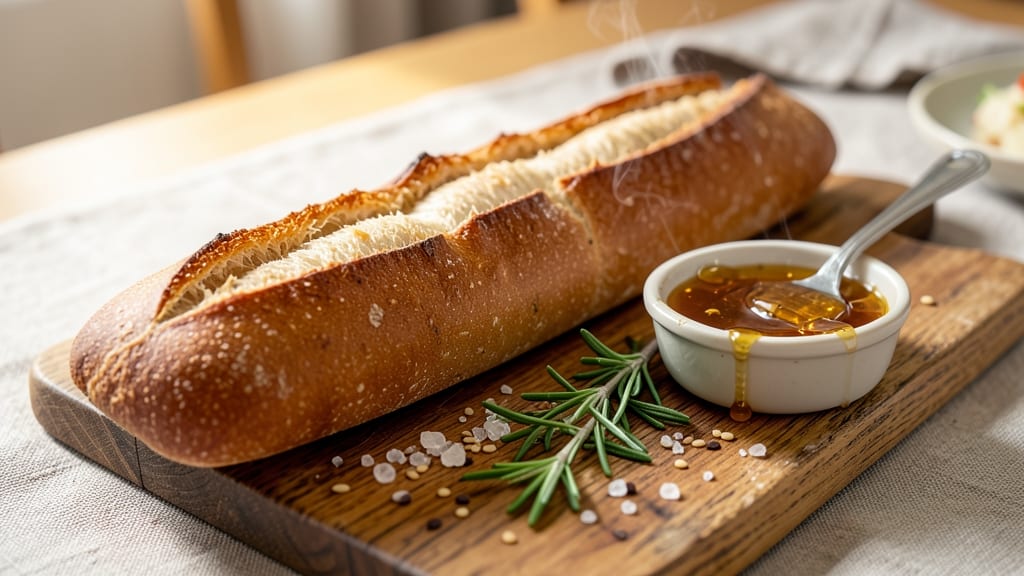
This artisan baguette bread recipe delivers the perfect balance of a crispy crust and airy crumb—just like your favorite Parisian boulangerie. 🌟 The secret lies in precise dough hydration, proper fermentation, and high-heat baking techniques that create that signature crackly exterior and light, open crumb.
I've perfected this method over years of baking, ensuring even home cooks can achieve restaurant-quality results.
The process begins with a simple yet precise dough formula using high-protein flour and a touch of honey for subtle sweetness. After mixing, the dough undergoes two fermentation stages—one at room temperature and another in the refrigerator—which develop complex flavors and create the ideal texture.
Shaping is where the magic happens, requiring gentle handling to build tension in the dough for that classic baguette structure.
Baking at high heat with steam injection is critical for achieving that crispy crust and preventing the bread from browning too quickly. The result is a baguette that's golden, crackling, and packed with air pockets—each slice revealing a perfect crumb.
This recipe stays true to traditional methods while offering modern adaptations, like using a Dutch oven for steam.
Whether you're serving with butter, olive oil, or as part of a charcuterie board, this baguette will elevate any meal. The best part? You'll have fresh, crusty bread ready in just 6 hours—far better than anything store-bought. Let's get started on your journey to perfect baguettes.
Ingredients for artisan baguette bread
Nine essential ingredients transform your kitchen into a Parisian boulangerie in just six hours.
| Ingredient | Amount | Notes |
|---|---|---|
| High-Protein Bread Flour 🌾 | 3 ½ cups | 14% protein or higher for structure |
| Active Dry Yeast 🍞 | ¼ oz | 1 packet or 2 1/4 tsp |
| Granulated Sugar 🍚 | ½ tbsp | Feeds yeast for activation |
| Salt 🧂 | 1 ½ tsp | Diamond Crystal preferred |
| Honey 🍯 | 1 tbsp | For subtle sweetness |
| Warm Water 💧 | 1 ½ cups | 105-110°F for yeast activation |
| Extra-Virgin Olive Oil 🫒 | ¾ tbsp | For dough elasticity |
| Cornmeal 🌽 | ¼ cup | For dusting work surface |
| Ice Cubes ❄️ | 1 cup | For dough chilling |
| Coarse Sea Salt 🧂 | 1 tsp | For final crust sprinkle |
| Egg Wash 🥚 | 1 whole | Optional for golden crust |
The high-protein bread flour is non-negotiable—King Arthur or Caputo deliver that signature open crumb. Look for 14% protein or higher on the package, and store it in a cool, dark place to preserve freshness. Diamond Crystal kosher salt is my go-to for even dissolution, though any fine sea salt works. The honey adds subtle sweetness while feeding the yeast—local raw honey has more flavor but regular grocery store honey works perfectly fine. Warm the water to 105-110°F (like a warm bath) to activate the yeast without killing it. Extra-virgin olive oil from California Olive Ranch adds that authentic elasticity to the dough—avoid the cheap stuff that turns rancid quickly.
No high-protein flour? All-purpose flour plus 1 tbsp vital wheat gluten gets you close. Active dry yeast older than 4 months? Test it first—drop a pinch in warm water with sugar, and if it doesn't foam in 10 minutes, toss it. Honey substitute? Use maple syrup or agave at the same amount. The cornmeal can be swapped for semolina if you're feeling fancy—it gives a nicer crust texture. Olive oil shortage? Vegetable oil works, but the flavor won't be as rich. For the egg wash, whisk the egg with 1 tbsp water for a glossy finish. No egg? Brush with watered-down milk instead.
This dough is a two-stage fermentation beast—room temp for 2 hours, then fridge overnight. Store the dough in a sealed container for up to 24 hours before shaping. The cornmeal keeps your work surface from sticking like glue. Chill the shaped baguettes for 30 minutes before baking—this prevents them from spreading too much. Baked baguettes stay crisp for 2 days at room temp, wrapped in a clean kitchen towel (not plastic). Freeze shaped dough for up to 1 month—thaw overnight in the fridge before baking. Revive stale baguettes by toasting in a 400°F oven for 5 minutes—instantly crispy again.
Why You'll Love This Recipe
- Five-Ingredient Magic: Honestly, I swear by this list—yeast, flour, sugar, salt, and honey. That’s it. No fancy add-ins, no stress. The high-protein flour gives it that sturdy structure, while the honey just elevates everything with a subtle sweetness that disappears as it bakes.
- Crispy-Creamy Payoff: Between us, that golden crust with a pillowy center? It’s the kind of texture that makes you pause mid-bite. The yeast does its thing overnight (or even just a few hours), so by the time you bake it, you’re rewarded with layers that beg for more.
- Weeknight Hero: I keep a loaf in the freezer at all times—toss it in the oven straight from frozen, and you’ve got dinner. Perfect for sandwiches, dipping in olive oil, or even toasted with butter. It’s my go-to when I don’t want to overthink dinner.
- Budget-Friendly Staple: A single batch stretches for days—think garlic butter toast for breakfast, charcuterie boards for guests, or even breadcrumbs for meals. The ingredients are cheap, the yield is generous, and I’ve never once regretted baking another loaf.
Step-by-step instructions for artisan baguettes with perfect crust
Here's how to craft golden, crackling baguettes with an airy interior—no shortcuts, just pure technique.
👨🍳 Step 1: Activate the Yeast and Mix the Dough
In a large mixing bowl, combine the 1.5 cups warm water (between 105-110°F—test with your finger, it should feel like bathwater), 0.5 tbsp granulated sugar, and 0.25 oz active dry yeast. Let sit for 5-10 minutes until foamy—this confirms your yeast is alive and ready to work. If it doesn't foam, start over with fresh yeast.
Add the 3.5 cups high-protein bread flour, 1.5 tsp salt, 1 tbsp honey, and 0.75 tbsp extra-virgin olive oil to the bowl. Using a wooden spoon or dough whisk, mix until a shaggy mass forms. The honey and olive oil create elasticity, while the high-protein flour develops gluten for that signature chew.
🍳 Step 2: Knead Until Silky and Elastic
Turn the dough onto a lightly floured surface and knead for 10-12 minutes by hand (or 5-7 minutes with a stand mixer using the dough hook). You're aiming for a smooth, elastic dough that springs back when poked—this is your gluten developing. If it sticks, wet your hands slightly instead of adding more flour.
Here's the thing—this kneading step is non-negotiable. It builds the structure that gives baguettes their airy crumb. When the dough passes the "windowpane test" (stretch a piece thin enough to see light through), it's ready. Shape into a ball, place in a lightly oiled bowl, cover with a damp towel, and let rise at room temperature for 1 hour or until doubled in size.
⏰ Step 3: Cold Proof for Maximum Flavor
After the initial rise, transfer the dough to the refrigerator and wrap it tightly in plastic wrap. This cold proof lasts 12-16 hours—yes, overnight—and develops incredible flavor through slow fermentation. The cold also strengthens the gluten further, preventing baguettes from spreading too much during baking.
I know it seems counterintuitive to wait this long, but trust me—this step transforms your baguettes from good to restaurant-quality. The dough will be firm and slightly sticky when you remove it from the fridge. Divide it into 6 equal pieces (about 6 oz each) and let them sit at room temperature for 10 minutes before shaping.
🥘 Step 4: Shape and Score for that Classic Look
Roll each piece into a 20-inch log with tapered ends. The tension on the surface creates that signature baguette shape. Dust your work surface with 0.25 cup cornmeal to prevent sticking as you shape. Place the shaped baguettes on a parchment-lined baking sheet, cover with a towel, and let rise for 1-2 hours until puffy.
Preheat your oven to 475°F with a baking stone or inverted baking sheet inside. When ready, use a razor blade or sharp knife to score each baguette diagonally—this controls expansion and creates those beautiful cracks. Brush with 1 whole egg wash (optional but worth it) and sprinkle with 1 tsp coarse sea salt for that iconic crust.
🔥 Step 5: Bake to Crispy Perfection
Bake for 15-18 minutes until the baguettes are deep golden brown with a hollow sound when tapped. The crust should be crisp enough to shatter slightly, while the interior remains soft and airy. If your oven runs hot, start checking at 12 minutes—every oven behaves differently.
Remove from the oven and let cool on a wire rack for at least 10 minutes before serving. The crust will continue to crisp as it cools, and the interior will set properly. Slice into 1-inch pieces and serve warm with your favorite butter or olive oil. Each bite should deliver that perfect balance of crispy exterior and pillowy interior.
Pro Tips For Making Artisan Baguette Bread
- STRETCH AND FOLD: Don’t just slap and fold your dough—grab the sides, stretch them toward the center, then fold sharply. This builds gluten faster than punching alone, and my baguettes now have that signature chewy crunch instead of feeling dense. (Yes, even if your hands get tired first.)
- WEIGH YOUR FLOUR: Scooping flour from the bag is how you end up with dry, crumbly dough. Use a kitchen scale—this recipe needs 500g of bread flour, give or take 5g. The extra weight guarantees moisture balance, and your crust won’t turn into a sad, pale afterthought.
- SKIP THE HONEY IF IT’S HUMID: Honey adds sweetness, but when the air’s thick with moisture, it can make your dough sticky and sluggish. Swap it for an extra 10g of sugar instead—same flavor boost, no dough disaster. I learned this the hard way during a summer bake where my loaves never rose properly.
- BAKE WITH STEAM, NOT HOPE: Toss a handful of ice cubes into your Dutch oven before baking—this creates steam that puffs your baguettes into proper baguette shape. No ice? A spray bottle works in a pinch, but aim for the sides, not the bottom. (And yes, the crust will still be worth the effort.)
Wine and beer pairings for this artisan baguette bread
French White Wine
For that classic Parisian pairing, reach for a crisp Sauvignon Blanc from the Loire Valley—think Sancerre or Pouilly-Fumé. The mineral notes and citrus brightness cut through the baguette's buttery richness while complementing its crispy crust.
I love a chilled bottle of Olivier Legrand Sancerre—its herbal undertones mirror the subtle honey notes in your dough. Serve at 45-50°F to preserve its refreshing acidity. 🍷
Dry Rosé
A dry Provence rosé like Whispering Angel or Château d'Esclans is my go-to for brunch or charcuterie boards. The delicate strawberry and melon flavors harmonize beautifully with the baguette's crust, while its light body won't overpower the bread's texture.
Look for bottles labeled "Sec" (dry) to avoid sweetness. Serve slightly chilled at 50-55°F for the perfect balance of crispness and fruitiness.
German Wheat Beer
For beer lovers, a German Hefeweizen like Weihenstephaner Original or Paulaner Wheat Beer adds a refreshing contrast. The banana and clove notes in the beer play wonderfully with the bread's honeyed dough, while its effervescence cleanses your palate between bites.
Opt for a 50/50 blend of wheat and barley malts for the perfect balance. Serve at 45-50°F—too warm, and the flavors will fade.
Italian Aperitif
Skip the wine and try an Aperol Spritz for a festive touch. The bitter orange and bitter herbs in Aperol complement the baguette's crust, while the prosecco's bubbles provide a lively contrast. Mix 3 parts prosecco, 2 parts Aperol, and 1 part soda water with ice.
Garnish with an orange slice for that Italian bistro vibe—perfect for appetizers or as a pre-dinner drink. 🍹
Coffee or Tea
Don't underestimate the power of a simple espresso or earl grey tea with your baguette. The bold, slightly bitter notes of coffee cut through the bread's richness, while the floral and citrusy undertones of Twinings Earl Grey enhance the honey's natural sweetness.
For coffee, try a light roast to preserve nuanced flavors that pair beautifully with the baguette's crust.
Nutrition facts
Frequently asked questions
Why does my baguette dough feel too sticky?
The dough should be tacky but manageable—if it's overly sticky, you likely need more kneading to develop the gluten. Wet your hands instead of adding extra flour, which weakens the structure. For extra help, chill the dough for 15 minutes before shaping—this firms it up beautifully.
Can I make baguettes without a Dutch oven?
Place a baking sheet on the lower rack and pour 1 cup hot water into a tray on the upper rack 5 minutes into baking. The steam mimics a Dutch oven's effect, creating that signature crispy crust. Preheat your oven to 475°F with a baking stone for best results.
How do I fix dough that didn't rise properly?
If your dough didn't double in size, check your yeast first—it may be old or exposed to cold. For a quick fix, punch down the dough and let it rise in a warm spot (80°F) for another 30-60 minutes. If it still doesn't rise, start fresh with new yeast. The cold proof step is especially critical—don't skip it!
What's the best way to store leftover baguettes?
Wrap cooled baguettes in a clean kitchen towel (not plastic) and store at room temperature for up to 2 days. For longer storage, freeze shaped dough for 1 month or baked baguettes for 3 months400°F for 5 minutes—instant crispiness!