
Side Dishes
This artisan bread recipe from Reddit delivers a foil-sealed crust and open crumb structure that rivals bakery loaves—without requiring a bread machine. The secret lies in precise dough hydration, strategic kneading, and a baking technique that traps steam for maximum oven spring.
I’ve refined this method over years of home baking, incorporating Reddit’s most reliable tips for achieving that coveted crispy crust and airy interior every single time.
The foundation starts with a simple 5-ingredient dough (bread flour, water, yeast, salt, and olive oil), but the real magic happens in the shaping and baking. We’ll use a biga starter for depth of flavor, followed by a controlled fermentation that develops gluten without overproofing.
The foil-seal method during baking creates steam, which is critical for that signature artisan rise and crackly crust—something even experienced bakers often struggle to perfect.
What you’ll end up with is a loaf that’s golden brown on the outside, with a crisp yet tender crust that gives way to an open, airy crumb. The texture is light yet substantial, with a subtle sweetness from the slow fermentation.
This isn’t just bread; it’s a centerpiece for any table, and the best part? It’s achievable with basic kitchen tools and patience.
Whether you’re baking for a family dinner or treating yourself to homemade goodness, this recipe builds confidence in your bread-making skills. Let’s get started—your kitchen is about to smell like a Parisian bakery.
Ingredients for artisan bread recipe reddit
Five simple ingredients plus a biga starter transform into bakery-quality artisan bread with crisp crust and airy crumb.
| Ingredient | Amount | Notes |
|---|---|---|
| Bread Flour 🌾 | 4 cups | High-protein (12-14%) for structure |
| Water 💧 | 2 ½ cups | Room temperature for hydration |
| Active Dry Yeast 🍞 | ¼ oz | Or 2 1/4 tsp (1 packet) |
| Sea Salt 🧂 | 1 ½ tsp | Fine grain preferred |
| Extra-Virgin Olive Oil 🫒 | 2 tbsp | For dough elasticity |
| Biga Starter 🍞 | 1 cup | Day-old, well-fermented |
| Cornmeal 🌽 | ¼ cup | For dusting work surface |
| Egg Wash 🥚 | 1 whole | Optional for golden crust |
| Coarse Sea Salt 🧂 | 1 tbsp | For final sprinkle |
| Aluminum Foil 📄 | 1 sheet | For steam sealing |
The bread flour is non-negotiable—King Arthur or Caputo are Reddit favorites for that perfect open crumb. If you can't find high-protein flour, all-purpose plus 1 tbsp vital wheat gluten works in a pinch. The biga starter (a pre-ferment) adds depth—make yours 24 hours ahead with 1 cup flour, 1 cup water, and 1/4 tsp yeast. Whole Foods or King Arthur sell pre-made starters if you're short on time. Room temperature water is key—cold water slows fermentation, and hot water kills yeast. For the yeast, Saf-Instant is foolproof since it doesn't need proofing in water first.
No biga starter? Use 1/2 cup reserved dough from your final mix instead—just mix it with 1 cup flour and 1/2 cup water 24 hours ahead. Substituting olive oil? Avocado oil works too, but olive adds that authentic flavor. For salt, Maldon flaky sea salt is perfect for the final sprinkle (if you splurge), but regular coarse salt does the job. The egg wash is optional but gives that golden sheen—beat the egg with 1 tsp water for even coverage. If you're baking in a humid climate, reduce water by 1 tbsp to prevent a gummy texture.
Store the biga starter in an airtight container in the fridge for up to 5 days. The final dough keeps in the fridge for 24 hours before baking—perfect for overnight prep. Once baked, let the bread cool completely on a wire rack (at least 2 hours) to prevent soggy crumb. Wrap cooled loaves in a clean kitchen towel and store at room temperature for 3 days, or freeze for 3 months by wrapping tightly in plastic. For reheating, 5 minutes at 300°F restores that bakery-fresh warmth.
Why You'll Love This Recipe
- Four-Ingredient Magic: I swear, the simplicity of this dough—just flour, water, yeast, and salt—makes me feel like a baker even when I’m not. No fancy mix-ins, no stress, just a few minutes of mixing and a long rise that does all the work.
- Crispy-Soft Crust: That olive oil brush? Absolute game-changer. It gives the crust a golden crackle while keeping the inside pillowy—like a hug from a bakery, but one I made myself.
- Weeknight & Weekend: Toss it in a basket for a rustic breakfast, tear it over soup when you’re exhausted, or serve it with dinner when you’re feeling fancy. It’s the one loaf that does it all.
- Budget-Friendly Staple: A single batch costs pennies but lasts days—freeze slices for toast, use scraps for croutons, or just enjoy the fact that you’re not buying sad supermarket bread anymore. Win.
Step-by-step instructions for artisan bread with foil-sealed crust
Here's how to bake a bread with a crispy, golden crust and open crumb—just like the Reddit crowd loves.
Mix the Dough with Biga Starter
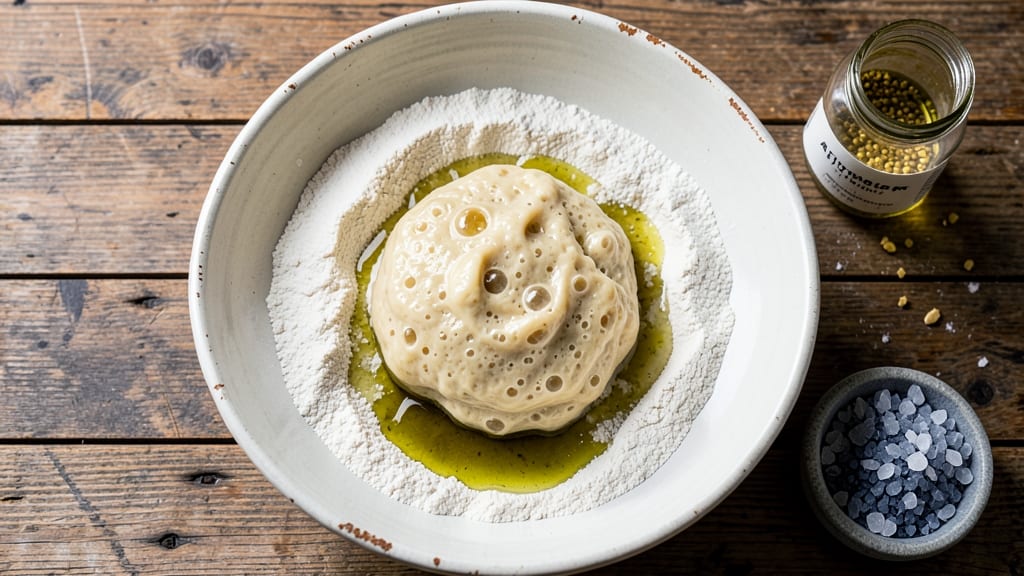
In a large bowl, combine the 4 cups bread flour and 1 cup biga starter. The biga should be well-fermented with visible bubbles—this gives your bread that signature open crumb and tangy flavor. Make a well in the center and add the 2.5 cups room-temperature water, 2 tbsp extra-virgin olive oil, 1.5 tsp sea salt, and 0.25 oz active dry yeast.
Mix with a wooden spoon until a shaggy dough forms, then turn it out onto a lightly floured surface. Knead by hand for 10-12 minutes until smooth and elastic. The dough should spring back when poked and feel slightly tacky but not sticky. If it's too dry, add 1 tbsp water at a time until it reaches the right consistency. This high-protein flour needs proper kneading to develop gluten for that perfect oven spring.
Bulk Ferment for Maximum Flavor
Shape the dough into a loose ball and place it back in the bowl. Cover with a damp towel or plastic wrap and let it rise at room temperature (70-72°F) for 4-6 hours, or until it has nearly doubled in size. You're looking for 30-50% increase—don't overproof or the bread will collapse. Every 30 minutes, do a "poke test": gently press your finger into the dough. If it springs back slowly (not immediately), it's ready.
During this time, the yeast and biga starter will work together to create a complex flavor profile. The longer the fermentation, the more developed the taste, but don't exceed 8 hours or the structure will weaken. I like to do this overnight in the fridge for even better flavor—just adjust the bulk fermentation time accordingly.
Shape and Seal with Foil for Crispy Crust
Turn the dough out onto a surface dusted with 0.25 cup cornmeal (this prevents sticking and adds texture). Shape it into a tight round boule by pulling the edges toward the center and tucking them underneath. The surface should be smooth and taut—no cracks or loose spots. Place the shaped boule seam-side down on a parchment-lined baking sheet.
Preheat your oven to 450°F with a Dutch oven inside for 45 minutes to get it screaming hot. Once preheated, carefully remove the Dutch oven and place the dough inside. Cover tightly with the 1 sheet aluminum foil (this creates steam for that crackly crust). Bake for 20 minutes covered, then remove the foil and bake for another 15-20 minutes until the crust is deep golden brown. Brush with 1 whole egg wash (optional) during the last 5 minutes for extra shine.
Final Salt Sprinkle and Resting
Remove the bread from the oven and immediately sprinkle with 1 tbsp coarse sea salt while it's still hot. This gives that signature crusty texture and enhances the flavor. Let it cool on a wire rack for at least 1 hour before slicing—this allows the crumb to set properly. If you can't resist, slice a piece at 30 minutes and toast it for an amazing snack.
For best results, store the bread in a paper bag at room temperature for up to 3 days. The crust will stay crispy and the crumb will remain tender. This method delivers that perfect Reddit-loved combination of chewy interior and shatteringly crisp exterior—every time.
Pro Tips For Making Artisan Bread Recipe Reddit
- STRETCH THE DOUGH: If your dough feels tight or resists stretching, it’s not ready—give it another 10–15 minutes of bulk fermentation. I used to rush this and end up with dense loaves; now I check by poking the dough gently. If it springs back slowly (not immediately), it’s time to shape.
- USE COLD WATER: Skip the warm water for mixing—cold water (around 60°F/15°C) slows yeast activity just enough to give you time to handle the dough without it overproofing. Yes, it’ll take a little longer to rise, but your crust will be crispier and the crumb more open.
- SALT THE WATER: Dissolve the sea salt in the water before mixing—it distributes evenly and prevents clumpy dough. I learned this the hard way when my first batch had salt pockets that made the bread taste uneven. A pinch of salt in the water also helps control yeast activity.
- PROOF ON COUNTERTOP: Skip the fridge for bulk fermentation—let the dough rise at room temp (70–75°F/21–24°C) for 4–6 hours until it’s nearly doubled. I was skeptical until I tried it; the flavor develops faster, and the texture is lighter than cold-proofing. Just don’t let it get too warm or it’ll rise too fast.
Creative variations of this artisan bread recipe reddit
No-Knead Overnight Version
Skip the kneading entirely by mixing your dough the night before. Combine all ingredients in a bowl, cover, and let it ferment at room temperature for 12-16 hours. The slow fermentation develops incredible flavor without requiring active kneading.
In the morning, shape the dough and bake as directed—this method is perfect for busy schedules and yields a loaf with an even more open crumb structure. 🌙
Herb-Infused Variations
Add 1 tbsp fresh rosemary or thyme to the dough during mixing for an aromatic twist. For a Mediterranean touch, mix in 2 tbsp finely chopped sun-dried tomatoes and 1 tsp dried oregano.
The herbs infuse the dough during fermentation, creating layers of flavor. I love using Penzeys Mediterranean Herb Blend for a balanced mix of savory notes.
Seed and Nut Enhancements
For added texture and nutrition, fold in ¼ cup toasted seeds (like sesame or flax) or ½ cup chopped walnuts during the final kneading stage. These additions create delightful crunch contrasts with the soft crumb.
For a sweeter variation, stir in 2 tbsp honey with the olive oil—this works beautifully with cinnamon or cardamom for a breakfast loaf.
Sourdough Starter Swap
Replace the biga starter with ½ cup active sourdough starter (fed and bubbly) for a tangier flavor profile. The sourdough adds complexity while maintaining the same structural benefits. If using, reduce the yeast to ¼ tsp since sourdough is already active.
This variation is my go-to for a more rustic, artisanal taste that still delivers that perfect crust.
Sweet Loaf Adaptation
Transform this into a sweet bread by replacing ½ cup bread flour with ½ cup all-purpose flour and adding 2 tbsp honey or ¼ cup maple syrup to the dough. For extra richness, fold in ¼ cup chopped candied citrus peel or ½ cup dried fruit.
The sweetness pairs beautifully with the crusty exterior, making it perfect for breakfast or dessert. 🍯
Nutrition facts
Frequently asked questions
Why does my artisan bread turn out dense instead of airy? Dense bread usually means underdeveloped gluten or overproofing.
Can I make this recipe without a Dutch oven?
Use a heavy oven-safe pot with a lid or even a baking stone with steam pans. For the foil-seal method, place a tray of boiling water on the lower rack while baking. The steam will help create that crackly crust. Just bake 5-10 minutes longer since home ovens vary in heat distribution.
How do I know when the biga starter is ready?
Your biga should have visible bubbles, smell slightly tangy (like yogurt), and nearly double in size after 24 hours. Press it gently—if it springs back slowly, it's ready. For best results, use it within 5 days of making. If it smells sour or has a strong alcohol odor, discard and make a fresh batch.
What's the best way to store leftover artisan bread?
Wrap cooled bread in a clean kitchen towel and store at room temperature for 3 days to keep the crust crispy. For longer storage, freeze wrapped loaves for 3 months. To reheat, wrap in foil and warm at 300°F for 5 minutes—this restores that bakery-fresh warmth without drying out the crumb.
Can I substitute bread flour with all-purpose?
You can try, but expect a denser crumb. For best results, use all-purpose plus 1 tbsp vital wheat gluten to mimic bread flour's protein content. The gluten development is crucial for that signature open crumb structure. If you must use all-purpose, increase kneading time to 15 minutes to compensate.