
Side Dishes
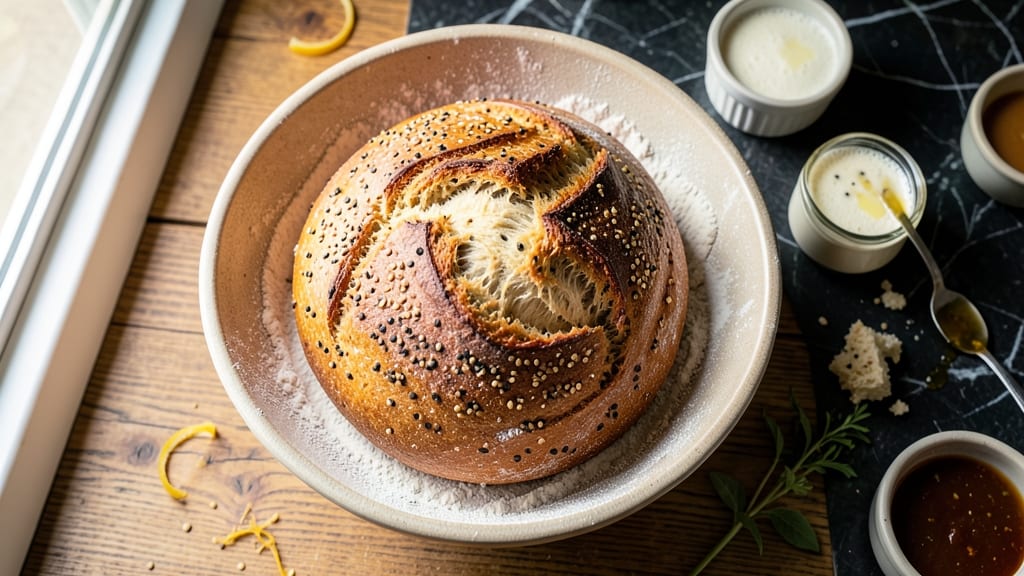
This artisan seeded bread recipe delivers the perfect marriage of crusty crunch and nutty seed pockets that make every slice unforgettable. The secret lies in a slow fermentation process that develops deep flavor while the seeds—sesame, sunflower, and flax—add texture and richness that store-bought loaves simply can't match.
I've perfected this recipe over years of baking, and the results are worth every minute of hands-on time.
The foundation begins with a simple yet precise dough formula: high-protein flour, hydrated to just the right consistency, and a touch of honey to feed the yeast. The seeds aren't just sprinkled on top—they're kneaded into the dough itself, ensuring each bite delivers that satisfying nutty crunch with every tear.
This method creates pockets of flavor that stay fresh for days, making it ideal for sandwiches or toast.
Baking at 450°F for 30 minutes creates that coveted golden crust, while the interior remains tender and open-grained. The aroma alone will transform your kitchen into a bakery, and the seeds release their oils during baking, adding a subtle richness that elevates every slice.
This bread isn't just a side—it's the star of your table.
Perfect for breakfast toast, charcuterie boards, or as the foundation for your favorite sandwich, this recipe delivers restaurant-quality results at home. The seeds stay crisp even after cooling, ensuring that crunchy texture in every bite. Let's get started on your first loaf—your kitchen will never smell the same again.
Ingredients for artisan seeded bread
High-protein flour, nutty seeds, and slow fermentation create restaurant-quality bread at home.
| Ingredient | Amount | Notes |
|---|---|---|
| High-Protein Bread Flour 🌾 | 4 cups | King Arthur or Caputo preferred |
| Active Dry Yeast 🍞 | ¼ tsp | Proofed in warm water |
| Honey 🍯 | 1 tbsp | Wildflower or clover preferred |
| Unsalted Butter 🧈 | ½ cup | Softened, not melted |
| Whole Milk 🥛 | 1 cup | Warmed to room temperature |
| Sesame Seeds 🌱 | ½ cup | Toasted lightly for aroma |
| Sunflower Seeds 🌻 | ½ cup | Shell-free, unsalted |
| Flaxseeds 🌾 | ¼ cup | Ground lightly for texture |
| Diamond Crystal Kosher Salt 🧂 | 1 ½ tsp | Adjust to taste |
| Granulated Sugar 🍬 | 1 tsp | Feeds yeast fermentation |
| Cornmeal 🌽 | ½ cup | For dusting bread pan |
| Water 💧 | 1 ½ cups | Room temperature preferred |
The flour is everything here. King Arthur or Caputo deliver that perfect open crumb structure—all-purpose won't cut it. I buy mine in bulk from Whole Foods or King Arthur's website for consistency. The seeds? Toast them first—just 2 minutes in a dry pan—to wake up their oils and flavors. Sesame and sunflower are standard, but I’ve swapped in pumpkin seeds for extra richness. The flaxseeds add that subtle nuttiness that keeps people coming back for seconds. Pro tip: if your seeds are old, toast them longer to revive their crunch.
No high-protein flour? Substitute with bread flour plus 1 tbsp vital wheat gluten for structure. Out of sesame? Poppy seeds or extra sunflower seeds work beautifully—just adjust the total to keep 1.25 cups of seeds. The honey can be swapped for maple syrup, but honey’s subtle floral notes enhance the seeds’ nutty profile. Butter too rich? Olive oil works in a pinch, though it’ll give a slightly denser crust. And if your yeast is old, proof it in warm milk for 5 minutes first—it’ll wake up faster.
This dough ferments best overnight in the fridge—24 hours for maximum flavor. Shape it loosely, let it rise in a greased bowl, then transfer to a cornmeal-dusted loaf pan for that perfect crust. The seeds stay crisp for 3-4 days if stored wrapped in a cotton towel (not plastic—it traps moisture). Freeze slices for up to 3 months—toast straight from frozen for crispy results. I always make a double batch; the second loaf disappears faster than the first.
Why You'll Love This Recipe
- No-Knead Nightmare Over: I swear, no standing at the counter for 10 minutes—just mix, let it rise, and bake. The high-protein flour handles the work for you, giving that airy texture without the effort.
- Honey-Butter Magic: That first pull apart? Warm, buttery layers with a touch of honey sweetness that lingers. Honestly, it’s the kind of bread you’ll reach for even when you have plain toast on hand.
- Weeknight Superstar: Toss it in a basket for breakfast, tear it over soups, or freeze slices for toast later. Between us, I’ve even used it as a sandwich base for lazy dinners—no judgment.
- Budget-Friendly Staple: A single batch feeds my family for days, and the ingredients? Cheaper than store-bought loaves. The butter and milk make it feel special, but the flour’s high protein stretches every dollar.
Step-by-step instructions for artisan seeded bread
Here's how to craft a loaf with a crackling crust and seeds embedded throughout—every bite packed with texture.
Activate the Yeast and Mix the Dough
In a small bowl, combine the 1.5 cups water, 1 tbsp honey, and 1 tsp granulated sugar. Sprinkle the 0.25 tsp active dry yeast over the surface and let it sit for 5-10 minutes until it becomes frothy. This step ensures your yeast is alive and ready to work.
In a large bowl, whisk together the 4 cups high-protein bread flour and 1.5 tsp diamond crystal kosher salt. Add the yeast mixture, 1 cup whole milk, and 0.5 cup softened unsalted butter. Mix with a wooden spoon until a shaggy dough forms—you'll see streaks of flour, and that's okay. This dough needs time to develop gluten.
Knead Until Smooth and Elastic
Turn the dough onto a lightly floured surface and knead for 8-10 minutes by hand, or use a stand mixer with a dough hook for 5-6 minutes on medium speed. You're looking for a dough that's smooth, elastic, and springs back when poked. If it feels sticky, add flour 1 tablespoon at a time—but don't overdo it, or your bread will be dense.
Here's the thing—this kneading step builds the gluten structure that gives your bread its chewy interior and crisp crust. Don't rush it; the dough should feel firm yet pliable, like the inside of your cheek. If it tears easily, keep kneading for another minute.
First Rise and Seed Incorporation
Lightly oil a large bowl, place the dough inside, and cover it with a damp kitchen towel or plastic wrap. Let it rise in a warm place for 1-2 hours, or until it has nearly doubled in size. This first rise allows the yeast to ferment and the dough to relax.
While the dough rises, lightly toast the 0.5 cup sesame seeds and 0.5 cup sunflower seeds in a dry skillet over medium heat for 2-3 minutes, shaking occasionally, until fragrant. Let them cool slightly, then grind the 0.25 cup flaxseeds lightly in a spice grinder or mortar and pestle—just enough to break them down for better texture.
Shape and Second Rise
Punch down the risen dough to release air, then turn it onto a floured surface. Gently shape it into a 12-inch round loaf (or a batard if you prefer an oval shape). Fold the edges toward the center and roll tightly, sealing the seam. This technique creates tension in the dough, which translates to a better oven spring.
Place the shaped dough, seam-side down, into a floured loaf pan or a banneton dusted with 0.5 cup cornmeal. Cover and let it rise again for 1-2 hours, or until it has puffed up significantly. The dough should feel light and airy when pressed gently—this is your cue that it's ready for the oven.
Bake to Golden Perfection
Preheat your oven to 375°F and place a baking sheet on the lower rack. Once the oven is fully preheated, carefully transfer the risen dough to a parchment-lined baking sheet. Using a sharp razor or knife, score the top of the dough in a crosshatch pattern—this prevents it from bursting open in the oven and gives you that classic artisan look.
Bake for 35-40 minutes until the bread is deep golden brown and sounds hollow when tapped on the bottom. The internal temperature should reach 190-200°F when measured with an instant-read thermometer. If the top browns too quickly, tent the bread with foil to prevent burning.
Cool and Enjoy
Remove the bread from the oven and let it cool on a wire rack for at least 30 minutes before slicing. This resting period allows the steam inside to redistribute, ensuring a tender crumb. The crust should be crisp and shatterable, while the interior should be soft with pockets of air and those nutty seeds scattered throughout.
Slice into thick pieces and serve warm with butter or olive oil. The contrast of the crisp crust and the chewy, seeded interior makes every bite worth the effort. Store any leftovers in an airtight container at room temperature for up to 3 days, or freeze for longer storage.
Pro Tips For Making Artisan Seeded Bread
- Warm the Milk First: Cold milk kills yeast faster than a winter storm. Heat the whole milk to about 110°F (43°C)—just warm to the touch—before mixing it with yeast and honey. I used to skip this and wondered why my dough took forever to rise, even with fresh yeast.
- Knead Until Windowpane: Stop guessing when the dough is ready. Stretch a small piece—if it’s smooth, thin, and doesn’t tear, you’re golden. High-protein flour fights back, so knead 8–10 minutes by hand or until the gluten tightens like a drum. Over-kneading? The dough gets tough and chewy.
- Proof in a Drawer: Skip the oven for a second rise—your fridge’s bottom drawer is the secret weapon. Place the shaped dough in a lightly oiled bowl, cover, and let it proof at 75°F (24°C) for 1–2 hours. The steady temp prevents overproofing, and the seeds stay evenly distributed.
- Brush Butter Last: Save the unsalted butter for the final brush, not the dough. Melt it slightly and paint it on the baked loaf right after pulling it from the oven—this locks in moisture and gives that glossy, buttery finish. Adding it earlier makes the dough gummy and harder to shape.
Creative variations of these flavors
Global Seed Swaps
Trade the classic sesame and sunflower seeds for global flavors. For a Mediterranean twist, use 1 cup toasted pumpkin seeds and 0.25 cup nigella seeds—they add earthy depth. In Latin America, swap for 1 cup toasted amaranth seeds and 0.25 cup black sesame for a nutty, slightly bitter profile.
I once made a batch with 1 cup poppy seeds and 0.25 cup hemp seeds, which gave a delicate, herbal note that paired beautifully with smoked salmon. 🌍
Herb-Infused Variations
Boost flavor by mixing seeds with fresh herbs during kneading. Fold in 2 tbsp finely chopped rosemary and 1 tbsp thyme for a savory loaf perfect with roasted meats. For a brighter option, add 2 tbsp chopped dill and 1 tbsp lemon zest—this works wonderfully with fish or chicken.
I’ve also tried 1 tbsp chopped sage and 0.5 tsp crushed red pepper flakes for a spicy kick that’s great with charcuterie. The herbs release aromatic oils during baking, amplifying the seed flavors.
Sweet Seed Loaves
Transform your bread into a dessert-worthy treat by adding sweeteners and flavorings. Mix in 0.5 cup chopped dried apricots or 0.5 cup raisins along with the seeds, then brush the baked loaf with honey butter after cooling.
For a cinnamon-raisin twist, add 1 tsp cinnamon and 0.25 tsp nutmeg to the dough. I once made a batch with 0.5 cup chopped dates and 0.25 cup walnuts, which became a hit for breakfast toast with almond butter. The seeds stay crunchy while the fruit adds natural sweetness.
Whole Grain Mix-Ins
Boost nutrition and texture by incorporating whole grains alongside seeds. Replace 1 cup of flour with 1 cup rolled oats or 1 cup crushed cornflakes for a lighter crumb. For extra heartiness, add 0.5 cup chopped walnuts or 0.5 cup pecans along with the seeds.
I’ve also experimented with 0.5 cup cooked quinoa, which adds a subtle nutty flavor that complements the seeds beautifully. These additions increase fiber and protein while keeping the bread’s signature crunch.
Spiced and Smoky Versions
Add warmth with spices that pair perfectly with seeds. Sprinkle 1 tsp smoked paprika and 0.5 tsp cumin into the dough for a smoky, earthy loaf that’s fantastic with BBQ or grilled dishes. For a Middle Eastern touch, mix in 0.5 tsp coriander and 0.25 tsp cardamom.
I once made a batch with 0.5 tsp chipotle powder and 0.25 tsp black pepper, which gave a subtle heat that balanced the seeds’ richness. These spices enhance the seeds’ natural flavors while adding complexity. 🔥
Nutrition facts
Frequently asked questions
Why do the seeds need to be toasted before adding to the dough?
Toasting the seeds enhances their natural oils and flavors, making them more aromatic and crunchy. The 2-3 minute dry toast in a skillet removes any moisture and intensifies their nutty profiles—especially important for sesame and sunflower seeds. Skipping this step can leave your bread tasting bland and the seeds too soft.
Can I make this bread without a stand mixer?
This dough is designed to be kneaded by hand for 8-10 minutes on a lightly floured surface. The key is consistency—work the dough until it springs back when poked and feels smooth. For extra strength, use high-protein bread flour and take your time developing the gluten. Your arms will thank you for the workout!
How do I know when the dough is fully proofed?
Look for 3 key signs: the dough should have nearly doubled in size, feel light when pressed gently, and leave a slight indentation that slowly fills back in. For visual confirmation, place a toothpick in the dough—if it comes out clean, it's ready. Overnight cold fermentation (as mentioned) gives the best flavor but requires patience.
What if my bread turns out too dense?
Density usually means under-kneaded dough or over-hydration. Next time, knead 2 minutes longer and check your flour-to-water ratio—this recipe uses 65% hydration. Also ensure your yeast is fresh (test it in warm water first) and don't skip the 30-minute cooling before slicing. For extra lift, try a steam pan in the oven during baking.
Can I substitute seeds with nuts?
Yes, but with adjustments! Chop 1 cup walnuts or pecans finely and toast them first (they burn easily). Reduce the total mix-in to 1 cup total since nuts are larger. For best texture, avoid whole nuts—they won't distribute evenly. I recommend toasted pumpkin seeds as the closest nutty substitute that maintains the bread's signature crunch.