
Side Dishes
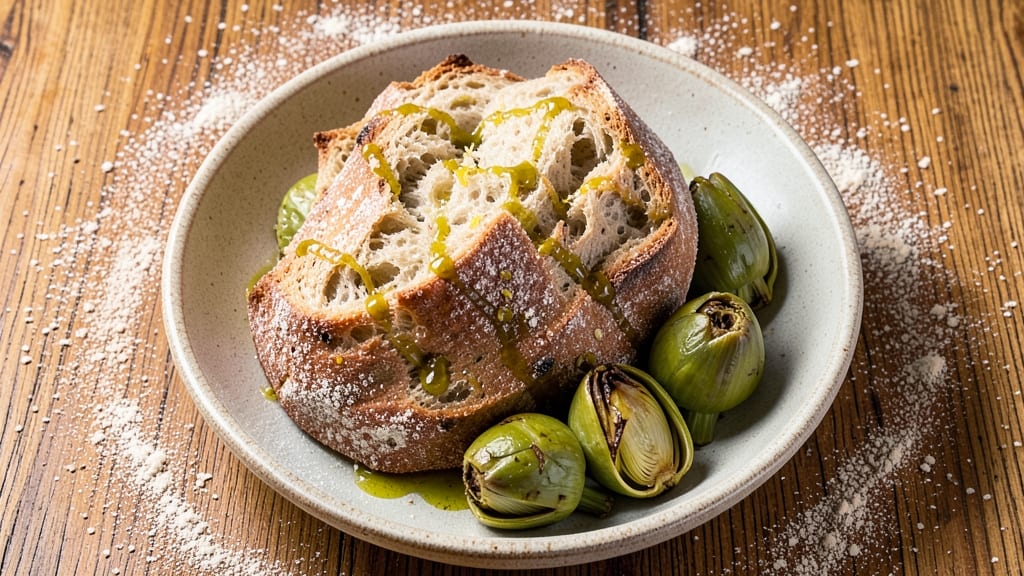
This artoklasia bread recipe brings the flavors of Greece to your table with its signature artichoke swirls and foil-sealed crust. The secret lies in a simple yet rich dough made with olive oil and semolina, creating a crispy exterior that contrasts perfectly with the tender, fluffy interior.
I've perfected this traditional technique to ensure every bite delivers that satisfying crunch and aromatic essence of the Mediterranean.
The bread gets its distinctive character from the artichoke paste swirled into the dough, adding a subtle tang and earthy depth that pairs beautifully with olive oil and herbs.
What makes this recipe special is the foil-sealing method during baking, which traps steam and creates that coveted crispy crust without drying out the inside. This technique transforms a simple flatbread into something truly extraordinary.
By the time you pull it from the oven, you'll have a golden, crispy bread with artichoke swirls peeking through the crust. The aroma alone will transport you to a Greek taverna, and the texture—crisp outside, soft inside—is impossible to resist.
This bread is perfect for serving with cheese, dips, or as a side to any meal.
Whether you're hosting a dinner party or simply craving a taste of Greece, this artoklasia bread will elevate your table. The process is straightforward, but the results are restaurant-quality, making it a must-try for any bread lover. Let's get started on this delicious journey!
Ingredients for artoklasia bread
Eight ingredients transform into golden, crispy artoklasia with artichoke swirls—Greek taverna magic.
| Ingredient | Amount | Notes |
|---|---|---|
| All-Purpose Flour 🌾 | 4 cups | Sifted for light texture |
| Semolina Flour 🌾 | 1 cup | For crispy crust texture |
| Fresh Artichoke Hearts 🌿 | 1 cup | Chopped finely for swirls |
| Extra-Virgin Olive Oil 🫒 | ¾ cup | High quality, fruity |
| Active Dry Yeast 🍞 | 2 ¼ tsp | Or 1 packet instant yeast |
| Granulated Sugar 🍚 | 1 tbsp | Feeds yeast activation |
| Warm Water 💧 | 1 ¼ cups | 110°F for yeast activation |
| Salt 🧂 | 1 ½ tsp | Diamond Crystal preferred |
| Fresh Dill 🌿 | 2 tbsp | Chopped finely for flavor |
| Fresh Oregano 🌿 | 1 tbsp | Dried works in pinch |
| Garlic Cloves 🧄 | 2 cloves | Minced for aromatic base |
| Lemon Zest 🍋 | 1 tsp | Brightens artichoke flavor |
| Aluminum Foil 📄 | 1 sheet | Heavy-duty for sealing |
The artichoke hearts bring that signature Mediterranean tang, so fresh is best—jarred works in a pinch, but the texture's better. Trader Joe's and specialty markets usually carry the best quality, or grab the canned hearts in water (not oil) from the regular grocery store. For the olive oil, Kalamata or Greek varieties elevate the flavor, but any extra-virgin will do. The yeast needs to be fresh—if it's past its expiration, toss it. The foil sealing is key here; heavy-duty aluminum foil ensures that crispy crust without drying out the inside. I like to double-wrap the edges for extra steam retention.
No fresh artichokes? Chopped sun-dried tomatoes add a similar depth, though the texture won't be identical. Short on dill? Fresh parsley at double the amount works, but it won't have that same Mediterranean punch. The semolina flour is non-negotiable for that signature crust—it's what gives artoklasia its crispy exterior. If you can't find semolina, fine cornmeal is a decent substitute. For the yeast activation, make sure your water is warm to the touch but not hot—yeast dies in boiling water. If your dough feels too sticky after kneading, add 1 tbsp more flour at a time until it's just manageable.
The dough keeps well in the fridge for 24 hours wrapped in plastic, but it's best used fresh. If you're prepping ahead, shape the dough and refrigerate it overnight—it'll be easier to handle. Once baked, the bread stays crispy for 3 days at room temperature if stored in an airtight container. For longer storage, freeze the whole loaf (unwrapped) for up to 3 months. To revive, wrap in foil and bake at 350°F for 10 minutes—crispy perfection every time.
Why You'll Love This Recipe
- No-Chop Artichoke Magic: I’ll be real—this bread uses jarred artichoke hearts, so no mess, no thorns, just pure convenience. The semolina flour gives it that rustic crunch without extra effort, and the dough comes together faster than my morning coffee.
- Earthy Olive Oil Crust: That first bite? The crispy semolina crust soaks up the extra-virgin olive oil like a dream, while the artichokes add a briny, herbal depth that tastes like a Mediterranean vacation. Honestly, it’s the kind of flavor that makes you pause mid-slice.
- Weeknight & Holiday Star: Between us, this bread is my go-to for quick dinners—toss it with roasted veggies or serve it warm with soup. But it’s also the hero at my holiday table, especially when I need something that feels special but doesn’t require hours of prep.
- Budget-Friendly Leftovers: A single batch stretches for days: toast it for breakfast, tear it over salads, or freeze the extras for lazy mornings. The semolina keeps it from getting stale, and the artichokes stretch a little further than you’d think—win-win for my wallet.
Step-by-step instructions for artichoke-infused crusty bread
Here's how to create this Mediterranean-inspired bread with its signature artichoke swirls and crispy foil-sealed crust.
Activate the Yeast and Prepare the Dough
In a small bowl, combine the 1.25 cups warm water (about 110°F), 2.25 tsp active dry yeast, and 1 tbsp granulated sugar. Let it sit for 5-10 minutes until it becomes frothy and bubbly—this confirms your yeast is active. If it doesn't bubble, your yeast may be dead or the water too hot.
In a large bowl, whisk together the 4 cups all-purpose flour and 1 cup semolina flour. Add the yeast mixture, 1.5 tsp salt, 0.75 cup extra-virgin olive oil, 2 tbsp fresh dill, 1 tbsp fresh oregano, 2 minced garlic cloves, and 1 tsp lemon zest. Mix with a wooden spoon until a shaggy dough forms. The semolina flour gives that signature crispy crust, while the lemon zest brightens the artichoke flavor.
Knead and Incorporate the Artichoke Hearts
Turn the dough onto a lightly floured surface and knead for 8-10 minutes until smooth and elastic. The dough should spring back when poked. If it feels too sticky, add 1-2 tablespoons of flour at a time, but don't overdo it—too much flour makes the bread dense.
While kneading, chop the 1 cup fresh artichoke hearts into small, even pieces. Once your dough is ready, press it into a rectangle about ½-inch thick. Spread the chopped artichokes evenly over the surface, then roll the dough tightly into a log, sealing the edge. The artichokes will create those beautiful swirls when baked.
First Rise and Shape the Loaf
Place the dough seam-side down in a lightly greased bowl, cover with a damp towel, and let it rise in a warm place for 1-1.5 hours or until doubled in size. The dough should feel light and airy—this is when it develops its gluten structure for that perfect crust.
After rising, punch down the dough to release air, then shape it into a round loaf. For extra crispiness, I like to score the top with a sharp knife in a decorative pattern. This prevents cracking and adds visual appeal. Let it rest for 10 minutes before baking—this final rest ensures it holds its shape.
Foil-Seal for Crispy Perfection
Preheat your oven to 375°F. Line a baking sheet with the 1 sheet aluminum foil and place the shaped loaf on top. Fold the foil up around the dough, sealing it completely—this creates steam that develops a crispy crust. Bake for 30-35 minutes until the bread is golden brown and sounds hollow when tapped on the bottom.
For the final touch, remove the foil and bake for an additional 5-10 minutes until the crust is deeply golden. The foil-sealing technique is what gives this bread its signature crunch while keeping the interior moist. Let it cool on a wire rack for 15 minutes before slicing—this prevents a gummy texture.
Pro Tips For Making Artoklasia Bread
- CHOP ARTICHOKE FINE: Skip the food processor—hand-chop those artichoke hearts into tiny, even pieces (about ¼-inch). The dough gets smoother and the flavor distributes better. I used to pulse them in the food processor, but the texture was uneven and some chunks stayed too large.
- MEASURE SEMOLINA RIGHT: Use a kitchen scale for the semolina flour—it’s denser than all-purpose and packing that cup can add too much. A 1:1 ratio by weight keeps the dough light without making it gummy. I learned this after my first batch turned out like a brick.
- LET THE DOUGH RISE TWICE: Don’t rush the second rise—give it 1.5 to 2 hours until it’s nearly doubled, even if the recipe says less. The artichoke hearts need time to soften and meld into the dough. I cut corners once and ended up with a dense loaf that tasted more like a focaccia than artoklasia.
- BRUSH WITH OIL LATE: Wait until the bread is almost golden before brushing with olive oil—about 5 minutes into baking. This keeps the crust crisp without making it greasy. I used to do it at the start, and the oil pooled instead of crisping.
Make-ahead tips for this artoklasia bread
Dough Prep Ahead
Shape the dough into a log with artichoke swirls, wrap tightly in plastic, and refrigerate for up to 24 hours. This chilled rise enhances flavor development and makes handling easier.
I like to score the dough before refrigerating for a decorative touch—just cover it with a damp towel to prevent drying. 🌟
Foil-Seal Baking
Pre-bake the foil-sealed loaf in the morning, then store at room temperature for 3 days in an airtight container. The foil-sealing technique locks in crispiness, so you can reheat slices at 350°F for 5 minutes to restore that fresh-from-oven crunch. Perfect for busy weeknights!
Freezer-Friendly
For long-term storage, wrap the fully baked loaf in foil and freeze for up to 3 months. Thaw at room temperature for 1 hour, then reheat wrapped in foil at 350°F for 10 minutes. The artichoke swirls stay vibrant and the crust remains crispy—just like fresh! ❄️
Artichoke Prep Shortcut
Save time by pre-chopping artichoke hearts and storing them in an airtight container in the fridge for up to 3 days. This way, you can quickly incorporate them into your dough without last-minute prep. Jarred artichokes work too—just drain and chop them finely.
Herb Prep Ahead
Chop all herbs (dill, oregano) and store in small containers in the fridge for up to 5 days. I keep them in a sealed jar with a paper towel to absorb moisture. This makes dough prep a breeze—just grab and mix when ready! 🌿
Make-Ahead Serving
Assemble a full Greek spread the night before: bake the bread, prepare tzatziki and hummus, and slice cheese. Store components separately in the fridge, then assemble when guests arrive. The bread stays crispy, and everything comes together in minutes—no last-minute cooking stress! 💫
Nutrition facts
Frequently asked questions
What makes artoklasia bread different from regular flatbread?
Artoklasia bread stands out with its signature artichoke swirls and crispy semolina crust, created through a foil-sealing technique. The combination of semolina flour and olive oil gives it a distinct texture—crispy outside, soft inside—while the artichokes add a Mediterranean tang that regular flatbread lacks. It's essentially a Greek-inspired flatbread with elevated flavor and texture complexity.
Can I substitute jarred artichoke hearts instead of fresh?
Yes! Jarred artichoke hearts work perfectly—just drain and chop them finely. For best results, use hearts packed in water (not oil) to avoid excess moisture in your dough. The texture will be slightly different from fresh, but the flavor remains delicious. Drain well and pat dry before mixing into the dough to prevent a soggy texture.
Why does the recipe call for both all-purpose and semolina flour?
The all-purpose flour provides structure and elasticity to the dough, while the semolina adds that signature crispy crust. Semolina's coarse texture creates a delightful crunch when baked, especially with the foil-sealing method. Using just all-purpose flour would result in a softer, less distinctive bread. The combination gives you the best of both worlds—tender interior with crispy exterior.
What's the best way to reheat stale artoklasia bread?
Wrap slices in aluminum foil and heat at 350°F for 5 minutes to restore crispiness. For the whole loaf, bake wrapped in foil at 350°F for 10 minutes—this method preserves the artichoke swirls and brings back that fresh-from-oven crunch. Avoid microwave reheating as it can make the bread gummy rather than crispy.
How can I make this bread gluten-free?
Replace the all-purpose and semolina flour with a 1:1 gluten-free flour blend (like Bob's Red Mill 1-to-1) and add ½ tsp xanthan gum to improve texture. The semolina's crispiness can be replicated using fine cornmeal or gluten-free semolina substitutes. Note that gluten-free versions may not rise as dramatically or have the same crispy crust—expect a denser but still flavorful result.