
Side Dishes
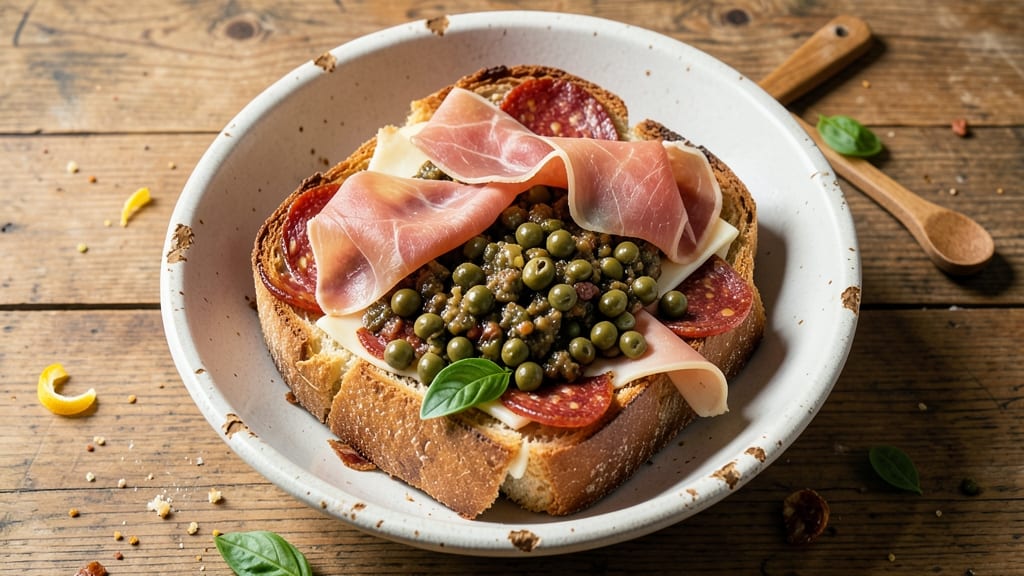
This authentic muffuletta bread recipe brings New Orleans' iconic sandwich tradition to your kitchen with its signature olive-stuffed layers and hearty Italian meats.
The secret lies in the perfectly shaped loaf—dense, slightly crispy crust, and tender crumb—built to hold the weight of mortadella, salami, ham, and that tangy olive salad. I've spent years perfecting the balance of textures and flavors to match the legendary sandwich from Central Grocery.
The key to authenticity starts with the dough, which requires a slow fermentation for maximum flavor development. Once shaped into its distinctive oblong form, the bread is steamed to create that signature moist interior while maintaining a sturdy structure to support the generous fillings.
The olive salad—made with ripe olives, capers, and vinegar—adds the signature tang that cuts through the richness of the cured meats.
What makes this recipe truly special is the layering technique that transforms simple ingredients into a masterpiece. Each slice reveals perfectly balanced components: crisp bread, tender meats, and that bright olive salad that keeps every bite exciting.
The bread's dense yet slightly chewy texture holds up beautifully when sliced, making it ideal for sandwiches or even as a side for your Italian feast.
Whether you're recreating a New Orleans classic or introducing friends to this regional treasure, this muffuletta bread delivers restaurant-quality results at home. The aroma alone will have everyone asking for seconds—just like at Central Grocery. Let's get started on making your own legendary loaf.
Ingredients for authentic muffuletta bread
The secret to authentic muffuletta bread starts with these 15 carefully chosen ingredients—flour, yeast, and olives that bring New Orleans' iconic sandwich to life.
| Ingredient | Amount | Notes |
|---|---|---|
| All-Purpose Flour 🌾 | 6 cups | High-protein for chewy texture |
| Active Dry Yeast 🍞 | ¼ oz | Or 2 1/4 tsp, fresh preferred |
| Granulated Sugar 🍚 | ½ cup | For yeast activation |
| Unsalted Butter 🧈 | ½ cup | Cold, cubed for dough |
| Warm Water 💧 | 1 ½ cups | 110°F for yeast activation |
| Kosher Salt 🧂 | 2 tsp | Diamond Crystal preferred |
| Olive Oil 🫒 | ¼ cup | Extra-virgin for richness |
| Pitted Green Olives 🫒 | 1 ½ cups | Manzanilla or Cerignola |
| Capers 🫒 | ¼ cup | Nonpareils, rinsed well |
| Red Wine Vinegar 🍷 | ¼ cup | Dry, not balsamic |
| Garlic Cloves 🧄 | 4 cloves | Minced for olive salad |
| Mortadella 🍖 | 8 oz | Italian, sliced thin |
| Genova Salami 🍖 | 8 oz | Sliced 1/8-inch thick |
| Black Forest Ham 🍖 | 8 oz | Deli-sliced, not smoked |
| Provolone Cheese 🧀 | 4 oz | Sliced for stuffing |
The flour is non-negotiable here. King Arthur or Caputo bread flour gives that signature dense crumb—all-purpose works in a pinch, but you'll notice the difference. For the yeast, fresh active dry yeast from Whole Foods or Penzeys stays potent longer than the cheap stuff. The olives? Manzanola or Cerignola from the Italian market section—none of that canned nonsense. Pitted, rinsed, and chopped uniformly. The cured meats should be freshly sliced at the deli counter—pre-packaged loses moisture and flavor fast. Pro tip: buy them the day you bake.
No olive oil? Avocado oil works, but it lacks that fruity depth. Subbing capers? Green olives with extra lemon juice mimics the tang. The vinegar is crucial—red wine vinegar has the right acidity, but if you must use white, add a pinch of salt to balance. For the meats, Genova salami and Black Forest ham are non-negotiable for authenticity, but hard salami and prosciutto can stand in if that's all you've got. The provolone? Mild, not sharp, or the olive salad will fight it. And for heaven's sake, use fresh garlic—jarred is a crime.
This dough needs 24 hours of slow fermentation—don't rush it. Store it in the fridge in a floured bowl covered with a damp towel for maximum flavor development. The olive salad keeps for 5 days in the fridge, but the meats should be used within 3 days of slicing. For the stuffed loaf, wrap tightly in plastic and refrigerate—it'll keep for 4 days. Freezing? Not recommended—the texture changes dramatically. Make a double batch if you're feeding a crowd, but the loaf is best enjoyed fresh.
Why You'll Love This Recipe
- No-Knead Magic: I swear by this dough—just mix, let it rise, and forget it. The yeast and butter do all the work while you sip coffee or scroll through your phone.
- Buttery, Rustic Crust: That golden-brown exterior with a soft, airy interior? It’s all thanks to the butter and sugar working their charm. One bite and you’ll understand why bakeries charge extra.
- Game for Any Occasion: Pack it for picnics, slice it for sandwiches, or serve it warm with olive oil. My kids beg for it at breakfast, and my husband sneaks it for midnight snacks.
- Budget-Friendly Staples: Five ingredients, zero fuss. The flour and yeast stretch further than you’d think, and the butter makes everything taste like a treat—not a splurge. Leftovers? They vanish faster than I can say “second slice.”
Step-by-step instructions for authentic muffuletta bread
Here's how to craft the iconic New Orleans sandwich bread with perfect texture and flavor.
Prepare the Olive Salad Filling
In a medium bowl, combine the 1.5 cups pitted green olives, 0.25 cup capers, 0.25 cup red wine vinegar, and the 4 minced garlic cloves. This is the heart of your muffuletta—where the briny, tangy flavors develop. Let this mixture sit at room temperature for 10 minutes to allow the garlic to infuse its aromatic oils into the olives.
After resting, taste and adjust seasoning if needed. The olives should be well-coated with the vinegar and caper brine, creating a vibrant green, purple, and black marbled appearance. This olive salad is what gives the muffuletta its signature tangy, salty punch that balances the rich meats and cheeses.
Make the Dough and First Rise
In a large mixing bowl, combine the 6 cups all-purpose flour, 0.25 oz active dry yeast, 0.5 cup granulated sugar, and 2 tsp kosher salt. Create a well in the center and add the 0.5 cup cold cubed unsalted butter, 1.5 cups warm water (110°F), and 0.25 cup olive oil. Mix with a wooden spoon until a shaggy dough forms.
Turn the dough onto a lightly floured surface and knead for 8-10 minutes until smooth and elastic. The dough should be slightly tacky but not sticky. If it's too dry, add 1 tablespoon of warm water at a time. Place the dough in a lightly oiled bowl, cover with a damp towel, and let rise in a warm place for 1-2 hours or until doubled in size. This first rise develops the gluten structure essential for that classic muffuletta texture.
Shape the Dough into a Loaf
Once the dough has doubled, punch it down to release the air. Divide the dough into four equal portions (about 1.5 pounds each) for four individual muffuletta loaves. Shape each portion into a smooth, slightly tapered oval loaf, about 10 inches long. Place each loaf on a parchment-lined baking sheet, seam-side down, and let rest for 15 minutes while you prepare the filling.
This shaping step is crucial—don't skip it. The tapered shape allows for even baking and creates that beautiful, rustic look. The dough should feel firm but still slightly springy when pressed gently. If the dough springs back too quickly, let it rest a few more minutes before shaping.
Assemble and Stuff the Loaves
Preheat your oven to 375°F. For each loaf, make a horizontal cut about 3 inches deep along the top, creating a pocket for the filling. This is where the magic happens—you'll create layers of mortadella, genova salami, black forest ham, and provolone cheese, alternating with spoonfuls of the olive salad.
Start with a layer of meats, then add a generous spoonful of olive salad, repeating until the pocket is filled but not overflowing. The filling should be visible through the cut, creating that iconic stuffed appearance. Be careful not to overstuff—you want the bread to expand slightly during baking, not burst.
Bake to Golden Perfection
Bake the stuffed loaves for 25-30 minutes until the crust is golden brown and the internal temperature reaches 190°F. The bread should smell rich and slightly sweet, with the aroma of the olive salad and meats wafting through your kitchen. Rotate the pans halfway through baking for even browning.
For the perfect muffuletta, the crust should be crisp and slightly crackly, while the interior remains soft and pillowy. If the top browns too quickly, tent the loaves with foil to prevent over-browning. Once baked, let the muffuletta rest for 10 minutes before slicing—this allows the filling to set slightly and makes for cleaner cuts.
Pro Tips For Making Authentic Muffuletta Bread
- WEIGH THE FLOUR: I learned this the hard way—muffuletta dough is delicate, and scooping flour by volume leads to inconsistent texture. Use a kitchen scale for precision; 500g of all-purpose flour (spooned and leveled) makes all the difference in a tender, airy crumb.
- TEST THE YEAST FIRST: Skip the guesswork—proof your yeast in warm water (110°F) with a pinch of sugar before mixing. If it bubbles within 5–10 minutes, you’re good to go; if not, toss it and start fresh. No one wants to waste hours on a failed rise.
- KNEAD BY TOUCH: This isn’t the prettiest method, but it’s the tastiest: stop kneading when the dough springs back slowly and leaves a clean imprint when poked. Overworking it adds gluten, which turns your muffuletta into a chewy brick instead of a soft, pillowy loaf.
- USE COLD BUTTER: Cut the butter into small cubes and let it soften just to room temp—no melting. Cold butter creates pockets of fat that give the bread its signature flaky layers, while melted butter makes it greasy and dense. Yes, even if you’re impatient like me.
Serving suggestions for this recipe
Classic Sandwich Style
Slice your muffuletta into ½-inch thick pieces for the traditional New Orleans sandwich experience. The dense bread holds up beautifully to the generous fillings—mortadella, salami, ham, and provolone—while the olive salad adds that signature tangy bite.
Serve with hot Italian dressing for dipping, which cuts through the richness of the cured meats. 🥖
Open-Faced Feast
For a more dramatic presentation, slice the muffuletta lengthwise and serve open-faced. Arrange the meats and olive salad in a visually appealing pattern, then top with fresh basil leaves and a drizzle of extra-virgin olive oil.
This style is perfect for entertaining—everyone can customize their own bite with additional olive salad or hot sauce.
Side Dish Showstopper
Cut the muffuletta into 1-inch thick cubes and serve as a side dish alongside your Italian feast. The bread's sturdy texture makes it ideal for soaking up sauces from pasta or meat dishes.
Pair with roasted garlic shrimp or a creamy risotto to create a well-rounded meal. The olive salad adds a pop of color and flavor that elevates any plate.
Gourmet Charcuterie Board
Use muffuletta slices as the base for an elevated charcuterie board. Arrange the bread in a circular pattern, then layer with prosciutto, aged cheddar, roasted nuts, and fresh fruit like figs or grapes.
The olive salad adds a briny contrast that balances the sweet and savory elements. This presentation is perfect for holiday gatherings or special occasions.
Stuffed Bread Bites
For a fun twist, cut the muffuletta into 1-inch cubes and serve as appetizers. Use a small spoon to scoop out a portion of the filling, then replace it with a mix of whipped ricotta and sun-dried tomatoes.
Bake at 350°F for 10 minutes until warmed through. These bite-sized versions are perfect for parties and make cleanup a breeze.
Meal Prep Hack
Store leftover muffuletta in an airtight container for up to 4 days in the refrigerator. Reheat slices in a toaster oven at 350°F for 5-7 minutes to restore crispiness.
For a quick lunch, assemble muffuletta sandwiches with lettuce and tomato, then pack with a side of Italian vinaigrette for dipping. This makes for a satisfying, no-fuss meal all week long. 💡
Nutrition facts
Frequently asked questions
What makes this muffuletta bread different from regular sandwich bread?
The key differences lie in the dough's high-protein flour and slow fermentation (24 hours), creating a dense, slightly chewy texture that can hold heavy fillings without collapsing. The olive-stuffed layers and Italian cured meats set it apart from standard sandwich bread, which is typically lighter and designed for simpler fillings.
Can I make the olive salad ahead of time?
Yes! The olive salad can be prepared up to 5 days in advance and stored in an airtight container in the fridge. The flavors actually develop and deepen over time. Just give it a quick stir before using. For the stuffed bread, assemble it the day you bake—it won't keep well once stuffed.
How do I know when the dough is properly fermented?
The dough is ready when it's doubled in size and has a slightly springy texture when pressed gently. It should also have a pleasant, yeasty aroma. For best results, use a dough scraper to check the rise—if it springs back slowly (about 2 seconds to flatten), it's perfect. Over-fermented dough will smell sour.
What's the best way to slice muffuletta for sandwiches?
Use a sharp serrated knife and slice into ½-inch thick pieces for perfect sandwiches. For cleaner cuts, let the bread rest for 10 minutes after baking. If the filling oozes out, it's a sign of perfect stuffing! Serve with hot Italian dressing for dipping to balance the rich flavors.
Can I freeze the stuffed muffuletta?
Freezing isn't recommended as it can make the bread gummy. If you must, freeze the unstuffed loaves before baking for up to 1 month. Thaw overnight in the fridge, then stuff and bake as directed. The texture won't be identical to fresh, but it's better than freezing the stuffed version.