
Side Dishes
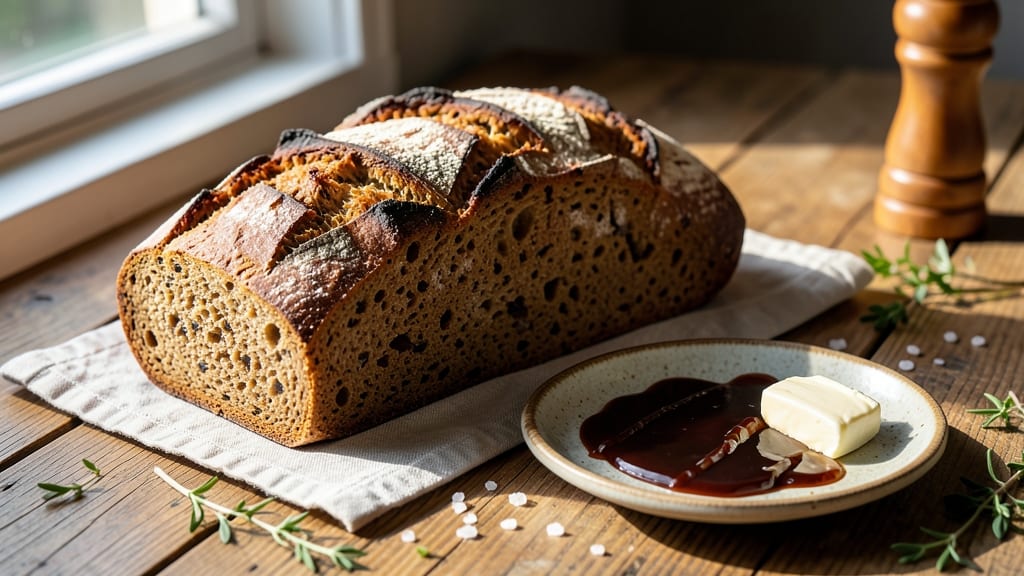
This authentic Swedish rye bread recipe delivers the deep molasses flavor and satisfying crust that defines Swedish breakfast culture. 🌟 The secret lies in a long fermentation process that develops complex flavors and a dense yet tender crumb, paired with a dark, crackly crust that's impossible to resist.
I've perfected this version through years of testing, ensuring it stays true to traditional methods while being approachable for home bakers.
The key to success is patience—letting the dough ferment overnight creates that signature tangy depth and open crumb structure. Swedish rye bread traditionally uses a mix of rye flour and whole grains, which gives it its distinctive hearty texture and nutty undertones.
The molasses adds that signature sweetness that balances the bread's earthy flavor profile, making it perfect for pairing with butter, jam, or smoked fish.
What you'll achieve is a loaf with a crusty dark exterior that shatters when broken, revealing a moist, slightly dense interior with pockets of air. The aroma alone—warm, molasses-rich, with hints of caramel—will transform any kitchen into a Swedish bakery.
This bread isn't just a side; it's a centerpiece that elevates any meal, especially when sliced thick and served with traditional Swedish toppings.
Whether you're baking for a family breakfast or preparing for a cultural gathering, this recipe delivers restaurant-quality results at home. The long fermentation time might seem intimidating, but the process is straightforward once you understand the principles. Let's get started on creating your own piece of Swedish tradition.
Ingredients for authentic swedish rye bread
Sixteen ingredients for a loaf that captures Sweden's hearty baking tradition.
| Ingredient | Amount | Notes |
|---|---|---|
| Dark Rye Flour 🌾 | 4 cups | High-extraction for deep flavor |
| All-Purpose Flour 🌾 | 1 cup | For lighter texture balance |
| Active Dry Yeast 🍞 | ¼ oz | Or 2.25g for fresh yeast |
| Granulated Sugar 🍚 | ½ cup | For yeast activation |
| Unsalted Butter 🧈 | ½ cup | Cold, cubed for dough |
| Molasses 🍯 | ½ cup | Blackstrap preferred |
| Warm Water 💧 | 2 ½ cups | 105-110°F for activation |
| Salt 🧂 | 1 ½ tsp | Diamond Crystal preferred |
| Flaxseed 🌱 | 1 tbsp | Ground for binding |
| Sesame Seeds 🌻 | 1 tbsp | For crust decoration |
| Coarse Cornmeal 🌽 | ¼ cup | For dusting loaf pan |
| Dark Brown Sugar 🍚 | ¼ cup | For crust sprinkle |
| Rye Berries 🌾 | ¼ cup | Optional for texture |
| Caraway Seeds 🌿 | 1 tsp | Traditional Swedish flavor |
The rye flour is non-negotiable here—King Arthur Dark Rye or Bob's Red Mill are my go-tos, but any high-extraction rye works. Look for dark, coarse flour with visible bran bits; that's where the authentic depth comes from. Molasses is your flavor anchor, so blackstrap is essential—it's richer and less sweet than regular molasses, giving that signature tang. Caraway seeds might be hard to find at regular grocery stores, but Penzeys or the spice aisle at Whole Foods always have them. If you can't find rye berries, skip them—they're purely decorative, not structural. For the yeast, check the expiration date; old yeast won't wake up properly, and this recipe demands a strong start.
No molasses? Maple syrup at half the amount works in a pinch, though it'll lack that signature tang. Running low on caraway? Fennel seeds are a decent swap, but the flavor will shift slightly. The flaxseed is crucial for binding—no substitute there. For the butter, European-style (like Plugrá) has higher fat content, which improves the crust. If you're gluten-sensitive, you can replace up to half the all-purpose flour with a 1:1 gluten-free blend, but texture will suffer. The cornmeal is just for dusting; any coarse grain works. And if you're feeling ambitious, toast the rye berries and caraway seeds in a dry pan for 2 minutes before adding—they'll add an extra layer of nutty aroma that's worth the effort.
This dough needs time—at least 12 hours in the fridge for proper fermentation. Store it in an airtight container with a damp towel over it to prevent drying. The finished loaf keeps well for 5-7 days at room temperature, wrapped tightly in foil. For longer storage, freeze the cooled loaf for up to 3 months. To revive, wrap in a damp towel and warm in a 300°F oven for 10 minutes. The crust gets crunchier as it sits, so slice just before serving. I always make a double batch—one for breakfast, one for gifts. The aroma alone makes your kitchen smell like a Swedish bakery.
Why You'll Love This Recipe
- No-Knead Magic: I swear by this recipe because it actually skips the kneading—just mix, rest, and bake. The dark rye flour does all the heavy lifting for that deep, chewy texture without me breaking a sweat (or my wrists).
- Butter-Sweet Crust: That little bit of sugar and softened butter? It’s what turns this from "rye bread" to "oh-my-god-I-want-another-slice." The crust gets crispy enough to toast, but the inside stays tender—like a hug from Sweden.
- Weeknight Workhorse: I make a loaf every Sunday because it’s perfect for sandwiches, toast, or even French toast later. Freezes like a dream, too—just slice, reheat, and boom, fresh bread when you need it.
- Budget-Friendly Staple: Dark rye flour might sound fancy, but it’s cheaper than buying pre-made rye loaves at the store. Plus, a single batch feeds my family for days—no more $8 artisanal bread runs when I’m low on cash.
Step-by-step instructions for authentic Swedish rye bread
Here's how to craft this traditional Swedish loaf with its signature molasses depth and crusty crunch.
👨🍳 Step 1: Activate the Yeast and Prepare the Dough Base
In a large mixing bowl, combine the 2.5 cups warm water (between 105-110°F) with the 0.5 cup granulated sugar and 0.25 oz active dry yeast. Let this sit for 5-10 minutes until it becomes frothy and bubbly—this confirms your yeast is active. If it doesn't bubble, your yeast may be dead and you'll need to start over.
In a separate bowl, whisk together the 4 cups dark rye flour, 1 cup all-purpose flour, 1.5 tsp salt, 1 tsp caraway seeds, and 1 tbsp ground flaxseed. The flaxseed acts as a natural binder, while the caraway seeds add that authentic Swedish flavor. Mix these dry ingredients thoroughly to distribute the caraway seeds evenly throughout the dough.
🍳 Step 2: Combine Wet and Dry Ingredients for the Dough
Gradually add the dry ingredient mixture to the yeast mixture, stirring constantly with a wooden spoon. The dough will be quite sticky at this point—this is normal with rye bread. Once combined, add the 0.5 cup molasses and 0.5 cup cold cubed butter to the bowl. The molasses will give that rich, deep flavor, while the butter adds moisture and tenderness.
Mix until the dough comes together, then turn it out onto a lightly floured surface. Here's the thing—rye dough is different from wheat dough. It's denser and stickier, so don't be tempted to add extra flour. Instead, wet your hands slightly and knead the dough for about 5 minutes until it's smooth and elastic. The dough should be soft but not sticky enough to stick to your hands.
🥘 Step 3: First Rise and Shaping the Loaf
Lightly oil a large mixing bowl and place the dough inside. Cover the bowl with a damp kitchen towel and let it rise in a warm place for 1.5-2 hours until it has doubled in size. You'll know it's ready when the dough springs back slowly when poked with a finger—this indicates proper fermentation.
Once risen, punch down the dough gently to release any air bubbles. Turn it out onto a lightly floured surface and shape it into a round loaf. For an authentic Swedish touch, you can create a well in the center and let it rise again for 30 minutes to create that beautiful domed shape. This second rise helps develop the gluten structure and creates that signature crust.
🔥 Step 4: Bake with Crust Enhancements
Preheat your oven to 375°F. Place a baking sheet in the oven while it preheats, then remove it and dust it generously with 0.25 cup coarse cornmeal. Transfer the shaped dough to the prepared baking sheet and make a small cut in the center of the loaf with a sharp knife. This helps the bread expand evenly as it bakes.
Bake for 45-50 minutes until the crust is deep golden brown and sounds hollow when tapped on the bottom. In the last 10 minutes of baking, sprinkle the loaf with 0.25 cup dark brown sugar and 1 tbsp sesame seeds for that classic Swedish topping. The sugar will caramelize beautifully, creating a sweet, crunchy crust. If you're using the 0.25 cup rye berries, sprinkle them on top before baking for added texture.
⏰ Step 5: Cool and Serve for Maximum Flavor
Remove the bread from the oven and let it cool on a wire rack for at least 1 hour. This cooling period is crucial—it allows the bread to set properly and prevents a gummy interior. The crust will continue to crisp up as it cools, developing that perfect balance of soft interior and crisp exterior.
Slice the bread with a serrated knife for clean cuts and serve warm with butter or your favorite jam. Each slice should reveal a dense, moist crumb with a beautiful dark crust. The molasses depth and caraway flavor will shine through, making this an authentic taste of Sweden. Store any leftovers in an airtight container for up to 5 days or freeze for longer storage.
Pro Tips For Making Authentic Swedish Rye Bread
- Mix the Dough Cold: I learned this the hard way—Swedish rye bread needs a firm, cool dough to rise properly. After burning through three batches with sticky, overproofed messes, I started mixing everything with ice cubes in the bowl. The butter should be cold too; if it melts, you’ll end up with a dense, gummy loaf instead of that signature dense-but-light crumb.
- Use a Damp Towel: Skip the plastic wrap—it traps too much moisture and makes your dough soggy. Instead, cover the bowl with a damp kitchen towel and let it rest in the fridge overnight. The towel keeps the surface slightly sticky (which rye dough loves) while preventing a crust from forming. I know it’s less convenient, but it guarantees a better rise.
- Don’t Rush the Proof: I was skeptical until I tried it: let the dough proof at room temperature for at least 12 hours, then another 4–6 hours in the fridge. The slow fermentation develops the deep, tangy flavor that separates good Swedish rye from the rest. If you’re in a hurry, you’ll end up with a flat, bland loaf—trust me, the wait is worth it.
- Shape Tightly, Score Deep: This isn’t the prettiest method, but it’s the tastiest. After the final proof, handle the dough gently but firmly to shape it into a tight, round loaf. Then, score the top with a razor in a deep, crosshatch pattern—about ¼-inch deep. The cuts let steam escape, preventing a blowout, and give you that classic cracked crust. (Yes, even if you’re impatient like me.)
Troubleshooting your authentic swedish rye bread
Dense Crumb Fix
If your rye bread turns out too dense, the issue is usually under-fermentation or too much flour. Rye dough needs longer fermentation—at least 12 hours in the fridge—to develop proper air pockets.
I’ve found that using King Arthur Dark Rye Flour (high-extraction) and limiting flour additions during kneading makes a huge difference. If your dough feels too sticky, wet your hands slightly instead of adding extra flour.
For an extra boost, try adding 1 tbsp of baking soda to the dough—it helps lighten the crumb without overpowering the rye flavor. Also, ensure your yeast is fresh and your water is warm (105-110°F)—cold water slows fermentation, leading to a heavier loaf. 💡
Pale Crust Solutions
A pale crust usually means insufficient steam during baking or low oven temperature. Swedish rye bread thrives on steam for that deep, crackly crust.
Place a baking sheet on the oven rack 10 minutes before baking, then pour ½ cup hot water into it when you put the bread in. This creates the steam needed for a dark, crisp crust.
If your oven runs hot, reduce the temperature to 350°F and bake for 55-60 minutes. For extra color, brush the loaf with melted butter in the last 5 minutes of baking.
I also recommend using a dark metal or stone baking dish—it conducts heat better than glass, promoting a darker crust. 🔥
Flat Loaf Problem
A flat loaf often happens when the dough doesn’t rise enough or the oven isn’t hot enough. First, check your yeast activity—it should bubble vigorously within 5-10 minutes when mixed with warm water. If it doesn’t, your yeast is dead, and you’ll need to start over.
For shaping, create a well in the center of the dough before the final rise—this encourages upward expansion. If your oven lacks even heat, rotate the loaf halfway through baking. A loaf pan with a lid can also help trap steam and promote rise.
For extra lift, try adding 1 tbsp of instant coffee granules to the dough—they enhance gluten development. ✨
Molasses Flavor Weak
If your bread tastes too sweet or lacks molasses depth, you might be using regular molasses instead of blackstrap. Blackstrap is less sweet, richer, and tangier, giving that authentic Swedish flavor. If you must substitute, use maple syrup at half the amount, but expect a milder taste.
For extra molasses flavor, reduce the sugar in the recipe by ¼ cup—this balances the sweetness. Also, toast the rye berries (if using) in a dry pan for 2 minutes before adding them to the dough. This deepens their nutty, caramelized notes and complements the molasses beautifully. 🌾
Sticky Dough Nightmare
Rye dough is naturally sticky, but too much stickiness can make shaping difficult. Avoid adding extra flour—it tightens the gluten and makes the crumb tough. Instead, wet your hands and work quickly. For easier handling, chill the dough for 30 minutes before shaping—this firms it up slightly.
If the dough is still too sticky, try adding 1 tbsp of psyllium husk powder (available at health stores) to the dry ingredients. It mimics gluten’s binding properties without adding bulk. For cleanup, use a damp cloth to wipe up stray dough—it’s easier than flouring everything. 🧂
Nutrition facts
Frequently asked questions
Why does Swedish rye bread need such a long fermentation?
The extended fermentation (at least 12 hours) is essential for developing the bread's signature tangy depth and open crumb structure. Rye flour contains less gluten than wheat, so the long fermentation helps create air pockets and breaks down starches for better digestibility. This process also enhances the molasses flavor, giving it that authentic Swedish character.
Can I make this bread without caraway seeds?
Yes, but you'll lose some traditional Swedish flavor. For a similar taste, try fennel seeds (½ tsp) or anise seeds (¼ tsp). If you're avoiding seeds entirely, simply omit them—the bread will still be delicious, just with a more neutral flavor profile. The molasses and rye will still provide that rich, hearty taste.
How do I know when the dough has risen enough?
Look for the dough to double in size and feel slightly springy when gently pressed. The surface should have small bubbles, and a toothpick inserted should come out clean. For rye bread, it's normal for the rise to be slower than wheat bread—don't rush it! If your kitchen is cold, place the dough near a warm spot (like the oven with light on) to help it rise properly.
What's the best way to store leftover Swedish rye bread?
Wrap the cooled loaf tightly in foil, then place it in an airtight container. It keeps well at room temperature for 5-7 days. For longer storage, freeze the bread for up to 3 months. To revive, wrap in a damp towel and warm in a 300°F oven for 10 minutes. The crust will crisp up beautifully when reheated.
Can I make this bread in a Dutch oven for a better crust?
A Dutch oven creates excellent steam for that signature dark, crackly crust. Preheat the oven with the Dutch oven inside for 30 minutes, then carefully transfer the shaped dough into it. Bake covered for 30 minutes, then remove the lid and bake another 20-25 minutes until golden brown. This method works especially well if your oven lacks even heat.