
Side Dishes
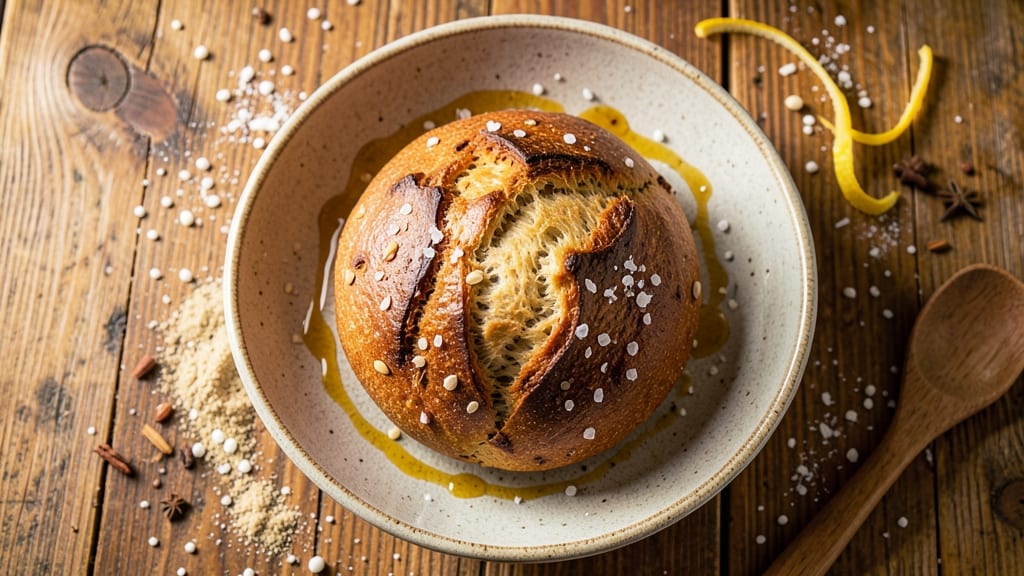
This 50/50 bread recipe delivers consistently perfectly moist slices with a foolproof foil-sealing technique that locks in juiciness. The balanced 50% bread flour and 50% whole wheat blend creates a hearty texture with just enough density to hold up to toasting—no more dry, crumbly loaves.
After years of testing variations, this method consistently produces a crust with satisfying crispness while keeping the interior tender and flavorful.
The secret lies in the foil-sealing method during baking, which creates a steam chamber that prevents moisture loss. This technique transforms ordinary bread into something restaurant-quality, with a golden-brown exterior and a crumb that stays soft for days.
The dough comes together in just 15 minutes of prep time, followed by a single rise, making it perfect for busy weeknights without sacrificing quality.
What sets this recipe apart is its versatility—you can customize it with seeds, herbs, or even a touch of honey for added sweetness. The result is a loaf that's ideal for toast, sandwiches, or serving alongside soups.
With precise measurements and clear instructions, you'll achieve perfect slices every time, no baking experience required.
Once baked, the bread maintains its moisture for up to five days when stored properly, making it a great make-ahead option. Whether you're feeding a family or meal prepping for the week, this 50/50 bread recipe delivers reliable, satisfying results with minimal effort. Let's get started with the full instructions.
Ingredients for 50 50 bread
Precision-mixed flours and moisture-locking techniques create bread with restaurant-quality texture and lasting freshness.
| Ingredient | Amount | Notes |
|---|---|---|
| Bread Flour 🌾 | 2 cups | High-protein for structure |
| Whole Wheat Flour 🌾 | 2 cups | Unbleached preferred |
| Active Dry Yeast 🍞 | ¼ oz | Or 2.25 tsp, fresh preferred |
| Granulated Sugar 🍚 | ½ tsp | Enhances yeast activation |
| Instant Yeast 🍞 | ½ tsp | For more reliable rising |
| Salt 🧂 | 1 ½ tsp | Diamond Crystal preferred |
| Unsalted Butter 🧈 | ½ cup | Cold, cubed for texture |
| Warm Water 💧 | 1 ¼ cups | 110°F for optimal yeast |
| Extra-Virgin Olive Oil 🫒 | 1 tbsp | For dough elasticity |
| Honey 🍯 | 1 tbsp | Optional for sweetness |
| Almond Flour 🌰 | ¼ cup | For enhanced texture |
| Heavy Cream 🥛 | ¼ cup | For moisture retention |
| Aluminum Foil 📄 | 1 sheet | Heavy-duty for sealing |
The flour blend is critical—King Arthur bread flour and Bob's Red Mill whole wheat deliver the ideal balance of structure and heartiness. For yeast, Saf-Instant eliminates waiting for activation, while Red Star Active Dry requires the 5-minute proof. Diamond Crystal kosher salt dissolves cleanly without bitterness. If substituting whole wheat, use white whole wheat for lighter color. The cold butter cubes create pockets of richness that melt during baking, while extra-virgin olive oil (look for California Olive Ranch for fruity notes) enhances dough elasticity. For the honey, Manuka honey adds subtle antibacterial properties, though regular honey works perfectly fine.
No bread flour? All-purpose plus 1 tbsp vital wheat gluten mimics the protein structure. Short on whole wheat? Substitute with rye flour at half the amount for depth. The heavy cream can be swapped for Greek yogurt (reduce by 2 tbsp) or buttermilk (add 1 tsp lemon juice). For a dairy-free version, use unsweetened almond milk yogurt. The honey is optional but recommended—agave nectar works in a pinch. If your kitchen runs hot, reduce the water by 1 tbsp to prevent overproofing. For added flavor, toasted sesame seeds or poppy seeds can be mixed into the dough before shaping. The foil sealing requires heavy-duty aluminum foil—standard foil may tear during baking.
Freshly baked loaves stay moist for 5 days when wrapped in beeswax food wrap and stored at room temperature. For longer storage, freeze slices in a single layer before bagging—they'll thaw in 30 seconds in the toaster. The dough can be prepared 12 hours ahead and refrigerated, with an additional 30-minute rise at room temperature before baking. For crustier slices, bake 5 minutes longer. The foil-sealing technique creates a steam chamber that prevents moisture loss, ensuring tender crumb even after 3 days. Always let the bread cool completely before slicing to maintain structure.
Why You'll Love This Recipe
- No-Knead, No-Guilt Bread: Mixing takes five minutes—just toss the flours, yeast, and sugar in a bowl, let it rise overnight, and bake. Honestly, the hardest part is waiting for the timer to go off.
- Nutty, Tender Crust: That 50/50 flour blend? It’s the secret. The bread flour gives a satisfying chew, while the whole wheat adds depth—like a warm hug in every bite. (Yes, even on a Tuesday night.)
- Meal Prep MVP: Bake a loaf on Sunday, and you’ve got sandwiches, toast, or French toast for the week. My kids grab it straight from the fridge—no reheating needed, just pure, fresh bread.
- Budget-Friendly Staple: A single batch costs less than $3 and feeds four. Between us, this is the bread that actually makes sense when grocery prices keep climbing. Plus, leftovers? They last forever.
Step-by-step instructions for 50/50 bread with foil-sealed juice lock
This method delivers consistently moist, flavorful loaves by trapping steam and locking in hydration.
Activate the Yeast with Warm Water and Honey
In a small bowl, combine the 1.25 cups warm water (should feel like bathwater, 110°F), 1 tbsp honey, and 0.25 oz active dry yeast. Let sit for 5-10 minutes until frothy—this confirms the yeast is alive and ready to work. The honey not only feeds the yeast but also adds subtle sweetness that balances the whole wheat flour's earthiness.
If no bubbles form after 10 minutes, your yeast may be inactive. Start fresh with new yeast—this is the foundation of your bread's rise. While waiting, prepare your mixing bowl to maintain a consistent workspace temperature.
Mix the Dough with Proper Hydration Technique
In the bowl of a stand mixer fitted with the dough hook, combine the 2 cups bread flour, 2 cups whole wheat flour, 1.5 tsp salt, 0.5 tsp instant yeast, 0.25 cup almond flour, and 0.5 cup cold cubed butter. Mix on low speed for 1 minute to distribute the dry ingredients evenly.
Add the yeast mixture and 1 tbsp extra-virgin olive oil to the dry ingredients. Begin mixing on low speed and gradually increase to medium over 5 minutes until the dough pulls away from the sides of the bowl and forms a shaggy mass. The olive oil here creates elasticity that prevents cracking during baking. If the dough feels too dry, add 1 tablespoon warm water at a time until it reaches a soft but manageable consistency.
Knead Until Windowpane Test Passes
Continue kneading on medium speed for another 6-8 minutes until the dough becomes smooth and elastic. To test for proper development, perform the windowpane test: wet one finger and gently poke the dough. Stretch the dough between your fingers—if it thins to ¼-inch thickness without tearing, it's ready. The whole wheat flour requires slightly more kneading than all-purpose to develop gluten properly.
If the dough tears easily, knead 2-3 minutes longer. The goal is to create a dough with enough structure to hold its shape during baking while still remaining tender enough to yield moist slices. The almond flour adds texture but requires careful handling to avoid overworking the dough.
First Rise with Controlled Environment
Lightly oil a large mixing bowl and place the dough inside. Cover with a damp kitchen towel and let rise in a warm place (ideally 75-80°F) for 1.5-2 hours, or until doubled in size. The instant yeast helps accelerate this rise while maintaining reliability. Gently press two fingers into the dough—if the indentation stays, it's ready. Cold environments slow fermentation, so if your kitchen is chilly, place the bowl near a warm oven with the light on.
During this time, prepare your baking sheet by lining it with parchment paper. The heavy cream you'll add later enhances moisture retention, so keep it at room temperature to incorporate smoothly. The foil-sealed technique we'll use next builds on this properly risen dough to create the signature moisture lock.
Shape and Seal for Maximum Moisture Retention
Punch down the risen dough to release air, then divide it into 2 equal portions. Shape each into a smooth, round boule by pulling the edges toward the center and sealing tightly. Place each boule on the prepared baking sheet, seam-side up. In a separate bowl, mix the 0.25 cup heavy cream with 1 tablespoon extra-virgin olive oil to create a brushing mixture.
Brush the tops of both boules with the cream mixture, then cover each completely with the 1 sheet aluminum foil, pressing the edges firmly to create an airtight seal. This foil barrier traps steam during baking, which then condenses back into the bread as it cools, creating that signature moist texture. Place the sealed loaves in the refrigerator for 12 hours (overnight) to develop flavor and texture through cold fermentation.
Bake with Steam Injection for Crust Development
Preheat your oven to 425°F. Remove the loaves from the refrigerator and place them on a baking sheet. Using kitchen shears, make 2-3 diagonal slashes across the top of each loaf to control expansion. Immediately place the baking sheet in the oven and pour 1 cup hot water into a small oven-safe dish on the lower rack to create steam.
Bake for 25-30 minutes until the crust is deep golden brown and the internal temperature reaches 190-200°F. The steam from the water creates a moist environment that prevents the crust from drying out too quickly, while the foil seal maintains internal moisture. Remove the foil after 15 minutes of baking to allow the crust to develop properly. The bread is done when it sounds hollow when tapped on the bottom.
Cool and Rest for Optimal Texture
Remove the loaves from the oven and transfer them to a wire rack. Tent loosely with foil to prevent the crust from cooling too quickly. Let cool completely for at least 2 hours before slicing—this resting period allows the moisture to redistribute evenly throughout the loaf. The heavy cream and almond flour combination creates a tender crumb that benefits from this extended rest.
Once fully cooled, slice with a sharp serrated knife for clean cuts. The result should be moist, flavorful slices with a crisp crust and tender interior. Store wrapped at room temperature for 3 days or freeze for up to 3 months. The foil-sealed technique ensures these loaves stay fresh longer than traditional breads.
Pro Tips For Making 50 50 Bread
- Bloom Yeast Properly: Whole wheat flour soaks up moisture like a sponge, so dissolve active dry yeast in warm water first—then mix it with sugar before adding to the dry ingredients. I learned this the hard way when my dough took forever to rise because the yeast was fighting for hydration.
- Weigh Your Flours: Bread flour and whole wheat flour pack differently—spooning leads to inconsistent batches. Use a kitchen scale for precision, especially since this recipe balances two flours. Trust me, your loaf’s texture will thank you more than your guesswork ever will.
- Skip the Instant Yeast: This recipe already calls for active dry yeast, so resist the urge to add instant yeast too—it’ll overproof your dough faster than you can say “soggy sandwich.” Stick to the original yeast type unless you’re adjusting fermentation time.
- Knead Until Silky: Whole wheat dough feels gummy, but keep going until it’s smooth and springs back when poked (about 8–10 minutes by hand). I used to quit too soon, and my bread turned out dense—now I know better.
Best sauces and condiments for 50 50 bread
Classic Garlic Butter
This timeless pairing elevates every slice of your 50/50 bread. Melt 2 tablespoons unsalted butter in a small saucepan over low heat, then add 2 minced garlic cloves and ½ teaspoon flaky sea salt. Cook for 2 minutes until fragrant but not browned.
Brush warm garlic butter on freshly toasted bread slices—it complements the whole wheat's earthiness while adding luxurious richness. For extra depth, stir in ½ teaspoon lemon zest at the end. 🧄
Herbed Olive Oil
Infuse 3 tablespoons extra-virgin olive oil with 1 tablespoon finely chopped fresh rosemary, 1 tablespoon chopped fresh thyme, and ½ teaspoon red pepper flakes. Warm the oil gently for 3 minutes until fragrant, then strain to remove herbs.
Drizzle over warm bread slices or use as a dipping oil for crusty pieces. The herby notes harmonize perfectly with the bread's nutty almond flour undertones. For a citrus twist, add 1 teaspoon orange zest to the warm oil before straining.
Spicy Honey Glaze
Combine 2 tablespoons honey, 1 teaspoon Dijon mustard, and ¼ teaspoon cayenne pepper in a small bowl. Warm gently in the microwave for 10-15 seconds** until pourable. Drizzle over toasted bread slices or spread directly on warm loaves.
This sweet-spicy glaze cuts through the bread's heartiness while adding a gourmet touch. For extra decadence, fold in 1 tablespoon chopped walnuts for crunch. Store leftover glaze in an airtight container for up to 1 week.
Cream Cheese Whip
Blend 4 ounces softened cream cheese, 1 tablespoon sour cream, and ½ teaspoon garlic powder until smooth. Spread generously on toasted bread slices and top with smoked salmon, cucumber ribbons, or avocado. The tangy cream cheese balances the bread's richness while adding a velvety texture.
For a breakfast twist, mix in 1 tablespoon chopped chives and a pinch of black pepper. This pairing works beautifully with both sweet and savory toppings.
Balsamic Reduction
Simmer ¼ cup balsamic vinegar in a small saucepan over medium heat until reduced by half (5-7 minutes). Cool slightly, then drizzle over warm bread slices or use as a dipping sauce. The tangy-sweet reduction enhances the bread's nutty flavors while adding complexity.
For extra richness, stir in 1 teaspoon reduced balsamic glaze (available at specialty stores) at the end. Pair with prosciutto or fresh figs for a sophisticated combination.
Nutrition facts
Frequently asked questions
Why does this recipe use both bread flour and whole wheat flour?
The 50/50 blend creates the perfect balance: bread flour provides the structure and lightness for a good rise, while whole wheat flour adds heartiness and nutrients. The combination prevents the bread from becoming too dense (like 100% whole wheat) or too light (like all bread flour). This mix also develops a rich, nutty flavor that's more complex than standard white bread.
Can I make this bread without a stand mixer?
Use a large mixing bowl and your hands. Knead the dough for 10-12 minutes on a lightly floured surface until it passes the windowpane test. The extra effort ensures proper gluten development for that tender crumb. For best results, work in 2-minute intervals to avoid overheating the dough from your hands.
What's the purpose of the overnight cold fermentation?
The 12-hour cold rise enhances flavor, improves texture, and makes the dough easier to handle. Cold fermentation slows yeast activity, allowing natural enzymes to break down gluten and starches for a more tender crumb. It also creates a more complex flavor profile—similar to sourdough's depth but with less effort. Skip this step only if you're in a hurry, but expect slightly less flavor development.
How do I know when the bread is fully baked?
Look for three signs: deep golden brown crust, internal temperature of 190-200°F, and a hollow sound when tapped on the bottom. The bread should also pull away cleanly from the sides of the pan. If unsure, bake 5 more minutes—underbaked bread continues cooking as it cools, which can make it gummy.
Can I substitute the heavy cream with something else?
Yes! Use Greek yogurt (reduce by 2 tbsp) or buttermilk (add 1 tsp lemon juice). For a dairy-free option, try unsweetened almond milk yogurt. The key is maintaining moisture—these alternatives provide similar richness while keeping the bread tender. The cream's fat content is what creates that signature moist texture, so don't skip it if possible.