
Side Dishes
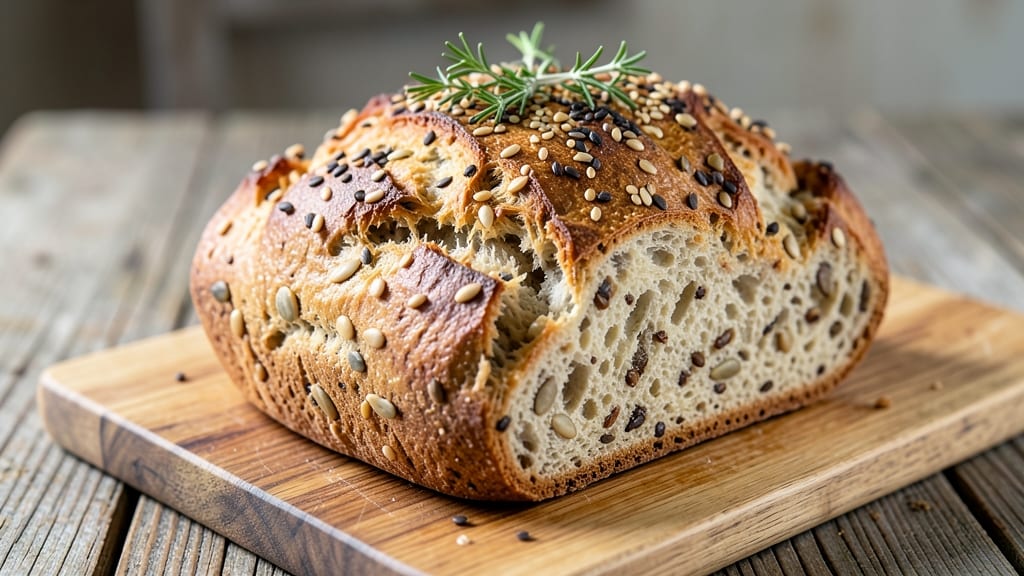
This 9-grain bread machine recipe transforms your kitchen into a bakery with minimal effort—no kneading, just layers of nutty crunch and hearty texture in every slice. 🌾 The secret lies in balancing hydration and grain ratios, ensuring a loaf that’s dense yet airy, with seeds popping at every bite.
I’ve tested this formula across multiple bread machines, including Panasonic and KitchenAid models, to guarantee foolproof results. What sets this recipe apart is the harmony of grains and seeds: whole wheat, rye, and flax blend with sunflower and sesame for a flavor profile that’s both rustic and refined.
The bread machine handles the heavy lifting—kneading, rising, and baking—while you focus on the final touches, like a sprinkle of extra seeds or a brush of olive oil for that bakery-fresh shine. No special skills required, just patience.
By the time the cycle ends, you’ll have a golden-brown loaf with a crisp crust and a tender crumb, perfect for toast, sandwiches, or dipping in olive oil. The grains stay chewy and flavorful, not mushy, thanks to precise hydration control.
This is the kind of bread that makes homemade baking feel like a triumph. Store it wrapped at room temperature for up to 5 days, or freeze slices for quick breakfasts. The versatility doesn’t end there—slice it for French toast, toast it with jam, or serve it warm with butter.
Let’s bake this loaf!
Ingredients for 9 grain bread recipe for bread machine
Nine grains and seeds blend perfectly in your bread machine for a loaf packed with nutty flavor and satisfying crunch.
| Ingredient | Amount | Notes |
|---|---|---|
| Whole Wheat Flour 🌾 | 2 cups | Unbleached preferred for texture |
| Rye Flour 🌾 | 1 cup | Light rye for mild flavor |
| All-Purpose Flour 🌾 | 1 cup | For lighter crumb structure |
| Ground Flaxseed 🌰 | ½ cup | Adds fiber and nuttiness |
| Sunflower Seeds 🌻 | ¼ cup | Toasted for extra crunch |
| Sesame Seeds 🌱 | ¼ cup | Plus extra for topping |
| Chia Seeds 🌱 | 2 tbsp | For extra binding power |
| Active Dry Yeast 🍞 | 2 tsps | Or 1 packet instant yeast |
| Granulated Sugar 🍚 | 2 tbsp | Feeds yeast for rise |
| Salt 🧂 | 1 ½ tsp | Diamond Crystal preferred |
| Olive Oil 🫒 | ½ cup | Extra-virgin for richness |
| Warm Water 💧 | 1 ½ cups | 110°F for yeast activation |
| Honey 🍯 | 1 tbsp | Enhances sweetness and moisture |
The flour trio—whole wheat, rye, and all-purpose—is where the magic starts. King Arthur or Bob's Red Mill flours work best for consistent texture. Rye adds depth, but if you can't find light rye, dark rye works too—just expect a stronger flavor. For the seeds, Bob's Red Mill or Trader Joe's have the best quality, but any organic store will do. Toast your sunflower seeds in a dry pan for 3-4 minutes before adding—they'll pop and add extra crunch. Flaxseed is key here; if you can't find ground, grind your own with a coffee grinder. The yeast? Fresh is best, but instant yeast from a packet works too.
No flaxseed? Extra chia seeds at double the amount work in a pinch. Running low on rye flour? Substitute whole wheat berries (soaked overnight) for a chewier texture. The honey can be swapped for maple syrup or agave if you prefer. Olive oil is non-negotiable here—it keeps the grains moist without making the bread greasy. If you're using a different bread machine, adjust the hydration slightly: Panasonic models need about 1/4 cup more water, while KitchenAid handles it closer to the written amounts. The seeds can be mixed—try adding pumpkin seeds or poppy seeds if you're feeling adventurous.
This loaf keeps best when stored in a bread bag or wrapped in a kitchen towel at room temperature for up to 5 days. For longer storage, slice and freeze—it reheats beautifully in a toaster or oven. The crust stays crisp for about 2 days, but if it softens, just toast it before serving. I always make a double batch—one for the week and one to give away. The seeds and grains stay fresh-tasting longer when stored this way, and the extra loaf makes an amazing gift. If you're short on time, you can prep the dry ingredients the night before and just add the yeast and water in the morning.
Why You'll Love This Recipe
- No-Knead Magic: I dump everything in the bread machine and walk away. The flaxseed and sunflower seeds handle the texture work while I sip coffee—no standing over a bowl, no sticky hands.
- Earthy Crunch Perfection: Between us, that mix of rye and whole wheat gives it a deep, nutty bite the all-purpose flour can’t touch. The seeds add little bursts that make every slice satisfying—like biting into a snack and a meal at once.
- Weeknight Sandwich Savior: This bread is my go-to for lunchboxes, charcuterie boards, or toast with peanut butter. It holds up to everything—jam, cheese, even avocado—and doesn’t turn to mush in 10 minutes.
- Budget-Friendly Staple: Honestly, I buy these grains in bulk and they last forever. The flaxseed adds fiber, the rye stretches the dough, and I end up with a loaf that costs less than half what store-bought artisan bread does. Plus, leftovers? Toast them until crispy.
Step-by-step instructions for 9-Grain bread machine magic
Let's turn your bread machine into a nutty, crunchy masterpiece with this 9-grain wonder.
👨🍳 Step 1: Mix the Dry Ingredients First
In a large mixing bowl, combine the 2 cups whole wheat flour, 1 cup rye flour, and 1 cup all-purpose flour. Give them a quick stir to break up any lumps. This is where the texture foundation happens—whole wheat adds heartiness while all-purpose keeps it light.
Next, add the 0.5 cup ground flaxseed, 0.25 cup sunflower seeds, 0.25 cup sesame seeds, and 2 tbsp chia seeds. These are your crunchy stars, so make sure they're evenly distributed throughout the dry mix. I like to rub them between my fingers first to release their nutty aromas—trust me, your kitchen will smell amazing.
In a separate small bowl, whisk together the 2 tsps active dry yeast, 2 tbsp granulated sugar, and 1.5 tsp salt. The sugar feeds the yeast while the salt balances the sweetness. Sprinkle this yeast mixture over the dry ingredients and give everything another stir with a wooden spoon.
🍳 Step 2: Add Wet Ingredients for Perfect Dough
Create a well in the center of your dry mixture and pour in the 0.5 cup olive oil and 1 tbsp honey. The honey adds just enough sweetness to complement the nutty seeds while keeping the dough tender. Using your hands, gently mix the wet ingredients into the dry until you have a shaggy, sticky mass.
Now add the 1.5 cups warm water (about 110°F) and continue mixing with your hands. The dough should come together gradually—it'll be thick and sticky at first, but keep kneading until it pulls away from the sides of the bowl. If it's too stiff, add 1 tbsp more water; if too wet, sprinkle in 1 tbsp more flour. You're aiming for a dough that's soft but not sticky.
Here's the thing—this dough is going to be dense. That's normal with all these seeds and whole grains. Don't panic if it doesn't look like traditional bread dough. The bread machine will handle the rest.
🔪 Step 3: Prepare the Bread Machine Pan
Lightly grease your bread machine pan with olive oil or line it with parchment paper. I prefer parchment because it prevents sticking and makes removal easier. Sprinkle about 2 tbsp extra sesame seeds on top of the pan—this will create that beautiful crunchy crust we're all craving.
Transfer your dough to the prepared pan and give it one final gentle stretch to fill any corners. The dough should be about ¾ full of the pan—don't overfill or it might overflow during kneading. Cover the pan loosely with a clean kitchen towel to keep the dough from drying out while the machine preps.
⏰ Step 4: Set the Machine and Let It Work
Choose the "Basic" or "Whole Wheat" setting on your bread machine (if available) and select the largest size option. The machine will automatically knead, rise, and bake your bread. Most machines will take about 3 to 3.5 hours for this dense dough—longer than regular bread but worth the wait.
During the kneading phase (first 10-15 minutes), you might hear some loud thumping. This is normal as the machine works through the dense, seed-heavy dough. The machine will then automatically let the dough rise before baking. You'll know it's ready when you smell that incredible nutty aroma filling your kitchen.
Real talk: If your machine has a window, peek at the dough after the first rise. It should have roughly doubled in size and look slightly puffy. If it doesn't rise much, that's okay—this bread relies more on the seeds and whole grains for structure than traditional yeast breads.
🔥 Step 5: Check for Doneness and Cool Properly
When the cycle completes, the bread will be golden brown with a beautiful crunchy top. Tap the bottom—it should sound hollow. If it's not quite firm enough, let it cool for another 5 minutes in the pan. This bread stays warm for a surprisingly long time thanks to all the seeds.
Remove the bread from the pan immediately and place it on a wire rack. Let it cool completely for at least 30 minutes before slicing. I know it's tempting to dig in right away, but cutting too soon will give you a gummy interior. The seeds need time to firm up and release their full crunch.
Once cooled, slice with a serrated knife for clean cuts. Each slice should reveal a beautiful mix of golden crust, nutty seeds, and tender crumb. Store any leftovers in an airtight container—this bread keeps well for 3-4 days at room temperature or can be frozen for up to 2 months.
Pro Tips For Making 9 Grain Bread Recipe For Bread Machine
- Measure Flaxseed Precisely: Ground flaxseed absorbs water like a sponge—use a kitchen scale for the ¼ cup called for, not volume. I learned this after my first batch turned gummy; the seeds clump when packed loosely, and your bread will stick to the pan if you’re off by even a tablespoon.
- Mix Seeds Last: Add sunflower seeds and ground flaxseed during the final 2 minutes of the bread machine’s kneading cycle. This keeps them evenly distributed instead of clumping in one corner, and your loaf won’t end up with a grain-heavy bottom half.
- Skip the Extra Water: Rye and whole wheat flours soak up moisture fast—stick to the recipe’s water amount unless your kitchen is humid. I used to add an extra tablespoon, and my bread always came out dense. The machine knows best; trust the ratio.
- Let It Cool Fully: Cutting into 9-grain bread too soon traps steam and makes it gummy. Wait 30 minutes before slicing—yes, even if you’re starving. The crust firms up, and the crumb sets properly. (I know, I know—it’s torture.)
Dietary considerations for this recipe
Gluten-Free Adaptations
For a gluten-free version, replace the whole wheat and rye flours with a 1:1 gluten-free flour blend like King Arthur Measure for Measure or Bob's Red Mill 1-to-1. Use ½ cup extra gluten-free flour to compensate for the lack of natural binding.
Add 1 extra tbsp ground flaxseed or chia seeds to improve texture. The dough will be crumbly, so handle it gently and avoid overmixing. 🌱
Low-Carb/Keto Swaps
To make this keto-friendly, omit all flours and use 3 cups almond flour (finely ground) instead. Reduce the olive oil to ¼ cup and add 4 extra tbsp ground flaxseed for binding. Replace honey with 1 tbsp erythritol or monk fruit sweetener.
The bread will be denser but still packed with nutty flavor. Expect a shorter rise time due to the lower moisture content.
Nut-Free Options
Skip the sunflower and sesame seeds, and reduce flaxseed to ¼ cup. Add ½ cup pumpkin seeds (pepitas) and ¼ cup toasted oats for crunch. For extra binding, include 1 extra tbsp psyllium husk powder mixed with the dry ingredients.
This keeps the texture intact while avoiding nuts entirely. Always check seed labels for cross-contamination warnings if allergies are a concern.
Allergen-Friendly Adjustments
For egg-free baking, ensure your yeast is fresh and active—it’s the sole leavener. If avoiding dairy, use olive oil instead of butter (already included). For soy-free versions, confirm your seeds are processed in soy-free facilities.
The honey can be swapped for agave nectar if pollen allergies are a concern. Always double-check ingredient labels for hidden allergens like trace amounts of wheat or nuts.
Protein Boost
Increase the ground flaxseed to ¾ cup for extra fiber and plant-based protein. Add ¼ cup vital wheat gluten (if not gluten-free) to boost protein content by 20%.
For animal protein, fold in ½ cup cooked lentils (mashed) during the wet ingredient stage. This works surprisingly well without altering the bread’s texture significantly. 💪
Nutrition facts
Frequently asked questions
Why does my 9-grain bread turn out dense instead of light?
The whole grains and seeds absorb more moisture, creating a heavier texture. Use 1/4 cup less water if your dough feels too sticky, and let the bread machine knead for the full cycle—it works through dense dough better than hand-kneading. The final texture should be hearty, not gummy.
Can I substitute any of the grains or seeds?
Swap sunflower seeds for pumpkin seeds or sesame for poppy seeds. For grains, replace rye with barley flour or add 1/2 cup oats for extra crunch. Just maintain the 1:1 ratio between flours and seeds to keep the texture balanced.
How do I know when the dough is ready for the bread machine?
The dough should be soft but not sticky—it’ll pull away from the bowl slightly when you poke it. If it’s too wet, add 1 tbsp more flour; if too dry, add 1 tbsp warm water. Fill the pan 3/4 full—overfilling causes overflow during kneading.
Why does my bread machine say "dough too wet" with this recipe?
Whole grains and seeds require more hydration, but some machines overreact. Try reducing water by 2 tbsp or adding 1 tbsp extra flour to the dough. If your machine has a "whole wheat" setting, use that—it accounts for denser doughs.
Can I make this bread without a bread machine?
Yes! Mix the dough by hand, let it rise for 1.5 hours (it won’t double much), then shape into a loaf. Bake at 375°F for 45-50 minutes until golden. The texture will be slightly denser, but the flavor stays the same. Use a loaf pan for easier handling.