
Side Dishes
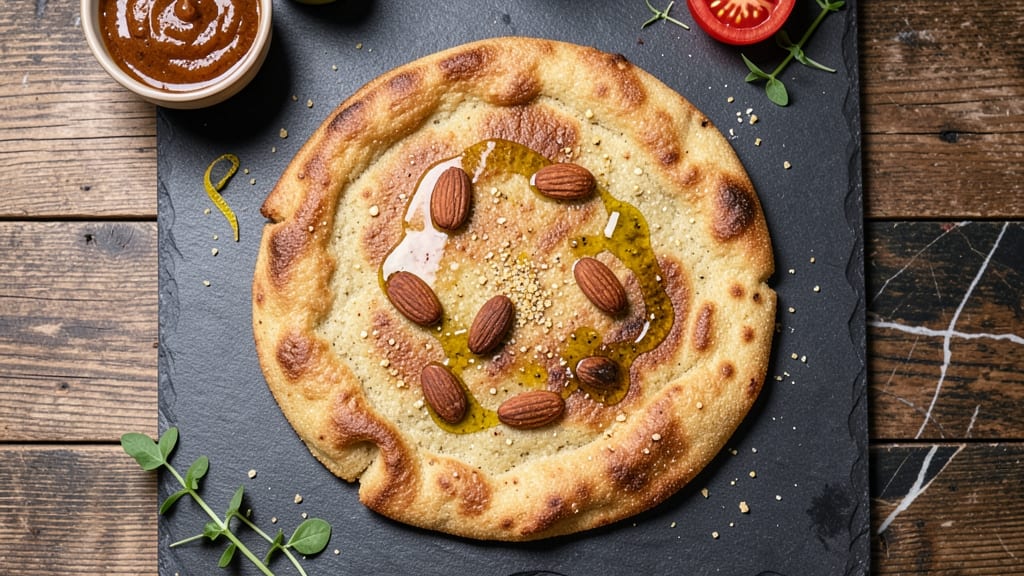
This almond flour flatbread recipe delivers crispy, golden layers with a nutty depth that rivals traditional bread—all while being naturally gluten-free. The secret lies in blending almond flour with a touch of psyllium husk for structure, creating a flatbread that holds its shape and crispiness even after baking.
I developed this recipe after years of experimenting with gluten-free alternatives, and it finally achieves that perfect balance of texture and flavor.
What makes this flatbread special is its simplicity: just six core ingredients, a 15-minute prep time, and a 350°F bake that transforms the dough into crispy, flaky layers. The almond flour provides a rich, nutty flavor, while the psyllium husk ensures the bread stays sturdy and doesn’t crumble.
Unlike many gluten-free breads, this one doesn’t require special ingredients or complicated techniques—just a few pantry staples and a little patience.
By the time you pull it from the oven, you’ll have a flatbread with a crispy exterior and a tender, slightly chewy interior—ideal for dipping in olive oil, pairing with soups, or using as a wrap.
The nutty aroma fills your kitchen, and the texture holds up beautifully even when reheated. It’s the kind of bread that proves gluten-free doesn’t mean compromising on taste or texture.
For extra flavor, try adding fresh herbs like rosemary or thyme to the dough, or sprinkle everything bagel seasoning on top before baking. This flatbread is versatile enough for everyday meals but impressive enough for guests—without the fuss of traditional breadmaking.
Ingredients for almond flour flatbread bread
Six ingredients transform into crispy, golden almond flour flatbread with restaurant-quality texture.
| Ingredient | Amount | Notes |
|---|---|---|
| Almond Flour 🌰 | 2 cups | Finely ground for smooth texture |
| Psyllium Husk Powder 🌿 | 1 tbsp | Key for gluten-free structure |
| Extra-Virgin Olive Oil 🫒 | ½ cup | High quality for richness |
| Water 💧 | ¾ cup | Room temperature preferred |
| Salt 🧂 | ½ tsp | Diamond Crystal kosher |
| Nutritional Yeast 🧀 | 1 tbsp | For cheesy umami flavor |
| Everything Bagel Seasoning 🌶️ | 1 tbsp | Optional for topping |
The almond flour is non-negotiable—Bob's Red Mill or Anthony's Goods brands deliver the finest grind for that perfect crumb. Psyllium husk powder might sound obscure, but it's a game-changer for gluten-free structure. Find it in the baking aisle of most grocery stores or online at Amazon. For the olive oil, California-based brands like Corto or Lucini offer the best flavor profile. Nutritional yeast adds that savory depth—Bragg is the most widely available brand, but check the organic section for higher quality. If you can't find psyllium husk powder, psyllium husk whole works too—just grind it finely.
No psyllium husk? Xanthan gum at half the amount creates a similar structure, though the texture won't be quite as crispy. Substituting almond flour with sunflower seed flour works in a pinch, but the flavor will be milder. For the olive oil, avocado oil maintains a neutral taste if you prefer. Fresh herbs like rosemary or thyme can replace everything bagel seasoning—use 1 tsp chopped herbs for equivalent flavor. The water should be room temperature; cold water can make the dough tough. If your dough feels too sticky, add 1 tsp more almond flour gradually until it's workable.
Store the flatbread in an airtight container at room temperature for up to 3 days—it reheats beautifully in a toaster or oven. For longer storage, freeze individual flatbreads wrapped in parchment paper for up to 3 months. The psyllium husk powder keeps indefinitely in a cool, dark place, while almond flour stays fresh for 6 months in the pantry. This flatbread freezes exceptionally well, making it perfect for meal prep. Simply reheat in a dry skillet for 1-2 minutes per side to restore crispiness.
Why You'll Love This Recipe
- Five-Ingredient Magic: I swear by this recipe because it’s the kind of thing you can mix up while waiting for the coffee to brew. Just almond flour, psyllium husk powder (the secret binder), olive oil, water, and salt—no yeast, no kneading, no waiting around. Honestly, I’ve made it at 7 AM before work and still had time to fold laundry.
- Nutty Crispy Edge: That first bite—warm, slightly crisp, with a buttery almond richness—is what keeps me coming back. The psyllium husk gives it a satisfying chew, while the olive oil adds a subtle depth. It’s not just bread; it’s good bread, the kind that disappears faster than I can say “second helping.”
- Lunchbox Legend: Between us, this flatbread is my go-to for packed lunches. It holds up for days without getting soggy, pairs perfectly with hummus or avocado, and even freezes well. I’ve sent my kids off to school with these wrapped around turkey and cheese, and they’ve never complained. (Yes, even on a Tuesday night.)
- Budget-Friendly Staple: Almond flour might seem pricey, but a little goes a long way here—this recipe makes enough for a week’s worth of meals. The psyllium husk is a game-changer for stretch, so you’re not wasting dough (literally). Plus, no fancy ingredients mean no excuses to skip it. It’s my secret weapon for stretching groceries without sacrificing flavor.
Step-by-step instructions for gluten-free almond flatbread
Here's how to craft crispy, layered flatbread with nutty depth using simple gluten-free ingredients.
Combine Dry Ingredients for Optimal Texture
In a large mixing bowl, whisk together the 2 cups almond flour and 1 tbsp psyllium husk powder until fully aerated. The psyllium creates a gluten-free network that holds the bread together while maintaining crispiness. I like to use a whisk for this step to avoid compacting the fine almond flour.
Next, add the 1 tbsp nutritional yeast and 0.5 tsp salt, mixing until evenly distributed. The nutritional yeast adds that signature cheesy depth while the salt enhances all flavors. At this point, your dry ingredients should look like fine, uniform crumbs with no visible clumps.
Incorporate Wet Ingredients for Perfect Consistency
Create a well in the center of your dry mixture and pour in the 0.5 cup extra-virgin olive oil and 0.75 cup water. Using a silicone spatula, gently fold everything together until you achieve a thick, dough-like consistency that holds together when pressed.
Here's the thing—this dough should be slightly tacky but not sticky. If it feels too dry, add 1 tablespoon water at a time until it comes together. If it's too wet, sprinkle in 1 tablespoon almond flour until it forms a cohesive mass. The goal is a dough that's pliable enough to roll out but not so soft it sticks to your hands.
Knead and Rest for Maximum Flavor Development
Turn the dough onto a clean surface and knead gently for 2-3 minutes until smooth. Don't overwork it—the almond flour is delicate and can become dense if kneaded too vigorously. Shape the dough into a round disc about ½-inch thick and wrap it tightly in plastic wrap.
Refrigerate for at least 30 minutes (up to 2 hours for best results). This resting period allows the psyllium to fully hydrate and develop its binding properties, which is crucial for achieving that perfect crispy texture when baked. I always set a timer so I don't forget this important step—rushing here leads to dense, rather than crispy, flatbread.
Roll and Bake for Crispy Layers
Preheat your oven to 375°F and line a baking sheet with parchment paper. Remove the chilled dough from the refrigerator and place it between two sheets of parchment paper. Using a rolling pin, roll the dough out to about ⅛-inch thickness, keeping the edges slightly thicker for a rustic look.
Transfer the rolled dough to the prepared baking sheet, carefully lifting it with the parchment paper. Bake for 12-15 minutes until the edges are golden brown and the center feels firm to the touch. The flatbread should have a crisp exterior while remaining tender inside—this is where the psyllium's magic really shines.
Add Seasoning and Serve Warm
Remove the flatbread from the oven and immediately sprinkle with the 1 tbsp everything bagel seasoning while it's still warm. The seasoning will stick better when the bread is fresh from the oven. Let it cool for 2-3 minutes before slicing into wedges.
Serve immediately for maximum crispiness, or store in an airtight container for up to 3 days. The contrast between the crispy exterior and tender interior makes this flatbread perfect for dipping in hummus, spreading with almond butter, or using as a wrap for sandwiches. The nutty flavor from the almond flour pairs beautifully with savory toppings or sweet preserves.
Pro Tips For Making Almond Flour Flatbread Bread
- Mix the Psyllium Last: The psyllium husk powder is your flatbread’s glue—add it to the wet ingredients after the almond flour and olive oil, then stir fast. I used to mix it in dry, and my breads always turned out dense and gummy. This way, it dissolves smoothly into a gel-like consistency, giving you that perfect chewy texture without the rubbery aftertaste.
- Press Thin or Regret It: Skip the thick, uneven pressing—aim for ⅛-inch thickness. A rolling pin works, but I’ve found a wine bottle or even a heavy mug gives me more control. Thinner bread cooks faster and toasts up evenly, while thick spots burn before the edges crisp. (Yes, I’ve ruined batches this way—learned the hard way.)
- Toast the Almond Flour First: Lightly toast your almond flour in a dry pan for 2-3 minutes until it smells nutty. This step banishes that raw, bitter edge that can sneak into your flatbread. Cold almond flour works, but toasted gives depth—like the difference between a good cup of coffee and one brewed from beans straight from the bag.
- Rest the Dough 10 Minutes: Give the dough a solid 10-minute rest before shaping, even if you’re eager to cook. The psyllium needs time to fully hydrate and bind, or your flatbread will crack or fall apart when you try to roll it. I know, I know—waiting feels like forever, but it’s the thing that actually changes the outcome from "meh" to "wow."
Make-ahead tips for this dish
Prep Ahead Dough
Make the dough up to 2 days in advance and store it wrapped tightly in plastic in the refrigerator. The psyllium husk absorbs moisture over time, so the dough will firm up slightly—just let it sit at room temperature for 10 minutes before rolling.
I often prep the dough the night before and bake it fresh the next morning for breakfast. 🌰
Freeze Rolled Flatbread
Roll out the dough as directed, then wrap each flatbread tightly in parchment paper and freeze for up to 3 months. When ready to bake, simply remove from the freezer and bake straight from frozen at 375°F for 18-20 minutes.
The extra time accounts for the cold start, ensuring even crispiness throughout. This is my go-to trick for lazy weekend brunches!
Batch Baking Tips
For multiple flatbreads, divide the dough into 4 equal portions (about ½ cup each) before rolling. Stack them with parchment paper between layers and refrigerate for 30 minutes before baking. Bake one sheet at a time on the same tray—just rotate the pan halfway through for even browning.
I like to bake two batches back-to-back for a crowd, using the oven's residual heat efficiently.
Reheat Like a Pro
To revive stale flatbread, place wedges in a dry skillet over medium heat for 1-2 minutes per side until crispy again. For oven reheating, wrap in foil and warm at 350°F for 5-7 minutes.
The key is high heat and minimal moisture—steam makes the bread soggy. A quick pass under the broiler for 30 seconds restores that golden crispiness instantly. ✨
Make-Ahead Toppings
Pre-mix your seasoning blends in advance and store in small jars. I keep everything bagel seasoning, garlic powder, and dried herbs in separate containers so I can customize each batch.
For sweet versions, blend cinnamon and sugar ahead of time. Sprinkle toppings immediately after baking while the bread is still warm for best adhesion. 💫
Storage Containers
Use glass airtight containers with silicone seals for storage—they maintain crispiness better than plastic. I recommend Pyrex Simply Store containers for their tight seals. For longer storage, place parchment-wrapped flatbreads in freezer bags with all air removed to prevent freezer burn.
Label with dates to track freshness—trust me, you'll forget these are in there! ❄️
Nutrition facts
Frequently asked questions
Can I substitute almond flour with another nut or seed flour?
Yes, but the texture and flavor will change. For a similar nutty taste, try cashew flour or hazelnut flour at a 1:1 ratio. Sunflower seed flour works too but has a milder flavor. Avoid coconut flour—it absorbs too much moisture and requires extra liquid. If substituting, check the dough consistency and adjust by adding 1 tsp more water if needed.
Why did my flatbread turn out dense instead of crispy?
This usually happens from one of three issues: overworking the dough, skipping the rest time, or using too much liquid. The psyllium husk needs 30+ minutes to activate—never rush this step. Also, knead gently (just 2-3 minutes) to avoid compacting the almond flour. If the dough feels too wet, add 1 tbsp more almond flour before rolling.
How can I make this flatbread sweeter for dessert?
Swap the everything bagel seasoning for 1 tbsp cinnamon + 1 tbsp sugar and add 1 tsp vanilla extract to the dough. For extra richness, replace 2 tbsp almond flour with melted coconut oil. Brush the baked flatbread with a mix of 2 tbsp melted butter and 1 tbsp honey while warm. It pairs perfectly with fresh berries or nut butter!
Is this flatbread safe for nut allergies?
No—this recipe contains almond flour, which is a tree nut. For nut-free versions, use sunflower seed flour or oat flour (certified gluten-free) instead. The psyllium husk and other ingredients are nut-free, but always check labels for cross-contamination warnings. When in doubt, make it at home with fresh ingredients!
Can I make individual flatbreads instead of one large sheet?
Divide the dough into 4 equal portions (about ½ cup each) and roll each into a 4-inch circle. Bake on the same tray, spacing them 1 inch apart. They'll bake in 10-12 minutes instead of 12-15 minutes. Perfect for personal servings or meal prep—just freeze extras between parchment paper!