Side Dishes
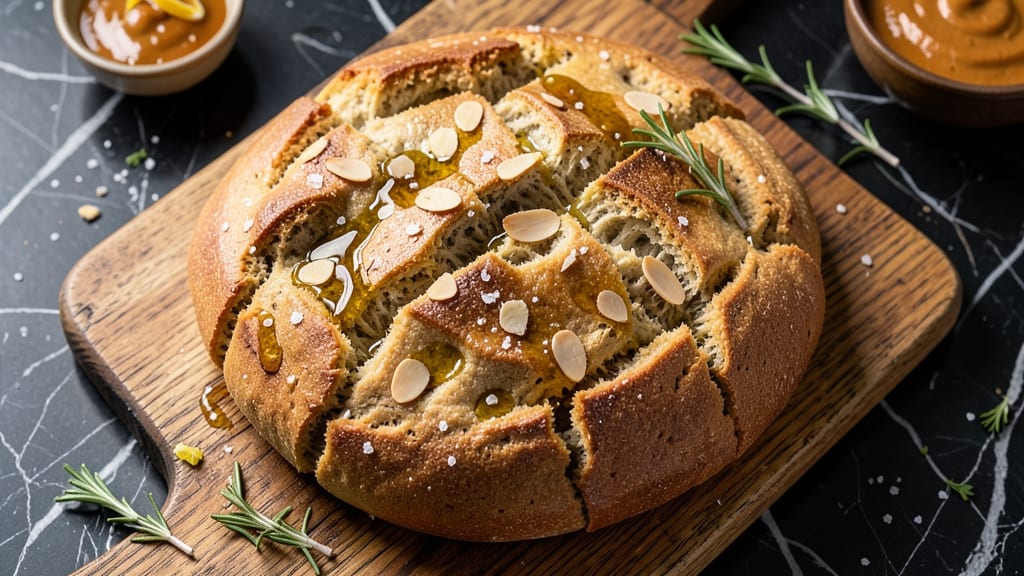
This almond flour focaccia bread recipe transforms traditional baking with a gluten-free, grain-free twist that still delivers that iconic olive oil shine and airy texture. The secret lies in almond flour's natural moisture retention and the right blend of eggs and olive oil to create a tender yet sturdy crumb.
I developed this version after years of perfecting gluten-free focaccia—no one will guess it's made without wheat flour.
The magic happens with a simple yet precise method: combining almond flour with eggs, olive oil, and a touch of psyllium husk for structure, then proofing just long enough for that signature rise.
The dough comes together in minutes, and the baking process ensures a crispy crust with a soft, pillowy interior. What sets this apart is how the almond flour absorbs the olive oil differently than wheat flour, creating that signature golden sheen without over-drying.
By the time it emerges from the oven, you'll have a focaccia loaf with all the classic characteristics—crisp edges, tender crumb, and that irresistible olive oil aroma—just without the gluten.
The texture is surprisingly similar to traditional focaccia, with just enough chew to satisfy. This recipe proves grain-free baking can deliver restaurant-quality results at home.
Perfect for serving alongside soups, with antipasto platters, or simply as a showstopping centerpiece. The best part? It keeps well for days, making it ideal for meal prep. Let's get started on your grain-free masterpiece.
Ingredients for almond flour focaccia bread
Grain-free baking meets classic Italian flavors in this almond flour focaccia masterpiece.
| Ingredient | Amount | Notes |
|---|---|---|
| Almond Flour 🌰 | 3 cups | Blanched, finely ground preferred |
| Extra-Virgin Olive Oil 🫒 | ¾ cup | High-quality, fruity variety |
| Large Eggs 🥚 | 4 whole | Vegan flax eggs (4 tbsp ground flax + 10 tbsp water) |
| Psyllium Husk Powder 🌾 | 1 tbsp | For gluten-free structure |
| Warm Water 💧 | ½ cup | Mixed with psyllium husk |
| Fine Sea Salt 🧂 | 1 ½ tsp | Diamond Crystal preferred |
| Active Dry Yeast 🍞 | 1 tsp | Instant yeast works too |
| Garlic Cloves 🧄 | 2 cloves | Minced for topping |
| Fresh Rosemary 🌿 | ¼ cup | Chopped, for topping |
| Fresh Thyme Leaves 🌿 | ⅛ cup | Chopped, for topping |
| Black Lava Salt 🧂 | ¼ cup | For decorative topping |
| Nutritional Yeast 🧀 | 2 tbsp | For cheesy flavor |
Almond flour is the star here—Bob's Red Mill or Anthony's Goods brands are my go-tos for consistent texture. The key is using blanched almond flour (not almond meal), which bakes up lighter. If you can't find it, grind your own blanched almonds in a food processor until ultra-fine. Psyllium husk might sound intimidating, but trust me—it's what gives this focaccia its signature structure. Now Foods makes a great powdered version that mixes easily with water. For the olive oil, California Olive Ranch or Bertolli are reliable choices—avoid the cheap stuff, as it can taste bitter when baked.
No flax eggs? Chia eggs (3 tbsp ground chia + 9 tbsp water) work perfectly too. Fresh herbs are ideal, but dried rosemary and thyme at half the amount will work in a pinch. The yeast is crucial for that classic focaccia rise—Saf-Instant is my preferred brand since it doesn't require proofing. For the garlic, roasted garlic powder adds depth if you're short on time. The nutritional yeast isn't just for flavor—it adds that umami richness that makes this taste like traditional focaccia. If you're worried about the psyllium husk clumping, whisk it vigorously with the water first—it dissolves completely when mixed properly.
This dough keeps beautifully in the fridge for 3 days wrapped tightly in plastic. For longer storage, freeze the shaped loaf for up to 3 months—thaw at room temperature before baking. The fresh herbs are best used immediately, but you can store them in the fridge for 5 days wrapped in damp paper towels. Baked focaccia reheats best at 350°F for 5-10 minutes to restore that crispy crust. I always make a double batch—the extra loaf makes fantastic croutons or breadcrumbs for future recipes.
Why You'll Love This Recipe
- No-Knead Magic: Honestly, this dough comes together in five minutes—just mix, shape, and bake. The psyllium husk does the heavy lifting, so no waiting for gluten to develop or fussing with yeast. I swear, I’ve made it while scrolling through emails.
- Rich, Nutty Crunch: That almond flour gives it a textural upgrade—crispy edges, tender crumb, and a subtle sweetness that pairs perfectly with olive oil’s fruity punch. Drizzle it with more EVOO after baking, and you’ve got a flavor bomb that feels fancy but isn’t.
- Weeknight Workhorse: Between us, this is my go-to for sandwiches, toast, or even a quick charcuterie base. It keeps three days in the fridge without drying out, and slices beautifully—no sad, crumbly focaccia tears here. (Yes, even on a Tuesday night.)
- Budget-Friendly Luxe: Almond flour’s pricey rep is real, but this recipe uses less than a cup—stretch it into two loaves, and suddenly it’s a splurge that doesn’t break the bank. Plus, the psyllium bulk means you’re not wasting dough. My wallet and my taste buds thank me.
Step-by-step instructions for almond flour focaccia bread
This grain-free focaccia delivers crispy edges and tender crumb—every technique matters for perfect texture.
Activate the Yeast and Mix the Wet Ingredients
In a small bowl, dissolve the 1 teaspoon active dry yeast in the 0.5 cup warm water (around 105-110°F). Let it sit for 5-10 minutes until foamy—this confirms the yeast is active. In a separate large bowl, whisk together the 4 whole large eggs, 0.75 cup extra-virgin olive oil, and 2 tablespoons nutritional yeast until smooth and fully combined.
I like to use a fork for this step—it creates just enough air to help the focaccia rise later. The olive oil should emulsify completely, leaving no streaks. If you're making vegan flax eggs, whisk the 4 tablespoons ground flax with 10 tablespoons water first, then proceed with the same method.
Combine Dry Ingredients and Form the Dough
In the same large bowl, add the 3 cups almond flour, 1 tablespoon psyllium husk powder, and 1.5 teaspoons fine sea salt. Mix vigorously with a wooden spoon or spatula until the dough comes together—it should be thick but still pourable. The psyllium husk is crucial here; it mimics gluten's structure in gluten-free baking.
Gradually pour in the yeast mixture and stir until fully incorporated. The dough will be sticky but manageable. If it seems too dry, add 1 tablespoon warm water at a time until it reaches a thick batter consistency. Let the dough rest for 10 minutes at room temperature—this allows the psyllium to fully hydrate and develop structure.
Shape and Proof the Dough
Lightly grease a 9x13-inch baking pan with olive oil. Transfer the dough to the pan and spread it evenly using an offset spatula, pressing gently to fill all corners. The dough should be about ½-inch thick—don't worry if it looks uneven at this stage. Cover the pan with a damp towel and let it proof at room temperature for 1-2 hours, or until it rises noticeably and looks puffy around the edges.
This proofing step is where the magic happens. The yeast activates slowly in the almond flour base, creating that signature focaccia airiness. Avoid overproofing—if the dough collapses when touched, it's gone too far. A gentle press with your finger should leave a slight indentation that slowly springs back.
Preheat and Prepare for Baking
Preheat your oven to 375°F with a rack positioned in the lower third. While the oven heats, drizzle the top of the dough with the remaining 2 tablespoons olive oil (if any remains) and sprinkle evenly with 2 cloves minced garlic, 0.25 cup chopped fresh rosemary, and 0.125 cup chopped fresh thyme. Press the herbs lightly into the dough so they release their flavors during baking.
For that classic focaccia dimple effect, use your fingers to gently press shallow dimples all over the surface. This creates pockets for the olive oil to pool and crisp during baking. The herbs should be distributed evenly—taste a small piece to ensure balanced seasoning before baking.
Bake to Golden Perfection
Bake the focaccia for 25-30 minutes until the edges are deep golden brown and the top feels firm to the touch. The internal temperature should reach 200°F when measured with an instant-read thermometer. In the last 5 minutes, sprinkle the 0.25 cup black lava salt evenly over the top for that signature crunch and visual contrast.
Remove from the oven and let cool in the pan for 10 minutes before transferring to a wire rack. The focaccia will continue to crisp up as it cools. Slice into squares or rectangles and serve warm—each piece should have a crispy exterior, tender crumb, and pockets of fragrant olive oil. The aroma of fresh rosemary and thyme will fill your kitchen as it bakes.
Pro Tips For Making Almond Flour Focaccia Bread
- STIR THE PSYLLIUM FIRST: Mix the psyllium husk powder with warm water before adding it to the almond flour—it forms a gel that binds the dough better. I learned this the hard way after my first focaccia collapsed like a sad soufflé.
- WEIGH YOUR ALMOND FLOUR: Scooping almond flour by volume leads to dry, crumbly bread—it’s lighter than regular flour. Use a kitchen scale for accuracy; 1 cup of almond flour is about 100 grams, but brands vary.
- DON’T OVERMIX THE DOUGH: Once the wet ingredients are combined, fold in the almond flour just until no dry spots remain—overworking it turns the texture dense. Think "gentle but thorough," like folding a quilt, not kneading bread.
- LET IT RISE COLD: Skip the warm oven for proofing—cover the focaccia and refrigerate for 1–2 hours instead. The cold slows fermentation, giving you time to prep toppings while the dough develops flavor without overproofing.
Best sauces and condiments for this recipe
Olive Oil Drizzle
Start with a generous drizzle of extra-virgin olive oil before baking—this is the soul of focaccia. Use California Olive Ranch or Bertolli for their rich, fruity notes.
After baking, add another drizzle while still warm for that signature shine. I recommend 2-3 tablespoons total for a perfect balance of moisture and crunch. 🫒
Garlic Infusion
Fresh garlic is non-negotiable for authentic flavor. Minced 2 cloves sprinkled before baking adds depth, but roasted garlic powder works in a pinch.
For extra richness, infuse ¼ cup olive oil with 3 minced garlic cloves and 1 tsp dried oregano for 10 minutes on low heat, then strain and use as a topping. This creates a silky, aromatic oil that elevates every bite.
Herb Blends
Fresh rosemary and thyme are classic, but don't shy away from experimenting. Try ½ cup chopped sage for a deeper earthiness or 2 tbsp lemon zest for brightness. For a Mediterranean twist, add 1 tbsp finely chopped sun-dried tomatoes and 2 tbsp crumbled feta (omit if vegan).
Always press herbs into the dough lightly so their flavors meld during baking.
Nutritional Yeast Cheese
The 2 tbsp nutritional yeast in this recipe mimics the umami of Parmesan perfectly. For a stronger cheesy flavor, sprinkle an additional 1 tbsp on top before baking. Brands like Bragg or Bob's Red Mill work best.
If you can't find it, a mix of 1 tsp white miso paste and 1 tsp lemon juice creates a similar tangy depth.
Sweet Variations
Swap out the herbs for ½ cup chopped figs and 1 tbsp cinnamon for a sweet focaccia that pairs beautifully with cheese boards. Drizzle with 2 tbsp honey before baking and finish with toasted walnuts for crunch. This version works especially well with brie or goat cheese pairings. 🌟
Spicy Kick
For heat lovers, mix ½ tsp red pepper flakes into the dough before proofing, then top with 1 tbsp chopped fresh basil and 2 tbsp sun-dried tomato paste after baking.
The almond flour's natural sweetness balances the spice beautifully. For smoky depth, add ½ tsp smoked paprika to the dough and finish with crumbled chorizo (omit for vegan).
Nutrition facts
Frequently asked questions
Can I make this almond flour focaccia without psyllium husk?
You can try, but the texture will be much denser and less airy. Psyllium husk mimics gluten's structure, creating that signature focaccia rise. As a substitute, use 1 tbsp ground flaxseed mixed with 3 tbsp water (let it gel for 5 minutes) or 2 tbsp chia seeds soaked in 6 tbsp water. The dough will be stickier, so work quickly when shaping.
Why did my focaccia turn out too dry?
Almond flour absorbs moisture differently than wheat flour, so overbaking or insufficient olive oil are common culprits. Ensure you drizzle 2-3 tbsp olive oil before baking and cover tightly with foil after 15 minutes to trap steam. For extra moisture, brush the baked focaccia with melted butter or olive oil while still warm.
How do I store almond flour focaccia?
Keep it wrapped in an airtight container at room temperature for 3-4 days or freeze for up to 3 months. To reheat, warm slices at 350°F for 5 minutes or toast in a dry pan until crispy. The crust stays fresh longer than traditional focaccia because almond flour has natural preservative qualities.
Can I make this focaccia in a smaller pan?
Yes! Use an 8x8-inch pan for a thicker, more rustic loaf. Reduce baking time to 20-25 minutes and watch closely for golden edges. The dough will spread more thinly, so press it slightly thicker if you prefer a hearty slice. For extra flavor, double the herb topping per square inch of pan surface.
What's the best way to add cheese to this recipe?
For a cheesy version, sprinkle ½ cup shredded mozzarella or ¼ cup crumbled feta (vegan option) on top before the final 10 minutes of baking. To prevent burning, cover loosely with foil. For melted pockets, press cheese into dimples before baking. Nutritional yeast already adds umami depth, so use cheese sparingly—2 tbsp is plenty for a subtle boost.