
Side Dishes
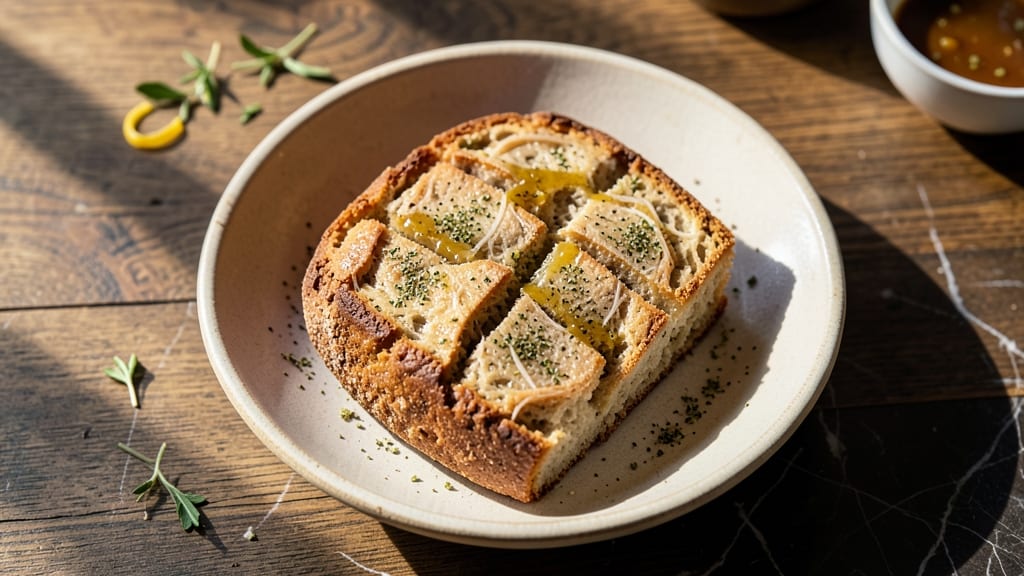
This almond flour unleavened bread delivers a nutty, dense crunch without yeast or gluten—perfect for sandwiches, dipping, or traditional flatbreads. The secret lies in precise hydration and baking techniques that create a golden crust while keeping the interior tender.
I developed this recipe after years of experimenting with grain-free baking, and it never fails to impress. The beauty of almond flour bread is its versatility. Shape it into flatbreads for Mediterranean dishes, slice it for toast, or form it into a loaf for sandwiches.
The rich, toasted almond flavor pairs beautifully with hummus, olive oil, or avocado spreads. Unlike traditional bread, this version requires no yeast, making it quick to prepare and ideal for busy weeknights.
Baking at 350°F for 25-30 minutes ensures a crisp exterior and moist interior, while a light egg wash (or water for vegan versions) adds shine. The result is a substantial, satisfying bread that holds up to dips and spreads without falling apart.
Store in an airtight container for up to 5 days or freeze for longer shelf life. Whether you're adapting traditional manakeesh or creating a modern sandwich loaf, this recipe delivers restaurant-quality texture with minimal effort. Let’s get baking!
Ingredients for almond flour unleavened bread
Precision-milled almond flour and binding agents create this gluten-free, yeast-free bread with restaurant-quality texture.
| Ingredient | Amount | Notes |
|---|---|---|
| Blanched Almond Flour 🥜 | 2 cups | Finely ground for texture |
| Tapioca Starch 🌾 | ½ cup | Ensures crisp crust |
| Psyllium Husk Powder 🌿 | 1 tbsp | Binds for structure |
| Baking Powder 🧂 | 1 tsp | Aluminum-free preferred |
| Salt 🧂 | ½ tsp | Diamond Crystal preferred |
| Flaxseed Meal 🌾 | 1 tbsp | Acts as egg binder |
| Cold Water 💧 | ½ cup | For flax egg activation |
| Extra-Virgin Olive Oil 🫒 | ⅓ cup | For moisture and richness |
| Apple Cider Vinegar 🍏 | 1 tbsp | Enhances rise |
| Garlic Powder 🧄 | ½ tsp | For subtle depth |
| Onion Powder 🧅 | ½ tsp | Complements almond flavor |
| Ground Cinnamon 🌿 | ¼ tsp | Optional for warmth |
| Plant-Based Milk 🥛 | ¼ cup | Unsweetened almond or oat |
The almond flour is non-negotiable here—blanched, finely ground for that signature nutty crunch. Bob’s Red Mill or Anthony’s Goods brands deliver consistent results, but avoid almond meal (too coarse). Psyllium husk powder is the secret to structure; Now Foods offers a reliable powdered form. For the flax egg, use golden flaxseed meal (brown works too) and let it sit for 5 minutes before mixing—this ensures maximum binding. The olive oil should be extra-virgin with fruity notes—California Olive Ranch is my go-to for consistent quality.
No psyllium husk powder? Chia seeds soaked in water (1 tbsp chia + 3 tbsp water = 1 tbsp psyllium equivalent) works in a pinch, though texture may vary slightly. Substitute tapioca starch with arrowroot powder at equal ratios, though it yields a marginally less crisp crust. For the plant-based milk, unsweetened almond or oat milk provides neutral flavor—avoid soy or coconut if you want to minimize overpowering tastes. The apple cider vinegar can be swapped for white vinegar or lemon juice, but ACV adds subtle depth. If you omit cinnamon, increase garlic powder to 0.75 tsp for extra savory punch.
Store baked bread in an airtight container with parchment paper between layers to maintain crispness for up to 5 days. For longer storage, wrap tightly in foil and freeze—thaw at 350°F for 5 minutes to restore texture. The dough can be prepped 24 hours ahead and refrigerated, though it’s best baked fresh. Portion into individual flatbread discs before baking for easy reheating—simply toast in a dry skillet for 1 minute per side.
Why You'll Love This Recipe
- No Mixer Needed: Mixing this dough is ridiculously simple—just stir the almond flour, tapioca starch, and psyllium husk powder with water until it clumps like wet sand. No kneading, no waiting for gluten to develop, just shape and bake. (Between us, I’ve made it while scrolling through my phone.)
- Nutty Crunch Without the Effort: The almond flour gives it that rich, toasty depth, but here’s the magic: the psyllium husk binds it so well, it holds up like a proper loaf—no crumbly disappointment. That crispy edge? Pure satisfaction after one bite.
- Meal Prep MVP: This bread stays fresh for days in the fridge, toasts up like a dream, and even reheats beautifully in the oven. I slice a batch on Sunday, wrap it in a towel, and it’s my go-to for sandwiches, dipping, or toast all week. (Yes, even on a Tuesday night.)
- Budget-Friendly Luxury: Almond flour’s pricey reputation fades fast when you realize how little you need—just a cup or two per loaf—and it stretches further than regular flour. Plus, the psyllium husk cuts costs while keeping it sturdy. It’s fancy enough for company but practical enough for daily.
Step-by-step instructions for almond flour unleavened bread
This method transforms simple ingredients into a nutty, crisp-edged loaf without yeast or gluten.
Create the Flaxseed Egg and Combine Dry Ingredients
In a small bowl, whisk together the 1 tablespoon flaxseed meal and 0.5 cup cold water. Let it sit for 5 minutes until it thickens into a gel-like consistency—this acts as your egg binder. Meanwhile, in a large mixing bowl, combine the 2 cups blanched almond flour, 0.5 cup tapioca starch, 1 tablespoon psyllium husk powder, 1 teaspoon baking powder, 0.5 teaspoon salt, 0.5 teaspoon garlic powder, 0.5 teaspoon onion powder, and 0.25 teaspoon ground cinnamon. Whisk until no lumps remain.
Here's the thing—psyllium husk powder is crucial for binding. If you skip it, your bread will crumble. Sift the dry ingredients first if you notice any clumping, especially with the almond flour.
Mix Wet Ingredients and Form the Dough
To the dry mixture, add the flaxseed egg, 0.33 cup extra-virgin olive oil, 1 tablespoon apple cider vinegar, and 0.25 cup plant-based milk. Stir with a silicone spatula until fully incorporated—about 2-3 minutes. The dough will be thick and sticky, but it should hold together when pressed. If it feels too dry, add 1 teaspoon cold water at a time until cohesive.
Don't overmix. You're looking for a dough that's just combined, not developed gluten like traditional bread. The vinegar here does more than flavor—it helps activate the baking powder for lift. Press the dough into a ball and let it rest for 10 minutes at room temperature.
Shape and Preheat for Crispy Edges
Preheat your oven to 350°F and line a loaf pan with parchment paper, leaving an overhang for easy removal. Transfer the rested dough to the prepared pan and press it firmly into the corners, creating an even surface. The dough will be dense but should spring back slightly when pressed—this indicates proper hydration. Cover with a damp towel and let it rest another 10 minutes while the oven preheats.
This resting period ensures even baking. If you skip it, the bread may develop uneven texture or crack unevenly. For extra crisp edges, I like to brush the top with a little more olive oil before baking—just enough to coat the surface lightly.
Bake Until Golden and Firm
Bake the bread for 45-50 minutes until the top is golden brown and a toothpick inserted in the center comes out clean. The internal temperature should reach 205°F—this ensures it's fully set without drying out. If the top browns too quickly, tent the pan with foil after 30 minutes to prevent over-browning while the center cooks.
Real talk: Almond flour bread doesn't rise like yeasted bread, so don't expect a dome. Instead, focus on the edges becoming crisp and the center firming up. The bread will continue setting as it cools, so remove it from the pan immediately after baking to prevent sogginess.
Cool and Slice for Maximum Crunch
Let the bread cool in the pan for 10 minutes, then transfer it to a wire rack to cool completely for 1 hour. This cooling period is critical—it allows the psyllium husk to fully hydrate and the texture to set properly. Slice with a serrated knife for clean cuts and serve at room temperature.
The crust should be crisp with a slight crunch, while the interior remains tender with a subtle almond flavor. If you're serving immediately, brush the slices with a little more olive oil for extra richness. Store leftovers wrapped in parchment paper at room temperature for up to 3 days or freeze for longer storage.
Pro Tips For Making Almond Flour Unleavened Bread
- Mix Wet First: Combine the water, psyllium husk powder, and salt before adding to dry ingredients—this prevents clumping and ensures the psyllium activates evenly. I used to toss it in dry, and the bread turned out gummy in spots. Stir vigorously for 20 seconds until it’s a smooth, thick paste.
- Preheat Pan Properly: Get your oven to 350°F and let the baking pan sit inside for 5 minutes before pouring the batter—this guarantees a crisp bottom crust. I skipped this once and ended up with a soggy base that ruined the whole loaf.
- Skip Overmixing: Fold in the almond flour and tapioca starch just until combined—overworking the batter makes the bread dense. Use a spatula to cut through the mixture; it’ll look shaggy, but that’s how you get a light, airy texture.
- Test Doneness Early: Check for doneness at 25 minutes—tap the top gently with a finger. If it sounds hollow, it’s done. Overbaking dries out the almond flour; pull it out when it’s just set, not golden. (Yes, it’ll keep cooking off the heat.)
Troubleshooting this dish
Dough Too Dry?
If your dough feels crumbly or won't hold together, you likely need more moisture. The almond flour absorbs liquid differently than wheat flour, so add 1 teaspoon cold water at a time until it forms a cohesive ball.
I’ve found that plant-based milk helps more than water alone—try adding 1 tablespoon extra if needed. For extra insurance, let the dough rest 15 minutes covered before shaping—this allows the psyllium husk to fully hydrate. 💧
Bread Cracking Unevenly?
Uneven cracks usually mean the dough wasn’t rested long enough or the oven temperature fluctuated. Always let the dough rest 10-15 minutes after mixing and again before baking.
Preheat your oven for 15 minutes with the rack in the middle position, and use an oven thermometer to confirm it’s at 350°F. If cracks still appear, brush the top with 1 teaspoon olive oil before baking to create a smoother surface. 🔥
Crust Too Soft?
A soft crust often means the bread didn’t bake long enough or the oven wasn’t hot enough. Increase baking time by 5-10 minutes and check the internal temperature—it should reach 205°F. For extra crispiness, bake on the top rack for the last 5 minutes of baking time.
I also recommend brushing the top with 1 teaspoon melted coconut oil before baking for a shinier, firmer crust. ✨
Bread Too Dense?
Density usually stems from overmixing or insufficient binding agents. Whisk the dough just until combined—no need to develop gluten like traditional bread. Double-check your psyllium husk powder measurement (it’s easy to under-measure) and ensure you’re using blanched almond flour, not almond meal.
For extra lift, add ½ teaspoon extra baking powder or replace 1 tablespoon almond flour with tapioca starch. 🥜
Sticky Residue in Pan?
This happens when the dough isn’t fully set before baking or the pan isn’t properly lined. Always use parchment paper with an overhang for easy removal. If residue sticks, let the bread cool in the pan for 10 minutes before transferring to a wire rack.
For stubborn cases, lightly grease the pan with olive oil before shaping the dough. I also recommend pressing the dough firmly into the corners to eliminate air pockets that can cause sticking. 🧂
Bread Tastes Bland?
Almond flour bread can taste flat if not properly seasoned. Boost flavor by increasing the garlic powder to 1 teaspoon or adding ½ teaspoon smoked paprika to the dry ingredients. A pinch of sea salt (like Maldon) enhances taste more than regular salt.
For extra richness, add 1 teaspoon tahini to the wet ingredients—it adds depth without altering texture. 🧄
Nutrition facts
Frequently asked questions
Can I make this almond flour bread without psyllium husk?
You can substitute psyllium husk with 1 tablespoon chia seeds soaked in 3 tablespoons water (let sit for 10 minutes), but texture may be slightly less crisp. Psyllium creates the signature structure—without it, your bread could crumble. For best results, use 1 tablespoon psyllium husk powder as written.
How do I shape this into traditional flatbreads?
Divide the dough into 4 equal portions and roll each into a 1/4-inch thick circle on parchment paper. Brush with olive oil and bake at 375°F for 12-15 minutes until golden. For extra crispiness, bake on a preheated skillet for 2 minutes per side after oven baking. Perfect for dipping in hummus!
Why does my almond flour bread taste bitter?
Bitter flavor usually comes from old or poorly stored almond flour or overbaking. Use freshly ground blanched almond flour (store-bought can oxidize) and bake until internal temp reaches 205°F—no longer. For extra flavor, add 1 teaspoon vanilla extract to the wet ingredients.
Can I make this recipe nut-free?
Yes! Replace almond flour with an equal amount of oat flour or sunflower seed flour (ensure certified nut-free). Note that texture will differ—expect a denser, less nutty result. For binding, use 1 extra tablespoon psyllium husk to compensate for the lack of almond flour's natural oils.
How long can I keep the dough before baking?
The dough stays fresh in the fridge for 24 hours covered with plastic wrap. Let it sit at room temperature for 30 minutes before shaping to restore workability. For longer storage, shape the dough into a log, wrap tightly in plastic, and freeze for up to 1 month. Thaw overnight in the fridge before baking.