
Side Dishes
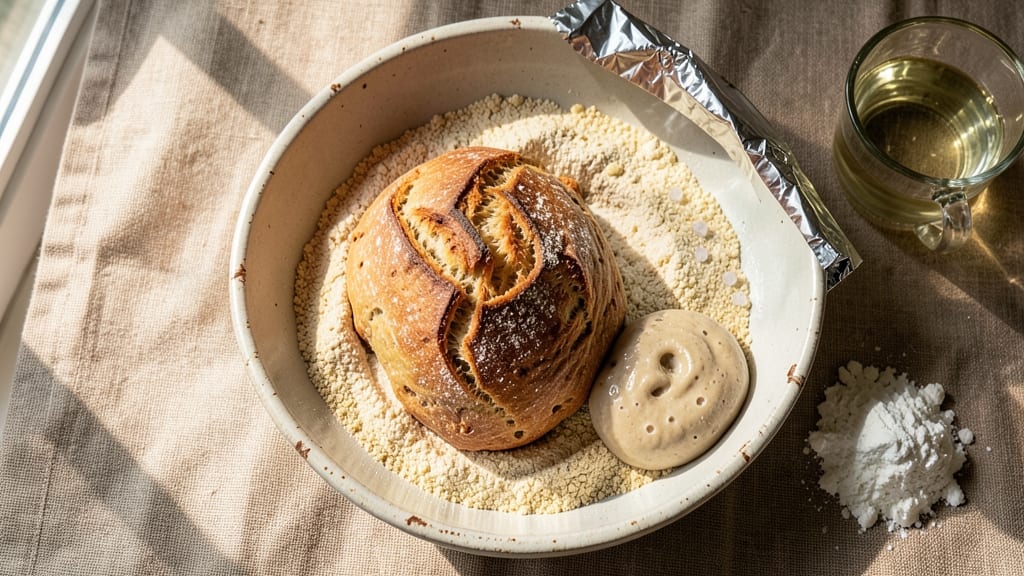
The Altamura sourdough bread recipe brings Italy's most celebrated crust to your kitchen with its signature chewy texture and golden crust. This protected traditional specialty (PTS) from Puglia requires patience and precision—starting with a robust sourdough starter that captures the essence of Italian wheat.
The foil-sealed baking technique ensures that signature open crumb structure while developing a crispy, flavorful crust.
What sets Altamura sourdough apart is its foil-sealed baking method, which creates a distinctive chewy interior while maintaining a crisp exterior. The dough undergoes a long fermentation (12-16 hours) to develop depth of flavor, and the high-protein wheat flour gives it its signature structure.
This recipe maintains authenticity while adapting to home kitchens, ensuring you achieve restaurant-quality results.
By following this method, you'll create a loaf with a golden, crackling crust and an open, airy crumb that's irresistibly chewy. The sourdough starter adds a tangy complexity that elevates this bread beyond standard sourdough, making it perfect for sandwiches, toast, or enjoying on its own.
The cultural significance of this bread—protected by Italian law—makes it a true culinary treasure.
This recipe includes detailed instructions for maintaining your starter, proper dough handling, and the foil-sealing technique that defines Altamura sourdough. With practice, you'll master the balance of texture and flavor that makes this bread so beloved. Let's get started on creating an authentic Italian masterpiece.
Ingredients for altamura sourdough bread
Authentic Italian ingredients for a bread protected by tradition and time.
| Ingredient | Amount | Notes |
|---|---|---|
| Altamura Wheat Flour 🌾 | 3 ½ cups | High-protein 00 flour preferred |
| Active Sourdough Starter 🍞 | 1 cup | 100% hydration, bubbly and active |
| Warm Water 💧 | 1 ¾ cups | 95°F-105°F for optimal hydration |
| Kosher Salt 🧂 | 1 ½ tsp | Diamond Crystal preferred |
| Unbleached All-Purpose Flour 🌾 | ½ cup | For final dough adjustment |
| Heavy-Duty Aluminum Foil 📄 | 1 sheet | 12x16 inches minimum |
| Banneton or Linen Towel 🧵 | 1 whole | For dough proofing |
| Olive Oil 🫒 | 1 tbsp | Extra-virgin for dough coating |
| Semolina Flour 🌾 | 1 tbsp | For dusting banneton |
| Cornmeal 🌽 | 2 tbsp | For baking surface |
The Altamura wheat flour is non-negotiable for authenticity—its high gluten content creates that signature chewy texture. King Arthur or Caputo 00 flour are the gold standards, but any high-protein Italian flour will work. For your sourdough starter, maintain a 100% hydration ratio (equal parts flour and water) and feed it daily with Altamura flour for consistency. The starter should be bubbly and double in size within 4-6 hours after feeding. If you can't find Altamura flour, King Arthur Bread Flour is the closest substitute, though it won't be identical in flavor. Store your starter in a glass jar with a loose lid at room temperature, and always use a portion that's at its peak activity—typically 24 hours after feeding.
No semolina? Rice flour or all-purpose flour will work in a pinch, though the texture won't be as crisp. The foil-sealing technique requires heavy-duty aluminum foil—avoid lightweight versions that tear during baking. For proofing, a banneton is ideal, but a linen towel dusted with flour creates a similar effect. If you're short on time, you can skip the long fermentation (12-16 hours) and proof the dough for 6-8 hours, though flavor development will be less pronounced. The olive oil should be extra-virgin—its fruity notes complement the sourdough's tang, while lower-quality oils can taste bitter. For the final dough adjustment, always use unbleached all-purpose flour to avoid altering the bread's color or texture.
Once baked, let the loaf cool completely on a wire rack before slicing—this prevents a gummy crumb. Store wrapped in a clean cotton towel at room temperature for up to 3 days, or freeze slices for 3 months. The foil-sealed method creates a bread that's best enjoyed within 48 hours of baking, as the crust loses its crispness over time. For reheating, wrap cooled slices in foil and warm in a 350°F oven for 5-7 minutes. This bread freezes beautifully—slice before freezing to maintain texture, and toast directly from frozen for crispy results.
Why You'll Love This Recipe
- Four-Ingredient Magic: The Altamura flour does most of the work—just toss in your starter, water, and salt. No kneading, no fuss, just a few folds and a slow rise while you do other things.
- Crust That Cracks: That golden crust? It’s not just pretty—it’s crunchy in all the right ways, thanks to the high-protein Altamura flour. Honestly, I’ve caught myself eating slices straight from the pan.
- Weeknight Workhorse: Tear it for sandwiches, toast it for breakfast, or freeze slices for quick toast later. Between us, I’ve used it to soak up pasta water like a champ when we ran out of breadcrumbs.
- Budget-Friendly Staple: A single batch lasts my family five days, and the Altamura flour stretches further than store-bought. Plus, the starter’s free once you’ve got it—no more buying expensive loaves that go stale in two days.
Step-by-step instructions for authentic Altamura sourdough bread
Master the Italian technique that delivers legendary texture and flavor through precise hydration and foil-sealing.
Mix the Dough with Perfect Hydration
In a large mixing bowl, combine the 3.5 cups of Altamura wheat flour with the 1 cup of active sourdough starter. Create a well in the center and add the 1.75 cups of warm water (95°F-105°F) and 1.5 teaspoons of kosher salt. Using a dough whisk or your hands, gradually incorporate the liquid into the flour until a shaggy mass forms.
Once combined, switch to a stand mixer fitted with a dough hook attachment. Knead on low speed for 5 minutes until the dough becomes smooth and elastic. The dough should be slightly tacky but not sticky—if it sticks to your fingers, add the 0.5 cup of unbleached all-purpose flour gradually. For authentic texture, the dough should test at around 78-80% hydration. This high hydration creates the signature open crumb structure of Altamura bread.
Bulk Ferment for Optimal Development
Transfer the dough to a lightly oiled bowl, cover with a damp kitchen towel, and let it rest at room temperature for 1 hour. After the initial rest, perform a series of stretch-and-folds every 30 minutes for 2 hours. To do this, wet your hands, grab one side of the dough, stretch it upward, and fold it over itself. Rotate the bowl and repeat this process on all four sides.
During bulk fermentation, the dough should roughly double in size and develop visible bubbles on the surface. The ideal temperature for this stage is 75-78°F. If your kitchen is cooler, extend the fermentation time to 3-4 hours. The dough is ready when it springs back slowly when poked and has developed a slightly domed shape with good volume. This development creates the signature chew and open crumb structure that Altamura bread is known for.
Shape and Proof in the Banneton
Lightly dust a work surface with the 1 tablespoon of semolina flour and turn out the dough. Gently deflate it and shape it into a round boule. To do this, use the "stretch and turn" method: stretch one side of the dough toward you while turning the boule 90 degrees with each stretch. After shaping, place the dough seam-side up in a floured banneton or line a bowl with a floured linen towel and place the dough inside.
Cover with plastic wrap and refrigerate for 12-16 hours. This cold proofing slows fermentation and allows the gluten to relax, which is crucial for developing the bread's signature structure. The dough should rise noticeably in the banneton, with the sides expanding and the top becoming slightly domed. The cold proof also enhances the flavor development, creating the complex, slightly tangy taste that defines authentic Altamura bread.
Score and Bake with Foil-Sealing Technique
Preheat your oven to 450°F with a Dutch oven inside for 45 minutes. While the oven heats, turn the dough out onto a piece of parchment paper dusted with the 2 tablespoons of cornmeal. Using a razor blade or sharp lame, score the dough with a crosshatch pattern about 1/8-inch deep. This scoring allows the bread to expand properly during baking and creates the characteristic crust.
Carefully transfer the scored dough to the hot Dutch oven, cover tightly with the heavy-duty aluminum foil, and bake for 20 minutes. After 20 minutes, remove the foil and bake for an additional 15-20 minutes until the bread reaches an internal temperature of 205-210°F. The crust should be deep golden brown with dark spots, and the bread should sound hollow when tapped on the bottom. This foil-sealing technique traps steam, creating the signature dense, chewy crust while maintaining a moist interior.
Cool and Develop Flavor
Remove the bread from the Dutch oven and let it cool on a wire rack for at least 1 hour before slicing. This resting period allows the internal structure to set and the flavors to fully develop. The bread should have a dense, slightly chewy crumb with an open, irregular structure and a thick, crisp crust. The flavor should be tangy with a subtle sweetness, a hallmark of authentic Altamura sourdough.
Slice the bread with a serrated knife and serve while still slightly warm. The interior should be moist and elastic, with a slight resistance when bitten into—a testament to the high hydration and proper fermentation. Store any leftovers in an airtight container at room temperature for up to 3 days, or freeze for longer storage. This bread is best enjoyed fresh, with the crust providing a satisfying crunch and the interior offering a satisfying chew.
Pro Tips For Making Altamura Sourdough Bread
- Hydrate Altamura First: Mix the Altamura flour and water into a thick paste before adding anything else—this prevents clumping and ensures even hydration. I learned this the hard way after scrapping a batch where dry bits stubbornly resisted the starter.
- Skip the Over-Kneading: Altamura’s high protein content makes it tough—stop mixing once the dough is shaggy and sticky, then let autolyse work its magic. I used to overwork it, and the bread turned dense. Trust the stretch-and-fold method instead.
- Salt the Dough Early: Dissolve the kosher salt in the warm water before mixing—it distributes evenly and prevents uneven flavor. I used to sprinkle it in later, and some chunks stayed bland. Do this step first, no excuses.
- Use a Banneton with Dusting: Lightly coat your banneton with unbleached all-purpose flour (not Altamura—it’ll stick like glue) and turn the dough seam-side up. This keeps the crust from sticking without weighing it down. I tried rice flour once, but it’s overkill for this bread.
Best sauces and condiments for this altamura sourdough bread
Olive Oil Infusions
Enhance your Altamura sourdough with infused olive oils that complement its tangy notes. A simple garlic-infused olive oil (steep 4 garlic cloves in ½ cup extra-virgin olive oil for 2 hours) adds depth to sandwiches.
For a richer flavor, try rosemary-infused olive oil—simmer 2 sprigs fresh rosemary in ½ cup olive oil for 10 minutes before straining. Drizzle lightly over warm slices for an aromatic finish. 🫒
Tomato Sauce Pairings
Altamura sourdough’s chewy texture pairs perfectly with San Marzano tomato sauce. Simmer 2 cups crushed San Marzano tomatoes, 2 tbsp olive oil, 1 tsp sugar, and ½ tsp red pepper flakes for 20 minutes.
The sauce’s natural sweetness balances the sourdough’s tang, making it ideal for bruschetta or open-faced sandwiches. For extra richness, stir in 1 tbsp balsamic glaze at the end. 🍅
Whole-Grain Mustard
Whole-grain mustard adds a bold contrast to the bread’s mild sweetness. Mix 2 tbsp Dijon mustard with 1 tbsp whole-grain mustard, 1 tsp honey, and 1 tsp apple cider vinegar.
Spread on toasted sourdough and top with prosciutto or fig jam for a gourmet sandwich. The mustard’s grainy texture cuts through the bread’s chew, creating a satisfying bite. 🌾
Herb Butter Spreads
Create a herb butter to elevate your sourdough. Mix ½ cup softened unsalted butter with 2 tbsp chopped fresh parsley, 1 tbsp chopped chives, and ½ tsp lemon zest. Roll into a log, chill for 1 hour, and slice to spread on warm bread.
For a savory twist, add 1 tsp grated Parmesan and a pinch of black pepper. This spread works wonders with roasted vegetables or as a simple appetizer. 🧀
Honey and Nut Compotes
Sweeten your sourdough with a honey-nut compote. Simmer ½ cup honey, ¼ cup chopped walnuts, and 1 tbsp lemon juice for 10 minutes. Let cool, then drizzle over toasted bread.
The caramelized honey and crunchy nuts create a delightful contrast to the bread’s chewy interior. For a spiced variation, add ½ tsp cinnamon to the compote. 🍯
Cheese Pairings
Altamura sourdough’s neutral flavor makes it a canvas for bold cheeses. Try aged Pecorino Romano (grated over soups or salads) or creamy burrata (torn into pieces for bruschetta). For a smoky option, pair with aged Manchego and black garlic jam.
The bread’s structure holds up to even soft cheeses, making it perfect for charcuterie boards. 🧀✨
Nutrition facts
Frequently asked questions
Why does Altamura sourdough need such a long fermentation?
The 12-16 hour cold proof is key to developing the bread's signature chewy texture and complex flavor. This extended fermentation breaks down gluten proteins and starches, creating that signature open crumb structure while enhancing the sourdough's tangy depth. The cold slows fermentation just enough to maintain structure while allowing flavors to fully develop.
Can I substitute the Altamura wheat flour?
While Altamura flour is ideal (high protein, 13-14% protein content), you can use King Arthur Bread Flour or Caputo 00 flour as substitutes. Avoid all-purpose flour—the lower protein content (10-11%) won't develop the same chewy texture. The bread will still be good, but the crumb will be less open and the crust less crisp.
What's the purpose of the foil-sealing technique?
The foil-sealing creates a steam chamber that develops the bread's signature chewy interior while maintaining a crisp crust. The trapped steam prevents rapid moisture loss, allowing the dough to expand fully and develop that characteristic dense yet airy structure. Without it, you'll get a denser, less authentic loaf.
How do I know when my sourdough starter is ready?
Your starter should be bubbly, doubled in size, and have a slightly domed top 4-6 hours after feeding. For Altamura bread, use a portion that's 24 hours post-feed—this peak activity gives the best flavor and rise. If it smells strongly alcoholic or has a grayish tint, it's overripe and needs refreshing.
Can I bake this in a regular oven without a Dutch oven?
Yes, but you'll need to compensate for heat loss. Place the dough on a baking sheet with a steam pan (fill a small tray with water and place it below the bread). Cover the dough with foil for the first 20 minutes, then uncover for the final 15-20 minutes. The result won't be identical, but you'll still get a good chewy loaf with a crisp crust.