
Sauces & Condiments
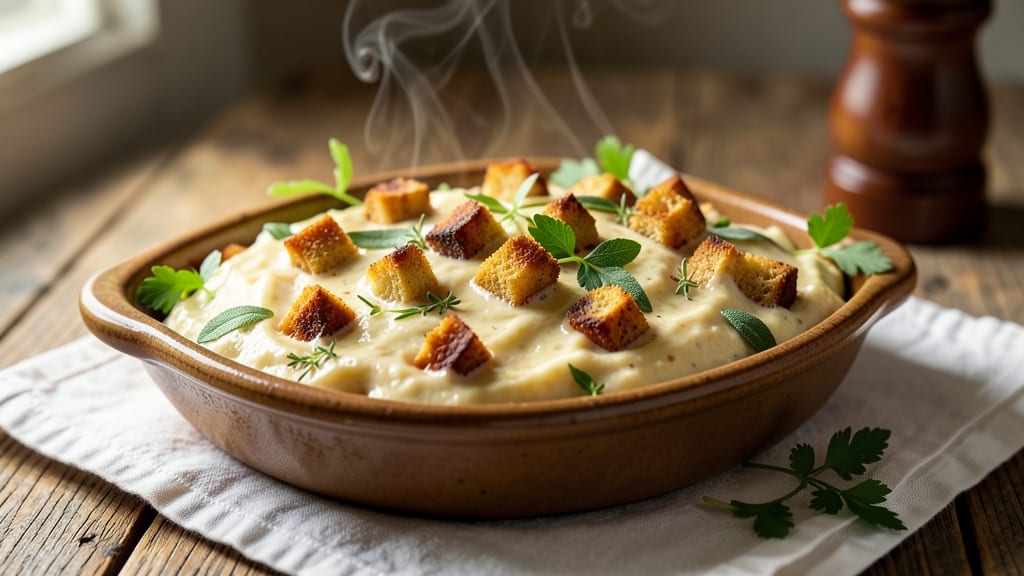
This Amish bread dressing recipe transforms simple ingredients into a rich, savory sauce that elevates everything from roasted vegetables to mashed potatoes. The secret lies in slow-simmered herbs, melted butter, and a touch of cream that creates velvety swirls with every spoonful.
What starts as a humble blend of broth, herbs, and dairy becomes a flavorful condiment that brings warmth to any meal.
The beauty of this dressing is its versatility—it works as a dipping sauce for bread, a topping for soups, or a finishing touch for roasted meats. Traditional Amish cooking often relies on slow, gentle methods to develop deep flavors, and this recipe follows that principle.
By simmering the ingredients just until they meld, you achieve a sauce that’s rich, aromatic, and perfectly balanced between savory and buttery.
What sets this dressing apart is its simplicity—just a handful of pantry staples come together in 15 minutes of active time, with minimal effort required. The herbs infuse the butter and broth with earthy, aromatic notes, while the cream adds a luxurious finish.
Each bite delivers layers of flavor that make even the simplest dishes feel special.
Perfect for holiday meals, weeknight dinners, or as a gift-worthy condiment, this dressing is a staple worth keeping in your recipe rotation. The slow-cooked method ensures every spoonful is packed with flavor, making it a go-to for anyone who appreciates the comfort of homemade, hearty sauces.
Ingredients for amish bread dressing
Nine simple ingredients transform into velvety, aromatic Amish bread dressing perfect for elevating any meal.
| Ingredient | Amount | Notes |
|---|---|---|
| Unsalted Butter 🧈 | ½ cup | Cold, cubed for even melting |
| Fresh Parsley Stems 🌿 | ½ cup | Woody stems included for depth |
| Fresh Sage Leaves 🍃 | ¼ cup | Finely chopped, stems removed |
| Fresh Thyme Leaves 🌿 | 1 tbsp | Or 1 tsp dried thyme |
| Heavy Cream 🥛 | ½ cup | Full-fat for richness |
| Chicken Broth 💧 | 1 cup | Homemade preferred, low-sodium |
| Diamond Crystal Kosher Salt 🧂 | ½ tsp | Adjust to taste |
| Freshly Ground Black Pepper 🌶️ | ¼ tsp | Freshly cracked preferred |
| Granulated White Sugar 🍚 | 1 tsp | Balances savory notes |
The herbs are the foundation of this dressing, so prioritize freshness. Whole Foods or local farmers markets offer the best quality parsley and sage—look for vibrant green leaves with no wilting. The stems add depth, so don't trim them completely. For thyme, Penzeys Spices sells high-quality dried leaves if fresh isn't available, though fresh is ideal. Butter quality matters too—Plugrá or Land O'Lakes unsalted melt beautifully without overpowering. Store fresh herbs wrapped in damp paper towels in the fridge for up to 5 days to preserve their aromatic oils.
No fresh herbs? Dried thyme at one-third the amount works in a pinch, but fresh parsley and sage are non-negotiable for authentic Amish flavor. Substitute chicken broth with vegetable broth for a vegetarian version, though traditional recipes use chicken. Heavy cream can be swapped for half-and-half for a lighter texture, but full-fat delivers the signature richness. The sugar balances the savory notes—honey or maple syrup can replace it if preferred, though it adds a distinct floral note. For a gluten-free version, ensure your broth and cream are certified gluten-free.
This dressing keeps beautifully for 5 days refrigerated in an airtight container, with the flavor deepening over time. For longer storage, freeze in ice cube trays for single-serving portions that thaw in minutes. The butter and cream may separate slightly when refrigerated—simply whisk vigorously before serving. Double the batch if entertaining, as it disappears quickly. The dressing reheats beautifully, making it perfect for last-minute holiday gatherings or weeknight meals where you want restaurant-quality flavor without the effort.
Why You'll Love This Recipe
- No-Chop Necessary: I swear by this trick—just toss in the parsley stems whole, sage leaves intact, and thyme sprigs. The butter melts into a fragrant, golden pool while you stir, and honestly? The flavor’s just as rich as if I’d spent 10 minutes dicing herbs.
- Creamy Butter Magic: That heavy cream and butter combo transforms into something dangerously addictive—smooth, velvety, with a whisper of herbaceous warmth. It’s the kind of dressing that makes you lick the spoon, no exaggeration.
- Leftovers? Lunch Saved: This keeps beautifully in the fridge for days, perfect for slathering on sandwiches or drizzling over roasted veggies. I’ve turned a single batch into three meals without breaking a sweat—my lazy Sunday strategy.
- Herb Powerhouse: Between us, fresh sage and thyme do all the work here. No fancy seasoning blends needed—just a handful of leaves simmered in butter until the kitchen smells like a forest. That’s flavor you can’t buy in a jar.
Step-by-step instructions for Amish bread dressing
Here's how to create this rich, aromatic dressing with perfect herb swirls and velvety texture.
Sauté the Herb Bundle for Depth of Flavor
In a medium saucepan, combine the 0.5 cup unsalted butter (cubed) with the 0.5 cup fresh parsley stems, 0.25 cup fresh sage leaves, and 1 tbsp fresh thyme leaves. Place the pan over medium-low heat and let it melt slowly for 3-4 minutes, stirring occasionally. The butter should foam gently without browning—this preserves the delicate herb flavors rather than burning them.
I like to press down gently on the herb stems with a wooden spoon during the first 2 minutes of cooking. This helps release their essential oils into the butter, creating that signature Amish herb complexity. Watch closely—the moment the butter stops foaming and takes on a pale golden hue, you're ready for the next step. If it starts to brown, immediately reduce the heat to low and continue stirring.
Infuse with Broth and Cream for Richness
Pour in the 1 cup chicken broth and 0.5 cup heavy cream, stirring constantly to combine. Increase the heat to medium and bring the mixture to a gentle simmer. Let it cook uncovered for 5-6 minutes until the liquid reduces by about one-third, leaving a thick, glossy consistency. You'll notice the aroma intensify—this is when the herbs truly meld with the dairy and broth.
Here's the thing—don't walk away during this reduction. The mixture should never boil vigorously, as that can cause the cream to curdle. Instead, maintain a steady simmer where small bubbles form at the edges but the center remains relatively calm. Taste the mixture now—it should be rich and herbaceous, with a subtle sweetness from the butter.
Season and Finish with Sugar
Remove the pan from heat and stir in the 0.5 tsp diamond crystal kosher salt, 0.25 tsp freshly ground black pepper, and 1 tsp granulated white sugar. Let the dressing sit off the heat for 2-3 minutes to allow the seasonings to fully integrate. The sugar here isn't just for sweetness—it balances the savory notes and helps prevent the dressing from becoming too heavy as it cools.
For best results, I strain the dressing through a fine-mesh sieve into a clean bowl before serving. This removes any herb stems that might make the texture uneven, leaving you with a silky, herb-infused sauce. If you prefer a more rustic texture, simply whisk vigorously to distribute any remaining herb pieces evenly throughout.
Serve Warm or Cold with Perfect Texture
Serve the dressing immediately while still warm, or allow it to cool to room temperature for a slightly thicker consistency. The dressing should coat the back of a spoon with a velvety sheen—this indicates proper reduction. For an extra touch, I like to drizzle a bit of melted butter on top just before serving, which adds a beautiful swirl pattern reminiscent of classic Amish preparations.
This dressing works equally well as a side for roasted meats, a dip for fresh bread, or a topping for creamy soups. The key to its success lies in the slow, controlled cooking that develops deep flavor without overpowering the delicate herb notes. Each bite should deliver that perfect balance of buttery richness, herbal brightness, and subtle sweetness that defines Amish comfort food.
Pro Tips For Making Amish Bread Dressing
- Melt Butter Slowly: I learned this the hard way—dumping cold butter into the pot makes it clump and burn. Instead, cut the unsalted butter into small cubes and let them melt gently over medium-low heat, stirring constantly until fully incorporated. This keeps the dressing creamy without scrambling the texture.
- Strip Herb Stems Clean: Don’t just chop the herbs—strip the parsley stems, sage leaves, and thyme leaves off the woody parts first. Finely mince the stems (they’re packed with flavor) and chop the leaves separately for a smoother, more aromatic dressing. Trust me, your future self will notice the difference.
- Whisk in Cream Last: Heavy cream can curdle if added too early. Let the butter, herbs, and bread (if using) toast and cook down until fragrant before whisking in the cream. Start with a splash, then gradually add the rest while stirring vigorously to keep it silky.
- Toast Bread (If Using): If your recipe includes bread cubes, don’t skip toasting them first—even if it feels like extra work. Spread them on a baking sheet and toast at 350°F (175°C) for 5–7 minutes until golden. This prevents a soggy dressing and adds depth of flavor that raw bread can’t match.
Pro cooking tips for great amish bread dressing
Herb Infusion Mastery
The secret to authentic Amish flavor lies in properly infusing those herb stems and leaves.
I always use a wooden spoon to gently press down on the parsley stems during the first 2 minutes of melting the butter—this releases their essential oils into the fat. Medium-low heat is critical; too high and the butter burns before the herbs release their aroma.
If you notice the butter turning golden, immediately reduce to low heat and keep stirring. The goal is a pale golden hue with no browned bits—this preserves the delicate herb notes that define traditional Amish dressings. 🌿
Temperature Control
Maintaining precise medium heat during the broth and cream reduction is non-negotiable. The mixture should simmer gently with small bubbles forming at the edges but staying calm in the center—this prevents curdling. I use a slotted spoon to test the consistency every 2 minutes after adding the liquids.
If you see large bubbles or hear vigorous boiling, reduce the heat immediately. The dressing should reduce by about one-third in 5-6 minutes, leaving a glossy, velvety texture that coats the back of a spoon. 🌡️
Straining for Perfection
Straining through a fine-mesh sieve removes herb stems that can make the texture uneven, but I've found that leaving in a few small pieces actually enhances the rustic character. For a completely smooth finish, use a cheesecloth-lined sieve and press gently with a spoon.
If you prefer texture, simply whisk vigorously after removing the larger stems. The key is consistency—whether smooth or rustic, the dressing should have a silky mouthfeel that balances the herbaceous flavors. 🥄
Sugar's Dual Role
The 1 tsp granulated sugar serves two purposes: it balances the savory notes and prevents the dressing from becoming too heavy when cooled. I like to add it off the heat and let it sit for 2-3 minutes before straining—this allows the sugar to fully dissolve and integrate.
For a subtle floral note, replace the sugar with 1 tsp honey or maple syrup, though it will add a distinct sweetness that some traditionalists might prefer to avoid. 🍯
Reheating Like a Pro
If you need to reheat the dressing, do it gently over low heat with a splash of chicken broth to restore its silky texture. Never microwave it—this can cause the butter and cream to separate. For best results, reheat in a light-colored saucepan (like stainless steel) to prevent overheating.
Stir constantly until it reaches 160°F, then let it rest for 1 minute before serving. This method preserves the delicate herb flavors and velvety consistency. 🔥
Storage Secrets
Store the dressing in an airtight container in the refrigerator for up to 5 days, with flavors deepening over time. For longer storage, freeze in ice cube trays—each cube thaws in 2-3 minutes in warm water, perfect for quick additions to dishes.
The butter and cream may separate slightly when refrigerated, but a quick whisk brings it back to perfection. Double the batch if entertaining—this dressing disappears faster than you can say "Amish hospitality." ❄️
Nutrition facts
Frequently asked questions
Can I make this dressing without heavy cream for a lighter version?
Yes! Replace the 0.5 cup heavy cream with 0.5 cup whole milk or half-and-half for a lighter texture. The dressing will still be rich but slightly less velvety. For extra richness without cream, add 1 extra tablespoon of butter and reduce the broth by 2 tablespoons to maintain balance. The flavor will be slightly different but still delicious.
What can I use if I don't have fresh herbs?
For fresh parsley and sage, there's no perfect substitute—they're essential for authentic Amish flavor. However, you can use 1 tbsp dried parsley and 1 tbsp dried sage (reduce to half the amount of fresh) if absolutely necessary. For thyme, 1 tsp dried thyme works well. Keep in mind the flavor will be less vibrant, but the dressing will still be flavorful. Store-bought herb blends often contain fillers, so avoid those.
How do I fix curdled dressing?
If your dressing curdles during cooking, immediately remove it from heat and stir in 1 tablespoon of cold butter or 1 tablespoon of cold heavy cream to stabilize the mixture. For a smoother texture, strain it through a fine-mesh sieve. If the curdling is severe, start fresh—this usually happens from overheating or adding cold liquids to a hot pan. Always heat broth and cream together gently over medium heat to prevent separation.
Can I make this dressing ahead of time?
This dressing actually tastes better the next day as the flavors meld. Store it in an airtight container in the refrigerator for up to 5 days. The butter and cream may separate slightly, but a quick whisk will restore its silky texture. For longer storage, freeze in ice cube trays—each cube thaws in 2-3 minutes in warm water, perfect for quick additions to dishes. The dressing reheats beautifully over low heat with a splash of broth.
What are the best ways to serve this dressing?
This versatile dressing shines as a dipping sauce for warm bread, a topping for roasted vegetables, or a finishing touch for creamy soups and mashed potatoes. For extra presentation, drizzle with additional melted butter just before serving. It also pairs beautifully with roasted meats like chicken or pork, or as a sauce for dumplings. The Amish tradition often serves it alongside hearty dishes like fried chicken or corn pudding for a complete meal experience.