
Side Dishes
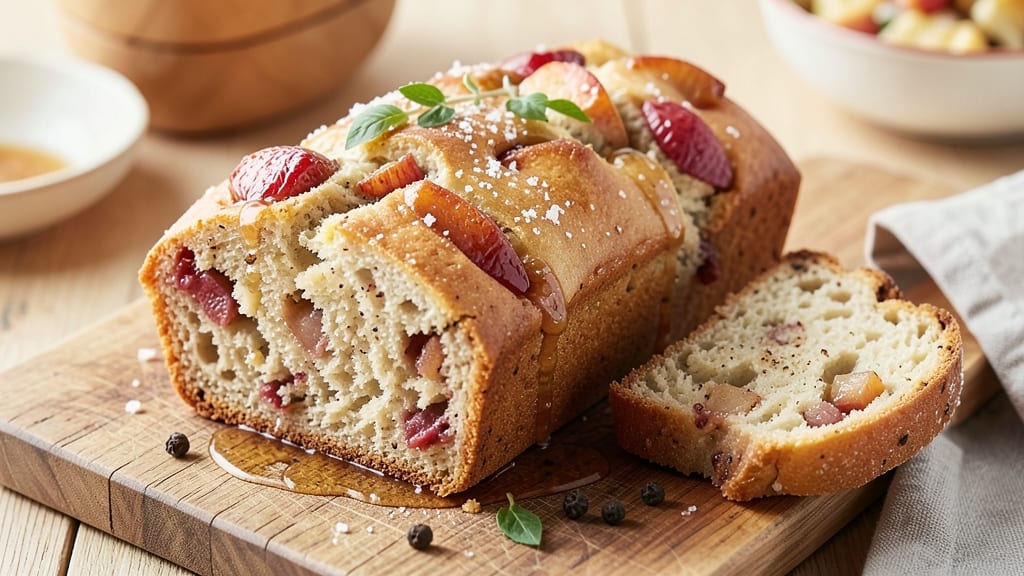
This apple brioche bread recipe transforms simple ingredients into a golden, buttery loaf with tender crumb and caramelized apple swirls—perfect for breakfast or dessert. 💛 The secret lies in brioche's signature richness (thanks to eggs and butter) combined with the natural sweetness of apples, creating a texture that's both flaky and moist.
Unlike basic bread, this recipe uses a foil-sealed rise technique to develop maximum flavor and rise without overproofing.
Brioche dough gets its legendary tenderness from high-fat content—this version incorporates both butter and eggs for that signature melt-in-your-mouth texture.
The apples (I recommend Honeycrisp or Granny Smith) are chopped and folded into the dough for even distribution, though you could also create a swirl or pocket filling for dramatic presentation. The proofing stage is where the magic happens—slow fermentation develops deep flavor while keeping the crumb light.
Baking at 350°F for 30-35 minutes yields a loaf with a golden, crackly crust and an interior so tender it nearly dissolves. The apples caramelize slightly during baking, adding natural sweetness that pairs perfectly with the buttery richness.
Serve warm with butter, jam, or even as a dessert with a drizzle of honey—this bread is versatile enough for any meal.
For extra indulgence, consider adding a streusel topping before baking or brushing the finished loaf with a simple glaze. The foil-sealed rise method ensures consistent results, even if you're new to brioche. Once you try this recipe, store-bought brioche will never compare again—it's that good.
Ingredients for apple brioche bread
Buttery richness meets apple sweetness in this brioche masterpiece—just 13 ingredients for restaurant-quality results.
| Ingredient | Amount | Notes |
|---|---|---|
| All-Purpose Flour 🌾 | 4 cups | Sifted for best texture |
| Unsalted Butter 🧈 | 1 cup | Cold, cubed for texture |
| Large Eggs 🥚 | 3 whole | Room temperature preferred |
| Granulated Sugar 🍚 | ¼ cup | Plus 2 tbsp for dough |
| Instant Yeast 🍞 | ½ tsp | Single-use packet preferred |
| Salt 🧂 | ½ tsp | Diamond Crystal preferred |
| Whole Milk 🥛 | ½ cup | Room temperature |
| Honeycrisp Apples 🍎 | 2 medium | Peeled, chopped into 1/2-inch pieces |
| Vanilla Extract 🌿 | 1 tsp | Pure vanilla preferred |
| Cinnamon 🌶️ | 1 tsp | Ground for warmth |
| Brown Sugar 🍚 | 2 tbsp | Packed for streusel |
| Oats 🌾 | ¼ cup | Quick or rolled for texture |
| Lemon Zest 🍋 | 1 tbsp | Freshly grated |
The butter and eggs are non-negotiable for authentic brioche texture. European-style unsalted butter (like Plugrá) has higher fat content—worth the splurge for that signature melt. Eggs should be large, preferably organic, for richer flavor. The Honeycrisp apples are ideal (their balance of sweetness and tartness), but Granny Smith works beautifully too. For the flour, King Arthur or Gold Medal brands yield the best results—avoid bread flour's higher protein content. The yeast is the backbone: Saf-Instant works best for single-step mixing.
No vanilla extract? Vanilla bean paste or even vanilla sugar (1 tsp) will work in a pinch. Substituting apples? Pear or peach (peeled and chopped) adds different but delightful flavors. For the streusel topping, almond flour can replace half the oats if you prefer nutty notes. The cinnamon matters—Ceylon cinnamon has a more delicate flavor than cassia. For a dairy-free version, substitute the milk with whole coconut milk (though texture will differ slightly). Always use room-temperature ingredients for proper emulsification in brioche.
Store the dough in an airtight container in the fridge for up to 24 hours before baking—this actually enhances flavor. Once baked, keep the loaf wrapped in a clean kitchen towel at room temperature for 2-3 days. For longer storage, slice and freeze portions between parchment paper for up to 3 months. The streusel topping can be prepped ahead and stored separately. Brioche freezes beautifully—wrap tightly in foil and thaw at room temperature before serving.
Why You'll Love This Recipe
- No-Knead Magic: The dough comes together in five minutes—just mix, let it rise, and bake. Honestly, I used to dread brioche, but this butter-rich dough is so forgiving, even if you forget to proof it overnight.
- Sweet Butter Bliss: That first bite? Warm, pillowy bread with caramelized apples and a whisper of vanilla from the sugar. The butter makes it rich without being heavy—trust me, my kids fight over the last slice.
- Breakfast or Snack Star: Toss it with cinnamon butter for morning toast, or slice it into thick pieces with jam for an after-school treat. My go-to? Toasted with peanut butter—it’s like dessert for breakfast.
- Budget-Friendly Luxury: Uses pantry staples (flour, sugar, eggs) and stretches into three loaves. Between us, I’ve made this for holiday gifts, potlucks, and lazy Sundays—it’s the kind of bread that makes you feel fancy without breaking the bank.
Step-by-step instructions for apple brioche bread
Master the art of brioche dough and apple swirls with this foolproof method.
👨🍳 Step 1: Prepare the Apple Filling and Streusel
Start by peeling and chopping the 2 medium Honeycrisp apples into ½-inch pieces. In a medium bowl, combine the apple pieces with 2 tablespoons packed brown sugar, 1 teaspoon cinnamon, and 1 tablespoon freshly grated lemon zest. Toss gently to coat evenly—the lemon zest brightens the apple flavor while the cinnamon adds warmth. Set aside while you prepare the dough.
In a separate small bowl, mix together ¼ cup oats and 2 tablespoons packed brown sugar for the streusel topping. This combination creates a crunchy contrast against the soft brioche and sweet apple filling. Keep both mixtures covered until ready to use.
🍳 Step 2: Create the Brioche Dough
In a stand mixer fitted with the dough hook attachment, combine 4 cups sifted all-purpose flour, 0.5 teaspoon instant yeast, and 0.5 teaspoon salt. Mix on low speed for 30 seconds to aerate the flour before adding any wet ingredients. This initial step ensures even distribution of the yeast and salt throughout the dough.
Add the 1 cup cold cubed unsalted butter to the flour mixture. Mix on low speed for 2-3 minutes until the butter is fully incorporated and the mixture resembles coarse crumbs. The butter should be evenly distributed but still visible in small pieces—this creates the signature tender crumb structure of brioche.
👨🍳 Step 3: Incorporate Wet Ingredients
In a separate bowl, whisk together the 3 whole large eggs, 0.25 cup granulated sugar, 0.5 cup room-temperature whole milk, and 1 teaspoon pure vanilla extract. The milk should be at room temperature to prevent shocking the yeast. Gradually pour this mixture into the flour-butter combination while mixing on low speed.
Continue mixing on medium speed for 4-5 minutes until the dough comes together and pulls away from the sides of the bowl. The dough should be soft, slightly sticky, and elastic. If it feels too dry, add 1 teaspoon milk at a time until it reaches the proper consistency. This stage is critical—under-mixed dough will be dense, while over-mixed dough develops too much gluten.
🔥 Step 4: First Rise and Foil-Sealed Magic
Transfer the dough to a lightly greased bowl, cover with plastic wrap, and let rise in a warm place for 1 hour or until doubled in size. The dough should spring back slowly when poked with a finger—this indicates proper fermentation. While the dough rises, preheat your oven to 350°F.
Once the dough has risen, punch it down gently to release air. On a lightly floured surface, roll the dough into a 12x16-inch rectangle about ½-inch thick. Spread the apple filling evenly over the dough, leaving a ½-inch border around the edges. Sprinkle the oat-brown sugar streusel evenly over the apple filling.
Starting from the long side, tightly roll the dough into a log. Place the log seam-side down on a parchment-lined baking sheet. Cut the log into 8 equal pieces (about 2 inches each) and arrange them on the baking sheet, leaving 1 inch between each piece. Cover loosely with plastic wrap and let rise for another 30-45 minutes.
🔥 Step 5: Foil-Seal and Bake to Perfection
Preheat your oven to 375°F. Place a large piece of aluminum foil on the counter and lightly grease it. Transfer the risen brioche pieces onto the foil, then gather the foil around the bread, sealing it completely. This foil-sealing technique creates a steam environment that produces that signature brioche texture and shine.
Bake the foil-sealed brioche for 25-30 minutes until the bread is deep golden brown and the internal temperature reaches 190°F. Remove from the oven and carefully unwrap the foil. The bread should have a glossy sheen from the steam and a slightly cracked top.
Let the bread cool on a wire rack for 15-20 minutes before slicing. The brioche will continue to set as it cools, making it easier to slice cleanly. Serve warm with a pat of butter or a drizzle of honey to complement the apple flavor.
Pro Tips For Making Apple Brioche Bread
- CHILL THE DOUGH: Cold butter in brioche is non-negotiable—this isn’t a shortbread cookie. Cut that butter into tiny cubes (pea-sized) and freeze it for 15 minutes before mixing. When you incorporate it into the dough, it’ll stay in little pockets, creating that signature tender, flaky crumb. I learned this the hard way after making a dense brick instead of a cloud.
- WEIGH YOUR APPLES: Skip the eyeballing. For every pound of apples you add, aim for about 1 cup of diced fruit—firm varieties like Honeycrisp or Granny Smith hold up best. Pat them dry first; wet apples make the dough gummy. And if you’re lazy (like me), a food scale takes the guesswork out of measuring flour too—this dough needs precision.
- DON’T OVERKNEAD: This dough is sticky, and it’s easy to panic. Knead just until it pulls away from the bowl—about 8-10 minutes by hand, or 5-6 minutes in a stand mixer with the dough hook. Overworking it develops gluten, and your brioche will turn out tough instead of pillowy. Stop when it’s smooth but still soft, like a ripe peach.
- USE A THERMOMETER: The oven’s “350°F” setting is a lie. Preheat to 375°F and bake until the internal temp hits 190°F—this guarantees a fully baked center without burning the crust. A cheap instant-read thermometer solves the guesswork, and trust me, your first attempt without one will either be raw or charred. (I speak from experience.)
Troubleshooting this dish
Dense Dough?
If your brioche dough feels too thick or dry during mixing, you likely need more liquid. Add 1 teaspoon milk at a time while mixing on low speed until the dough becomes soft and slightly tacky.
Overworking the dough can also make it dense—stop mixing as soon as it pulls away from the bowl. For extra insurance, let the butter soften slightly (but not melt) before mixing to improve emulsification. 💡
Underproofed Bread
Brioche requires patience during proofing. If your bread doesn't rise enough, check these common culprits: cold kitchen (yeast works best at 75-80°F), old yeast (use within 3 months of packaging date), or overproofing (dough should double in 1 hour).
Place your bowl near a warm oven with the light on, or use a proofing box for consistent results. A properly proofed brioche will spring back slowly when poked. ⏰
Flat Topped Loaves
The foil-sealing technique is key for that signature brioche dome. If your loaves flatten during baking, ensure you're using heavy-duty aluminum foil and sealing it completely around the bread. Another trick: place a water pan on the lower oven rack to create extra steam.
Also, avoid opening the oven door during the first 20 minutes of baking—temperature fluctuations cause collapsing. 🌡️
Apple Filling Too Watery
If your apple mixture releases too much liquid during proofing, drain any excess using a fine-mesh sieve after tossing with sugar and spices. For extra stability, toss the chopped apples with 1 teaspoon cornstarch before mixing with the other filling ingredients.
This prevents soggy streusel and keeps the texture perfect. 🍎
Pale Crust Color
Brioche crusts develop color during the final 10-15 minutes of baking. If yours stays pale, try brushing with egg wash (1 egg + 1 tbsp water) before baking. For deeper color, increase oven temperature to 375°F for the last 5 minutes.
A baking stone on the lower rack also helps create a crispier, browner crust. 🔥
Streusel Not Crunchy
For a properly crisp streusel, ensure your oats are old-fashioned or quick oats (not steel-cut). Toast them in a dry pan for 2-3 minutes before mixing with brown sugar—this adds extra crunch. Also, sprinkle the streusel just before the final rise so it stays fresh during baking.
If using a filling with high moisture (like apples), consider adding 1 tbsp flour to the streusel mixture for better texture. 🥄
Nutrition facts
Frequently asked questions
Can I substitute regular bread flour for all-purpose flour?
No, we recommend sticking with all-purpose flour for this recipe. Brioche dough requires a lower protein content to maintain its signature tender, melt-in-your-mouth texture. Bread flour's higher protein would develop too much gluten, resulting in a denser, chewier loaf. If you must substitute, use cake flour for even more delicate texture, though it may require adding back 1 teaspoon vital wheat gluten per cup replaced.
How do I know when the brioche is fully proofed?
Your brioche is ready when it has doubled in size and springs back slowly when gently poked with your finger. The dough should leave a slight indentation but not collapse completely. For visual confirmation, place a toothpick in the center—if it comes out clean with a few small dough bits, it's perfect. In cold kitchens, proofing may take up to 90 minutes, while warm environments (like near a turned-on oven) can speed it up to 45 minutes.
Can I make this recipe without a stand mixer?
While a stand mixer makes incorporating the butter easier, you can do it by hand using a large mixing bowl and wooden spoon. Cut the cold butter into the flour mixture until it resembles coarse crumbs, then work in the wet ingredients by hand. The key is to knead the dough for 8-10 minutes until it becomes elastic and smooth. The dough will be more labor-intensive but will still achieve that signature brioche texture.
What's the best way to store leftover apple brioche?
Wrap the cooled loaf tightly in plastic wrap or place it in an airtight container. For short-term storage, keep at room temperature for 2-3 days—the bread will actually improve as it stales slightly, developing deeper flavor. For longer storage, slice the bread and freeze between parchment paper for up to 3 months. To reheat, wrap slices in a damp paper towel and warm in a 350°F oven for 5-7 minutes for that fresh-baked taste.
Why does my brioche have a raw center?
Underbaking is the most common cause. Brioche should reach an internal temperature of 190°F—use an instant-read thermometer to check the thickest part. If your oven runs hot, reduce the temperature by 25°F and bake for 5-10 minutes longer. Another culprit is overcrowding on the baking sheet—leave at least 1 inch between pieces for proper air circulation. For extra insurance, tent the bread with foil if the top browns too quickly before the center is done.