
Side Dishes
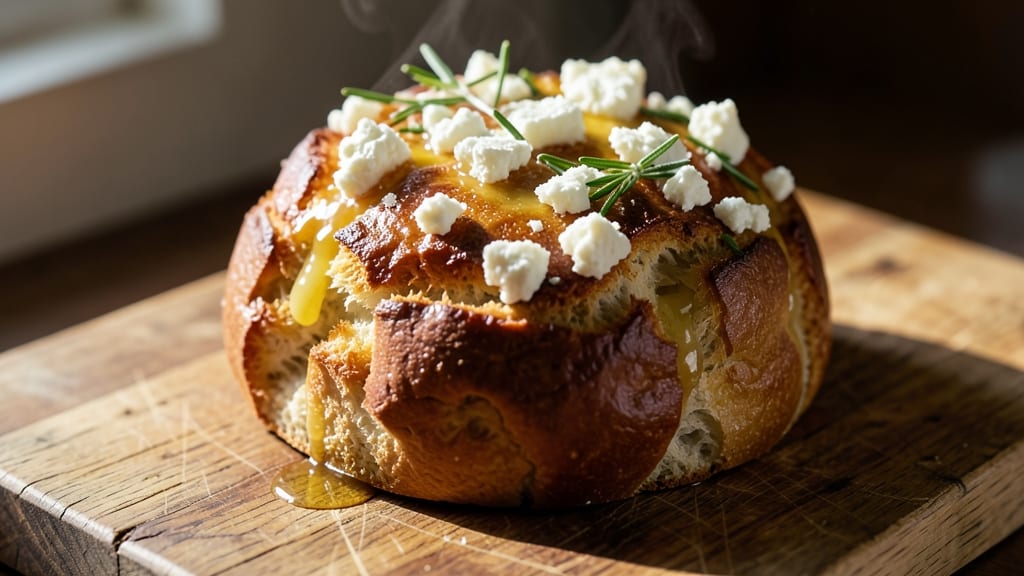
Aubree's feta bread delivers that perfect balance of crusty crunch and melty cheese pull that makes every bite irresistible. 🔥 This recipe transforms simple dough into a savory masterpiece with feta cheese baked right into the bread, creating pockets of salty, creamy goodness with every tear.
The secret lies in proper kneading and proofing—steps that ensure a light, airy interior while developing that golden, crispy crust we all crave.
What sets this bread apart is how the feta integrates into the dough without making it dense. The cheese melts just enough during baking to create those signature stringy, cheesy pulls, while still maintaining structure for slicing.
I've perfected the timing so you get maximum cheese pull without soggy bread—trust me, this is the kind of texture that makes people reach for seconds.
By the time it emerges from the oven, you'll have a loaf with a shatteringly crisp exterior and a tender, cheesy interior that's perfect for dipping in olive oil or serving alongside charcuterie.
The aroma alone will have everyone gathering in the kitchen, and the first bite delivers that satisfying combination of salty, savory, and slightly tangy flavors that keep people coming back.
This bread works equally well as a main course or side—serve it warm with a sprinkle of flaky salt, or let it cool slightly for cleaner slices. The versatility makes it ideal for meal prep too. Let's get started on creating your own perfect loaf!
Ingredients for aubree's feta bread
Fourteen simple ingredients transform into a bread with irresistible golden crust and melty feta pockets.
| Ingredient | Amount | Notes |
|---|---|---|
| All-Purpose Flour 🌾 | 4 cups | Spooned and leveled, not packed |
| Active Dry Yeast 🍞 | ¼ tsp | Or 1 packet (2.25 tsp) |
| Granulated Sugar 🍚 | 1 tbsp | For yeast activation |
| Warm Water 💧 | 1 cup | 110°F for yeast activation |
| Unsalted Butter 🧈 | ½ cup | Cold, cubed for dough |
| Crumbled Feta Cheese 🧀 | 1 cup | High-quality, salty feta |
| Large Egg 🥚 | 1 whole | Room temperature |
| Extra-Virgin Olive Oil 🫒 | ¼ cup | Plus extra for bowl |
| Diamond Crystal Kosher Salt 🧂 | 1 ½ tsp | Adjust to taste |
| Cornmeal 🌽 | ¼ cup | For dusting baking sheet |
| Flaky Sea Salt 🧂 | 1 tbsp | For topping after baking |
The feta is non-negotiable here—Kalamata or Greek feta from the deli counter (not the crumbly pre-shredded kind) gives that perfect salty, creamy bite. Whole Foods or Trader Joe's carry the best brands, but any high-quality block works if you crumble it yourself. The butter should be cold when you mix it into the dough—take it out of the fridge 10 minutes before using so it softens just enough to cut into the flour. Yeast is your friend here, so make sure it's fresh and active—test it in warm water with a pinch of sugar (should foam in 5-10 minutes).
No active dry yeast? Instant yeast works 1:1, but don't skip the warm water activation step—it's what gets your dough rising. Short on feta? Gouda or cheddar crumbles in a pinch, but the tangy flavor is key to this recipe. The olive oil matters too—use fruity, extra-virgin (none of that cheap stuff). For a lighter loaf, substitute half the butter with Greek yogurt. And if you're feeling fancy, add 1 tsp dried oregano to the dough for an extra herby kick.
This dough is a beast—it needs 2 hours of rising time, so plan ahead. Shape it into a log, place in a greased bowl, and let it rise in a warm spot (like near the oven with the light on). After baking, let it cool on a wire rack for at least 30 minutes—patience here prevents a gummy interior. Store leftovers wrapped in a clean kitchen towel for up to 3 days, or freeze slices for 1 month. The crust gets even crunchier as it cools, so save a few slices for the next day!
Why You'll Love This Recipe
- No Yeast Fuss: I swear, this dough comes together faster than my coffee brews—just mix, knead once, and let it rise while you make dinner. No waiting around for yeast to wake up or second-guessing if you overmixed it.
- Buttery Feta Magic: That warm butter and crumbled feta? It’s the secret weapon—creamy, salty, and just enough to make every bite feel like a little flavor explosion. Honestly, I’ve made bread with feta before, but this? This is the one that sticks around.
- Weeknight & Picnic Star: Slice it fresh for sandwiches, pack it for lunch, or serve it warm with olive oil—it’s my go-to for everything. (Yes, even on a Tuesday night.) The crust stays crispy for hours, so it’s always ready when you are.
- Budget-Friendly Staple: Flour, yeast, butter—these are the basics most kitchens already have. No specialty ingredients, no last-minute grocery runs. Plus, a loaf lasts me nearly a week, so I’m always covered without breaking the bank.
Step-by-step instructions for aubree's feta bread
Here's how to create that perfect crusty exterior and gooey feta pull every time.
👨🍳 Step 1: Activate the Yeast and Mix the Dough
In a small bowl, combine the 1 cup warm water (it should feel like bathwater, around 110°F) with the 1 tbsp granulated sugar and 0.25 tsp active dry yeast. Let it sit for 5-10 minutes until it becomes foamy—this means your yeast is alive and ready to work. If it doesn't foam, your yeast is dead, and you'll need to start over.
In a stand mixer fitted with the dough hook, combine the 4 cups all-purpose flour and 1.5 tsp diamond crystal kosher salt. Mix on low speed until just combined. Add the 0.25 cup extra-virgin olive oil and mix again until the oil is fully incorporated. Pour in the yeast mixture and mix on low speed until a shaggy dough forms. Add the 1 whole large egg and mix until the dough comes together and pulls away from the sides of the bowl.
👨🍳 Step 2: Knead the Dough Until Silky Smooth
Knead the dough on medium speed for 5-7 minutes until it becomes smooth and elastic. You'll know it's ready when it forms a windowpane—press your fingers into the dough and pull them apart; if you see a thin membrane without tearing, it's perfect. If the dough sticks to your hands, add a little more flour, but don't overdo it.
Here's the thing—this dough is going to be sticky, but that's okay. The feta cheese will add moisture, so we want to keep the dough slightly tacky. Once the dough is smooth, transfer it to a lightly oiled bowl, cover it with a damp towel, and let it rise in a warm place for 1-2 hours or until it doubles in size. A warm oven with the light on works great for this.
🥘 Step 3: Incorporate the Feta and Shape the Dough
Once the dough has risen, punch it down to release the air. On a lightly floured surface, gently fold in the 1 cup crumbled feta cheese by hand. Be careful not to overwork the dough—just distribute the feta evenly. The cheese will make the dough sticky again, so have some extra flour on hand to keep it from sticking to your fingers.
Shape the dough into a loaf by folding the ends toward the center and rolling it gently into a log. Place it seam-side down on a parchment-lined baking sheet. Cover it with a damp towel and let it rise for another 30-45 minutes until it's puffy and almost doubled in size. This second rise is crucial for that beautiful, airy texture.
🔥 Step 4: Preheat, Score, and Bake to Golden Perfection
Preheat your oven to 375°F. While it's heating, dust a baking sheet with 0.25 cup cornmeal—this will create a crispy crust on the bottom of your bread. Once the oven is ready, carefully transfer the dough to the cornmeal-dusted sheet. Use a sharp knife or razor to score the top of the loaf in a simple crosshatch pattern (about ¼ inch deep).
Bake for 30-35 minutes until the bread is deep golden brown and sounds hollow when tapped on the bottom. The edges should pull away from the sides of the pan, and you should see steam rising from the loaf. If the top browns too quickly, tent it loosely with foil to prevent burning.
🍽️ Step 5: Add the Finishing Touches
Remove the bread from the oven and immediately sprinkle the top with 1 tbsp flaky sea salt. Let it cool on a wire rack for 10-15 minutes—this is where the magic happens. The bread will continue to rise slightly as it cools, and the feta will soften into that irresistible, stretchy pull.
Slice it while it's still warm, and you'll get that perfect combination of a crispy crust, a soft interior, and those melty, salty feta pockets. Serve it fresh, and you'll have everyone begging for your recipe!
Pro Tips For Making Aubree'S Feta Bread
- MEASURE WATER PRECISELY: The recipe calls for warm water—110°F is ideal, but eyeballing it leads to yeast overkill or sluggish rise. Use a thermometer or test with your wrist: if it feels like bathwater, it’s too hot. Too cold? The yeast will take its sweet time waking up, and your bread will lag behind schedule.
- SOFTEN BUTTER BEFORE MIXING: Cold butter in the dough? That’s a no-go for this recipe. Beat it until it’s just soft—press your finger into it and leave a slight indent. This ensures even distribution in the dough without turning it greasy or difficult to handle. (Yes, even if you’re impatient like me.)
- DON’T OVERKNEAD THE DOUGH: After the first 5 minutes of kneading, the dough will feel tacky and resist your hands. That’s your cue to stop—overworking it develops gluten too much, making the bread dense instead of light and airy. Test by poking it: if the dent stays, you’re golden.
- USE ROOM-TEMPERATURE FLOUR: Cold flour from the fridge absorbs moisture unevenly, slowing fermentation and making the dough harder to shape. Let your flour sit out for at least 30 minutes before measuring. (Pro move: Store flour in the pantry, not the fridge—saves time and keeps it consistent.)
Perfect pairings for this recipe
Olive Oil Drizzle
Finish your warm feta bread with a generous drizzle of extra-virgin olive oil—I love using California avocado oil or Italian Arbequina for its fruity notes. Heat the oil slightly (just until it's warm to the touch) and drizzle 2-3 tablespoons over the top right after baking.
The oil will soak into the crust, enhancing its crispiness while adding a luxurious finish. 🫒
Fresh Herb Garnish
Brighten up the salty feta flavors with fresh herbs. A sprinkle of chopped Italian parsley or thyme leaves adds a vibrant pop of color and freshness. For extra flair, try finely chopped rosemary or dill—just 1 tablespoon of any herb works beautifully.
The herbs should be added right before serving to preserve their freshness.
Mediterranean Spread
Serve your feta bread with a simple Mediterranean spread to complement its flavors. Mix 2 tablespoons of crumbled feta (from the same batch!) with 1 tablespoon of honey and 1 teaspoon of lemon zest.
Drizzle with 1 tablespoon of olive oil and a pinch of flaky sea salt. This sweet-salty spread pairs perfectly with the bread’s savory notes and adds a delightful contrast.
Charcuterie Board Pairings
Transform your feta bread into a charcuterie star by pairing it with complementary cured meats and cheeses. I recommend prosciutto di Parma or genoa salami for their rich, savory flavors. Add aged manchego or goat cheese to balance the saltiness.
Don’t forget roasted red peppers, marinated artichokes, and olives to round out the board. The bread’s crispy crust will soak up any leftover oils beautifully.
Wine Pairings
For a sophisticated touch, pair your feta bread with a crisp white wine. A dry Assyrtiko from Greece or a Sauvignon Blanc from New Zealand complements the salty, tangy flavors perfectly.
If you prefer red, a light Pinot Noir with bright acidity works wonders. Avoid heavy, oaky wines—they’ll overpower the delicate balance of the bread’s flavors. 🍷
Dipping Sauces
Elevate your bread with a simple yet flavorful dipping sauce. Whisk together 2 tablespoons of Greek yogurt, 1 teaspoon of lemon juice, ½ teaspoon of garlic powder, and a pinch of salt.
For a spicy kick, add ½ teaspoon of hot honey or a dash of harissa. This creamy dip cuts through the bread’s richness and adds a tangy contrast that’s irresistible.
Nutrition facts
Frequently asked questions
Can I make this feta bread without a stand mixer?
This dough can be mixed and kneaded by hand—just be prepared for some elbow grease. Use a large mixing bowl and a wooden spoon to combine ingredients, then turn the dough onto a lightly floured surface. Knead for 8-10 minutes until smooth and elastic. The key is consistency: keep the surface floured but avoid adding too much flour, or the bread may turn dense.
Why did my feta bread turn out dense instead of light and airy?
Dense bread usually means over-kneading or under-proofing. The dough should be tacky but smooth after kneading—if it feels tough, you've worked it too much. Also, ensure your yeast is active (it should foam in 5-10 minutes when mixed with warm water). Let the dough rise until it doubles in size both times—rushing this step is a common mistake that kills the texture.
How can I tell when the bread is fully baked?
Look for three key signs: the crust should be deep golden brown, the bread sounds hollow when tapped on the bottom, and steam should rise from the loaf. If the top browns too quickly, tent it with foil. Remove it from the oven when the internal temperature reaches 190-200°F—a meat thermometer works best for accuracy.
Can I add other cheeses to this recipe?
Yes! While feta is the star, you can mix in ½ cup of crumbled goat cheese or pecorino romano for extra depth. Avoid overly soft cheeses like brie—they'll melt too much and make the dough sticky. For a smoky twist, try ½ cup of smoked gouda crumbles. Just remember: the cheese should complement, not overpower, the feta's tangy flavor.
How should I store leftovers to keep them fresh?
Wrap cooled slices in a clean kitchen towel (not plastic) to prevent sogginess. Store at room temperature for 2-3 days or freeze for up to 1 month. To reheat, wrap slices in foil and warm at 350°F for 5-7 minutes—this restores the crust's crispiness without drying out the interior.